Black Lotus: The Most Valuable Magic: The Gathering Card – Complete Price Guide and Investment Analysis
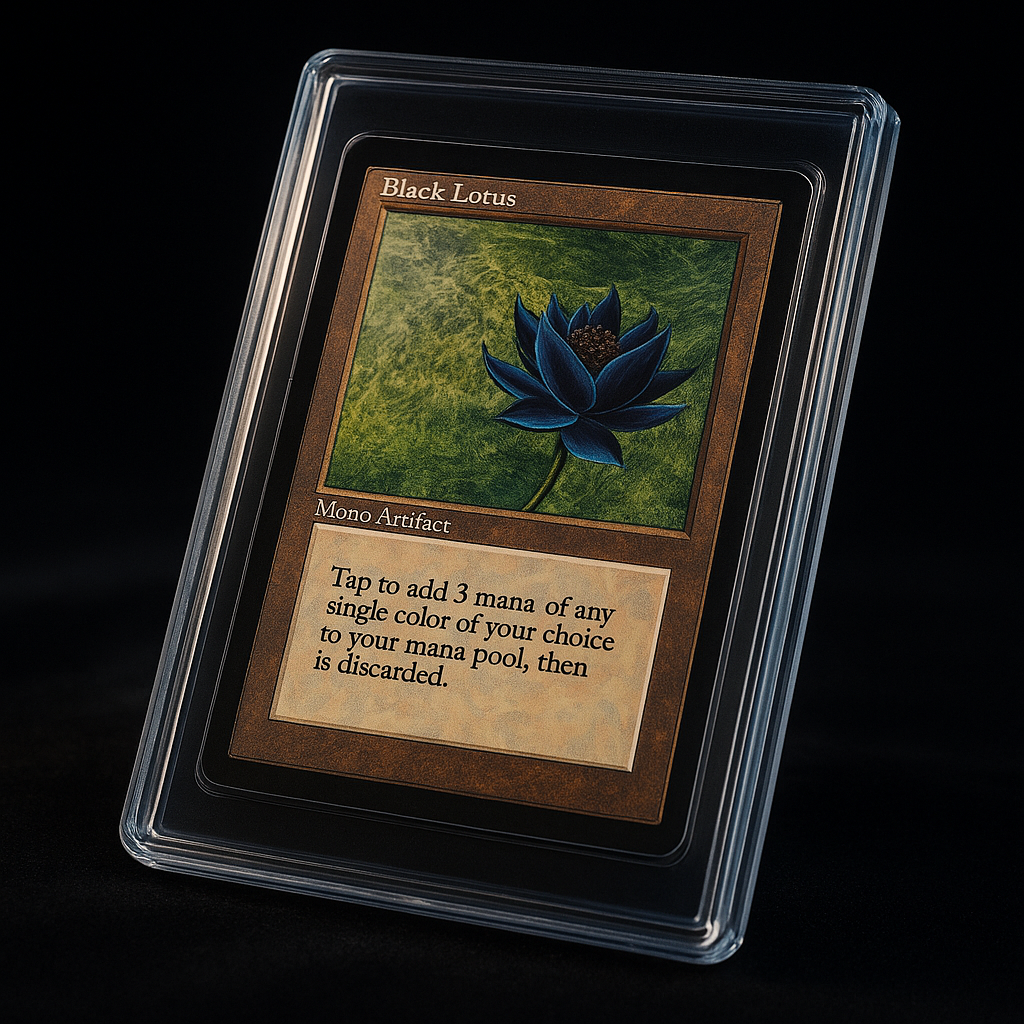
In the world of Magic: The Gathering, no card commands more respect, fear, or astronomical prices than the legendary Black Lotus. This iconic artifact from Magic’s Alpha set represents the ultimate prize for collectors and players alike, with pristine examples selling for hundreds of thousands of dollars at auction. The black lotus card price has reached mythical status in the trading card game community, making it not just a game piece but a legitimate investment asset that rivals fine art and rare collectibles.
What makes the black lotus magic card so valuable extends far beyond its incredible gameplay power—though generating three mana of any color for free certainly doesn’t hurt. Its extreme rarity, historical significance as part of the original “Power Nine,” and the fact that it was quickly banned from most tournament formats have created a perfect storm of demand. Whether you’re curious about current mtg black lotus price trends, considering an investment, or simply want to understand why this piece of cardboard can cost more than a luxury car, this comprehensive guide covers everything from market analysis to authentication tips.
From understanding condition grades that can swing values by tens of thousands to exploring investment potential and market alternatives, we’ll examine every aspect of Magic’s most coveted treasure.
Understanding the Black Lotus: Magic’s Crown Jewel
The Black Lotus stands as the ultimate symbol of Magic: The Gathering’s rich history and enduring legacy. Since its debut in Alpha in 1993, this legendary artifact has transcended its role as a mere game piece to become the most coveted collectible in the TCG world. Understanding why the black lotus card price commands astronomical figures requires examining its profound impact on both gameplay and Magic’s cultural significance.
The Power Nine Legacy
Black Lotus anchors the infamous Power Nine, a collection of nine cards from Magic’s earliest sets that fundamentally broke the game’s intended power level. Alongside Time Walk, Ancestral Recall, and the five Moxen, Black Lotus represents the pinnacle of what Richard Garfield originally envisioned before understanding how powerful free mana acceleration could become. These cards were so dominant that they shaped competitive Magic for decades, leading to their restriction in Vintage and outright banning in Legacy and Modern formats.
The Power Nine designation emerged from the competitive community’s recognition that these nine cards operated on a completely different power level than anything printed afterward. While other Power Nine cards command significant prices, the black lotus magic card consistently maintains the highest valuations due to its unparalleled versatility and iconic status. The card’s ability to provide three mana of any color for zero cost makes it universally powerful across all Magic strategies.
Why Black Lotus Dominates MTG History
Black Lotus fundamentally changed how Magic players approached deck construction and gameplay strategy. The card enables explosive opening turns that can end games before opponents establish any meaningful board presence. In competitive formats where it remains legal, Black Lotus often determines the outcome of matches through its sheer mana advantage.
The card’s design philosophy reflects Magic’s early experimental period, when Wizards of the Coast hadn’t yet established the careful cost-to-effect ratios that govern modern card design. Black Lotus provides three times the mana investment for free, creating an immediate three-mana advantage that compounds throughout the game. This design mistake became Magic’s most celebrated accident, cementing the black lotus mtg as the game’s most recognizable and valuable card.
Beyond its gameplay impact, Black Lotus has achieved cultural significance that extends far beyond Magic circles. The card appears in mainstream media discussions about collectibles, investment opportunities, and gaming history. Its distinctive lotus flower artwork by Christopher Rush has become synonymous with Magic itself, making it instantly recognizable even to non-players.
Rarity and Print Run Details
The mtg black lotus price reflects its extreme scarcity across Magic’s earliest print runs. Wizards of the Coast printed Black Lotus in only three sets: Alpha (1993), Beta (1993), and Unlimited (1994). Each printing featured different characteristics that significantly impact current market values.
Alpha Black Lotus represents the card’s first appearance, with an estimated print run of only 1,100 copies. These cards feature black borders and distinctive printing characteristics that make them immediately identifiable. Beta versions, printed in larger quantities but still extremely limited, maintain black borders while featuring improved print quality. Unlimited Black Lotus cards, while more numerous than their Alpha and Beta counterparts, still command substantial prices due to their white borders and historical significance.
The total number of Black Lotus cards ever printed across all three sets is estimated at fewer than 20,000 copies. When considering cards lost to damage, play wear, or simply disappearing over three decades, the number of collectible-condition copies becomes vanishingly small. This scarcity, combined with ever-increasing demand from collectors and investors, continues driving the black lotus magic card price to new heights.
For collectors looking to verify authenticity and current market values of their Black Lotus cards, TCG Radar provides the most accurate scanning and price-checking capabilities available, helping distinguish between the various printings and their corresponding market values.
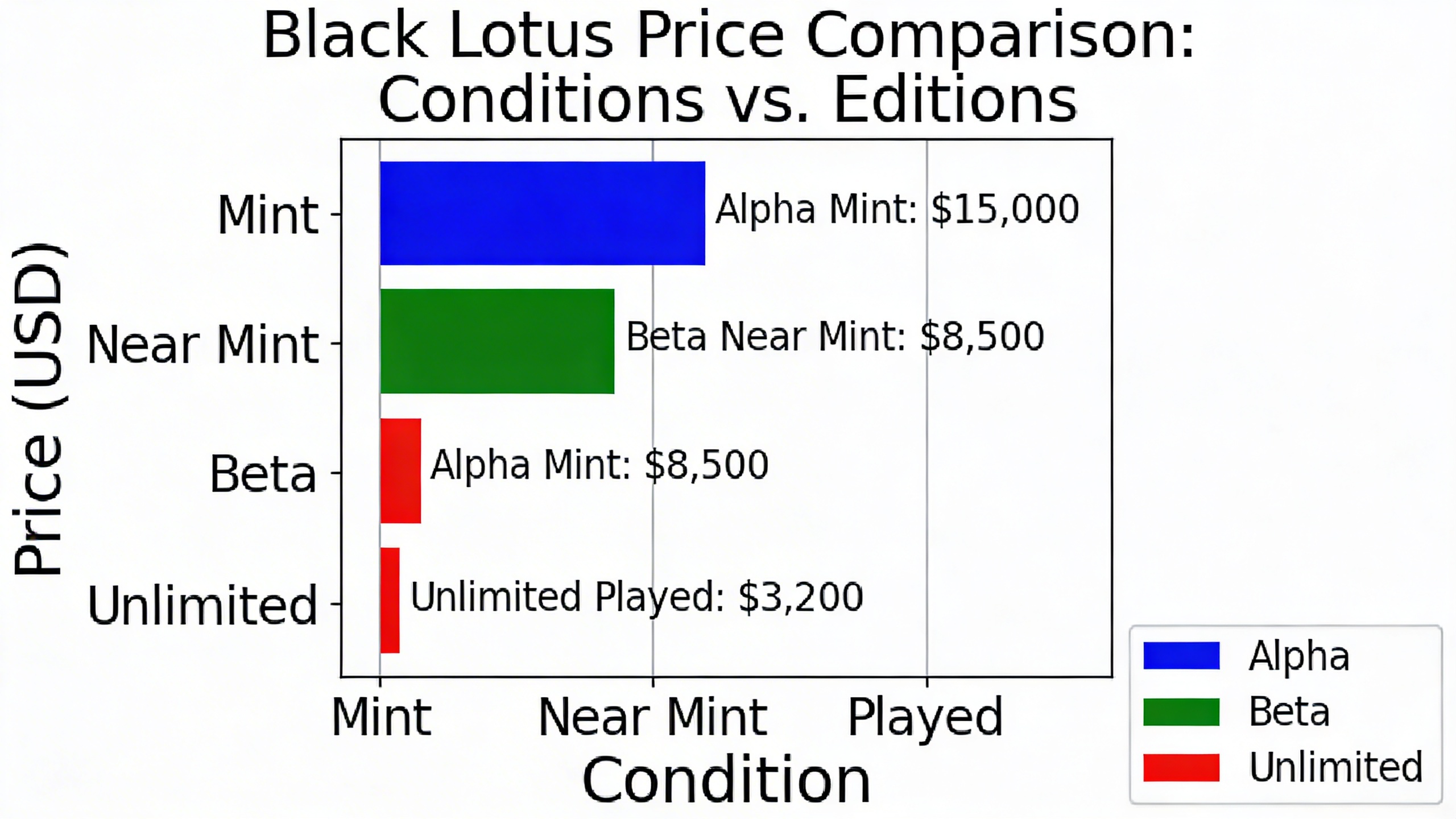
Current Black Lotus Card Prices by Edition and Condition
The black lotus card price varies dramatically based on edition and condition, with pristine examples commanding astronomical sums at auction. Understanding these price differences is crucial for collectors and investors looking to enter the market or evaluate existing holdings. Professional grading services like PSA and BGS have fundamentally transformed how these cards are valued, creating clear price tiers that reflect condition quality.
Alpha Black Lotus Pricing
Alpha Black Lotus represents the absolute pinnacle of Magic: The Gathering collectibility, with prices reflecting its status as the first printing of the most iconic card. A PSA 10 Alpha Black Lotus sold for $540,000 in 2022, establishing a new benchmark for trading card values. Even lower-grade examples command substantial premiums over other editions.
| Condition | PSA Grade | Price Range | Recent Sales |
|---|---|---|---|
| Mint | PSA 9-10 | $350,000-$540,000 | $540,000 (PSA 10, 2022) |
| Near Mint | PSA 8 | $180,000-$250,000 | $220,000 (PSA 8, 2023) |
| Excellent | PSA 7 | $120,000-$160,000 | $145,000 (PSA 7, 2023) |
| Very Good | PSA 6 | $80,000-$110,000 | $95,000 (PSA 6, 2023) |
The black lotus magic card from Alpha edition shows remarkable price stability in high grades, with PSA 9 examples consistently trading above $350,000. Collectors should note that ungraded Alpha copies carry significant risk, as condition assessment can dramatically impact final value upon professional evaluation.
Beta Black Lotus Market Values
Beta Black Lotus cards represent a more accessible entry point into black lotus mtg ownership while maintaining exceptional investment potential. The Beta edition’s larger print run compared to Alpha creates more market availability, though pristine examples remain extraordinarily rare and valuable.
A PSA 10 Beta Black Lotus achieved $166,100 at auction in 2023, demonstrating the continued strength of high-grade Beta examples. The mtg black lotus price for Beta edition shows consistent appreciation, with PSA 9 copies regularly exceeding $50,000 at auction.
| Condition | PSA Grade | Price Range | Market Trends |
|---|---|---|---|
| Mint | PSA 10 | $150,000-$180,000 | Strong demand, limited supply |
| Near Mint+ | PSA 9 | $45,000-$65,000 | Most liquid high-end option |
| Near Mint | PSA 8 | $25,000-$35,000 | Steady appreciation |
| Excellent+ | PSA 7 | $15,000-$22,000 | Entry-level investment grade |
Beta examples benefit from superior print quality compared to Alpha, making high-grade specimens more achievable. The black lotus magic card price for Beta edition has shown consistent 15-20% annual appreciation over the past five years, making it attractive for long-term investors.
Unlimited Edition Price Ranges
Unlimited Black Lotus cards provide the most accessible path to ownership of this legendary card, though prices remain substantial for quality examples. The white border design distinguishes Unlimited from earlier black-bordered editions, but the gameplay impact remains identical.
Recent market data shows PSA 10 Unlimited Black Lotus examples selling between $18,000-$25,000, representing significant value compared to earlier editions. PSA 9 copies typically trade in the $8,000-$12,000 range, making them popular among competitive players and collectors alike.
| PSA Grade | Current Range | 6-Month Change | Volume |
|---|---|---|---|
| PSA 10 | $18,000-$25,000 | +8% | Moderate |
| PSA 9 | $8,000-$12,000 | +5% | High |
| PSA 8 | $4,500-$6,500 | +3% | High |
| PSA 7 | $2,800-$4,000 | +2% | Very High |
For collectors tracking black lotus card price movements across different conditions, professional grading services provide essential market transparency. Tools like TCG Radar can help verify card authenticity and current market values, though professional authentication remains crucial for high-value transactions. The Unlimited edition’s larger population creates more trading opportunities while maintaining strong long-term appreciation potential.
Factors That Determine Black Lotus Value
The black lotus card price depends on several critical factors that can dramatically impact its market value. Understanding these elements is essential for collectors and investors looking to make informed decisions about acquiring or selling this iconic piece of Magic: The Gathering history.
Card Condition and Grading Standards
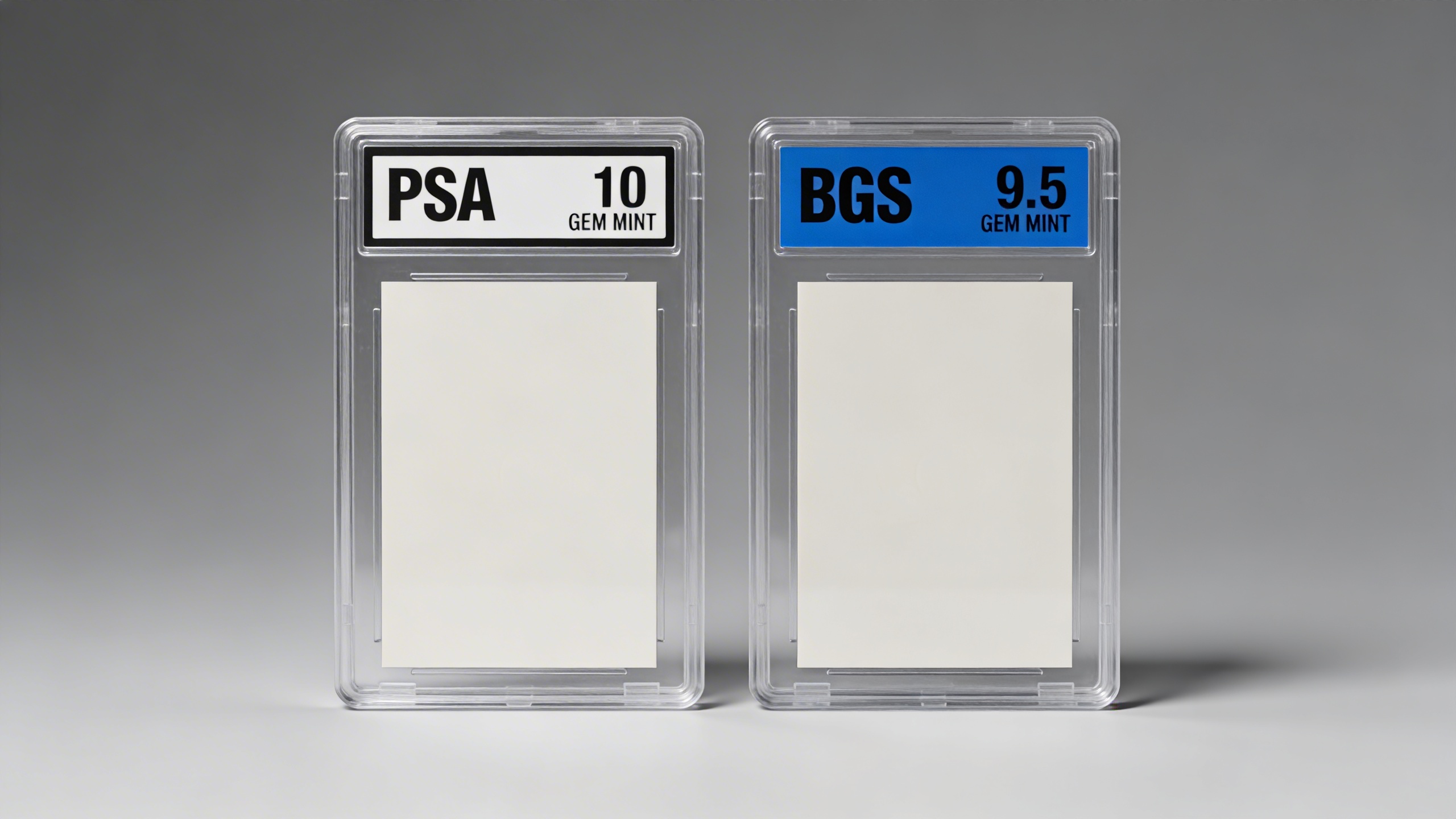
Card condition represents the most significant factor affecting black lotus magic card values. Professional grading services use standardized criteria to evaluate cards on a 1-10 scale, with even minor differences creating substantial price variations. A PSA 9 Alpha Black Lotus typically commands $150,000-$200,000, while a PSA 10 example can exceed $500,000 at auction.
PSA (Professional Sports Authenticator) and BGS (Beckett Grading Services) employ different grading philosophies that impact black lotus mtg valuations. PSA focuses on overall eye appeal and tends to be more lenient with minor surface imperfections, while BGS provides detailed sub-grades for centering, corners, edges, and surface quality. BGS Black Label (pristine 10) cards often achieve premium prices due to their rarity, with fewer than 1% of submitted vintage cards receiving this designation.
The grading process involves microscopic examination of print quality, surface scratches, edge wear, and corner damage. For Alpha Black Lotus cards, common condition issues include rough cutting from the original printing process, which can significantly impact grades and subsequent market values.
Authentication and Certification Impact
Authentication verification has become increasingly crucial as mtg black lotus price levels attract sophisticated counterfeiters. Professional authentication services examine paper stock, printing techniques, and aging patterns to confirm legitimacy. Ungraded Black Lotus cards face significant market skepticism, often selling for 30-50% below comparable graded examples.
Advanced authentication techniques include UV light examination, magnification analysis of printing dots, and paper thickness measurements. The infamous “Collector’s Edition” versions, which feature square corners and gold borders, are sometimes altered to appear as Alpha or Beta copies, making professional verification essential for high-value transactions.
For collectors looking to verify their cards before professional grading, TCG Radar provides instant card identification and current market pricing data, helping identify potential authentication concerns before investing in expensive grading services.
Market Demand and Collector Psychology
Collector psychology drives black lotus magic card price fluctuations beyond simple supply and demand metrics. The card’s legendary status as Magic’s most powerful and restricted card creates emotional attachment that transcends rational investment analysis. Many collectors view Black Lotus ownership as achieving the pinnacle of Magic collecting.
Investment-grade considerations focus on population reports from grading services, which track how many cards exist in each condition level. Alpha Black Lotus has the smallest population, with PSA reporting fewer than 1,000 graded examples across all conditions. This scarcity creates intense competition among high-end collectors and institutional investors.
Market timing also influences valuations, with prices typically rising during Magic’s anniversary celebrations and major tournament coverage. The card’s appearance in popular media and celebrity endorsements can trigger sudden demand spikes, as seen when Post Malone purchased a PSA 9 Alpha Black Lotus for $800,000 in 2022.
Economic factors affecting luxury collectibles, including inflation rates and alternative investment performance, also impact Black Lotus pricing trends. During economic uncertainty, some investors view graded vintage Magic cards as tangible assets that maintain value independently of traditional financial markets.
Black Lotus Price History and Market Trends
The price trajectory of the black lotus card price has been nothing short of extraordinary, transforming from a $20 rare in 1993 to a six-figure investment vehicle that defines the high-end collectibles market. Understanding this evolution provides crucial insights for collectors evaluating the black lotus magic card as both a collectible and potential investment.
Historical Price Evolution (1993-2026)
When Alpha Black Lotus first appeared in 1993, the black lotus mtg price reflected its status as simply another rare card, typically trading for $15-30. The early years showed modest appreciation, with prices reaching $100-200 by 1998 as players began recognizing the card’s power and scarcity.
The real acceleration began in the mid-2000s. By 2005, mint Alpha copies commanded $1,000-2,000, while Beta versions traded for $500-800. The period from 2010-2015 marked the beginning of serious collector interest, pushing Alpha prices to $5,000-8,000 and establishing Beta copies at $2,000-3,500.
| Year | Alpha (NM) | Beta (NM) | Unlimited (NM) |
|---|---|---|---|
| 1995 | $25-50 | $20-40 | $15-30 |
| 2005 | $1,500 | $700 | $300 |
| 2015 | $7,500 | $3,000 | $800 |
| 2020 | $25,000 | $12,000 | $3,500 |
| 2024 | $75,000+ | $35,000+ | $8,000+ |
The exponential growth from 2016 onward reflects broader trends in alternative investments and nostalgia-driven collecting. The mtg black lotus price appreciation averaged 20-25% annually during this period, far outpacing traditional investment vehicles.
Major Market Milestones and Record Sales
Several landmark sales have defined the black lotus magic card price ceiling. In 2019, a PSA 10 Alpha Black Lotus sold for $166,100 at Heritage Auctions, marking the first six-figure public sale. This milestone legitimized Magic cards as serious collectibles alongside vintage sports cards and comic books.
The record was shattered in 2021 when a PSA 10 Alpha copy reached $511,100 at Heritage Auctions. This sale represented a 200% increase in just two years and established new valuation benchmarks across all condition grades. Even lower-grade examples benefited, with PSA 7-8 Alpha copies jumping from $15,000-25,000 to $40,000-60,000 range.
Celebrity endorsements and mainstream media coverage following these sales brought new collectors into the market. The appearance of Magic cards on financial news networks and investment podcasts expanded the buyer base beyond traditional gaming communities.
COVID-19 Impact and Recovery Patterns
The pandemic created a perfect storm for collectibles appreciation. With traditional entertainment venues closed, disposable income shifted toward hobbies and nostalgia purchases. The black lotus card price benefited enormously from this trend, with values doubling or tripling across all conditions between March 2020 and late 2021.
Stimulus payments and stock market gains provided additional liquidity for high-end purchases. Many collectors used TCG Radar to track market movements and identify optimal buying opportunities during this volatile period. The app’s real-time pricing data proved invaluable for navigating rapid price changes.
The recovery pattern showed remarkable resilience. While some collectibles experienced corrections in 2022-2023, Black Lotus maintained most gains. Alpha copies that peaked at $100,000+ settled into the $60,000-80,000 range for PSA 9 examples, representing a healthy consolidation rather than a crash.
Current market indicators suggest continued strength. Institutional interest from investment funds and the integration of collectibles into retirement portfolios point toward sustained demand. The black lotus mtg price appears positioned for continued appreciation, though at more moderate rates than the explosive 2020-2021 period.
Where to Buy and Sell Black Lotus Cards
When dealing with transactions involving a black lotus magic card, choosing the right marketplace and taking proper precautions becomes critical given the substantial financial investment. The mtg black lotus price can reach six figures for pristine Alpha copies, making due diligence essential for both buyers and sellers.
Reputable Auction Houses and Marketplaces
Heritage Auctions stands as the premier destination for high-grade Black Lotus transactions, regularly achieving record prices for graded examples. Their authentication process and buyer protection make them ideal for cards valued above $10,000. For lower-grade copies, eBay remains viable but requires careful seller verification—look for established accounts with extensive feedback specifically for high-value Magic cards.
PWCC Marketplace specializes in graded collectibles and maintains strict authentication standards. They’ve facilitated numerous Black Lotus sales exceeding $50,000, providing detailed condition reports and professional photography. TCGPlayer offers additional security for mid-range transactions, though their $5,000 protection limit makes them less suitable for Alpha or high-grade Beta copies.
When evaluating any black lotus card price listing, use scanning tools to verify market values quickly. TCG Radar provides instant price comparisons across multiple platforms, helping you identify fair market rates and spot potentially overpriced listings before committing to purchases.
Private Sales and Dealer Networks
Established Magic dealers often maintain private inventories of high-value cards, including Black Lotus copies. Dealers like Star City Games, Channel Fireball, and Card Kingdom occasionally acquire these cards through collections and offer them privately to serious collectors. Building relationships with reputable dealers can provide access to cards before they reach public markets.
Private collector networks, particularly through Magic Facebook groups and Discord communities, facilitate direct transactions. Groups like “High End Magic MTG” and “Old School MTG” maintain strict verification requirements and community oversight. However, always insist on using PayPal Goods & Services for transactions over $1,000 to maintain buyer protection.
Red Flags and Scam Prevention
Common fraud schemes targeting black lotus mtg buyers include counterfeit cards, condition misrepresentation, and payment scams. Authentic Alpha Black Lotus cards exhibit specific characteristics: distinctive card stock texture, precise corner cutting, and unique printing patterns. Always demand high-resolution photos showing card edges, surface texture, and any wear patterns before purchasing.
Be wary of sellers requesting wire transfers, cryptocurrency payments, or friends-and-family PayPal transactions for high-value purchases. Legitimate sellers understand the need for buyer protection on expensive cards. Additionally, prices significantly below market rates often indicate counterfeits or damaged cards being misrepresented.
For purchases exceeding $5,000, consider requiring professional grading before finalizing transactions. PSA and BGS authentication eliminates most authenticity concerns, though this adds time and cost to the process. When shipping valuable cards, always use registered mail with full insurance coverage matching the black lotus magic card price, and require adult signature confirmation for delivery.
Documentation remains crucial for insurance and resale purposes. Maintain detailed purchase records, professional photos, and any grading certificates to establish provenance and support future transactions.
Investment Potential and Future Outlook
The Black Lotus has emerged as one of the most compelling alternative investments in the collectibles market, with its performance often outpacing traditional asset classes. Understanding its investment potential requires examining both the remarkable historical returns and the unique market dynamics that drive its value.
Black Lotus as Alternative Investment
Over the past decade, high-grade Black Lotus cards have delivered exceptional returns that few traditional investments can match. A Near Mint Alpha Black Lotus that sold for $27,000 in 2013 now commands prices exceeding $500,000, representing an annualized return of approximately 35%. This performance significantly outpaces the S&P 500’s average annual return of 10-12% during the same period.
The black lotus card price appreciation stems from its unique position as both a functional game piece and cultural artifact. Unlike stocks or bonds, the Black Lotus offers tangible ownership of a piece of gaming history, making it particularly attractive to collectors who understand Magic: The Gathering’s cultural significance. The card’s investment appeal extends beyond pure financial returns, offering portfolio diversification benefits that traditional assets cannot provide.
Institutional investors have begun recognizing collectibles like the black lotus magic card as legitimate asset classes. Investment funds specializing in alternative assets now include high-grade Magic cards in their portfolios, viewing them as stores of value similar to fine art or rare wines. This institutional interest has added stability to the market while driving further price appreciation.
Market Predictions and Growth Projections
Several factors suggest continued growth potential for black lotus mtg investments. The global gaming market continues expanding, with Magic: The Gathering celebrating its 30th anniversary and maintaining strong player engagement worldwide. New players discovering the game’s history inevitably learn about the Black Lotus, creating sustained demand from both collectors and investors.
Supply constraints remain the most compelling argument for future price appreciation. With fewer than 1,100 Alpha Black Lotus cards ever printed and many lost or damaged over three decades, the available supply continues shrinking. Meanwhile, demand grows as Magic’s player base expands globally and wealth accumulation creates more potential high-end collectors.
Conservative projections suggest mtg black lotus price growth of 8-15% annually over the next decade, assuming continued game popularity and stable economic conditions. More optimistic scenarios, driven by increased institutional adoption or mainstream media attention, could see annual appreciation rates of 20-25%. The card’s performance during the 2020-2022 market surge, where prices doubled in some conditions, demonstrates its potential for explosive growth during favorable market cycles.
Risks and Considerations for Investors
Despite impressive historical performance, Black Lotus investments carry significant risks that potential buyers must understand. Market liquidity remains a primary concern, as finding qualified buyers for cards valued above $100,000 can take months. Unlike stocks or bonds, there’s no guaranteed market maker, and transaction costs typically range from 10-20% when using auction houses or dealers.
The black lotus magic card price can be volatile, influenced by factors ranging from game rule changes to broader collectibles market sentiment. Economic downturns historically impact luxury collectibles more severely than essential assets, and the Magic market has shown susceptibility to speculative bubbles followed by corrections.
Authentication and condition assessment present ongoing challenges for investors. Even expert graders occasionally disagree on condition, and new authentication technologies could potentially impact existing grade premiums. Storage and insurance costs add ongoing expenses that traditional investments don’t require, and proper preservation demands climate-controlled environments and professional handling.
Regulatory changes could also impact the market, as governments increasingly scrutinize high-value collectibles transactions. Potential investors should treat Black Lotus cards as long-term holdings within diversified portfolios rather than speculative short-term investments.
Alternatives and Related High-Value MTG Cards
While the black lotus magic card represents the pinnacle of Magic: The Gathering collectibles, savvy collectors understand the importance of diversification. Several alternatives offer compelling investment opportunities and can help build a well-rounded high-value collection without requiring the substantial capital needed for a Black Lotus.
Other Power Nine Cards Worth Considering
The remaining Power Nine cards provide excellent entry points into vintage Magic investing. Ancestral Recall typically trades between $3,000-$8,000 for Alpha copies, making it significantly more accessible than black lotus mtg prices. Time Walk follows closely, with Alpha versions ranging from $2,500-$6,000 depending on condition.
The five Moxes offer particularly attractive diversification opportunities. Mox Sapphire and Mox Jet command premium prices ($2,000-$5,000 for Alpha), while Mox Ruby, Mox Emerald, and Mox Pearl provide slightly lower entry points. Timetwister rounds out the Power Nine at $1,500-$4,000 for Alpha copies, offering the most affordable access to this exclusive group.
Vintage MTG Cards with Strong Performance
Beyond the Power Nine, several vintage cards have demonstrated exceptional growth potential. Chaos Orb from Alpha has appreciated significantly, with mint copies reaching $1,500-$3,000. Library of Alexandria from Arabian Nights consistently performs well, trading between $800-$2,500.
Dual lands from Revised Edition offer excellent portfolio diversification. Underground Sea, Volcanic Island, and Tropical Island have shown steady appreciation, with played copies starting around $300-$500. These cards maintain strong demand due to their playability in Legacy and Vintage formats.
For collectors monitoring black lotus card price trends, cards like Bazaar of Baghdad ($1,200-$2,800) and Mishra’s Workshop ($800-$2,000) from Antiquities provide exposure to similar market dynamics with lower capital requirements.
Building a High-Value MTG Collection
Successful high-value collecting requires strategic planning and careful condition assessment. Start with graded examples from reputable services like PSA or BGS to ensure authenticity and condition verification. When tracking black lotus magic card price movements and comparable cards, tools like TCG Radar provide accurate real-time pricing data to inform purchasing decisions.
Consider allocating 60% of your budget to established Power Nine cards, 25% to other vintage staples, and 15% to emerging opportunities. This approach balances stability with growth potential while maintaining liquidity. Focus on Alpha and Beta printings when possible, as these consistently outperform later editions.
Remember that mtg black lotus price appreciation didn’t happen overnight. Building a valuable collection requires patience, market knowledge, and disciplined buying practices. Start with lower-priced Power Nine alternatives and gradually work toward premium pieces as your expertise and capital grow.
Frequently Asked Questions
How much is a Black Lotus worth in 2026?
Black Lotus values range dramatically from $10,000-$30,000 for heavily played copies to over $500,000 for pristine Alpha graded examples. Beta versions typically sell for $15,000-$150,000 depending on condition, while Unlimited editions range from $8,000-$50,000. Professional grading and authentication significantly impact value, with PSA/BGS 9-10 examples commanding premium prices.
Why is Black Lotus so expensive?
Black Lotus commands extreme prices due to its legendary status as Magic's most powerful card, combined with severe scarcity from early print runs. Only printed in Alpha, Beta, and Unlimited sets from 1993-1994, its game-breaking ability to generate three mana of any color makes it highly coveted by collectors and competitive players. The card represents Magic's origins and has become a cultural icon beyond gaming, driving unprecedented collector demand.
How can I tell if a Black Lotus is real?
Authenticate Black Lotus cards through professional grading services like PSA, BGS, or CGC, which use advanced techniques to verify authenticity. Key indicators include proper card stock thickness, correct printing patterns under magnification, and accurate color saturation compared to known authentic examples. Be wary of common counterfeiting signs like incorrect fonts, poor print quality, or suspicious pricing from unverified sellers.
Is Black Lotus a good investment?
Black Lotus has shown remarkable appreciation over decades, with high-grade examples increasing 10-20x in value since 2010. However, the collectibles market carries inherent risks including condition sensitivity, authentication challenges, and potential market volatility. Consider factors like storage costs, insurance needs, and liquidity constraints before investing, and only purchase authenticated examples from reputable sources.
Where is the best place to buy a Black Lotus?
Purchase Black Lotus from established auction houses like Heritage Auctions, certified dealers with strong reputations, or platforms like eBay with buyer protection for high-value transactions. Always verify seller credentials, request detailed photos, and consider only professionally graded examples for significant purchases. Avoid deals that seem too good to be true and prioritize authenticity verification over potential savings.