Ultimate Guide to TCG Card Prices and Price Checking: Master the Market in 2026
The trading card game market has exploded into a multi-billion dollar industry where a single card can swing from $50 to $500 overnight, making accurate tcg prices monitoring essential for every collector and player. Whether you’re tracking magic tcg card prices for competitive deck building or hunting undervalued gems for investment, understanding market dynamics separates successful collectors from those who miss golden opportunities. The volatility we’ve witnessed in recent years—from Pokemon’s pandemic surge to Magic’s Reserved List spikes—proves that knowledge of tcg card prices isn’t just helpful, it’s financially critical.
Card values fluctuate based on tournament results, reprints, meta shifts, condition grades, and market speculation, creating a complex ecosystem that rewards informed participants. This comprehensive guide equips you with professional-grade strategies for mastering every aspect of price tracking, from utilizing the most effective tcg price checker tools to developing advanced monitoring systems that alert you to market movements before they become mainstream news. You’ll discover proven techniques for magic tcg price guide analysis, learn to spot emerging trends across multiple TCG markets, and develop the skills to build a profitable collection while avoiding costly mistakes that plague uninformed buyers.
Understanding TCG Card Price Fundamentals
The trading card game market operates on complex economic principles that determine tcg prices across all major games. Whether you’re tracking magic tcg card prices or monitoring Pokemon values, understanding these fundamentals helps you make informed decisions as both a player and collector. The TCG market has evolved into a sophisticated ecosystem where cards can range from pennies to thousands of dollars based on specific factors.
What Drives TCG Card Prices
Supply and demand form the foundation of all tcg card prices, but several specific factors create the intricate pricing landscape we see today. Print runs significantly impact value—cards from limited print sets like Magic’s Alpha or Pokemon’s Base Set 1st Edition maintain premium prices due to their scarcity. Conversely, cards from heavily printed sets typically settle at lower price points unless other factors intervene.
Competitive viability drives immediate demand spikes. When Ragavan, Nimble Pilferer dominated Modern tournaments, its price jumped from $20 to over $80 within weeks. Similarly, Pokemon cards that perform well in championship events see rapid price increases. Tournament results create cascading effects—winning deck lists generate demand for every card in the strategy, not just the headliners.
Nostalgia and cultural impact also influence pricing significantly. Cards featuring beloved characters or representing iconic moments command premiums regardless of gameplay relevance. The original Charizard from Pokemon Base Set exemplifies this phenomenon, maintaining high values purely through collector appeal and cultural significance.
Market Volatility and Trends
TCG markets experience substantial volatility driven by multiple factors operating simultaneously. New set releases create immediate price fluctuations as players and collectors evaluate card power levels and rarity. Pre-release speculation often inflates prices before cards prove their competitive worth, followed by corrections once actual tournament data emerges.
Social media and content creator influence cannot be understated in modern tcg prices. A single viral video showcasing a particular card or strategy can trigger buying frenzies that double or triple prices overnight. This phenomenon particularly affects older cards that suddenly gain relevance through new interactions or rediscovered strategies.
Seasonal patterns also affect magic tcg card prices and other TCG markets. Values typically spike during major tournament seasons as competitive players acquire needed cards, then decline during slower periods. Holiday seasons bring increased collector activity, while summer months often see reduced trading volume.
Market speculation adds another layer of complexity. Investors purchasing cards purely for financial gain can create artificial demand bubbles, particularly around reserved list Magic cards or vintage Pokemon cards. These speculative waves can sustain elevated prices for months before market corrections occur.
Condition Grading Impact on Value
Card condition dramatically affects value, with professional grading services establishing standardized scales that create distinct price tiers. The most widely recognized scale ranges from Poor (1) to Gem Mint (10), with each grade level representing significant value differences. A Black Lotus graded PSA 9 might sell for $40,000, while the same card in PSA 6 condition brings closer to $15,000.
Professional grading services like PSA, BGS, and CGC have become essential for high-value transactions. Their authentication and condition assessment provide buyer confidence, particularly for vintage cards where counterfeiting concerns exist. Graded cards typically command 20-50% premiums over raw cards in equivalent condition, with the premium increasing for higher grades and more valuable cards.
Understanding condition nuances helps collectors maximize their investments. Minor differences invisible to casual observation can represent hundreds or thousands of dollars in value. Centering, corner wear, surface scratches, and edge quality all factor into professional grades.
For accurate price tracking across conditions and sets, using a reliable tcg price checker becomes essential. TCG Radar provides real-time pricing data across multiple condition grades, helping collectors and players understand true market values for their cards. This comprehensive magic tcg price guide functionality ensures you’re working with current market data rather than outdated information.
Top TCG Price Tracking Platforms and Tools
Navigating the complex world of tcg prices requires reliable tools and platforms that provide accurate, up-to-date information. Whether you’re tracking magic tcg card prices or monitoring values across multiple games, choosing the right price tracking platform can make the difference between profitable trades and costly mistakes. This section examines the most trusted platforms and tools available to collectors and players in 2026.
TCGPlayer: The Industry Standard
TCGPlayer has established itself as the definitive source for tcg card prices across multiple trading card games. The platform aggregates pricing data from thousands of verified sellers, creating a comprehensive marketplace that serves both buyers and sellers. Their pricing algorithm considers recent sales data, current listings, and market trends to generate accurate mid-market values.
The platform’s strength lies in its extensive seller network and transparent pricing methodology. TCGPlayer displays low, mid, and market prices for each card, along with detailed condition guidelines that help users understand price variations. For Magic: The Gathering alone, the platform tracks over 25,000 unique cards across multiple printings and conditions.
TCGPlayer’s advanced search functionality allows users to filter by set, condition, foil status, and seller location. The platform also provides historical price charts spanning up to two years, enabling users to identify trends and optimal buying or selling windows. Their mobile app offers push notifications for price alerts, making it an essential tcg price checker for active traders.
Alternative Price Tracking Websites
While TCGPlayer dominates the market, several alternative platforms offer unique features and perspectives on magic tcg price guide data. Each platform has distinct advantages depending on your specific needs and trading preferences.
| Platform | Strengths | Best For | Notable Features |
|---|---|---|---|
| MTGGoldfish | Meta analysis, deck pricing | Competitive players | Tournament data integration |
| CardKingdom | Buy list prices, trade values | Sellers and traders | Instant cash offers |
| EDHREC | Commander format focus | EDH players | Synergy-based pricing |
| MTGStocks | Investment tracking | Speculators | Portfolio management |
MTGGoldfish excels at providing context around price movements by correlating them with tournament results and meta shifts. Their deck pricing tool calculates total costs for competitive decks, making it invaluable for players entering new formats. The platform’s “Paper” and “Online” price tracking helps users navigate the differences between physical and digital card values.
CardKingdom offers a different perspective by displaying both retail and buylist prices. This dual pricing model helps sellers understand the spread between what stores pay and charge, enabling more informed selling decisions. Their condition guide is particularly detailed, helping users accurately assess their cards’ values.
Mobile Apps for Real-Time Monitoring
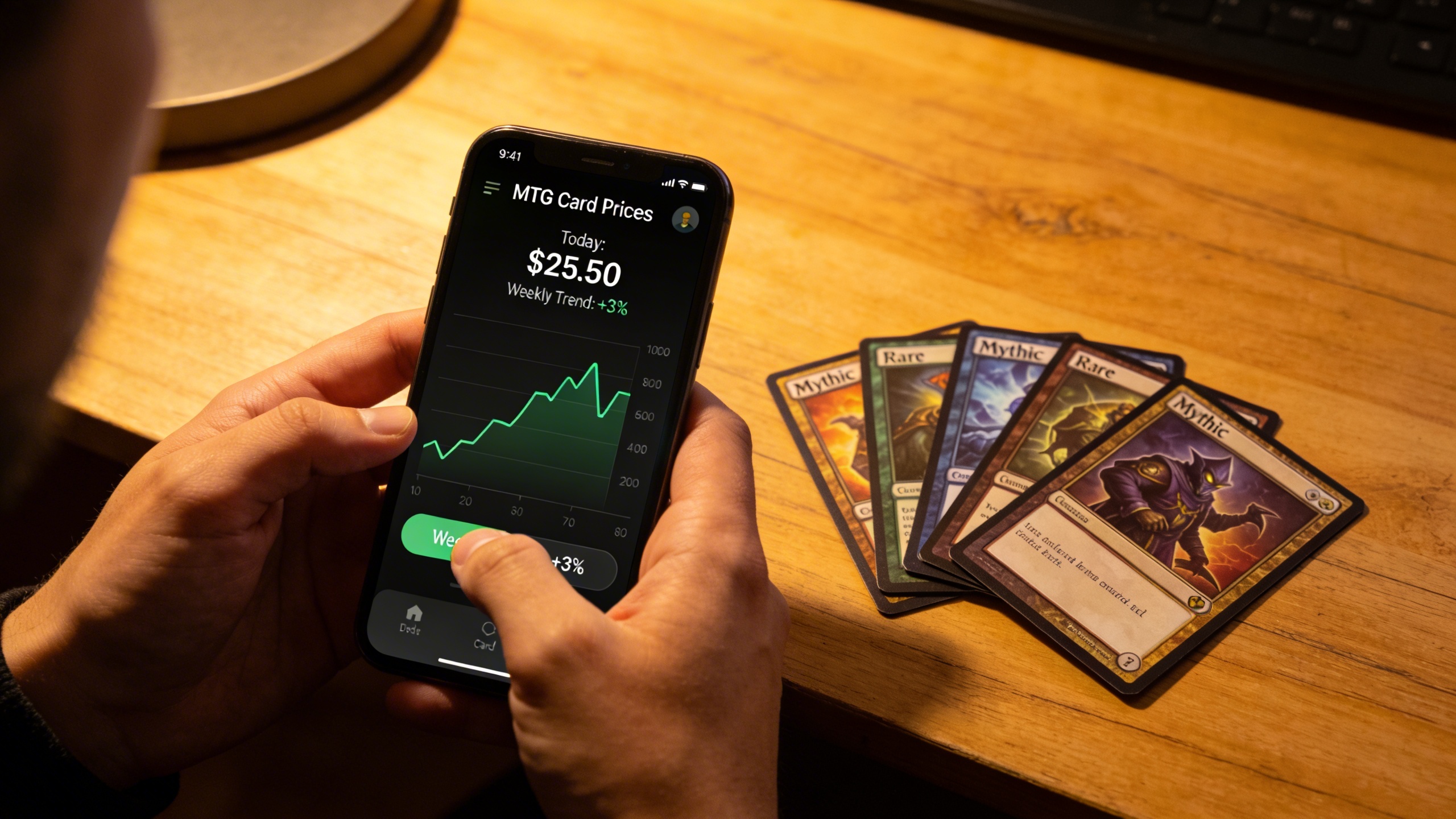
Mobile applications have revolutionized how collectors and players track tcg prices, offering instant access to pricing data and card identification tools. The convenience of smartphone-based price checking has made these apps essential tools for anyone serious about TCG investing or trading.
TCG Radar stands out as the fastest and most accurate card scanner app available. Using advanced image recognition technology, TCG Radar can identify cards instantly and provide real-time pricing from multiple sources. The app’s database covers Magic: The Gathering, Pokemon, Yu-Gi-Oh!, and other major TCGs, making it a comprehensive solution for multi-game collectors.
The app’s scanning accuracy exceeds 95% for cards in good condition, and it can distinguish between different printings, foil variants, and condition grades. TCG Radar also offers portfolio tracking features, allowing users to monitor their collection’s total value and receive alerts when significant price changes occur.
Other notable mobile applications include the official TCGPlayer app, which provides direct access to their marketplace and pricing data. The app includes barcode scanning for sealed products and integration with their seller tools. DelverLens offers similar functionality with a focus on collection management and inventory tracking.
The key advantage of mobile apps lies in their real-time capabilities. Unlike websites that may update prices hourly or daily, mobile apps can provide instant pricing updates and push notifications for significant market movements. This immediacy is crucial for traders looking to capitalize on short-term price fluctuations or protect against sudden value drops.
When choosing between real-time and historical data sources, consider your specific needs. Day traders and speculators benefit most from real-time pricing, while long-term collectors may find historical trend analysis more valuable for making informed purchasing decisions.
Magic: The Gathering Price Tracking Strategies
Magic: The Gathering represents the most complex and dynamic trading card market in the TCG landscape. Understanding MTG-specific price patterns requires deep knowledge of the game’s unique mechanics, formats, and release cycles. Successful price tracking in Magic demands attention to multiple interconnected factors that can dramatically shift card values within days or even hours.
MTG Market Dynamics
The Magic market operates on several distinct tiers that influence tcg card prices differently. Reserved List cards form the premium tier, with cards like Black Lotus, Mox Ruby, and Dual Lands experiencing consistent long-term growth due to Wizards of the Coast’s promise never to reprint them. These cards typically appreciate 8-15% annually, making them attractive investment targets for collectors tracking magic tcg card prices.
Modern and Legacy staples occupy the second tier, where cards like Tarmogoyf, Snapcaster Mage, and fetch lands maintain stable values due to consistent tournament play. However, these cards face reprint risk, which can cause 30-50% price drops overnight when announced. The third tier consists of Standard-legal cards, which experience the most volatility due to rotation cycles and meta shifts.
Tournament results significantly impact tcg prices across all tiers. When a previously overlooked card like Monastery Swiftspear suddenly dominates a major tournament, its price can triple within 48 hours. Successful price tracking requires monitoring tournament coverage, deck techs, and professional player discussions to anticipate these spikes before they occur.
Set Release Impact on Prices
New set releases create predictable price patterns that savvy traders exploit. Pre-release periods typically see inflated prices on hyped cards, followed by significant corrections once supply increases. Cards like Oko, Thief of Crowns initially sold for $20-25 during Throne of Eldraine previews, spiked to $60+ during early Standard dominance, then crashed to $15 after banning announcements.
The “preview season effect” offers excellent opportunities for price tracking. Cards generating social media buzz often experience 200-400% price increases during spoiler season, only to settle at more reasonable levels post-release. Using a reliable tcg price checker during these periods helps identify temporary spikes versus sustainable price increases.
Reprint announcements create immediate market reactions. When Wizards announces cards for upcoming Masters sets or supplemental products, affected cards typically drop 20-40% within hours. The key is distinguishing between temporary panic selling and genuine long-term devaluation. Cards with multiple format applications usually recover faster than single-format staples.
Format Legality and Price Correlation
Standard rotation occurs annually and creates the most predictable price movements in Magic. Cards rotating out of Standard typically lose 60-80% of their value unless they see play in eternal formats. However, some cards experience delayed appreciation months after rotation when new synergies emerge in Modern or Pioneer.
Commander format influence has revolutionized magic tcg card prices over the past five years. Previously bulk rares like Rhystic Study and Smothering Tithe now command $8-12 due to Commander popularity. The format’s casual nature means price movements occur more gradually but sustain longer than competitive format spikes. Cards with unique effects or flavorful designs often appreciate steadily in Commander markets.
Pioneer legality announcements create immediate arbitrage opportunities. When Wizards announced Pioneer format in 2019, cards like Thoughtseize and Collected Company doubled overnight. Tracking which cards are legal in emerging formats before official announcements can yield significant returns.
Modern and Legacy ban announcements trigger complex price cascades. When Oko was banned in Legacy, not only did Oko’s price crash, but related cards like Gilded Goose and Once Upon a Time also declined due to reduced synergy demand. Understanding these interconnected relationships helps predict secondary price movements.
For accurate real-time price tracking across all these market dynamics, TCG Radar provides instant card scanning and price verification. The app’s comprehensive database covers all Magic formats and updates prices continuously, making it essential for traders navigating MTG’s complex market landscape.
Successful Magic price tracking requires monitoring multiple data points simultaneously: tournament results, reprint announcements, format changes, and community sentiment. By understanding these interconnected factors, traders can anticipate price movements and make informed decisions in the ever-evolving Magic marketplace.
Pokemon TCG Price Analysis and Trends
Pokemon cards represent one of the most dynamic and culturally influenced segments of the tcg card prices market. Understanding the unique factors that drive Pokemon card valuations requires analyzing regional preferences, generational appeal, and celebrity-driven market spikes that can dramatically impact pricing overnight.
Japanese vs English Market Differences
The Japanese Pokemon card market operates under fundamentally different principles than Western markets, creating significant price disparities for identical cards. Japanese collectors prioritize pristine condition and first-edition status far more intensely than English-speaking markets, often paying 200-400% premiums for PSA 10 graded cards compared to PSA 9 examples.
Japanese exclusive releases like Pokemon Center Lady (SR 086/080) from XY11 can command $800-1,200 in mint condition, while comparable English promotional cards rarely exceed $200-300. This cultural emphasis on perfection means that using a reliable tcg price checker becomes essential when evaluating Japanese cards, as condition differences of a single grade can represent thousands of dollars in value.
Market timing also differs significantly between regions. Japanese card prices tend to spike immediately upon release and stabilize quickly, while English markets show more gradual price appreciation. The Lillie Full Art from SM Cosmic Eclipse demonstrates this pattern perfectly—Japanese versions peaked at $400 within weeks of release, while English versions took six months to reach similar pricing levels.
Vintage vs Modern Card Valuations
Pokemon’s age-based value patterns follow predictable but distinct trends that separate it from magic tcg card prices. Cards from the original Base Set (1998-1999) maintain premium valuations regardless of competitive playability, with even common cards like Machamp commanding $20-40 in near-mint condition due to nostalgic demand from millennial collectors.
The 25th anniversary in 2021 created unprecedented demand for vintage Pokemon cards, with PSA 10 Charizard Base Set examples reaching $350,000 at auction peaks. However, modern chase cards like Alternate Art Charizard VMAX (Champion’s Path 074/073) demonstrate that new releases can achieve immediate vintage-level pricing when scarcity and artwork quality align.
| Era | Price Driver | Example Card | Current Range |
|---|---|---|---|
| Vintage (1998-2003) | Nostalgia + Scarcity | Neo Genesis Lugia | $200-2,500 |
| Modern (2019-2024) | Artwork + Meta Play | Lost Origin Giratina Alt Art | $150-400 |
| Contemporary (2024+) | Speculation + Hype | Paldean Fates Charizard | $80-200 |
Promotional and Special Release Tracking
Pokemon promotional cards create some of the most volatile pricing in the entire TCG market. Distribution methods significantly impact long-term values—tournament prizes and convention exclusives typically appreciate faster than mass-distributed promotional items. The Tropical Mega Battle Trophy Pikachu exemplifies this principle, with verified examples selling for $128,900 due to extremely limited tournament distribution.
Celebrity endorsements and social media exposure can trigger immediate price spikes that traditional magic tcg price guide resources struggle to track in real-time. Logan Paul’s $6 million Base Set box opening in 2021 caused widespread market inflation across all vintage Pokemon products, with even played-condition cards experiencing 300-500% price increases within days.
For collectors serious about tracking these rapid market movements, TCG Radar provides the fastest card identification and real-time price updates available. The app’s instant scanning capability proves invaluable when promotional card prices fluctuate hourly during major market events.
Special releases from Pokemon Center and international collaborations require constant monitoring, as print runs often remain undisclosed until secondary market prices establish true scarcity levels. The Pokemon Van Gogh Museum collaboration cards demonstrate this unpredictability—initial estimates suggested wide availability, but actual distribution limitations drove Pikachu with Grey Felt Hat prices from $40 retail to $300+ within weeks of release.
Advanced Price Tracking Techniques
Mastering tcg prices requires sophisticated tracking methods that go beyond basic price checking. Professional collectors and traders employ advanced techniques to identify profitable opportunities, predict market movements, and optimize their buying and selling strategies across multiple platforms.
Setting Up Price Alerts
Strategic alert configuration transforms passive price monitoring into active market intelligence. Set alerts at multiple price thresholds rather than single target prices. For example, when tracking Ragavan, Nimble Pilferer, establish alerts at $45, $40, and $35 to capture different buying opportunities. Configure alerts for both individual cards and entire deck archetypes to identify broader market shifts.
Most effective alert strategies focus on percentage-based changes rather than absolute dollar amounts. A 15% price drop on a $100 card carries more significance than a $2 fluctuation on a $20 card. When using a comprehensive tcg price checker, set alerts for cards showing unusual volume spikes, as these often precede significant price movements. TCG Radar excels at providing instant price alerts with accurate market data, making it an essential tool for serious price tracking.
Historical Data Analysis
Understanding price patterns requires analyzing historical data across multiple time frames. Examine 30-day, 90-day, and annual trends to identify seasonal patterns and rotation cycles. Magic tcg card prices often follow predictable patterns around set releases, Pro Tour events, and rotation announcements.
Key metrics to track include price volatility, trading volume, and market depth. Cards with high volatility present both risk and opportunity – Teferi, Time Raveler demonstrated this with dramatic price swings following ban announcements. Calculate moving averages to smooth out daily fluctuations and identify genuine trends versus temporary market noise.
Create spreadsheets tracking your target cards’ performance metrics:
| Card Name | Current Price | 30-Day Change | Volume Trend | Market Depth |
|---|---|---|---|---|
| Force of Negation | $42.50 | -8.2% | Increasing | High |
| Wrenn and Six | $67.30 | +12.4% | Stable | Medium |
| Mox Opal | $89.95 | +3.1% | Decreasing | Low |
Cross-Platform Price Comparison
Arbitrage opportunities emerge from price discrepancies across different marketplaces. Compare tcg card prices between TCGPlayer, eBay, local game stores, and international markets. European prices often differ significantly from North American markets due to supply chain variations and local demand patterns.
Effective cross-platform analysis requires accounting for shipping costs, seller reliability, and payment processing fees. A $5 price difference becomes negligible after factoring in $8 shipping charges. Focus on high-value cards where percentage differences justify transaction costs.
Monitor buylist prices alongside retail prices to identify cards approaching peak values. When retail and buylist prices converge, it often signals an impending price correction. Professional traders use magic tcg price guide data to calculate spread percentages and identify optimal selling windows.
Automated tools streamline cross-platform monitoring, but manual verification remains crucial for high-value transactions. Price discrepancies exceeding 20% warrant additional research to confirm card condition, authenticity, and seller reputation before executing trades.
Investment and Collection Management
Successful TCG collecting requires more than just tracking tcg prices—it demands strategic thinking about budget allocation, timing, and risk management. Whether you’re building a competitive deck or investing for long-term value appreciation, understanding how to manage your collection portfolio separates casual buyers from savvy collectors.
Building a Price-Conscious Collection
Effective budget allocation starts with the 60-30-10 rule: allocate 60% of your budget to staple cards with proven track records, 30% to emerging playable cards, and 10% to high-risk speculation targets. For Magic players, this might mean prioritizing fetch lands and format staples like Lightning Bolt or Counterspell before chasing the latest mythic rare.
Set monthly spending limits and stick to them. Many collectors use a magic tcg price guide to establish baseline values before making purchases, ensuring they never pay more than 110% of market value for cards outside their speculation budget. Create a wishlist with target prices—when cards hit those thresholds, you’re prepared to act quickly.
Consider condition carefully when building your collection. Near Mint copies of eternal format staples typically retain value better than Lightly Played alternatives, even if the initial cost difference seems substantial. However, for personal play, Moderately Played copies can offer 30-40% savings on expensive cards.
When to Buy and Sell
Market timing revolves around understanding TCG release cycles and competitive seasons. Magic tcg card prices typically dip 2-4 weeks after set releases as supply increases, making this an ideal buying window for Standard cards. Conversely, prices often spike during major tournament seasons—Pro Tours, Grand Prix events, and rotation announcements create predictable market movements.
Sell signals include rotation announcements for Standard cards, ban list updates, and reprinting confirmations. Jace, the Mind Sculptor holders who sold before its Masters 25 reprint avoided a 40% value drop. Monitor official announcements and use a reliable tcg price checker to track sudden movements that might indicate insider information.
For Pokemon cards, selling before major set anniversaries often proves profitable, as reprints frequently accompany milestone celebrations. The key is recognizing when cards have peaked in their current print cycle.
Portfolio Diversification Strategies
Diversify across formats, sets, and TCGs to minimize risk. A balanced portfolio might include 40% Modern/Legacy staples, 30% current Standard cards, 20% vintage collectibles, and 10% alternative TCGs like Pokemon or Yu-Gi-Oh!. This spread protects against format-specific bans or meta shifts.
Geographic diversification matters too—Japanese and European exclusive cards often maintain premium values in North American markets. Consider sealed product allocation: booster boxes from popular sets like Modern Horizons or Pokemon celebrations can appreciate 15-25% annually if stored properly.
Track your collection’s performance using portfolio management tools. TCG Radar offers excellent collection tracking features, allowing you to scan cards quickly and monitor their current market values against your purchase prices. Regular portfolio reviews help identify underperforming segments and rebalancing opportunities.
Remember that tcg card prices fluctuate based on playability, scarcity, and collector demand. Maintaining detailed purchase records and staying informed about market trends positions you to make profitable decisions whether you’re buying, selling, or holding for long-term appreciation.
Common Price Tracking Mistakes to Avoid
Even experienced collectors fall into predictable traps when tracking tcg prices. Understanding these common mistakes can save you hundreds of dollars and improve your collection’s long-term value. Let’s examine the most critical errors that plague both newcomers and seasoned traders.
Overreliance on Single Sources
The biggest mistake collectors make is trusting only one tcg price checker for market data. Different platforms often show price variations of 20-30% for the same card due to varying sample sizes and user bases. TCGPlayer might show Scalding Tarn at $85, while eBay sold listings reveal an average of $78, and local game store prices hit $92.
Smart collectors cross-reference at least three sources before making purchase decisions. For accurate real-time scanning and price verification, TCG Radar provides instant access to multiple market data points, helping you identify discrepancies quickly. Always compare recent sold listings, current market prices, and trending data across platforms.
Ignoring Condition Variations
Condition assessment represents the most expensive oversight in tcg card prices tracking. A Near Mint Black Lotus commands $35,000, while a Heavily Played copy sells for $18,000—nearly a 50% difference. Many collectors assume all “played” conditions are equivalent, leading to costly misjudgments.
Professional grading standards vary significantly between platforms. What TCGPlayer lists as “Lightly Played” might qualify as “Moderately Played” elsewhere. Always examine actual card photos when available, and understand that magic tcg card prices fluctuate dramatically based on edge wear, surface scratches, and centering issues.
Emotional Decision Making
Market psychology destroys more collection value than any other factor. FOMO (fear of missing out) drives collectors to overpay during price spikes, while panic selling during market dips locks in unnecessary losses. The 2021 Pokemon boom saw cards like Charizard Base Set reach $400, only to settle back at $180 within months.
Successful collectors maintain detailed price logs and stick to predetermined buying thresholds. When using any magic tcg price guide, focus on 30-day and 90-day trends rather than daily fluctuations. Set price alerts for target cards and resist impulse purchases during tournament hype cycles. Remember that sustainable collecting requires patience and objective analysis over emotional reactions to temporary market movements.
Frequently Asked Questions
What is the most accurate TCG price checker?
TCGPlayer is widely considered the most accurate price checker due to its massive marketplace data and real-time transaction tracking across thousands of sellers. However, for the most reliable pricing information, it's essential to cross-reference multiple platforms like eBay sold listings, CardMarket (for European markets), and MTGO Traders to account for regional variations and market timing differences.
How often do TCG card prices change?
TCG card prices fluctuate daily, with some high-demand or tournament-relevant cards experiencing multiple price changes within a single day. Stable, established cards typically see gradual weekly or monthly adjustments, while newly released cards, tournament staples, and speculation targets can experience rapid hourly changes based on market events and trading volume.
Why are Magic TCG card prices different on various websites?
Price differences across platforms occur due to varying inventory levels, platform fees, regional market conditions, and timing of price updates. TCGPlayer reflects North American market rates, while CardMarket shows European pricing, and eBay prices include auction dynamics and international shipping costs, creating natural price disparities between platforms.
How do I track prices for multiple TCG games simultaneously?
Use comprehensive platforms like TCGPlayer's portfolio tracker or MTGStocks for Magic, combined with specialized tools like YuGiOhPrices for Yu-Gi-Oh! and PokemonPrices for Pokémon cards. Creating watchlists on multiple platforms and utilizing price alert apps like Cardboard Live allows efficient monitoring across different TCG ecosystems from a centralized dashboard.
What factors cause sudden spikes in TCG card prices?
Major tournament results, format rotations, and unexpected card interactions drive immediate price spikes, often within hours of the triggering event. Social media buzz, influencer recommendations, reprint announcements, and speculation about upcoming sets also create rapid price movements, with competitive staples being most susceptible to these sudden market changes.