How to Determine Pokemon Card Value: The Complete 2026 Guide to Appraising Your Collection
The Pokemon trading card game has experienced unprecedented growth in 2026, with rare cards selling for astronomical prices and everyday collections revealing hidden treasures worth thousands of dollars. Understanding your pokémon card worth has evolved from casual hobby knowledge to essential financial literacy, as vintage cards from the late 1990s continue breaking auction records while modern premium releases like Gold Pokemon cards command impressive premiums. Whether you inherited a childhood collection or recently discovered Pokemon cards in your attic, knowing how to check pokemon card worth accurately can mean the difference between selling a card for $20 or $2,000.
This comprehensive guide provides the complete methodology professional collectors and appraisers use to determine precise card values in 2026’s dynamic market. You’ll master the essential skills of rarity identification, condition assessment, market research techniques, and authentication methods that separate amateur guesswork from professional-grade valuation. From understanding first edition pokemon card value factors to recognizing counterfeit threats, you’ll gain the expertise needed to confidently assess any Pokemon card’s true market worth and maximize your collection’s potential.
Understanding Pokemon Card Rarity and Set Information
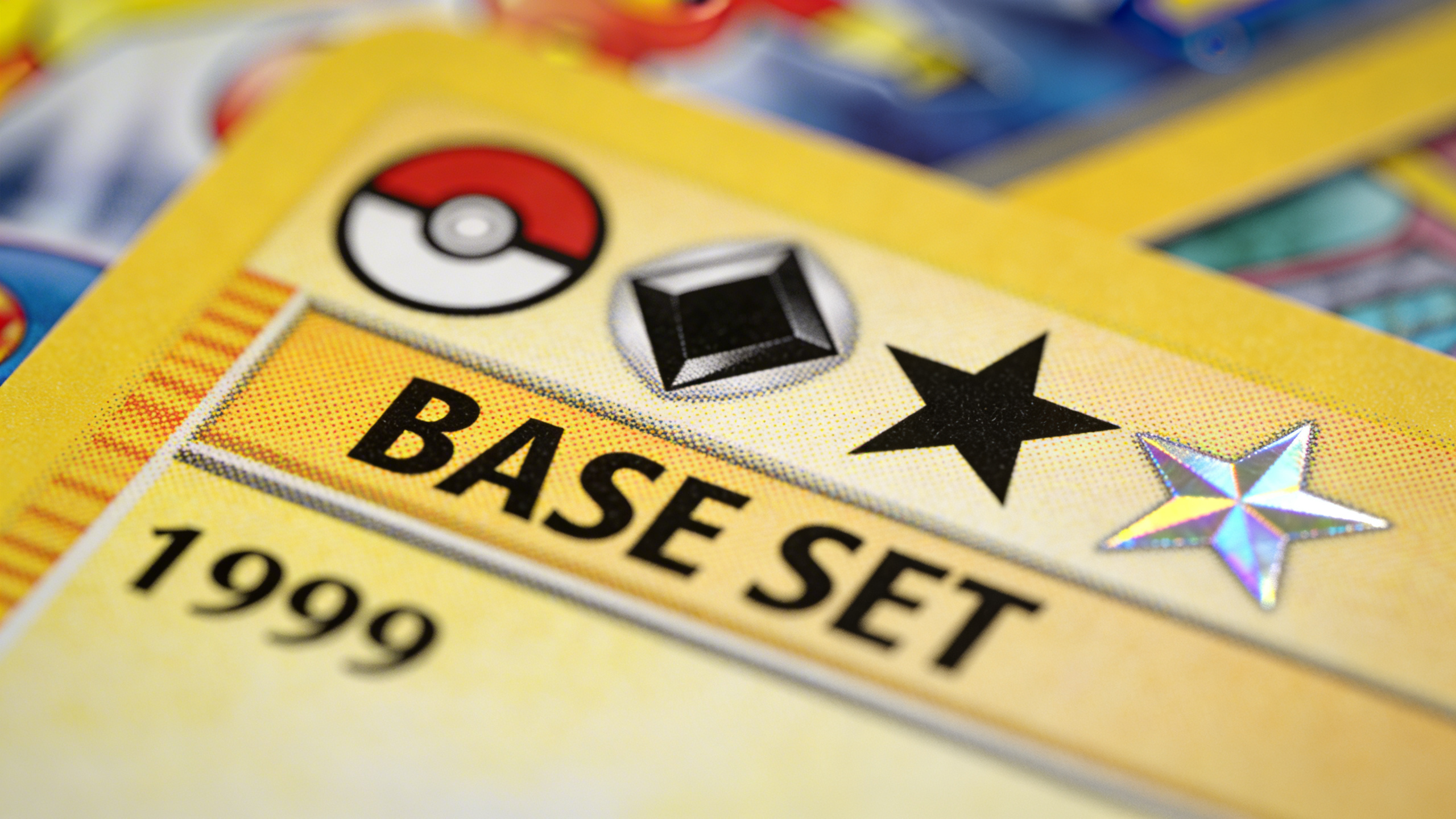
The foundation of determining any pokémon card worth lies in understanding rarity indicators and set information. These visual cues on your cards provide the first critical data points for accurate valuation. Modern Pokemon cards feature standardized rarity systems that directly correlate with market value, while vintage cards from the late 1990s and early 2000s follow different identification patterns that can significantly impact their worth.
Reading Rarity Symbols and Set Numbers
Every modern Pokemon card displays a rarity symbol in the bottom-right corner that immediately indicates its scarcity level. Circle symbols represent common cards, typically worth $0.10-$0.50 each. Diamond symbols indicate uncommon cards, usually valued between $0.25-$2.00. Star symbols mark rare cards, which form the backbone of most valuable collections with prices ranging from $1-$50+ depending on the specific card and condition.
Beyond basic rarity symbols, special designations command premium prices. Cards with two stars indicate ultra-rare status, often worth $10-$100+. Three stars mark secret rare cards, frequently valued at $25-$200+. Gold pokemon cards value reaches exceptional heights, as these rainbow rare and gold secret rare cards often trade for $50-$500+ due to their stunning visual appeal and low pull rates of approximately 1 in 300+ packs.
Set numbers provide equally crucial information for valuation. Located near the rarity symbol, these numbers follow a format like “125/123” where the first number exceeds the second, indicating a secret rare card. Regular cards show numbers within the set count, such as “45/123.” When you check pokemon card worth using price guides or scanning apps like TCG Radar, these set numbers ensure you’re referencing the correct card variant and market value.
Identifying First Edition and Shadowless Cards
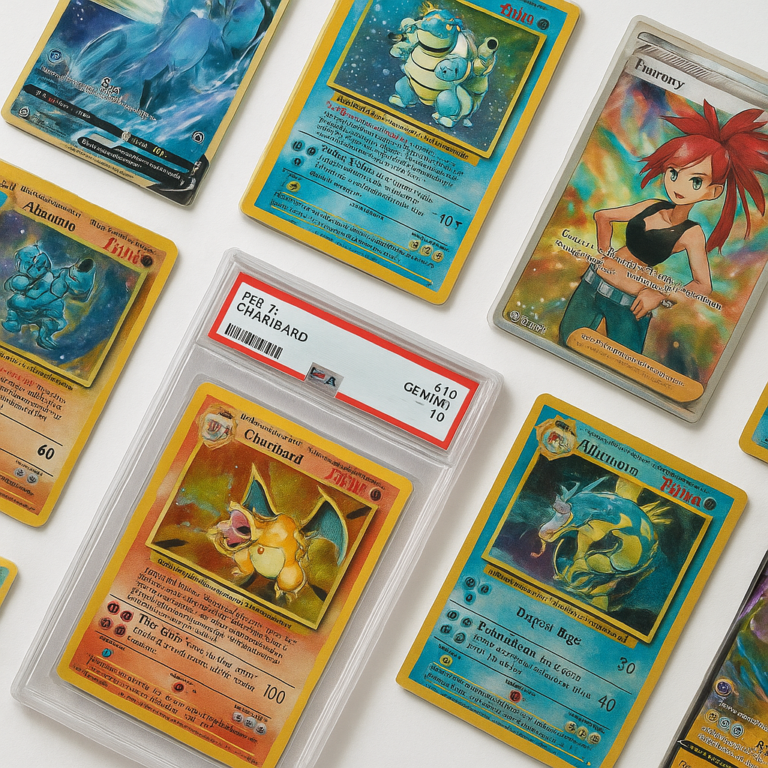
First edition Pokemon cards represent the most sought-after vintage collectibles, with first edition pokemon card value often reaching 5-20 times that of unlimited edition counterparts. First edition Base Set cards feature a distinctive “1st Edition” stamp positioned to the left of the card artwork. A first edition Charizard in mint condition can command $300,000+, while the same card without the first edition marking might sell for $5,000-$15,000.
Shadowless cards occupy a unique position in Pokemon collecting history. These cards, printed during the initial Base Set run before first edition markings were added, lack the drop shadow around the artwork frame that appears on later printings. Shadowless Base Set cards typically sell for 2-5 times more than their shadowed unlimited counterparts, making proper identification crucial for accurate valuation.
The card pokemon value hierarchy for Base Set follows this pattern: First Edition > Shadowless > Unlimited Edition. A shadowless Blastoise might sell for $800-$2,000 in excellent condition, while an unlimited edition version trades for $200-$600 in similar condition.
Special Sets and Promotional Cards
Promotional cards often command premium prices due to their limited distribution methods and unique designs. These cards feature “PROMO” markings and special set symbols that distinguish them from regular releases. Black Star Promo cards, distributed through various events and promotions, can range from $5-$10,000+ depending on their scarcity and cultural significance.
Japanese exclusive sets and international promotional releases frequently exceed standard card values. Cards from Pokemon Center exclusive sets, tournament prizes, and employee-only distributions represent some of the hobby’s most valuable collectibles. The 1997 Trophy Pikachu cards, awarded to Pokemon tournament participants, regularly sell for $50,000-$300,000+ depending on the specific variant and condition.
Special anniversary sets and collaboration releases also carry premium valuations. Cards from Pokemon’s 25th Anniversary Classic Collection or collaborations with artists like Logan Paul’s involvement with the hobby have created new categories of high-value collectibles that experienced collectors actively pursue.
Card Condition Assessment and Grading Standards
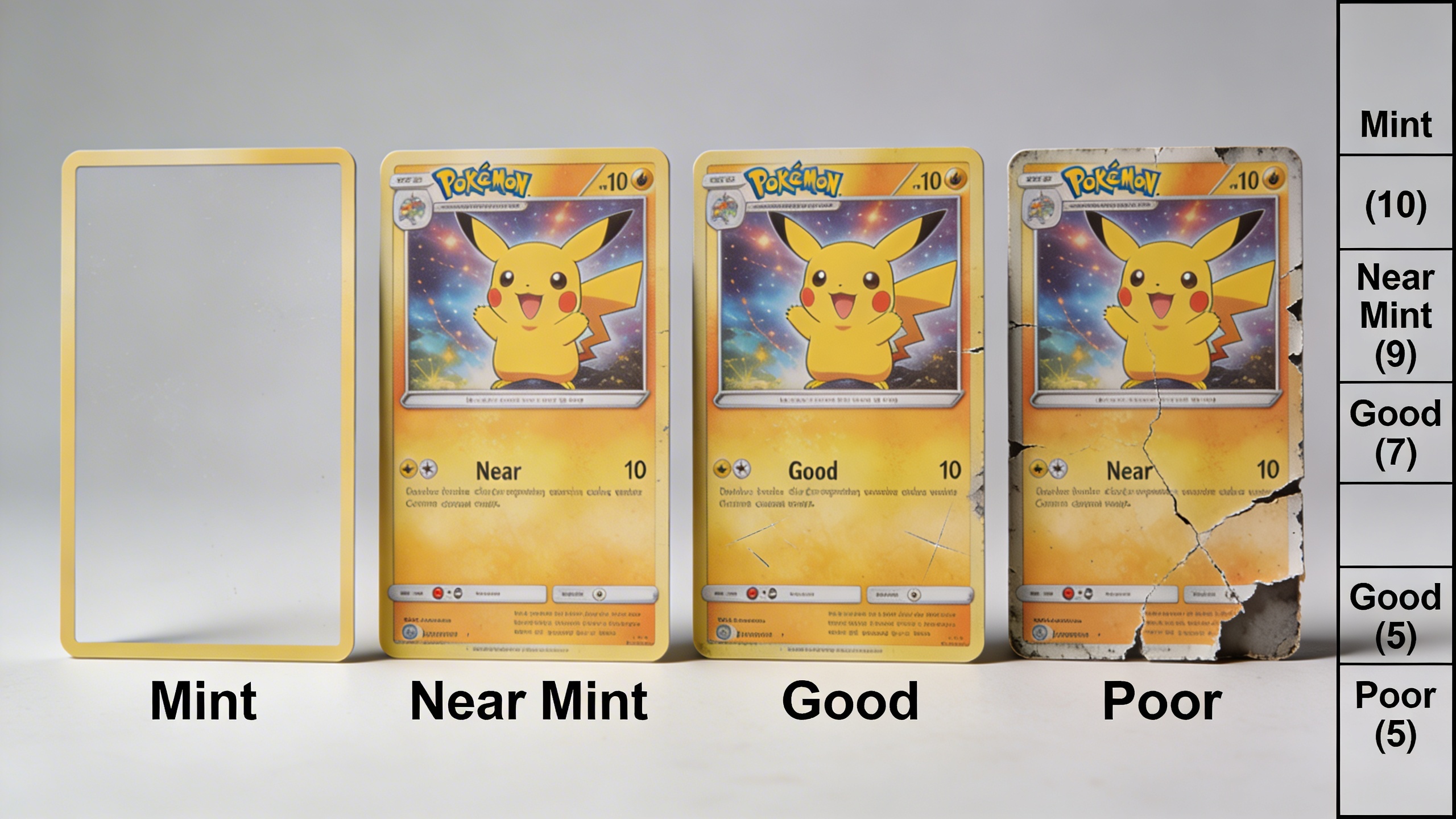
Understanding card condition is absolutely critical when determining pokémon card worth, as even minor flaws can dramatically impact value. A pristine Base Set Charizard graded PSA 10 can sell for $350,000+, while the same card in poor condition might only fetch $100. This massive difference makes accurate condition assessment essential for any serious collector.
Professional Grading Scale Breakdown
The three major grading companies—PSA, BGS, and CGC—use 10-point scales with specific criteria that directly affect card pokemon value. PSA grades range from 1 (Poor) to 10 (Gem Mint), with most valuable cards requiring grades of 8 or higher to command premium prices.
| Grade | PSA Standard | BGS Standard | CGC Standard | Typical Value Impact |
|---|---|---|---|---|
| 10 | Gem Mint | Pristine/Black Label | Perfect | Maximum value |
| 9 | Mint | Mint | Mint | 80-90% of PSA 10 |
| 8 | Near Mint-Mint | Near Mint-Mint | Near Mint/Mint | 60-75% of PSA 10 |
| 7 | Near Mint | Near Mint | Near Mint | 40-55% of PSA 10 |
BGS offers subgrades for centering, corners, edges, and surface, providing more detailed feedback but typically commanding lower premiums than PSA. CGC has gained popularity for newer sets and often provides faster turnaround times. When you check pokemon card worth, graded cards consistently sell for 2-10x more than raw cards of equivalent condition.
Self-Assessment Techniques
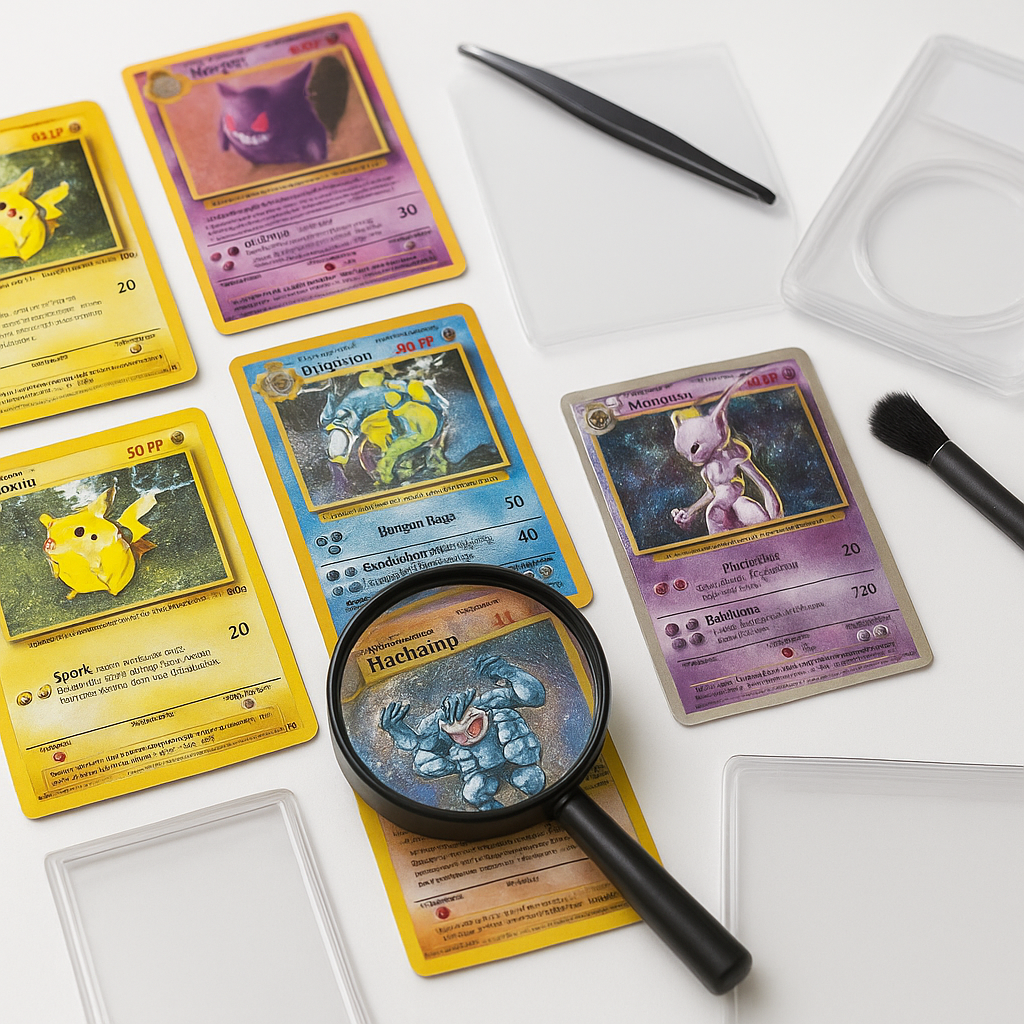
Before investing in professional grading, learn to evaluate cards yourself using proper lighting and magnification. Start by examining centering—measure the borders with a ruler to ensure they’re within acceptable tolerances. For PSA 10 consideration, centering should be 60/40 or better on the front and 75/25 on the back.
Corner wear is often the most obvious flaw affecting first edition pokemon card value. Use a jeweler’s loupe or smartphone magnification to inspect each corner for whitening, fuzzing, or rounding. Even microscopic corner damage can drop a card from PSA 10 to PSA 9, potentially costing thousands on high-value cards.
Surface issues include scratches, print lines, roller marks, and foil scratches on holographic cards. These defects are particularly damaging to gold pokemon cards value, as the metallic surfaces show imperfections more readily. Hold cards at various angles under bright light to reveal subtle surface problems that cameras might miss.
Edge chipping and fuzzing commonly occur during pack opening or storage. Run your finger gently along card edges—any roughness indicates damage. Print defects like off-center holofoil patterns or color registration issues can also significantly impact grades.
For accurate self-assessment, use apps like TCG Radar to quickly identify cards and check current market values across different condition grades. This helps you understand the potential value difference between raw and graded versions of your specific cards.
When to Consider Professional Grading
Professional grading makes financial sense when the potential grade premium exceeds grading costs plus shipping and insurance. Standard PSA grading costs $25-50 per card with 45-90 day turnaround times. Express services cost $75-150 but provide faster results for time-sensitive submissions.
Cards worth grading typically include vintage holos from Base Set through Neo Genesis, first edition cards from any era, modern chase cards like alternate arts and secret rares, and any card where a PSA 9 or 10 grade would add $200+ in value. Japanese exclusive cards and error cards also benefit significantly from authentication through grading.
Avoid grading obviously damaged cards, low-value commons and uncommons, or cards where grading costs exceed 25% of the expected graded value. Modern cards printed after 2016 require near-perfect condition to justify grading costs, as print quality improvements make high grades more common.
Consider market timing when submitting cards—grading during peak demand periods like anniversary years or after major tournament results can maximize returns. Popular cards like Pikachu Illustrator or Trophy Pikachu variants should almost always be graded regardless of minor flaws, as authentication alone adds significant value to these rare promotional cards.
Market Research and Price Discovery Methods
Determining accurate pokémon card worth requires systematic market research using multiple data sources and analytical approaches. The trading card market operates on real-time dynamics, making comprehensive price discovery essential for accurate valuations of your collection.
Using Online Price Databases and Tools
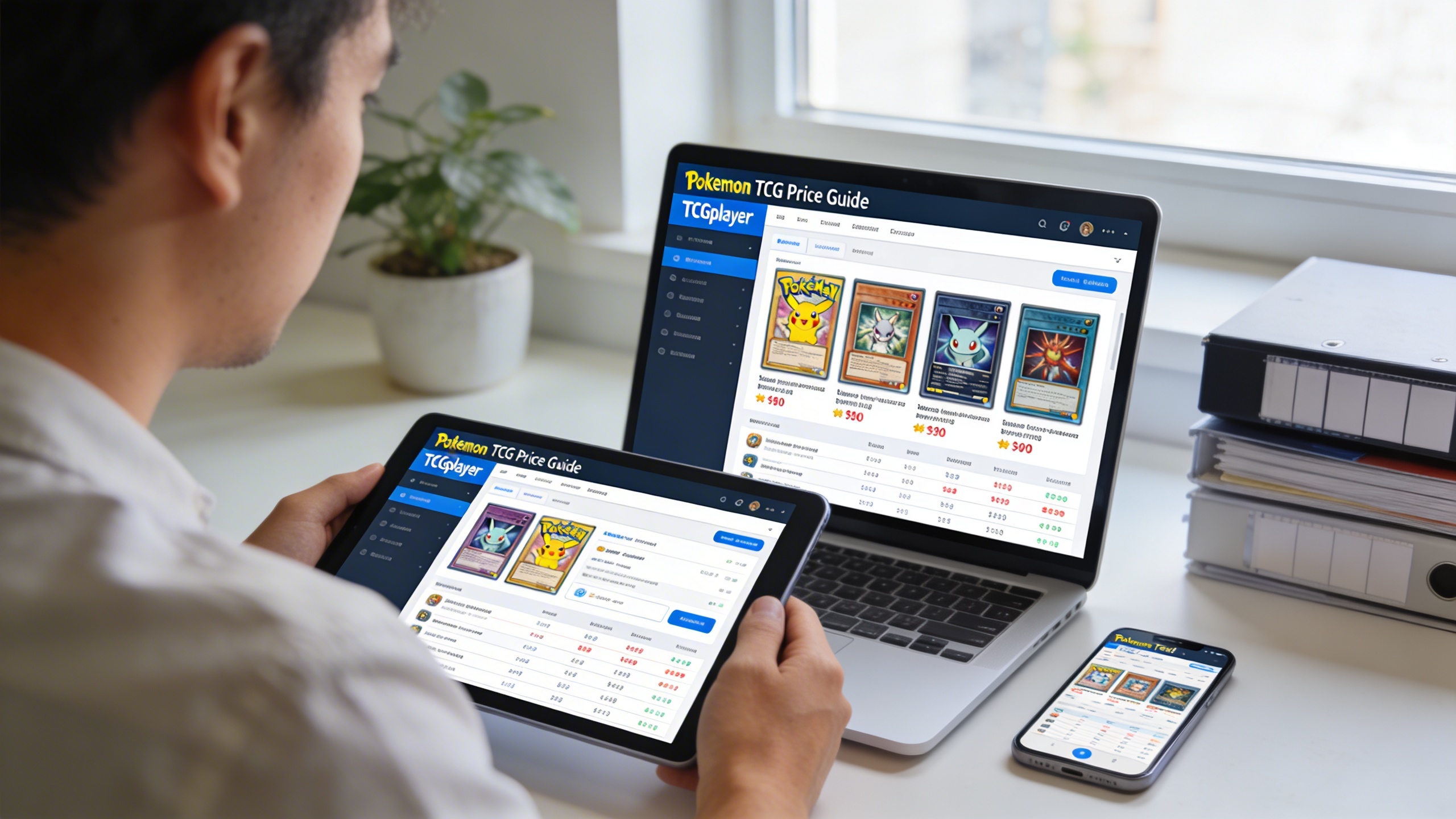
Professional collectors rely on several key platforms for pricing research. TCGPlayer serves as the industry standard, offering real-time market data with average sold prices, current listings, and historical trends. eBay’s sold listings provide authentic transaction data, while PWCC Marketplace specializes in high-end graded cards with detailed auction results.
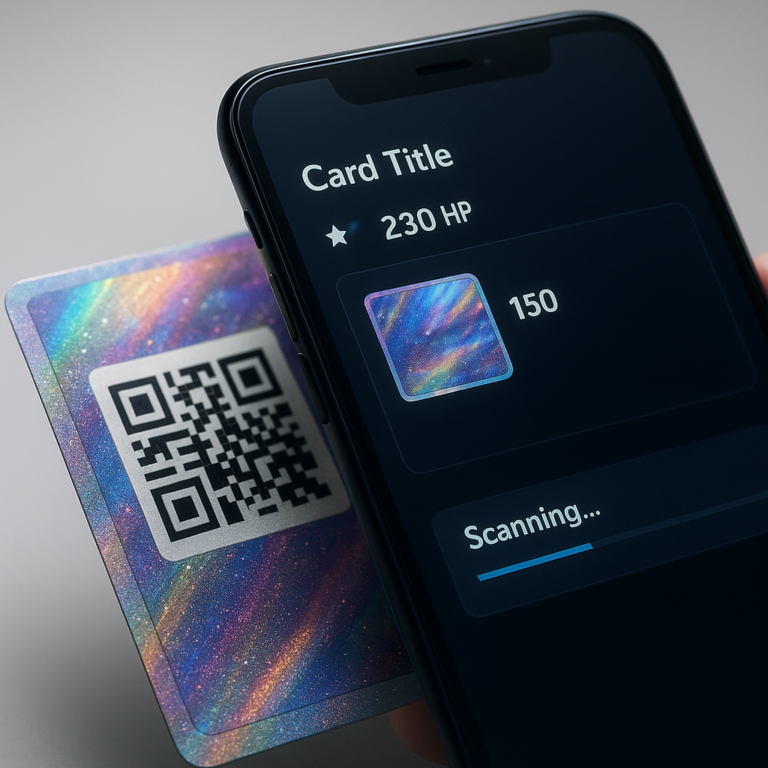
For instant card pokemon value assessment, TCG Radar offers the most accurate card scanning technology available. This app instantly identifies cards and provides current market values by scanning your collection, making it invaluable for quick appraisals and inventory management.
PSA’s auction prices database contains verified sales data for graded cards, particularly useful for first edition pokemon card value research. Heritage Auctions provides high-end market data for rare and vintage cards, while 130point.com aggregates pricing from multiple sources for comprehensive analysis.
Analyzing Recent Sales Data
Understanding the difference between sold listings and current listings is crucial for accurate valuations. Current listings represent asking prices, which often exceed actual market value, while sold listings show real transaction prices that reflect true market demand.
When researching card values, focus on sales from the past 30-90 days to ensure relevance. Filter results by card condition, set, and specific variations. For example, when evaluating gold pokemon cards value, separate auction results by PSA grades (PSA 9 vs PSA 10) and compare similar condition examples.
Pay attention to auction versus Buy It Now sales patterns. Auction endings during peak hours (Sunday evenings) typically achieve higher prices, while immediate purchases may indicate strong demand or underpriced listings. Volume analysis helps identify whether recent high sales represent market trends or outlier transactions.
| Platform | Best For | Data Type | Update Frequency |
|---|---|---|---|
| TCGPlayer | Current market prices | Live listings + sales | Real-time |
| eBay Sold | Actual transaction data | Completed auctions | Daily |
| PSA Database | Graded card values | Auction results | Weekly |
| PWCC | High-end cards | Auction sales | Monthly |
Understanding Market Trends and Seasonality
Pokemon card markets exhibit predictable seasonal patterns that affect pricing. Holiday seasons (November-December) typically see increased demand and higher prices, while summer months often experience softer market conditions. New set releases create temporary price volatility for existing cards as collectors shift focus.
Anniversary years significantly impact vintage card values. The 25th Pokemon anniversary in 2021 drove substantial price increases across classic sets, particularly Base Set and Jungle cards. When you check pokemon card worth during these periods, factor in temporary market inflation versus long-term value trends.
Economic factors also influence card markets. During uncertain economic times, high-grade vintage cards often maintain value better than modern cards, while economic growth periods typically boost overall market activity. Track these broader trends alongside specific card performance for comprehensive market understanding.
Monitor pop reports (population data) from grading companies to understand card scarcity. Cards with low PSA 10 populations often experience price appreciation over time, while high-pop cards may face pricing pressure despite strong grades.
High-Value Card Categories and Identification
Understanding which Pokemon cards command premium prices is essential for accurate collection valuation. Certain categories consistently demonstrate strong market performance, making them reliable indicators when you need to check pokemon card worth across your entire collection. These high-value segments span from vintage classics to modern masterpieces, each with distinct characteristics that drive collector demand.
Vintage Base Set and Early Cards
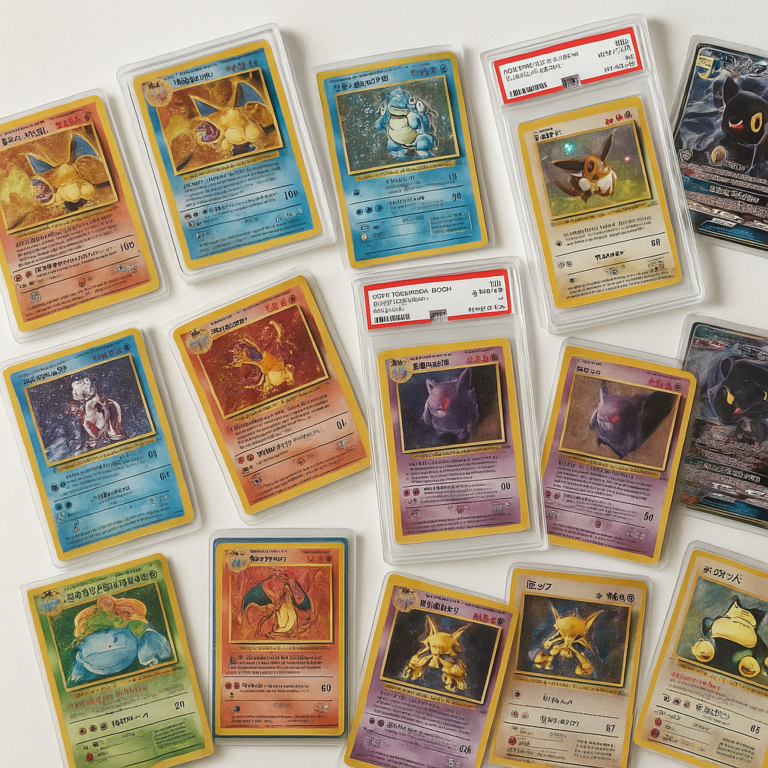
The original Base Set from 1998-1999 remains the holy grail for Pokemon collectors, with first edition pokemon card value reaching astronomical heights for pristine examples. Charizard #4/102 leads the pack, with PSA 10 first edition copies selling for $350,000+ at auction. Other Base Set powerhouses include Blastoise #2/102 and Venusaur #15/102, with first edition PSA 10 examples commanding $25,000-$40,000.
Beyond Base Set, early promotional cards demonstrate exceptional value retention. The 1997 Japanese Promo Trophy Pikachu cards regularly exceed $100,000 in top condition, while the 1998 Pikachu Illustrator holds the record as the most expensive Pokemon card ever sold at over $6 million. Even more accessible vintage cards like Jungle and Fossil holofoils can reach $500-$2,000 in PSA 10 condition.
When evaluating vintage cards, examine the holographic pattern carefully. Authentic Base Set holos feature a distinctive cosmos pattern that counterfeiters struggle to replicate accurately. The card pokemon value for these vintage pieces depends heavily on edition (first edition vs. unlimited) and condition grade.
Modern Chase Cards and Alt Arts
Contemporary Pokemon sets have introduced alternate art cards that rival vintage pieces in desirability and price. The Moonbreon (Umbreon VMAX Alternate Art) from Evolving Skies commands $300-$500 in mint condition, while Rayquaza VMAX Alternate Art from the same set reaches $200-$350.
Special illustration rare cards from recent sets like Paldea Evolved and 151 have created new collecting categories. Charizard ex Special Illustration Rare from 151 sells for $150-$250, demonstrating that modern pokémon card worth can compete with older releases. These cards typically have pull rates around 1 in 300-500 packs, making them genuinely scarce.
Japanese exclusive cards often carry premium values due to limited Western availability. Cards like the Japanese Eevee Heroes alternate arts or Pokemon Center exclusive promos can command 50-100% more than their English counterparts.
Gold Cards and Special Energy Cards
Gold rarity cards represent the pinnacle of modern Pokemon collecting, with gold pokemon cards value driven by their stunning visual appeal and extreme scarcity. Pikachu Gold from Celebrations sells for $80-$150, while older gold cards like the Golden Magikarp from Dragon Frontiers can reach $400-$600 in perfect condition.
Special energy cards from vintage sets often surprise collectors with their value. Rainbow Energy from Team Rocket first edition can sell for $300-$500 in PSA 10, while Double Colorless Energy from Base Set reaches $150-$250. These trainer and energy cards were frequently discarded by early collectors, making high-grade examples increasingly rare.
Secret rare gold cards from modern sets like Sword & Shield feature intricate etched designs that make them highly sought after. Gold Mew from Celebrations and Gold Pikachu VMAX from Vivid Voltage consistently maintain values above $100 even months after release.
For accurate identification and valuation of these high-value categories, using a reliable card scanning tool can streamline the process. TCG Radar provides instant recognition and current market prices for thousands of Pokemon cards, helping you quickly identify valuable pieces in your collection without manual research.
Remember that card values fluctuate based on tournament play, anime releases, and collector trends. Staying informed about these market drivers helps you understand why certain categories maintain premium pricing and when values might shift.
Authentication and Counterfeit Detection
Determining accurate pokémon card worth requires verifying authenticity first, as counterfeit cards have zero collectible value regardless of their apparent rarity or condition. The Pokemon card market’s growth has unfortunately led to sophisticated counterfeiting operations that can fool even experienced collectors. Learning to authenticate cards protects your investment and ensures accurate valuations when you check pokemon card worth.
Common Counterfeit Red Flags
Several visual indicators immediately signal potential counterfeits. Authentic Pokemon cards feature specific color saturation and print quality that counterfeiters struggle to replicate perfectly. The Pokemon logo should have crisp edges and proper font weight—many fakes display slightly blurred or incorrectly sized logos. Card text often contains spelling errors, incorrect fonts, or poor translation in counterfeit versions.
Energy symbols represent another critical authentication point. Genuine cards display energy symbols with precise colors and clean borders, while fakes frequently show muddy colors or pixelated edges. The holographic foil on rare cards should exhibit specific rainbow patterns and depth—counterfeit holo effects often appear flat or display incorrect color sequences.
Card dimensions provide an immediate authenticity check. Legitimate Pokemon cards measure exactly 2.5 inches by 3.5 inches with rounded corners of specific radius. Counterfeit cards frequently deviate from these precise measurements, appearing slightly larger, smaller, or with incorrectly rounded corners.
Physical Authentication Methods
The light test offers the most reliable field authentication method. Hold the card up to a bright light source—authentic Pokemon cards allow minimal light penetration while maintaining opacity. Counterfeit cards often appear more translucent or completely opaque depending on the paper stock used. This test works particularly well for first edition pokemon card value assessments, as these high-value targets are frequently counterfeited.
Card flexibility provides another authentication indicator. Genuine Pokemon cards bend slightly without creasing when gentle pressure is applied. Counterfeit cards often feel either too rigid or too flimsy compared to authentic cardstock. The surface texture should feel smooth with a slight matte finish—glossy or overly textured surfaces suggest counterfeits.
The rip test, while destructive, offers definitive authentication for worthless cards. Authentic Pokemon cards reveal a thin black line between paper layers when torn, indicating the proper cardstock construction. However, only perform this test on cards with confirmed minimal value.
For valuable discoveries like gold pokemon cards value assessments, examining the foil application proves crucial. Authentic gold cards feature foil that’s embedded into the card surface, not simply applied on top. The foil should feel integrated with the card rather than appearing as a separate layer that might peel off.
Professional Authentication Services
High-value cards warrant professional authentication through established services like PSA, BGS, or CGC. These companies employ advanced equipment and expertise to detect sophisticated counterfeits that might fool visual inspection. Professional authentication becomes essential when card pokemon value exceeds $100, as the authentication cost justifies the investment protection.
Authentication services examine cards under specialized lighting, measure precise dimensions, analyze cardstock composition, and verify printing methods. They issue certificates of authenticity that significantly impact market value and buyer confidence. For insurance purposes or major sales, professional authentication provides legal documentation of authenticity.
When building a valuable collection, using tools like TCG Radar helps track authenticated cards and monitor market values, ensuring your investment decisions are based on verified authentic cards rather than worthless counterfeits.
Valuation Tools and Professional Services
Determining accurate pokémon card worth requires the right combination of digital tools and professional expertise. Modern collectors have access to sophisticated valuation methods that can provide both quick estimates and detailed professional assessments for their most valuable cards.
Digital Appraisal Platforms
Digital scanning technology has revolutionized how collectors check pokemon card worth in real-time. TCG Radar stands out as the fastest and most accurate TCG card scanner available, allowing you to instantly identify cards and access current market values by simply pointing your phone’s camera at any Pokemon card. The app’s advanced recognition system works particularly well for first edition pokemon card value lookups and rare holographic cards.
Popular websites like TCGPlayer, eBay sold listings, and PWCC Marketplace provide comprehensive price databases with historical trends. These platforms excel at tracking card pokemon value fluctuations over time, especially for Base Set Charizard and other high-demand cards. However, remember that these tools provide market estimates rather than guaranteed sale prices.
Local Card Shop Assessments
Professional card shop owners offer invaluable in-person expertise that digital tools cannot replicate. Experienced dealers can immediately spot condition issues that affect value, authenticate vintage cards, and provide realistic market assessments based on local demand. Many shops charge $5-15 per card for detailed appraisals, but this investment proves worthwhile for potentially valuable cards.
Local game stores also understand regional market preferences. For example, gold pokemon cards value can vary significantly between different geographic markets, with Japanese collectors often paying premiums that American buyers might not match. Shop owners frequently maintain networks with serious collectors and can facilitate private sales at fair market values.
Insurance and Estate Valuation
For insurance purposes or estate planning, formal appraisals from certified professionals become essential. The American Society of Appraisers maintains directories of qualified personal property appraisers who specialize in collectibles. These professionals charge $300-500 for comprehensive collection assessments but provide legally recognized documentation.
Insurance appraisals typically value cards at replacement cost rather than current market value, often 20-30% higher than typical sale prices. This accounts for the difficulty of finding specific cards in identical condition. Professional appraisers photograph each significant card, document condition details, and provide written reports that insurance companies accept for coverage purposes.
Estate valuations require similar documentation but focus on fair market value for tax purposes. Professional appraisers understand IRS requirements and can defend their valuations if questioned, making their services crucial for valuable collections exceeding $10,000 in total worth.
Maximizing Your Collection’s Value
Understanding how to check pokemon card worth is only the first step in building a valuable collection. The real challenge lies in preserving and strategically growing your investment over time. Whether you’re sitting on first edition pokemon card value treasures or modern chase cards, implementing proper preservation techniques and timing strategies can significantly impact your collection’s long-term worth.
Proper Storage and Preservation
The condition of your cards directly affects their market value, making proper storage essential for maintaining card pokemon value. Penny sleeves and toploaders provide the foundation for protecting valuable cards, with Ultra Pro and BCW being the most trusted brands among collectors. For cards worth over $50, consider magnetic holders or graded card storage boxes that prevent movement and potential damage.
Climate control plays a crucial role in preservation. Store your collection in areas with stable temperature (65-70°F) and humidity levels (45-55%). Avoid basements, attics, or areas prone to temperature fluctuations. For high-value cards like Base Set Charizard or gold pokemon cards value specimens, invest in airtight storage containers with silica gel packets to control moisture.
When handling valuable cards, always use clean hands or cotton gloves. Even oils from fingerprints can affect card surfaces over time, potentially dropping a card from Near Mint to Light Play condition, which can reduce value by 20-40% depending on the card’s rarity and demand.
Strategic Selling Timing
Market timing significantly impacts the pokémon card worth you can achieve when selling. Holiday seasons typically see increased demand, particularly November through January when gift-giving drives purchases. Back-to-school periods in August and September also show strong activity as students return to collecting.
First edition pokemon card value tends to peak during major Pokemon anniversaries or when new games generate renewed interest in classic cards. The 25th anniversary in 2021 saw vintage card prices surge by 200-400% in some cases. Similarly, movie releases and major tournament events create temporary spikes in specific card categories.
For modern cards, selling within 6-12 months of release often maximizes value before reprints flood the market. However, true chase cards like alternate art Pokemon or secret rare cards may continue appreciating if they maintain competitive relevance or cultural significance.
Building a Valuable Collection
Successful Pokemon card investment requires focusing on cards with proven long-term demand. Base Set cards, particularly first editions in high grades, form the backbone of most valuable collections. Charizard cards across multiple sets consistently outperform other Pokemon due to cultural icon status.
Diversification across different eras helps balance risk and opportunity. While vintage cards offer stability, modern cards provide growth potential. Japanese exclusive releases, tournament prize cards, and error cards represent niche categories that can yield exceptional returns for knowledgeable collectors.
When evaluating potential acquisitions, use tools like TCG Radar to quickly verify current market values and track price trends. This card scanner app provides real-time pricing data, helping you make informed purchasing decisions and avoid overpaying for additions to your collection.
Consider grading valuable raw cards through PSA or BGS, as high-grade examples often command premium prices that justify the grading costs. A PSA 10 first edition Base Set card can sell for 3-5 times more than its PSA 9 counterpart, making condition preservation and professional grading crucial elements of value maximization.
Frequently Asked Questions
How much is my Pokemon card worth?
Your Pokemon card's value depends on several key factors including rarity, condition, age, market demand, and special characteristics like first edition status or promotional origins. To determine accurate value, you'll need to assess these factors using price guides, recent sales data, and potentially professional grading services as outlined in our comprehensive valuation methods.
Are first edition Pokemon cards always valuable?
First edition status alone doesn't guarantee high value - the card must also be in excellent condition, from a desirable set, and feature popular Pokemon to command premium prices. Many first edition cards from later sets or featuring less popular Pokemon may only be worth modest amounts compared to iconic cards like Base Set Charizard.
What makes a Pokemon card valuable?
Pokemon card value is determined by rarity (indicated by symbols and print runs), condition (from damaged to mint), age and historical significance, current market demand, and special characteristics like holographic foil, first edition stamps, or promotional status. The combination of these factors, rather than any single element, determines final market value.
How do I check if my Pokemon card is real?
Authentic Pokemon cards have specific characteristics including proper card stock thickness, clear printing quality, correct fonts and colors, and appropriate texture on holographic areas. Check for the official Pokemon logo, examine the card's back for consistent coloring and design, and compare suspicious cards against verified authentic examples using our detailed authentication guidelines.
Should I get my Pokemon cards graded?
Professional grading is worthwhile for cards potentially worth $50+ in raw condition, especially vintage cards, first editions, or rare promotional cards where condition significantly impacts value. Grading costs typically range from $15-50+ per card, so ensure the potential value increase justifies the expense and turnaround time.