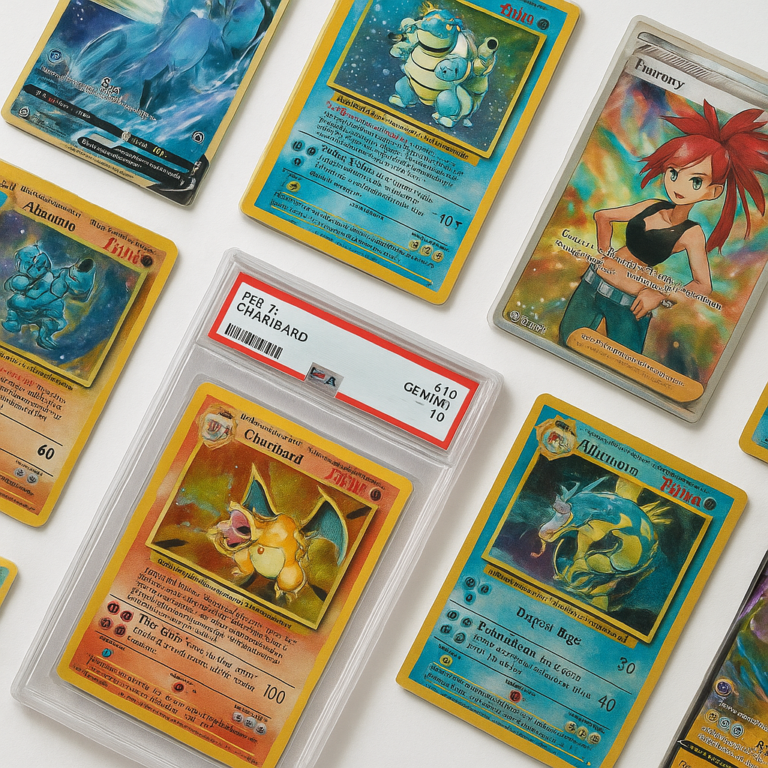
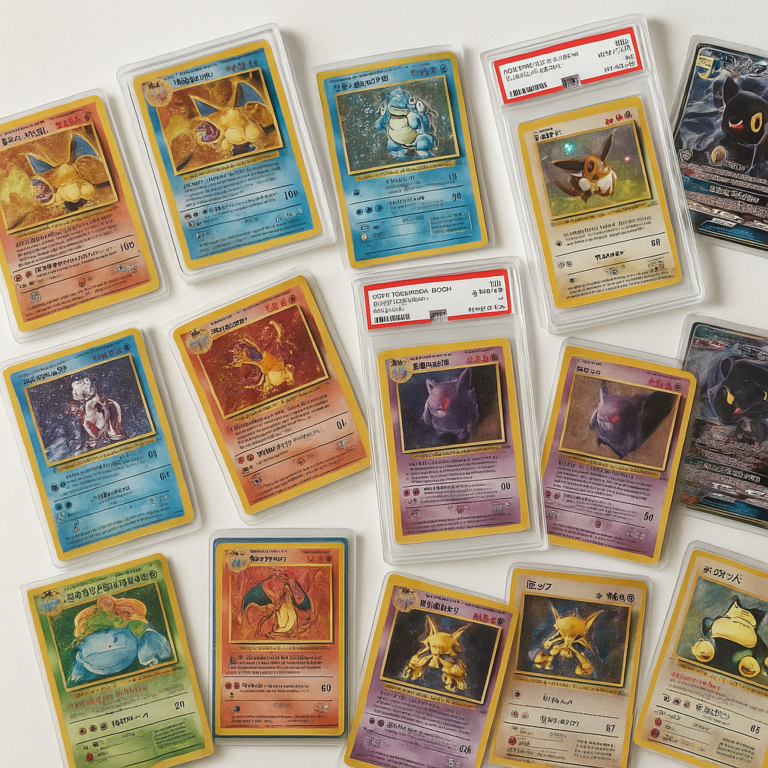
PSA Card Grading: Complete Collector’s Guide to Professional Sports Authenticator Services
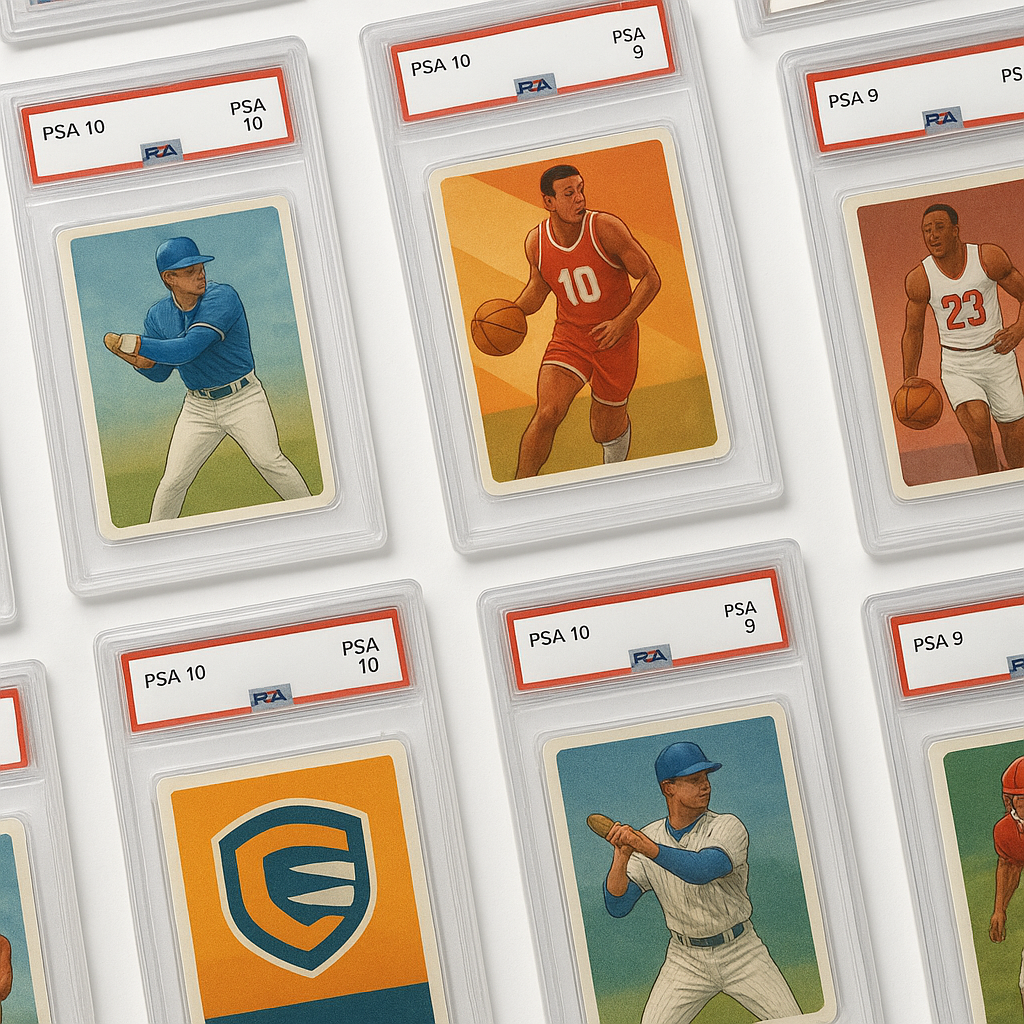
In the world of trading card collecting, few names carry as much weight and trust as Professional Sports Authenticator (PSA). Since 1991, this grading company has revolutionized how collectors protect, authenticate, and value their most precious cards. When you see a card encased in PSA’s distinctive clear holder, you’re looking at more than just cardboard—you’re seeing a certified piece of collecting history with verified authenticity and condition assessment that commands respect in marketplaces worldwide.
PSA grading transforms raw cards into investment-grade collectibles by providing standardized condition evaluation on their famous 1-10 scale. Whether you’re submitting vintage Mickey Mantle rookies or modern Pokémon chase cards, the PSA grading service offers protection against counterfeits while establishing clear market value through consistent, professional assessment. A graded PSA card typically sells for significantly more than its raw counterpart, making the grading process a crucial consideration for serious collectors and investors.
This comprehensive guide will walk you through everything you need to know about PSA’s services, from understanding their grading standards and current costs to mastering the submission process and maximizing your returns. You’ll discover how to leverage PSA’s expertise to build a more valuable, authenticated collection that stands the test of time.
What is PSA Card Grading and Why It Matters
PSA grading represents the gold standard in trading card authentication and condition assessment. Professional Sports Authenticator (PSA) evaluates cards on a 1-10 scale, encasing authenticated cards in tamper-evident holders that preserve condition while providing buyers confidence in their purchases. For collectors navigating today’s complex market, understanding PSA’s role is essential for making informed investment decisions.
History and Reputation of PSA
Founded in 1991 by David Hall, PSA emerged as the first third-party grading service dedicated exclusively to trading cards. The company revolutionized the hobby by establishing standardized grading criteria that transformed cards from subjective collectibles into quantifiable investments. Over three decades, PSA has graded more than 70 million cards, building an unmatched database of market knowledge and expertise.
PSA’s industry leadership stems from consistent grading standards and technological innovations. The psa grading company pioneered the 10-point scale that became the industry benchmark, with grades ranging from Poor (1) to Gem Mint (10). Their tamper-evident holders, known as “slabs,” feature holographic labels and unique certification numbers that connect to PSA’s online database, providing instant verification of authenticity and grade.
The company’s reputation extends beyond grading accuracy to market influence. Major auction houses, including Heritage Auctions and Goldin Auctions, rely heavily on PSA-graded cards for high-value sales. This institutional trust has made PSA the preferred choice for serious collectors and investors seeking maximum liquidity for their cards.
Benefits of PSA Grading for Collectors
PSA grading service offers collectors multiple advantages that extend far beyond simple condition assessment. Authentication represents the primary benefit, as PSA’s experts examine cards for alterations, reprints, and counterfeits using advanced equipment and decades of experience. This protection proves invaluable in an era where sophisticated fakes regularly enter the market.
Condition certification provides objective standards that eliminate subjective disagreements between buyers and sellers. PSA’s detailed grading criteria consider centering, corners, edges, and surface quality, assigning numerical grades that reflect precise condition levels. This standardization enables confident transactions between parties who may never meet in person.
Long-term preservation represents another crucial advantage. PSA holders protect cards from environmental damage, handling wear, and accidental damage while maintaining their condition indefinitely. The archival-quality materials used in PSA slabs prevent UV damage, moisture infiltration, and chemical degradation that can destroy raw cards over time.
For collectors managing large collections, tools like TCG Radar can help identify which cards might benefit most from professional grading by providing accurate market values and condition assessments before submission.
PSA vs Raw Cards: Value Comparison
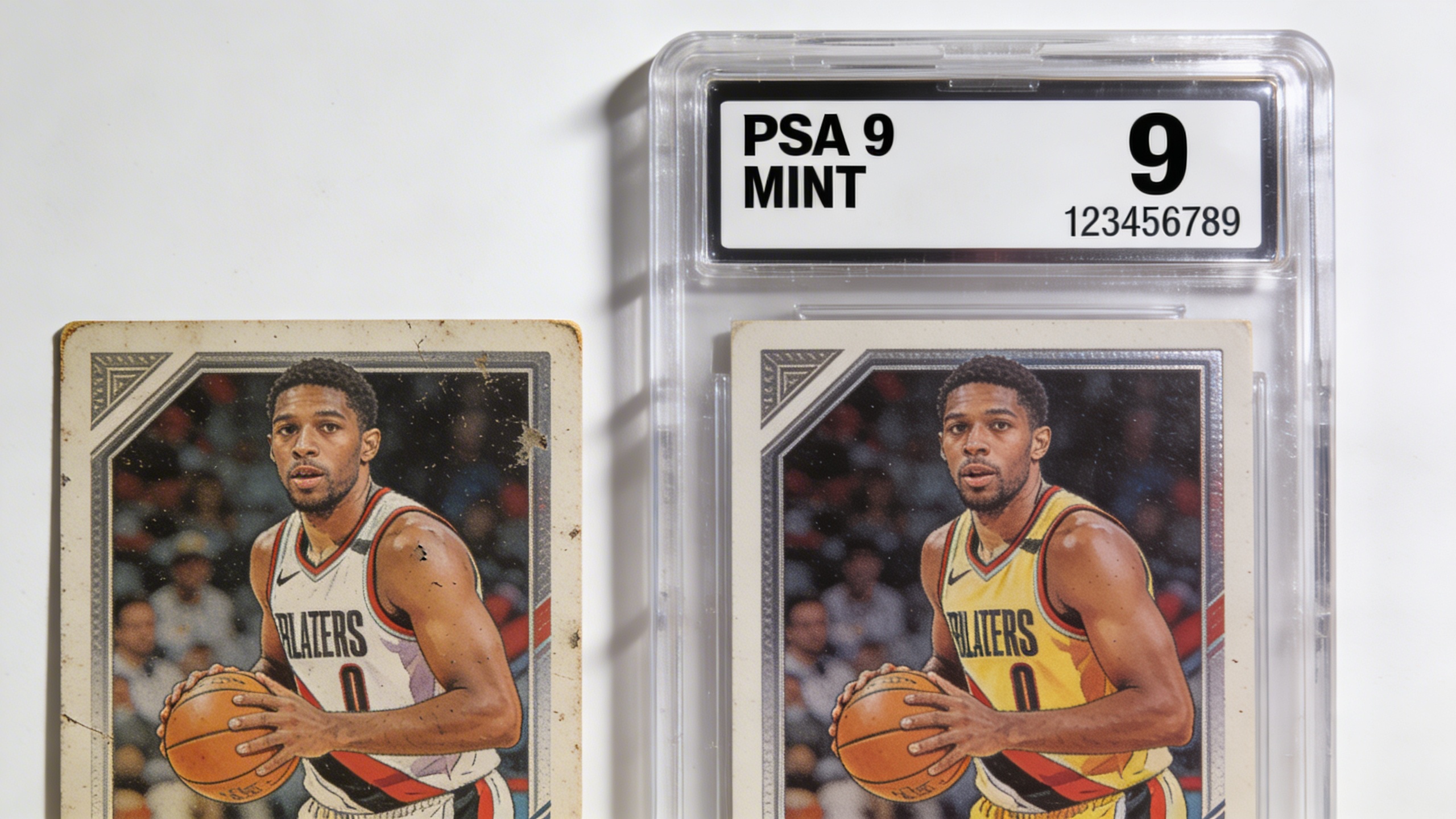
The value premium for graded psa cards varies significantly based on card rarity, condition, and market demand. High-grade modern cards often command 200-500% premiums over raw equivalents, while vintage cards in top condition can see even larger multipliers. For example, a raw 1986 Fleer Michael Jordan rookie in excellent condition might sell for $3,000-4,000, while the same card graded PSA 9 typically brings $8,000-12,000.
Market data consistently shows that PSA 10 cards achieve the highest premiums, often selling for 3-10 times the price of PSA 9 examples of the same card. This dramatic difference reflects the rarity of perfect grades and collector preference for flawless examples. Even lower grades can add value, as PSA 6-8 cards often outperform raw cards in similar condition due to authentication guarantees.
However, psa grading cost must factor into value calculations. Current PSA pricing ranges from $25-100+ per card depending on declared value and service level. Cards worth less than $200-300 in graded form rarely justify grading expenses unless they hold significant personal value or represent long-term investments in emerging players or sets.
The liquidity advantage of PSA-graded cards cannot be overstated. Graded cards sell faster and with greater buyer confidence than raw cards, particularly in online marketplaces where physical inspection isn’t possible. This enhanced marketability often justifies grading even when immediate value premiums appear modest.
Understanding PSA’s Grading Scale and Standards
Professional Sports Authenticator uses a precise 10-point grading scale that has become the industry standard for card authentication and condition assessment. Understanding how PSA evaluates cards is crucial for collectors looking to maximize their investment returns and make informed decisions about which cards to submit to the psa grading service.
The PSA 1-10 Grading Scale Explained
The PSA grading scale ranges from 1 (Poor) to 10 (Gem Mint), with each grade representing specific condition standards. A PSA 10 Gem Mint card exhibits perfect centering, sharp corners, smooth edges, and pristine surface quality. These represent the pinnacle of card condition and command premium prices in the marketplace.
PSA 9 Mint cards show excellent overall appeal with only minor flaws visible under close inspection. Most high-quality modern cards fresh from packs can achieve this grade. PSA 8 Near Mint to Mint cards display slight wear but maintain strong eye appeal, while PSA 7 Near Mint cards show more noticeable but still minor defects.
Mid-range grades include PSA 6 Excellent to Near Mint, PSA 5 Excellent, and PSA 4 Very Good to Excellent. These grades typically indicate visible wear, corner softness, or centering issues that prevent higher grades. Lower grades (PSA 1-3) are reserved for cards with significant damage, though even heavily played vintage cards can retain substantial value when graded psa.
Key Grading Factors: Centering, Corners, Edges, and Surface
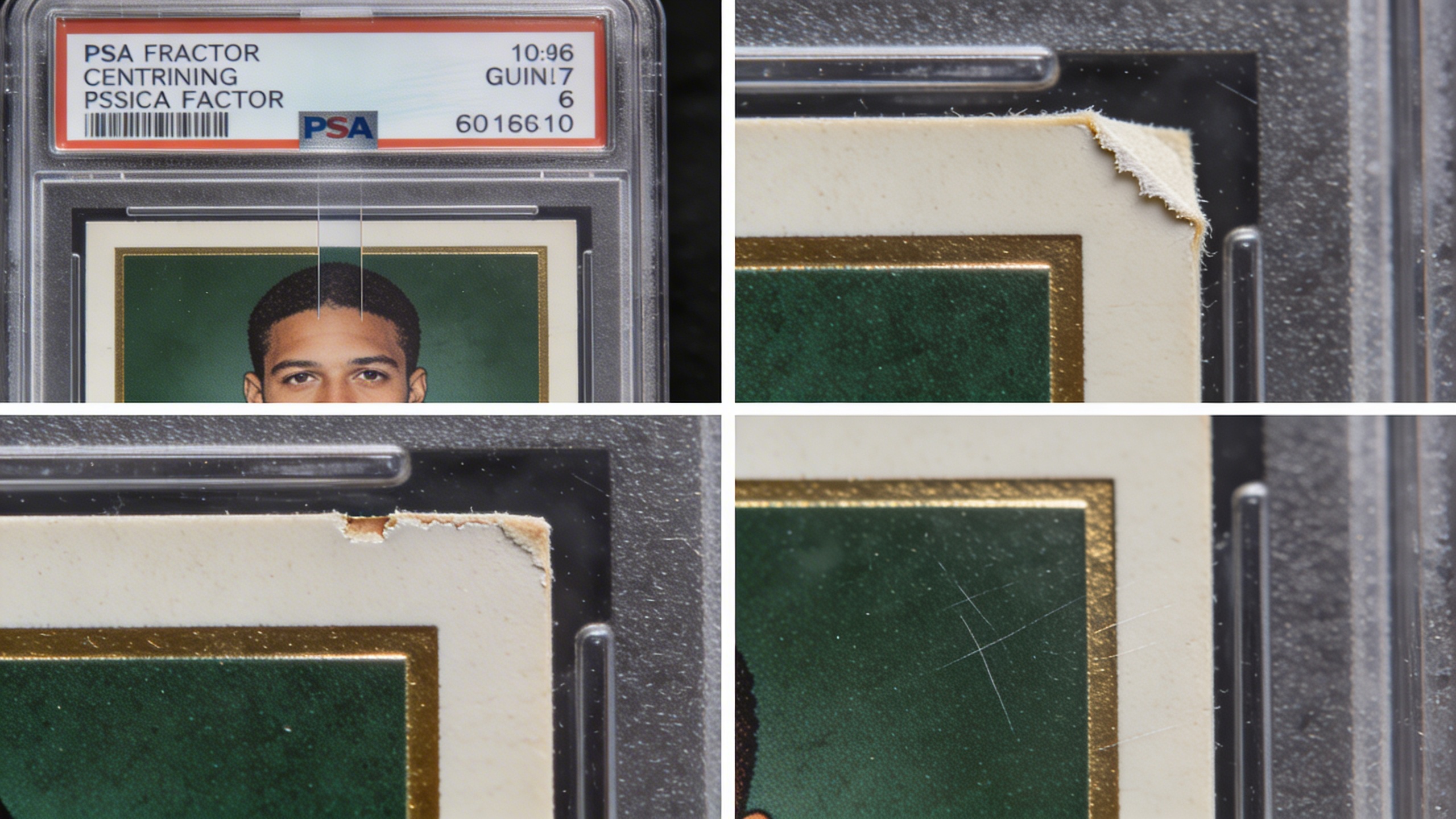
The psa grading company evaluates four primary factors when determining a card’s grade. Centering measures how well the image is positioned within the card borders, with PSA 10 requiring 55/45 centering or better on the front and 75/25 or better on the back. Poor centering can significantly impact grades, often resulting in qualifiers.
Corner condition directly affects grading outcomes. Sharp, pointed corners are essential for high grades, while soft, bent, or damaged corners immediately lower the grade. Even microscopic corner wear can prevent a PSA 10 designation. Edges must be smooth and free from chips, nicks, or rough cuts from the manufacturing process.
Surface quality encompasses print defects, scratches, stains, and other blemishes. The psa grading service examines cards under magnification to identify surface issues invisible to the naked eye. Common surface problems include print lines, roller marks, wax stains, and handling wear. Modern cards with glossy finishes are particularly susceptible to surface scratches that can impact grades.
| Grade | Centering Tolerance | Corner Quality | Typical Market Impact |
|---|---|---|---|
| PSA 10 | 55/45 or better | Sharp, perfect | Maximum premium |
| PSA 9 | 60/40 or better | Sharp with minor wear | Strong premium |
| PSA 8 | 65/35 or better | Slight corner wear | Moderate premium |
Special Designations and Qualifiers
PSA assigns qualifiers to cards with specific condition issues that don’t fit standard grading criteria. The OC (Off-Center) qualifier indicates centering worse than grade standards but not severe enough to lower the numerical grade further. An OC qualifier typically reduces market value by 20-50% compared to the same grade without qualifiers.
Other common qualifiers include ST (Stain), which identifies permanent discoloration, and PD (Print Defect) for manufacturing flaws. The MK (Mark) qualifier indicates writing, ink, or other markings on the card surface. While psa grading cost remains the same for qualified cards, their market value typically suffers significantly.
Population reports play a crucial role in determining card values within each grade. Cards with low population numbers in high grades become more valuable due to scarcity. For collectors tracking their portfolio values, using a comprehensive tool like TCG Radar can help monitor population changes and price trends for graded cards across different conditions.
Understanding these grading standards helps collectors make informed decisions about submission timing, expected grades, and potential returns on their psa grading investments. The combination of numerical grades, qualifiers, and population data creates a comprehensive framework for card valuation in the modern collecting marketplace.
PSA Grading Costs and Service Levels in 2026
Understanding PSA grading costs has become increasingly important as the hobby continues to evolve. The psa grading company has restructured its pricing model in 2026 to better serve collectors while managing unprecedented submission volumes. Whether you’re submitting a single vintage rookie card or planning a bulk submission, selecting the appropriate service level directly impacts both your timeline and budget.
Current PSA Grading Prices and Turnaround Times
PSA’s 2026 pricing structure offers three primary service tiers, each designed for different collector needs and urgency levels. The Economy service remains the most popular option at $25 per card for items with declared values up to $499, featuring an estimated 45-60 business day turnaround time. This psa grading service works perfectly for modern cards and lower-value vintage submissions where time isn’t critical.
The Regular service, priced at $50 per card for declared values up to $999, provides a 20-30 business day window. Express service jumps to $100 per card with declared values up to $2,499 and promises 10-15 business days. For high-value submissions requiring immediate attention, Super Express commands $200 per card with declared values up to $4,999 and delivers results within 3-5 business days.
| Service Level | Cost Per Card | Max Declared Value | Turnaround Time |
|---|---|---|---|
| Economy | $25 | $499 | 45-60 business days |
| Regular | $50 | $999 | 20-30 business days |
| Express | $100 | $2,499 | 10-15 business days |
| Super Express | $200 | $4,999 | 3-5 business days |
Choosing the Right Service Level
Selecting the optimal psa grading service depends on several factors beyond just cost. Consider your card’s potential market value first – a 1986 Fleer Michael Jordan rookie should utilize Express or Super Express service given its significance, while modern parallels typically work well with Economy submissions. Time sensitivity plays a crucial role, especially if you’re targeting specific selling windows or need graded psa cards for upcoming shows or auctions.
The declared value requirement serves as both insurance coverage and service tier determinant. Undervaluing cards to access cheaper service levels violates PSA’s terms and leaves you inadequately insured. Conversely, overvaluing cards unnecessarily increases your psa grading cost without additional benefits. When uncertain about current market values, tools like TCG Radar help identify accurate pricing data for proper value declarations.
Additional Fees and Insurance Options
Beyond base grading fees, several additional costs may apply to your submission. PSA charges $10 per card for their Card Saver sleeves if you don’t provide approved holders. Oversized cards incur a $5 surcharge per card, while cards requiring special handling due to condition issues may face additional research fees.
Bulk submission discounts become available at 20+ cards for certain service levels, offering modest savings for larger submissions. However, mixing service levels within a single submission isn’t permitted – each service tier requires separate submission forms and processing.
Return shipping costs vary by service level and destination, with Economy submissions typically including standard return shipping while express services offer expedited return options. International submissions face additional customs and shipping considerations that can significantly impact total costs and timelines.
How to Submit Cards to PSA: Step-by-Step Process
Successfully submitting cards to the psa grading company requires careful preparation and attention to detail. Following PSA’s specific requirements ensures your valuable cards receive proper handling throughout the grading process and arrive safely at their facilities.
Preparing Your Cards for Submission
Proper card preparation is crucial for protecting your investment during the psa grading service process. Start by examining each card under good lighting to identify any existing damage or flaws. Document these conditions with high-quality photos, as this helps you understand the final grade and serves as proof of the card’s condition before submission.
Remove cards from penny sleeves, toploaders, or magnetic holders before packaging. PSA requires cards to be submitted in Card Saver I semi-rigid holders exclusively. These holders provide adequate protection while allowing PSA’s graders to examine cards without removal. Never use Card Saver II holders or other rigid cases, as PSA will reject submissions using incorrect holders.
Handle cards by their edges only, avoiding contact with the surface. Even minor fingerprints can affect the final grade. If you’re evaluating cards for submission and want to check their current market values, TCG Radar provides instant price scanning to help determine which cards justify the psa grading cost.
Clean your workspace thoroughly before handling cards. Use a lint-free cloth to remove any dust from Card Saver I holders before inserting cards. Ensure each card sits flush within the holder without bending or forcing it into position.
Online Submission and Shipping Requirements
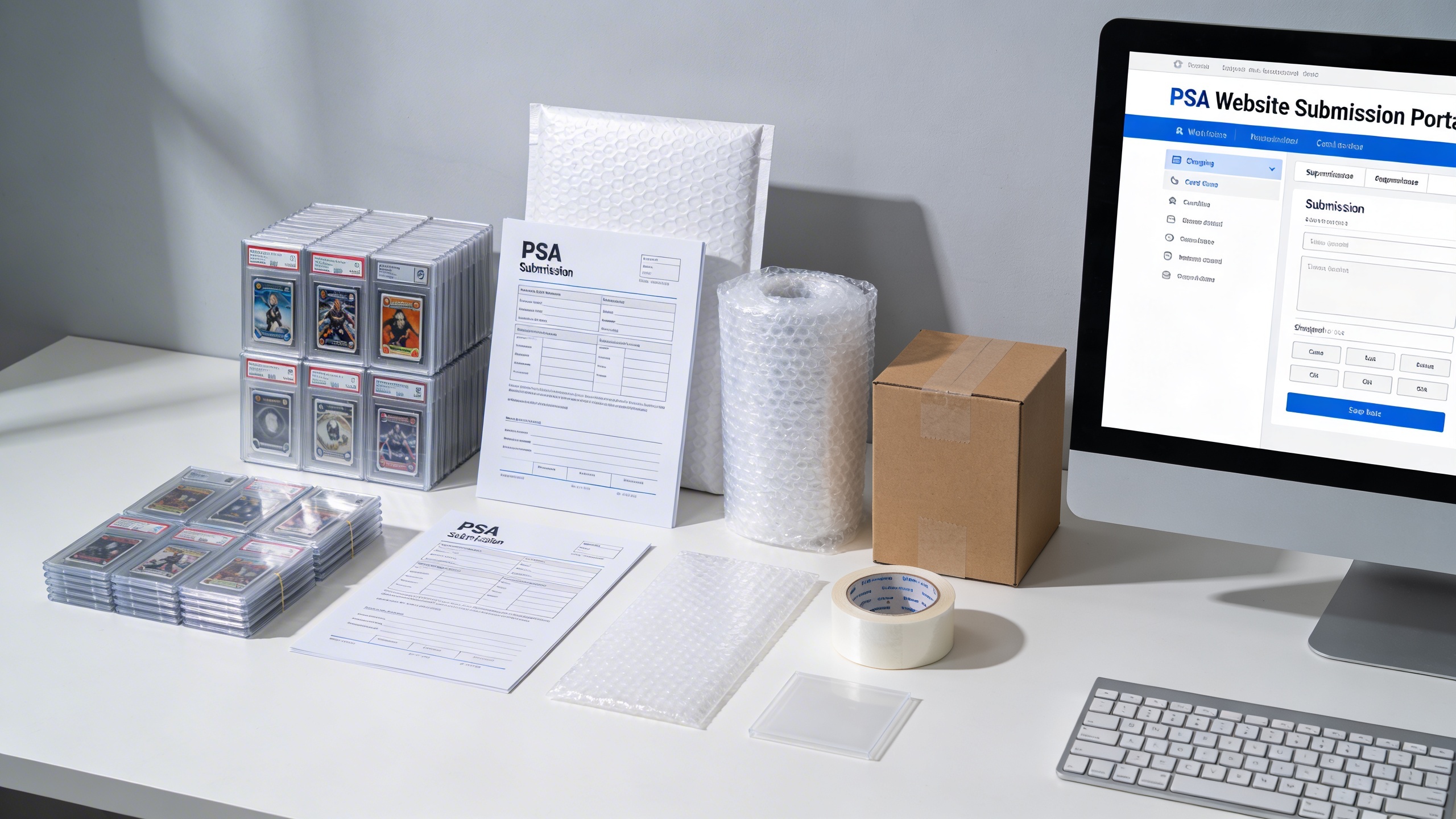
Create an account on PSA’s official website to access their submission center. The online form requires detailed information for each card, including sport/category, year, brand, card number, and player name. Accuracy is essential—incorrect information can delay processing or result in additional fees.
Select your desired service level based on card value and desired turnaround time. Remember that declared values must reflect realistic market prices, as PSA’s insurance coverage depends on these amounts. Undervaluing cards voids insurance protection, while overvaluing increases unnecessary costs.
Print the completed submission form and include it with your package. PSA requires the original printed form—photocopies or handwritten forms are not acceptable. Double-check all information before printing, as changes after submission incur modification fees.
Package cards securely using appropriate materials. Place Card Saver I holders between pieces of cardboard or bubble wrap to prevent movement during shipping. Use a sturdy box with adequate padding, ensuring cards cannot shift or bend. Include your printed submission form in a clear plastic sleeve taped to the inside of the package.
Ship via trackable methods only—USPS Priority Mail, FedEx, or UPS with full tracking and insurance coverage. PSA recommends insuring packages for the full declared value of submitted cards. Never use regular mail or untracked shipping methods for graded psa submissions.
Tracking Your Submission
PSA’s online tracking system provides real-time updates throughout the grading process. Log into your account and navigate to the “My Submissions” section to monitor progress. The system displays current status, estimated completion dates, and any issues requiring attention.
Typical status updates include “Received,” “Research & ID,” “Grading,” and “Quality Assurance.” Processing times vary significantly based on service level and current volume. Economy submissions may take several months, while Express services typically complete within 10-15 business days.
PSA sends email notifications at key milestones, including receipt confirmation and completion alerts. Enable all notifications to stay informed about your submission’s progress. If issues arise—such as minimum grade not met or authenticity concerns—PSA contacts submitters via email with detailed explanations and available options.
Once grading completes, review your results online before cards ship back. PSA provides detailed grade explanations and high-resolution images of each graded psa card. This information helps you understand grading decisions and plan future submissions more effectively.
The entire psa grading process, from submission to return shipping, typically ranges from 30 days for premium services to 6+ months for economy options, depending on current demand and seasonal fluctuations.
Maximizing Your PSA Grading Results
Success with PSA grading begins long before you submit your cards. Smart collectors understand that maximizing value requires careful preparation, strategic decision-making, and knowing when to leverage PSA’s additional services. The difference between a profitable submission and a costly mistake often lies in the details.
Pre-Grading Card Assessment Tips
Before investing in the psa grading service, conduct a thorough self-assessment of each card. Use a jeweler’s loupe or magnifying glass to examine corners for wear, edges for chipping, and surfaces for scratches or print defects. Pay special attention to centering—cards with obvious off-center printing rarely achieve high grades regardless of other factors.
Check your cards under different lighting conditions. Natural daylight often reveals flaws that indoor lighting masks, including subtle surface scratches and color inconsistencies. For valuable vintage cards like 1952 Topps Mickey Mantle or 1986 Fleer Michael Jordan rookies, consider using TCG Radar to verify authenticity and current market values before committing to grading costs.
Compare your cards against PSA’s population reports and recently graded examples. If similar cards consistently grade PSA 7 or below, reconsider whether the psa grading cost justifies potential returns. Focus your budget on cards with genuine PSA 8+ potential.
Common Grading Mistakes to Avoid
The most expensive mistake collectors make is submitting cards without proper research. Avoid grading common cards from overproduced sets unless they’re true condition rarities. A 1990 Donruss Frank Thomas rookie in PSA 10 might sell for $50, but the grading fee and shipping costs could exceed that value.
Handle cards minimally once you’ve decided to submit them. Use cotton gloves and card savers, never penny sleeves alone. Fingerprints and handling marks can drop a potential PSA 9 to a PSA 8, costing hundreds in value for high-end cards.
Don’t submit cards with obvious alterations or repairs. The PSA grading company has sophisticated detection methods, and altered cards receive “Authentic” grades with no numerical score, essentially making them worthless to most collectors.
Timing submissions poorly represents another costly error. Avoid rush services unless absolutely necessary—the premium rarely justifies the expedited timeframe for most cards.
When to Consider PSA Review Services
PSA’s review services offer recourse when you believe a card received an unfair grade. The Review service costs $20 per card and works best for borderline cases where you suspect grader inconsistency. Cards that appear to have PSA 9 qualities but received PSA 8 grades are prime candidates.
Consider reviews for high-value cards where a one-point grade increase significantly impacts value. A 1993 SP Derek Jeter rookie jumping from PSA 9 ($800) to PSA 10 ($3,000) easily justifies the review fee. However, avoid reviewing cards with obvious flaws—PSA graders rarely change grades on clearly damaged cards.
The Mechanical Error service addresses labeling mistakes, holder damage, or other technical issues. This service proves valuable when PSA incorrectly identifies a card’s year, set, or player name, as these errors can dramatically affect marketability and value for graded psa cards.
PSA Slabs: Authentication Features and Care
Once your cards return from the psa grading service, understanding the security features and proper care of your graded psa cards becomes essential for maintaining their value and authenticity. PSA slabs incorporate multiple layers of protection that both preserve your cards and prevent counterfeiting.
PSA Slab Security Features
PSA employs sophisticated anti-counterfeiting measures in their holders. Each slab features a unique holographic security label positioned on the back, displaying PSA’s logo with color-shifting properties that change appearance when viewed from different angles. The certification number appears in multiple locations, including the front label and hologram, making duplication extremely difficult.
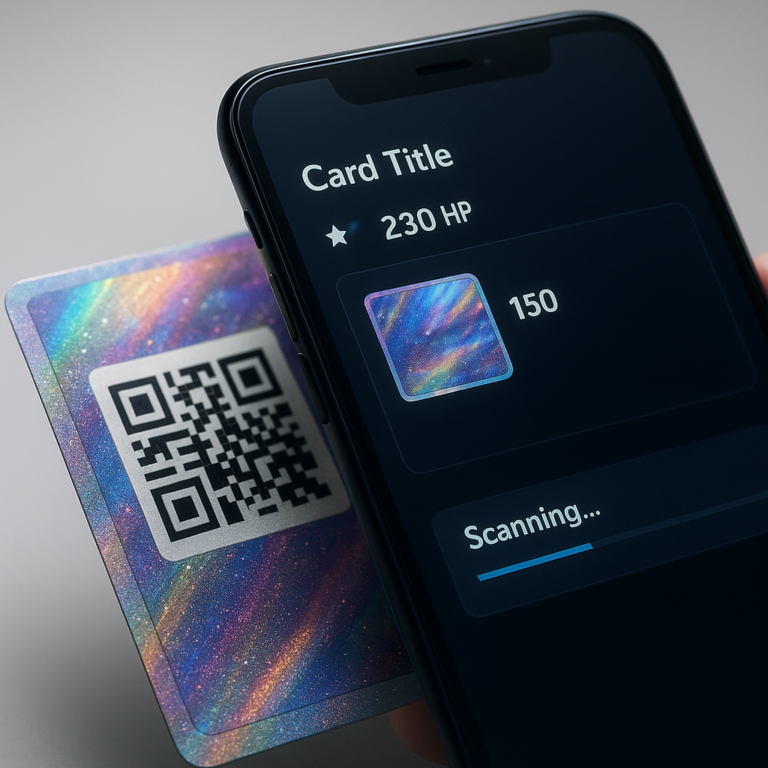
The sonic welding process creates an invisible seam around the holder’s perimeter, making tampering virtually impossible without obvious damage. Modern PSA slabs also include a QR code linking directly to the card’s certification details on PSA’s database. The holder material itself uses specific UV-resistant plastics that maintain clarity while protecting against harmful light exposure.
Proper Storage and Display of PSA Graded Cards
Despite the protective qualities of psa grading, proper storage remains crucial for long-term preservation. Store slabs vertically in acid-free boxes or specialized slab storage systems, avoiding horizontal stacking which can cause pressure damage. Maintain consistent temperature between 65-70°F with humidity levels around 45-50%.
For display purposes, keep graded cards away from direct sunlight and fluorescent lighting, even though PSA holders provide UV protection. Rotation schedules help prevent prolonged exposure to any single light source. When handling slabs, hold them by the edges to avoid fingerprints on the viewing surfaces.
Consider using TCG Radar to track your collection’s current market values, especially important for monitoring price fluctuations on your most valuable graded pieces.
Identifying Authentic PSA Slabs
Counterfeit PSA slabs have become increasingly sophisticated, making verification essential. Always check the certification number through PSA’s official website database. Authentic holograms display crisp, clear imagery with proper color-shifting effects, while fakes often appear dull or pixelated.
Examine the font consistency across all text elements—authentic PSA labels use specific typefaces that counterfeiters struggle to replicate perfectly. The holder edges should show clean, professional sonic welding without visible glue lines or rough cuts. Be particularly cautious with high-value cards where the psa grading cost difference between authentic and counterfeit slabs creates significant profit incentives for fraudsters.
When purchasing graded cards from secondary markets, request additional photos of the hologram and certification details. The psa grading company maintains detailed records of every card processed, making verification straightforward through their online tools.
The Future of PSA Grading and Market Trends
The card grading industry continues evolving rapidly, with technological innovations and market shifts reshaping how collectors approach PSA grading and investment strategies. Understanding these trends helps collectors make informed decisions about their grading submissions and long-term portfolio planning.
Digital Integration and Technology Advances
PSA has embraced digital technology to enhance authentication and verification processes. Modern PSA slabs now feature QR codes that link to digital certificates, providing instant verification of a card’s authenticity and grade through smartphone scanning. This technology integration addresses counterfeiting concerns while streamlining the verification process for buyers and sellers.
The PSA grading service has also implemented advanced imaging technology during the grading process, creating high-resolution digital records of each card. These digital archives serve multiple purposes: they help with authentication, provide detailed condition documentation, and support future research into grading consistency. For collectors managing large collections, tools like TCG Radar complement these digital advances by offering fast card identification and price tracking capabilities.
Market Impact and Investment Considerations
Grading premiums continue fluctuating based on market conditions, with PSA 10 specimens of popular cards commanding 3-10x premiums over raw cards in 2024. However, the PSA grading cost increases have led many collectors to become more selective about their submissions, focusing on higher-value cards or those with clear grade potential.
Market data shows that graded PSA cards from vintage sets (1980s and earlier) maintain stronger long-term appreciation compared to modern cards, where population reports often exceed demand. Collectors should consider submission timing, as market cycles significantly impact the return on investment for newly graded cards.
Alternative Grading Companies Comparison
While PSA maintains market leadership, competitors like BGS (Beckett Grading Services) and SGC (Sportscard Guaranty Corporation) offer distinct advantages. BGS provides subgrades for centering, corners, edges, and surface, appealing to collectors seeking detailed condition analysis. SGC often processes submissions faster and costs less than PSA, making it attractive for mid-tier cards.
The PSA grading company faces increasing competition as alternative services improve their market presence and collector acceptance. However, PSA’s brand recognition and resale premiums continue justifying higher submission costs for most valuable cards. Collectors should evaluate each grading service based on their specific collecting goals, budget constraints, and the intended market for their graded cards.
Frequently Asked Questions
How much does PSA grading cost in 2026?
PSA grading costs typically range from $25-30 for economy submissions up to $300+ for super express services, depending on your chosen turnaround time and card's declared value. Higher declared values (over $499) require premium service levels, which significantly increase costs. Additional fees may apply for oversized cards, autographs, or special handling requests.
How long does PSA grading take?
PSA turnaround times vary by service level, with economy submissions taking 45-90 business days and super express services completed in 3-5 business days. Regular service typically processes in 20-30 business days, while express takes 10-15 business days. Expect longer delays during peak seasons like post-holidays and major card releases.
What PSA grade is considered good for investment?
PSA 9 and 10 grades offer the strongest investment potential, with PSA 10 commanding significant premiums for most cards. PSA 8 represents solid value for most collectors and investors, while lower grades can still be worthwhile for extremely rare or vintage cards where high grades are scarce. The key is understanding population reports and market demand for specific cards.
Can I submit cards to PSA without being a member?
PSA requires either a paid membership or submission through an authorized dealer to grade cards. Membership levels start around $99 annually and include submission credits and other benefits. Alternatively, you can use authorized PSA dealers who will submit cards on your behalf, though this typically includes additional handling fees.
What happens if my PSA grade is lower than expected?
PSA offers a review service for $10 per card if you believe there was a mechanical error in grading, though success rates are relatively low. You can also request a complete regrade through their customer service, which involves additional fees and returning the card for re-evaluation. Most grade challenges are unsuccessful unless there's clear evidence of grader error or damage during the process.