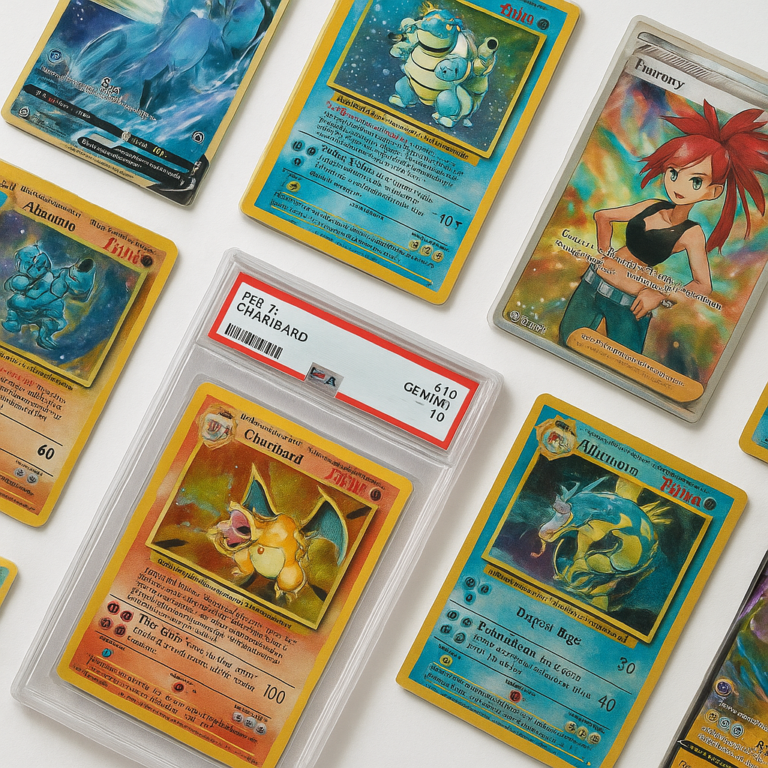
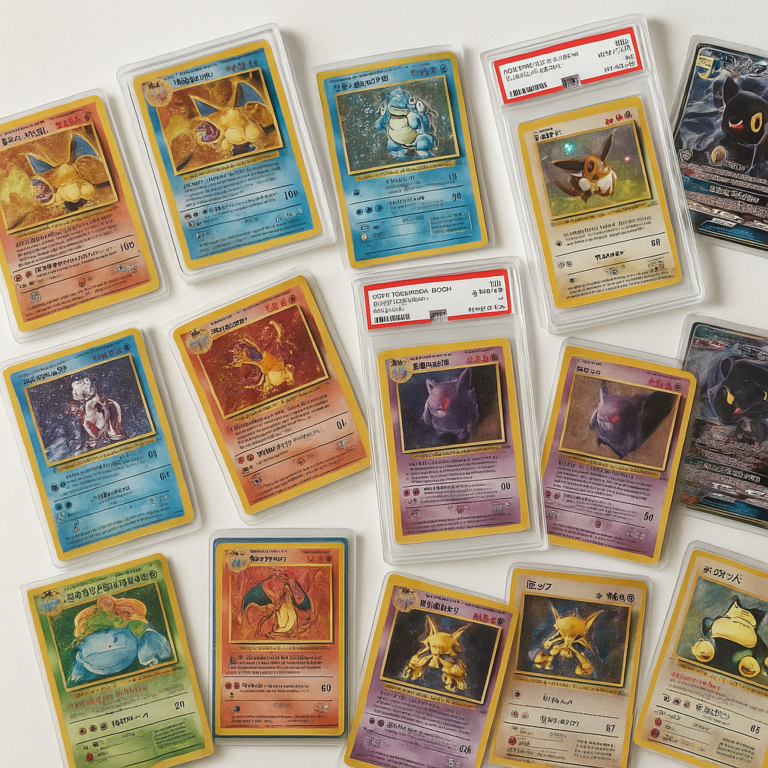
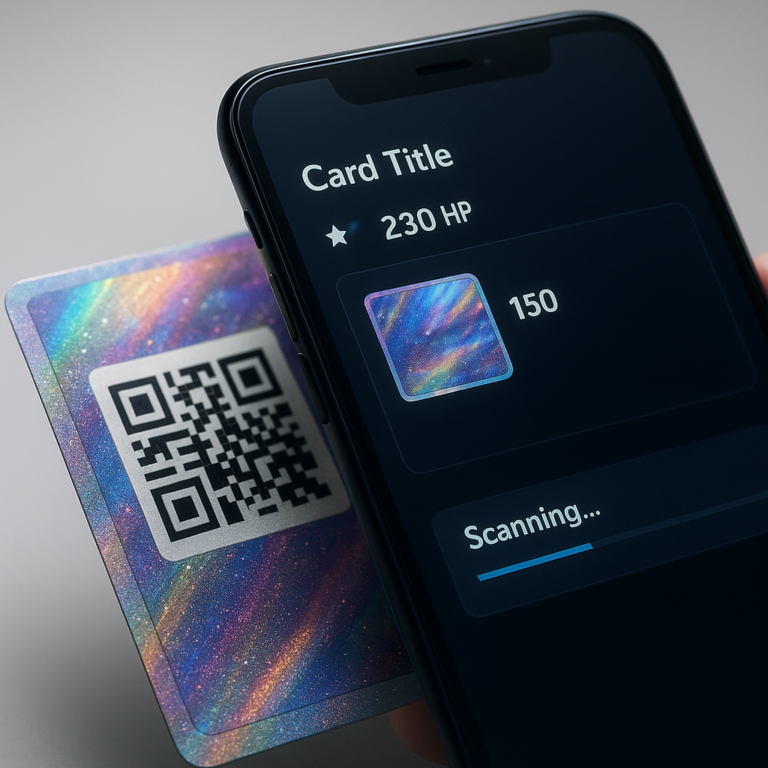
PSA Card Grading: The Collector’s Complete Guide to Professional Authentication and Pricing
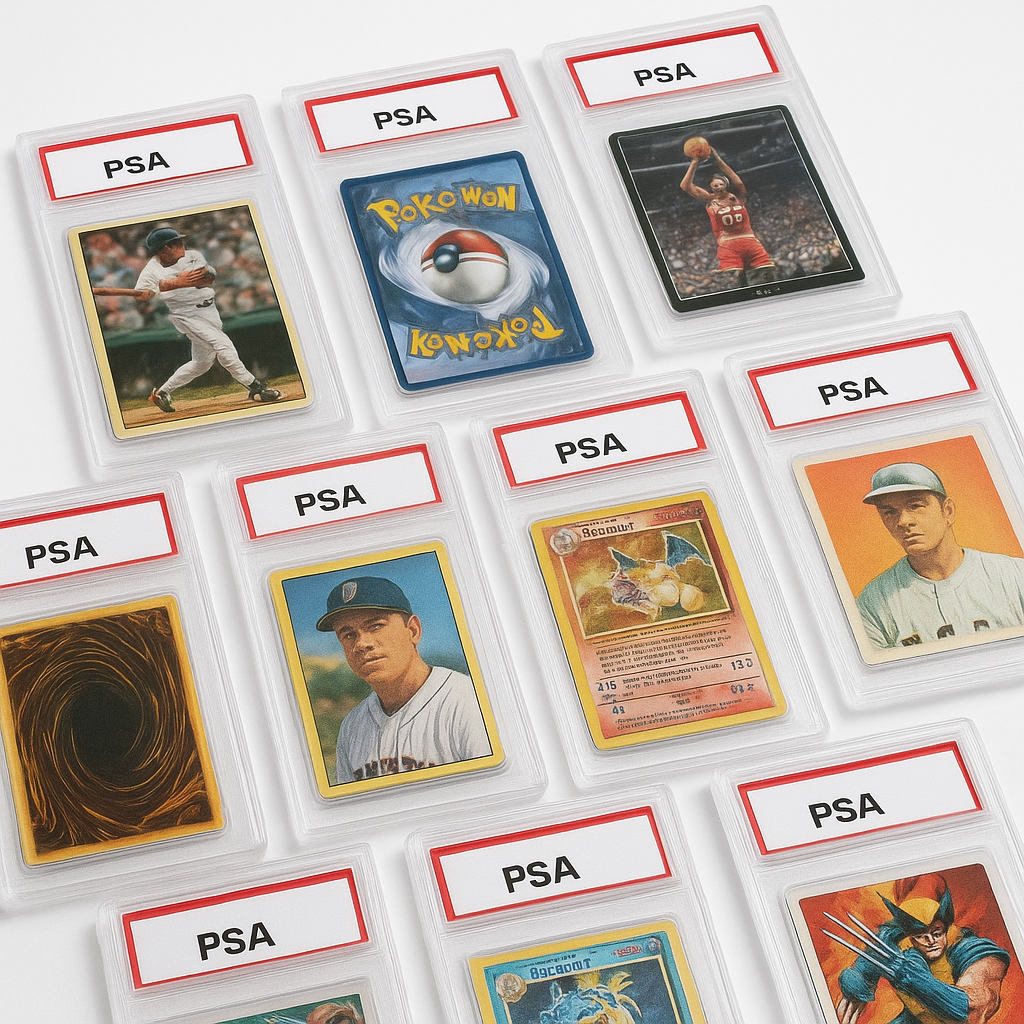
Professional Sports Authenticator (PSA) has revolutionized the trading card industry by establishing the definitive standard for card authentication and grading. Since 1991, PSA has evaluated millions of cards, transforming raw collectibles into certified investments with transparent condition assessments. The company’s rigorous 10-point grading scale has become the universal language of card collecting, where PSA 10 cards represent the pinnacle of condition and command premium prices in the marketplace. Understanding PSA card pricing and valuation is essential for any serious collector looking to build a valuable portfolio or make informed buying decisions.
The impact of PSA grading on card values cannot be overstated—a PSA 10 rookie card can sell for 10 times more than its ungraded counterpart, while even mid-grade PSA cards often outperform raw cards significantly. This comprehensive guide will walk you through every aspect of PSA card valuation, from understanding the grading process and submission strategies to analyzing current market trends and pricing factors. You’ll discover proven techniques for maximizing your PSA card investment, learn to avoid costly grading mistakes, and gain access to the best tools for tracking PSA card pricing in today’s dynamic market.
Understanding PSA Card Grading: What Every Collector Needs to Know
Professional card grading has revolutionized the trading card industry, providing collectors with standardized authentication and condition assessment. Among grading companies, PSA Professional Sports Authenticator stands as the most recognized name, transforming how collectors approach card valuation and market transactions.
What is PSA Professional Sports Authenticator
Founded in 1991 by David Hall, PSA Professional Sports Authenticator emerged as the first third-party grading service dedicated to trading cards. The company established its headquarters in Santa Ana, California, and quickly became the industry standard for card authentication and grading. PSA has graded over 40 million cards since its inception, making it the largest and most trusted grading service in the hobby.
PSA’s reputation stems from its consistent grading standards, tamper-evident holders, and comprehensive population reports. The company authenticates cards across all major sports and entertainment categories, including baseball, basketball, football, hockey, Pokémon, and Magic: The Gathering. Their certification process involves multiple quality control checkpoints, ensuring accurate assessment of each card’s condition and authenticity.
The PSA registry system allows collectors to showcase their graded collections online, creating competitive set building opportunities and establishing market benchmarks for high-grade examples. This database serves as an invaluable resource for psa card pricing research and market analysis.
The PSA Grading Scale Explained
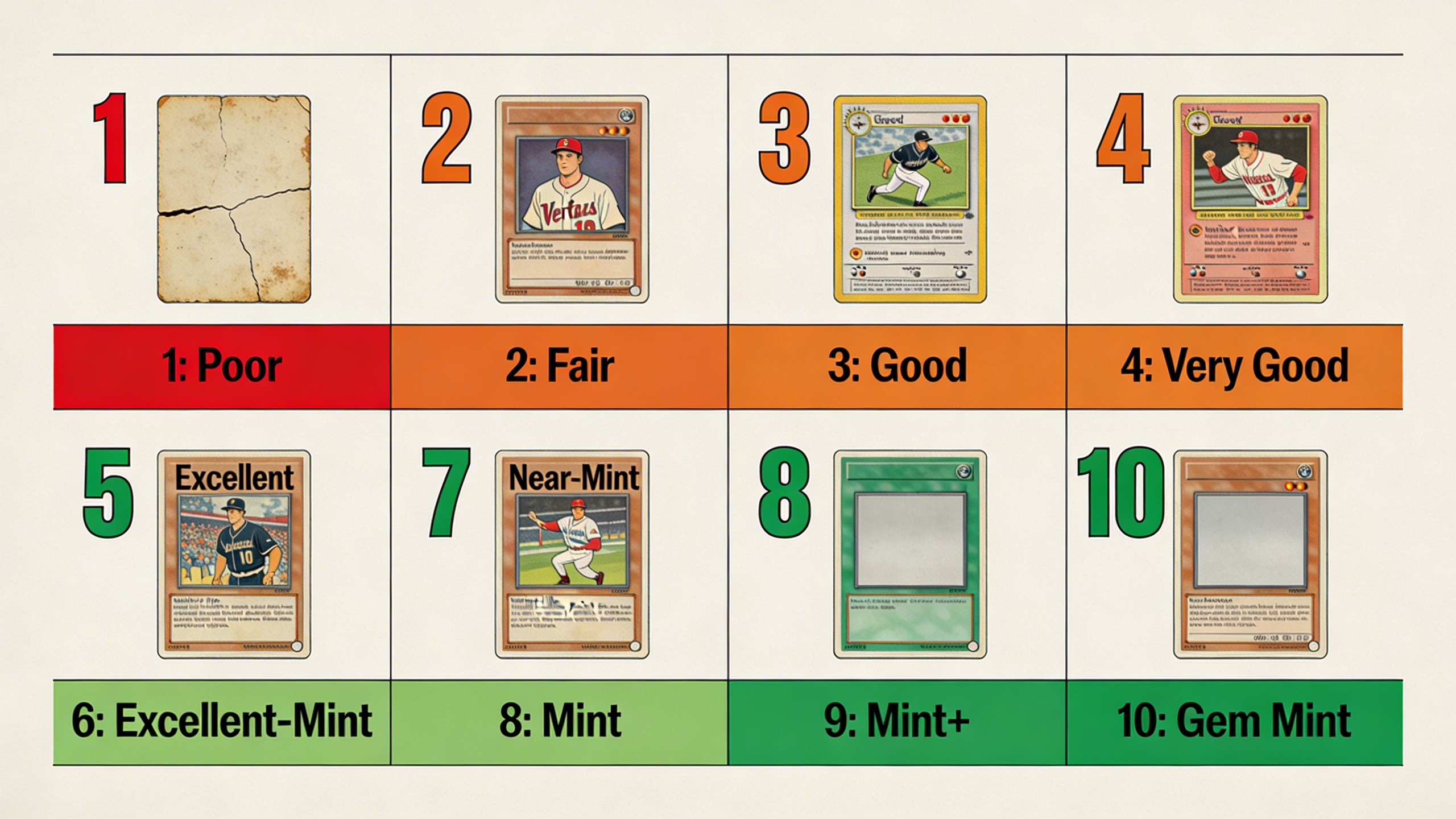
PSA utilizes a 10-point grading scale that evaluates cards based on four key criteria: centering, corners, edges, and surface condition. Understanding this scale is crucial for accurate psa card valuation and collection management.
| Grade | Description | Key Characteristics |
|---|---|---|
| PSA 10 (Gem Mint) | Perfect condition | Flawless corners, edges, surface, and centering |
| PSA 9 (Mint) | Near-perfect condition | Minor imperfection in one area |
| PSA 8 (Near Mint-Mint) | Excellent condition | Slight corner wear or centering issues |
| PSA 7 (Near Mint) | Very good condition | Minor corner wear and edge issues |
| PSA 6 (Excellent-Mint) | Good condition | Noticeable corner and edge wear |
| PSA 5-1 | Lower grades | Increasing levels of wear and damage |
PSA 10 cards represent the pinnacle of condition, commanding premium prices in the marketplace. These gem mint examples must exhibit perfect centering (typically 50/50 to 55/45), razor-sharp corners, pristine edges, and flawless surface with no printing defects, scratches, or staining.
For collectors managing large collections and tracking psa card pricing trends, using a reliable card scanning app like TCG Radar can streamline the process of identifying cards and checking current market values before submitting for grading.
Why PSA Grading Matters for Card Values
PSA grading significantly impacts card values through authentication, condition standardization, and market confidence. Raw cards, regardless of apparent condition, typically sell for substantially less than their graded counterparts due to authentication concerns and condition uncertainty.
The value difference between grades can be dramatic. A 1986 Fleer Michael Jordan rookie card in PSA 8 condition might sell for $3,000, while the same card in PSA 10 condition commands $15,000 or more. This exponential value increase demonstrates why understanding psa cards and their grading standards is essential for serious collectors.
PSA grading also provides market liquidity and standardization. Buyers can purchase cards with confidence, knowing the exact condition and authenticity. This standardization has created efficient secondary markets on platforms like eBay, PWCC, and Heritage Auctions, where PSA-graded cards consistently achieve higher sale prices than ungraded examples.
Population reports further influence values by revealing the scarcity of high-grade examples. Cards with low PSA 10 populations often command significant premiums, as collectors compete for the finest available examples. This data-driven approach to collecting has made PSA grading an indispensable tool for serious investors and collectors alike.
The PSA Grading Process: From Submission to Certification
Understanding the PSA grading process empowers collectors to make informed decisions about which cards to submit and what to expect throughout the authentication journey. Professional Sports Authenticator has streamlined their submission system while maintaining rigorous quality standards that have made PSA cards the gold standard in the hobby.
How to Submit Cards to PSA
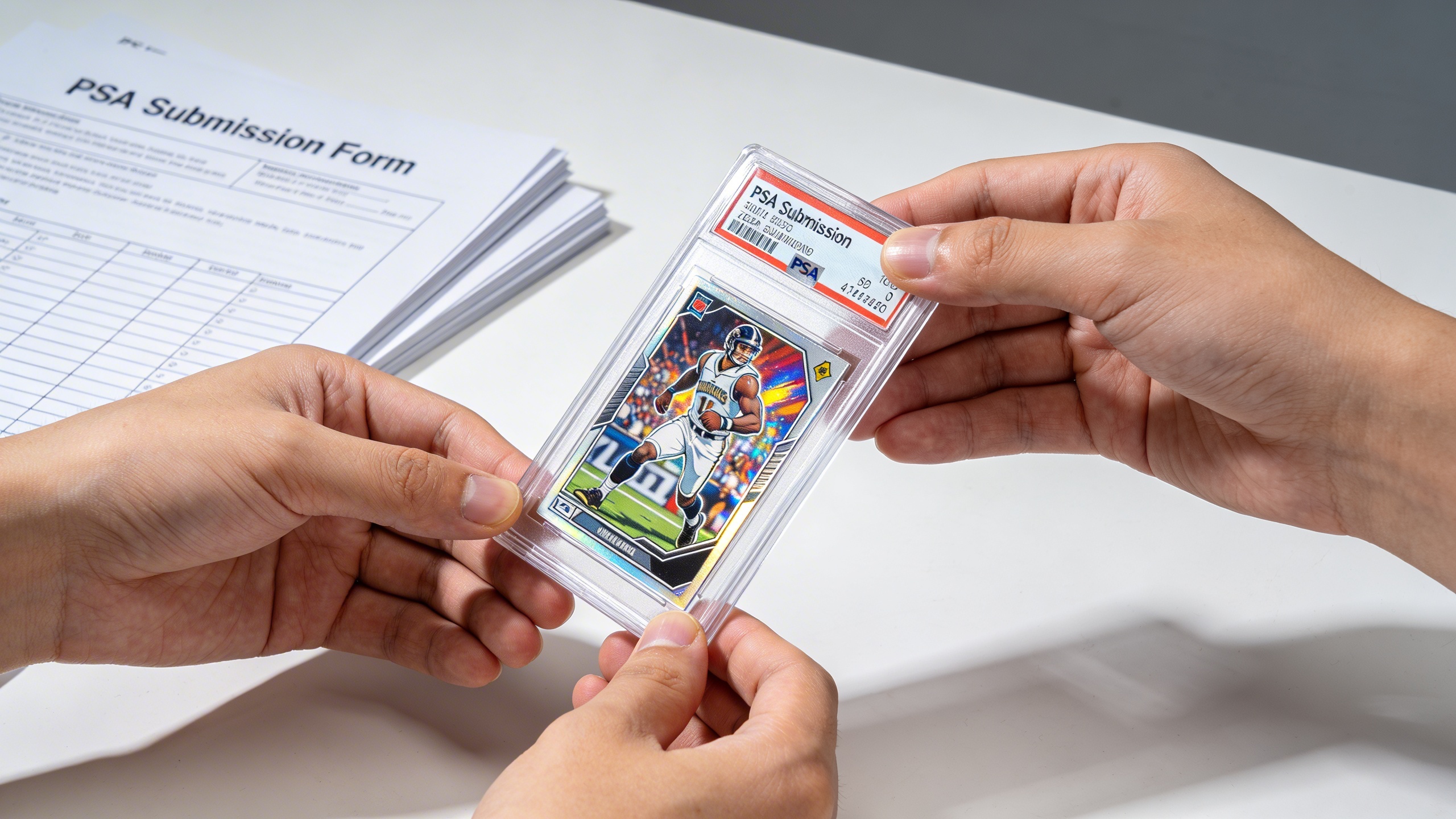
The submission process begins with creating an account on PSA’s website and selecting the appropriate service level for your cards. Start by organizing your cards into protective sleeves or card savers—never submit cards in penny sleeves or toploaders, as these can cause damage during handling.
Complete the submission form with accurate card details including year, brand, card number, and player name. Each card requires a declared value, which determines insurance coverage and affects service fees. For valuable vintage cards or modern rookies, consider using TCG Radar to scan and identify cards quickly, ensuring accurate submission details and current market values.
Package cards securely using PSA’s recommended methods: place cards between cardboard backing, wrap in bubble wrap, and ship in a sturdy box. Include printed submission forms, payment, and return shipping labels. Tracking numbers help monitor your package’s journey to PSA’s facilities in California, New Jersey, or Paris.
PSA Grading Timeline and Service Levels
PSA offers multiple service tiers designed to accommodate different budgets and urgency levels. Understanding these options helps optimize both cost and timing for your submissions.
| Service Level | Turnaround Time | Cost Range | Max Declared Value |
|---|---|---|---|
| Value | 65+ business days | $22-25 | $499 |
| Regular | 45+ business days | $35-50 | $2,499 |
| Express | 20+ business days | $75-100 | $4,999 |
| Super Express | 10+ business days | $150-300 | $24,999 |
| Walk-Through | 1-2 business days | $600+ | $100,000+ |
Current market conditions significantly impact these timelines. During peak submission periods—typically following major card releases or market surges—turnaround times can extend beyond stated estimates. The Value service represents the most cost-effective option for modern cards, while Express and Super Express services suit time-sensitive submissions like recent rookie cards or cards needed for upcoming sales.
Understanding PSA Labels and Certification
PSA labels contain critical information that directly impacts psa card pricing and market acceptance. The grade appears prominently on the front label, ranging from 1 (Poor) to 10 (Gem Mint). PSA 10 cards command significant premiums, often selling for 3-10 times the value of PSA 9 examples of the same card.
Each label includes a unique certification number that links to PSA’s online database, allowing buyers to verify authenticity and view high-resolution images. The population report accessible through this system shows how many examples of each card have received each grade, providing crucial context for psa card valuation.
Special designators add additional value and information. “OC” indicates off-center cards that still achieved their grade despite centering issues. Qualifiers like “ST” (stain) or “PD” (print defect) explain specific condition factors. Vintage cards may receive half-grades (8.5, 9.5) that acknowledge condition nuances important to collectors.
The holder itself provides tamper-evident security features including sonic welding and holographic elements. PSA’s database integration means each certified card exists as a permanent record, supporting long-term authenticity and helping establish market values for similar cards.
Population reports prove especially valuable for determining rarity and investment potential. Cards with low PSA 10 populations often experience stronger price appreciation than more common high-grade examples. This data helps collectors make informed decisions about which cards to pursue and what prices represent fair market value in the evolving landscape of professionally graded cards.
PSA Card Pricing and Valuation Factors in 2026
Understanding psa card pricing requires analyzing multiple interconnected factors that determine market value in today’s competitive collecting landscape. Professional Sports Authenticator’s grading system has created a standardized framework for card valuation, but prices fluctuate based on complex market dynamics that savvy collectors must understand to make informed decisions.
Key Factors That Determine PSA Card Prices
The foundation of psa card valuation rests on three primary pillars: rarity, condition grade, and population reports. Card rarity encompasses both the original print run size and the card’s significance within its set. For example, a 1986 Fleer Michael Jordan rookie card (#57) commands premium prices not just for its iconic status, but because relatively few high-grade examples exist in the marketplace.
Population reports, accessible through PSA’s certification database, reveal exactly how many cards of each grade exist for any given card. A PSA 10 1998 Pokémon Base Set Charizard with only 3,000 perfect examples carries significantly more value than cards with 10,000+ PSA 10 specimens. Current pop report data shows this Charizard averaging $6,000-$8,000 in PSA 10 condition, while cards with higher populations in perfect grade trade for substantially less.
Market demand plays an equally crucial role in psa card pricing. Cards featuring active athletes, popular entertainment franchises, or culturally significant moments experience price volatility based on real-world events. When evaluating potential acquisitions, collectors should research recent sales data through auction platforms and utilize tools like TCG Radar for accurate market pricing on specific cards and grades.
Historical significance and crossover appeal also influence valuations. Cards that attract both sports collectors and mainstream investors, such as vintage Mickey Mantle or modern LeBron James rookies, typically maintain stronger price floors during market downturns compared to niche hobby cards with limited appeal.
PSA 10 vs Lower Grades: Price Differences
The premium commanded by psa 10 cards versus lower grades has reached unprecedented levels in recent years. Perfect grade cards often trade for 3-10 times the value of PSA 9 examples, and sometimes 20-50 times more than PSA 8 specimens of the same card. This dramatic price spread reflects the perfectionist mentality driving modern collecting habits.
Consider the 2003 Topps Chrome LeBron James rookie card (#111). Recent sales data reveals PSA 10 examples selling for $4,000-$5,500, while PSA 9 copies trade in the $800-$1,200 range. PSA 8 examples can be acquired for $200-$400, demonstrating how each grade step down significantly impacts market value.
| Card Grade | Typical Price Range | Value vs PSA 10 |
|---|---|---|
| PSA 10 | $4,000-$5,500 | 100% |
| PSA 9 | $800-$1,200 | 20-25% |
| PSA 8 | $200-$400 | 5-8% |
| PSA 7 | $100-$200 | 3-4% |
This grade premium phenomenon creates both opportunities and risks for collectors. While PSA 10 cards offer the highest potential returns, they also carry greater downside risk if market sentiment shifts or additional high-grade examples surface through new submissions.
Market Trends Affecting PSA Card Values
The psa cards market has evolved dramatically since 2020, with several key trends shaping current valuations. Institutional investment has entered the space, with hedge funds and investment firms purchasing high-grade vintage cards as alternative assets. This institutional interest has created price floors for elite cards while potentially reducing long-term volatility.
Generation-driven collecting patterns significantly impact demand cycles. Millennials and Gen Z collectors gravitate toward 1990s and 2000s cards from their childhood, driving prices for Pokemon, Yu-Gi-Oh!, and late-era basketball cards. Meanwhile, traditional vintage collectors continue supporting pre-1980 baseball and football cards, creating distinct market segments with different price trajectories.
Technology integration has streamlined the buying and selling process, making psa card valuation more transparent and accessible. Real-time pricing data, population tracking, and mobile scanning applications have democratized market information that was previously available only to industry insiders.
Economic factors also influence collecting behavior and card prices. During periods of inflation or stock market uncertainty, collectors often view high-grade cards as tangible assets that can hedge against traditional investment volatility. Conversely, economic downturns typically reduce discretionary spending on collectibles, creating buying opportunities for prepared collectors.
Looking ahead, the continued growth of digital marketplaces, expanded grading capacity, and evolving collector demographics will likely maintain the importance of PSA certification while potentially moderating the extreme premiums currently commanded by perfect grade examples.
Maximizing Your PSA Card Investment
Smart collectors understand that successful PSA card investing requires strategic decision-making at every stage. From selecting the right candidates for grading to implementing proper storage protocols, each choice directly impacts your return on investment and long-term collection value.
Choosing the Right Cards for PSA Grading
The foundation of profitable PSA card investing lies in identifying cards with the highest potential for grade-driven value appreciation. Focus on rookie cards, Hall of Fame players, and limited-edition releases from major sets like Topps Chrome, Panini Prizm, or Upper Deck Young Guns. Cards featuring superstars like Connor McDavid, Patrick Mahomes, or Shohei Ohtani consistently demonstrate strong PSA card pricing premiums.
Examine your raw cards under proper lighting before submission. Look for perfect centering, sharp corners, and pristine surfaces. Cards with even minor whitening or edge wear rarely achieve PSA 10 status, which typically commands 3-10 times the value of PSA 9 examples. Modern cards printed after 2010 generally offer better grading candidates due to improved print quality and handling.
Consider the card’s current raw market value against potential graded prices. A $50 raw card that could grade PSA 10 and sell for $300 represents excellent grading potential, while a $10 card with a $25 PSA 10 ceiling may not justify the submission costs.
Cost-Benefit Analysis of PSA Grading
Understanding when grading costs exceed potential benefits prevents costly submission mistakes. PSA’s current service levels range from $25 for Regular service to $300+ for Super Express, plus shipping and insurance fees. Calculate the minimum grade needed to break even on your investment.
For example, if you spend $40 total on grading a card worth $30 raw, you need the graded version to sell for at least $70 to justify the expense. Cards with narrow spreads between raw and graded values—typically commons or readily available base cards—rarely provide positive returns unless they achieve PSA 10 grades.
Market timing also affects PSA card valuation significantly. Submit cards during player hot streaks, championship runs, or milestone achievements when demand peaks. Conversely, avoid grading during market downturns or when PSA backlogs extend turnaround times beyond optimal selling windows.
When evaluating potential submissions, tools like TCG Radar help track current market prices and identify cards with favorable grading economics by scanning and comparing raw versus graded values across multiple platforms.
Protecting Your PSA Cards with Proper Storage
Proper storage protects your PSA cards investment long after certification. PSA’s sonically sealed holders provide excellent protection, but additional precautions maximize preservation and resale value. Store graded cards in Card Saver sleeves or penny sleeves to prevent holder scratches that can affect eye appeal and marketability.
Climate-controlled environments prevent temperature fluctuations that can cause holder warping or label separation. Maintain temperatures between 65-70°F with 45-55% humidity levels. Avoid basements, attics, or areas prone to moisture exposure.
Organize your collection using storage boxes designed for graded cards, such as BCW or Ultra Pro options with adjustable dividers. Label each section clearly and maintain detailed inventory records including grade, cert number, and acquisition cost. This organization streamlines selling decisions and insurance documentation.
Handle PSA cards by the edges only, avoiding contact with the label or card surface visible through the holder. Even minor scratches on the holder can reduce buyer confidence and impact final sale prices, particularly for high-value PSA 10 cards where presentation matters most to serious collectors.
PSA Card Pricing Tools and Resources
Accurate pricing information is essential for making informed decisions about PSA cards, whether you’re buying, selling, or simply tracking your collection’s value. Professional Sports Authenticator has developed comprehensive resources alongside third-party platforms to help collectors navigate the complex world of PSA card valuation.
Using PSA’s Price Guide and Population Reports
PSA’s official Price Guide serves as the foundation for PSA card pricing across all major sports and trading card categories. This database tracks actual sales data from major auction houses and certified dealers, providing real-time market values for cards in each grade from PSA 1 through PSA 10 cards. The Price Guide updates monthly, incorporating recent sales to reflect current market conditions.
Population Reports represent another crucial PSA resource, showing exactly how many cards have been graded at each level for specific issues. A 1986 Fleer Michael Jordan rookie card graded PSA 10 commands significantly higher prices partly because only 316 examples have achieved this grade out of thousands submitted. Understanding population data helps explain why certain PSA cards maintain premium valuations even when market conditions fluctuate.
The PSA Set Registry complements these tools by tracking complete set values and identifying key cards within each release. Registry participants often drive demand for specific grades, particularly PSA 9 and PSA 10 examples needed to maintain competitive set rankings.
Third-Party Pricing Platforms and Databases
Several independent platforms provide alternative perspectives on PSA card valuation beyond official PSA resources. PWCC Marketplace maintains detailed sales histories with search filters for grade, year, and sale date. Their monthly price guides aggregate data from multiple sources, offering broader market insights than single-platform tracking.
For collectors managing extensive PSA card portfolios, scanning apps like TCG Radar provide instant price checking and collection tracking capabilities. This tool identifies cards through image recognition and delivers current market values across multiple grading companies, making it invaluable for quick valuation checks at card shows or when considering purchases.
eBay’s sold listings remain a practical resource for recent PSA card pricing, particularly for common cards not frequently tracked in premium databases. Filter results by “sold listings” and “PSA” to view actual transaction prices rather than current asking prices.
Tracking PSA Card Market Performance
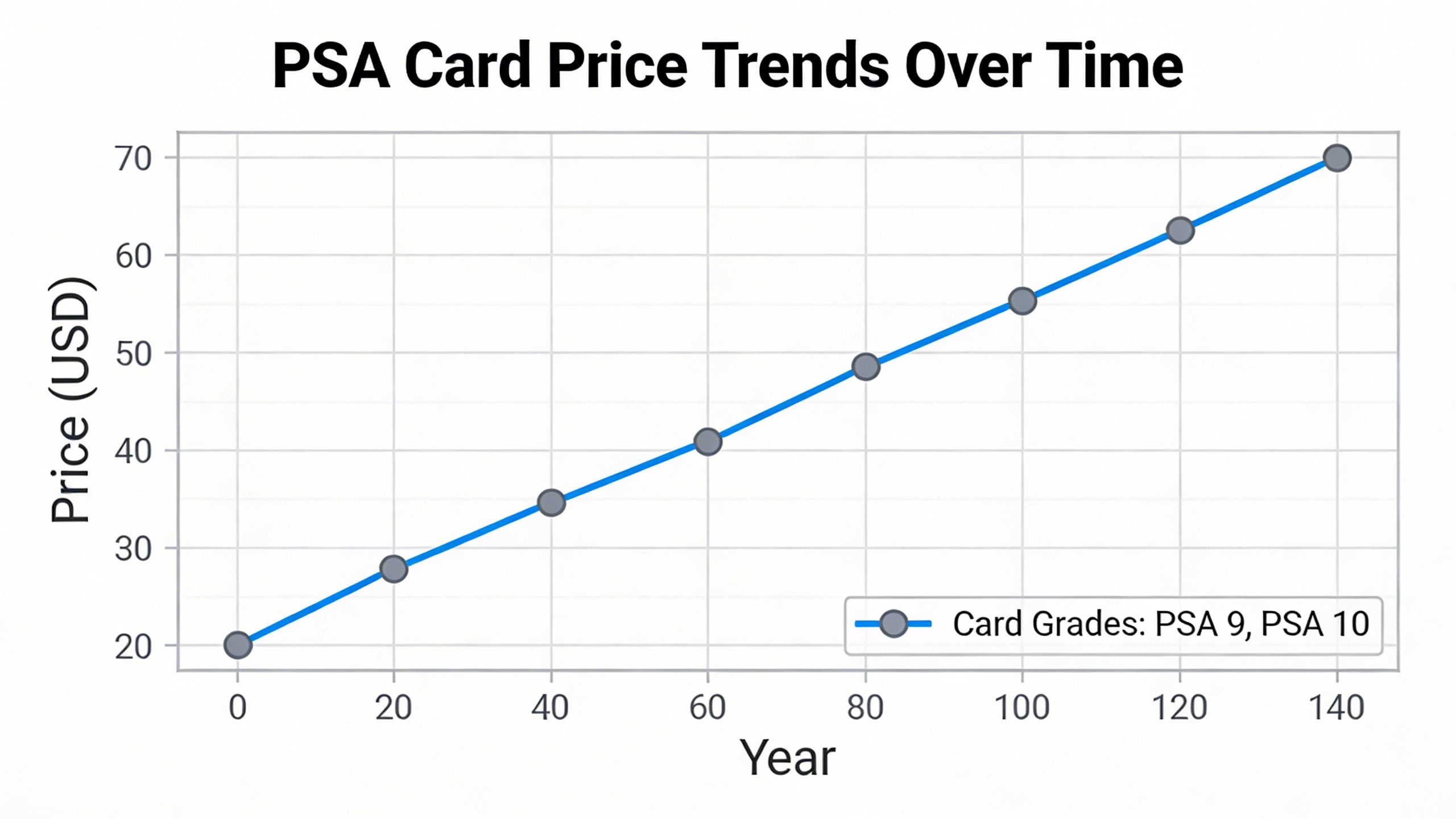
Long-term value tracking requires systematic data collection across multiple timeframes. Create spreadsheets documenting quarterly price points for key cards in your collection, noting grade, population changes, and external factors affecting demand. The 2020-2021 trading card boom demonstrated how quickly PSA card values can shift, with some modern rookies appreciating 500% before correcting significantly.
Monitor population report changes monthly, as new submissions can impact scarcity premiums. A card maintaining stable populations often sustains pricing better than issues experiencing significant grade inflation. Professional Sports Authenticator’s quarterly market reports provide macro-level insights into grading trends and emerging categories worth tracking.
Consider setting price alerts through multiple platforms to identify buying opportunities when specific PSA cards drop below historical averages. Market timing remains challenging, but systematic tracking helps identify patterns and optimal entry points for building positions in key cards.
Common PSA Grading Mistakes and How to Avoid Them
Even experienced collectors make costly errors when submitting PSA cards for grading. Understanding these common pitfalls can save you hundreds of dollars and prevent disappointing grades that hurt your psa card valuation potential.
Submission Errors That Cost Money
The most expensive mistake collectors make is improper card preparation and packaging. Cards submitted with fingerprints, dust, or surface debris often receive lower grades than their true condition warrants. Always handle cards with clean cotton gloves and examine them under proper lighting before submission.
Packaging errors cost collectors significantly. Using penny sleeves that are too tight can cause corner damage during transit, while loose sleeves allow cards to shift and sustain edge wear. The optimal approach involves placing cards in properly-fitted penny sleeves, then into semi-rigid card savers, secured with painter’s tape—never scotch tape which can leave residue.
Submission form errors create delays and additional fees. Incorrectly listing card years, player names, or set information forces PSA to research your submission, potentially adding $5-10 per card in research fees. Double-check all information against official checklists before submitting.
Understanding PSA’s Grading Standards
Many collectors overestimate their cards’ condition, leading to disappointment when PSA cards receive lower grades than expected. A card that appears mint to the naked eye may have microscopic surface scratches or slight corner wear visible under PSA’s high-powered magnification equipment.
PSA 10 cards represent the top 1-2% of all submissions for most vintage sets. Modern cards from 2020 onward have higher PSA 10 rates due to improved printing quality, but realistic expectations remain crucial. Cards with any visible centering issues, corner softness, or surface imperfections rarely achieve gem mint status.
Understanding that PSA grades the card, not the holder, helps set appropriate expectations. Even factory-fresh cards can have printing defects or quality control issues that prevent perfect grades. Tools like TCG Radar can help you research comparable sales and understand realistic grade ranges before submission.
When to Resubmit vs Accept Your Grade
Resubmission makes financial sense only when the potential grade increase significantly impacts psa card pricing. A 1986 Fleer Michael Jordan PSA 8 worth $3,000 justifies resubmission costs if there’s reasonable chance of achieving PSA 9 status worth $8,000+.
However, resubmitting cards hoping for grade bumps often proves costly. PSA Professional Sports Authenticator maintains consistent standards, and dramatic grade improvements are rare. Cards receiving PSA 6 or 7 grades typically have legitimate condition issues that won’t improve with resubmission.
Calculate the break-even point before resubmitting. Factor in grading fees ($20-50+ depending on service level), shipping costs, and insurance. Only resubmit when the potential value increase exceeds these costs by at least 100% to account for the risk of receiving the same or lower grade.
The Future of PSA Grading and Card Collecting
The card collecting landscape continues evolving rapidly, with Professional Sports Authenticator (PSA) positioning itself at the forefront of industry innovation. As technology advances and market dynamics shift, understanding these trends becomes crucial for collectors making long-term investment decisions with their psa cards.
Technology Innovations in Card Authentication
PSA is investing heavily in cutting-edge authentication technologies to enhance accuracy and combat counterfeiting. Advanced imaging systems now capture microscopic details invisible to the naked eye, creating digital fingerprints for each card. Artificial intelligence algorithms analyze printing patterns, paper composition, and aging characteristics to detect sophisticated forgeries that might fool traditional authentication methods.
Blockchain technology integration represents another significant development. PSA has begun testing immutable digital certificates that link physical cards to permanent blockchain records, making psa card valuation more transparent and fraud virtually impossible. This technology could revolutionize how collectors verify authenticity and track ownership history.
PSA’s Role in the Digital Card Market
The emergence of digital trading cards and NFTs has created new opportunities for PSA’s expertise. While traditional collectors initially viewed digital cards skeptically, PSA’s involvement in authenticating and grading digital assets has legitimized this market segment. The company now offers certification services for digital card collections, applying similar grading standards to virtual assets.
Integration between physical and digital collecting continues expanding. PSA-graded cards increasingly come with digital twins—authenticated digital versions that collectors can display, trade, or use in online gaming environments. This hybrid approach appeals to younger collectors while preserving the tangible appeal that drives psa card pricing.
Investment Outlook for PSA Graded Cards
Market analysts project continued growth for high-grade psa 10 cards, particularly in vintage sports and modern gaming categories. The expanding global collector base, driven by increased accessibility through online platforms and mobile apps like TCG Radar for price tracking, suggests sustained demand for professionally graded cards.
However, collectors should expect increased market sophistication. As more cards receive professional grading, the premium for PSA 10 specimens may stabilize, while lower grades become more accessible. Geographic expansion into emerging markets presents growth opportunities, though regulatory changes and economic factors could impact long-term psa card valuation trends.
The key to successful collecting remains focusing on quality, rarity, and personal enjoyment rather than purely speculative investments.
Frequently Asked Questions
How much does PSA card grading cost in 2026?
PSA grading costs range from $15-25 for regular service to $300+ for super express options, depending on card value and turnaround time selected. Bulk submissions of 20+ cards offer discounted rates starting around $12-15 per card. Additional fees may apply for high-value cards over $499, with declared value affecting the final cost.
What's the difference between PSA 9 and PSA 10 card values?
PSA 10 cards typically command 2-5x higher prices than PSA 9 cards of the same issue, with some premium cards showing even larger gaps. For example, a PSA 9 rookie card worth $500 might sell for $1,500-2,500 in PSA 10 condition. The PSA 10 'Gem Mint' designation represents perfect centering, corners, edges, and surface quality that collectors prize highly.
How long does PSA grading take?
Current PSA turnaround times range from 5-10 business days for super express service to 45-65 business days for regular submissions. Processing speed depends on service level selected, submission volume, and seasonal demand fluctuations. Express and super express options cost significantly more but guarantee faster processing for time-sensitive submissions.
Are PSA graded cards worth the investment?
PSA grading can be worthwhile for valuable cards (typically $100+ raw value) or key rookie cards with strong market demand. Graded cards offer authentication protection, enhanced liquidity, and potential value premiums of 20-300% over raw cards. However, grading costs and turnaround times make it less viable for lower-value cards unless submitting in bulk.
Can I use PSA sleeves before submitting cards for grading?
PSA requires cards to be submitted in penny sleeves or card savers, not their own branded sleeves or holders. Use clear penny sleeves or semi-rigid card savers to protect cards during shipping, ensuring they're clean and properly sized. Remove cards from any magnetic holders, screwdowns, or thick toploaders before submission as these aren't accepted.