SGC vs CGC Card Grading in 2026: Fees, Turnaround, Scales and Resale
SGC and CGC Cards are the two major graders with every service tier open in September 2026, which makes this comparison more useful than it was a year ago. With PSA’s Value tiers paused since 2 June and Beckett’s Base and Standard paused since 8 August, a collector who wants a slab for under $25 is choosing between exactly these two. SGC’s Standard is $15 with a $1,500 value cap and a 40–50 business-day estimate; CGC’s Economy is $20 with a $1,000 cap at 90 days, and its Bulk is $17 for 25 or more cards at 150 days.
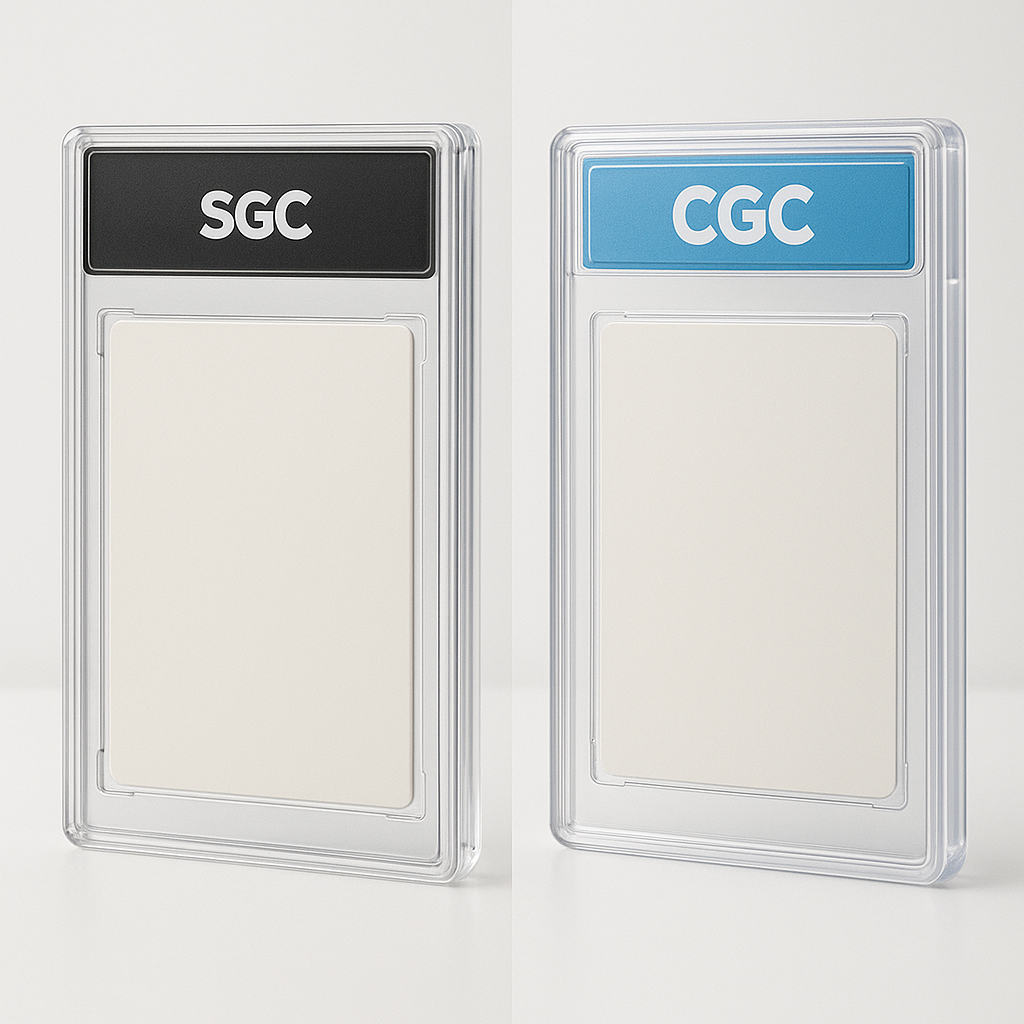
They are not interchangeable. SGC is the vintage sports grader whose black holder some buyers prefer to PSA’s; CGC is the trading card game grader with the strongest acceptance in Pokémon after PSA, an optional subgrade report, and a Pristine 10 above its Gem Mint 10. The right one depends on what you are grading and whether you plan to sell. Fees below were read from both companies’ price lists on 3 September 2026.
SGC vs CGC grading fees
| Company | Tier | Fee per card | Max declared value | Business days | Minimum cards |
|---|---|---|---|---|---|
| SGC | Standard | $15 | $1,500 | 40–50 | 1 |
| Standard, higher value | $85 | $3,500 | 40–50 | 1 | |
| Expedited | $150 | $3,500 | 2–3 | 1 | |
| Expedited 7.5K | $250 | $7,500 | 2–3 | 1 | |
| CGC Cards | Bulk | $17 | $500 | 150 | 25 |
| Economy | $20 | $1,000 | 90 | 1 | |
| Standard | $55 | $3,000 | 10 | 1 | |
| Express | $100 | $10,000 | 5 | 1 | |
| WalkThrough | $300 | $100,000 | 2 | 1 |
Three differences hide in that table. SGC’s $15 covers a card worth up to $1,500, which is triple CGC’s cap at Economy and higher than PSA allowed at four times the price before its pause. CGC’s members get 10% off (Associate, Premium) or 20% off (Elite), which brings Economy to $16–$18, while SGC has no membership at all. And CGC’s turnaround at the cheap end is two to three times SGC’s; the $3 you save with Bulk is paid for in months. Run both through the card grading cost calculator with your card count and shipping to see the real per-card figure.
Turnaround: SGC is faster at the same price
SGC quotes 40–50 business days on Standard and has generally delivered inside that window; the company starts its clock when the box is unboxed and logged, which at busy times has been several days after delivery. CGC quotes 90 business days on Economy and 150 on Bulk, and those are working days, so a Bulk order shipped in September is a March return. If speed matters and the card is worth under $3,500, SGC Expedited at $150 returns in 2–3 days; CGC’s Standard at $55 returns in 10, which is the best value for a card you need back within a month. The grading turnaround planner turns each tier into a calendar date.
Grading scales and labels
| SGC | CGC Cards | |
|---|---|---|
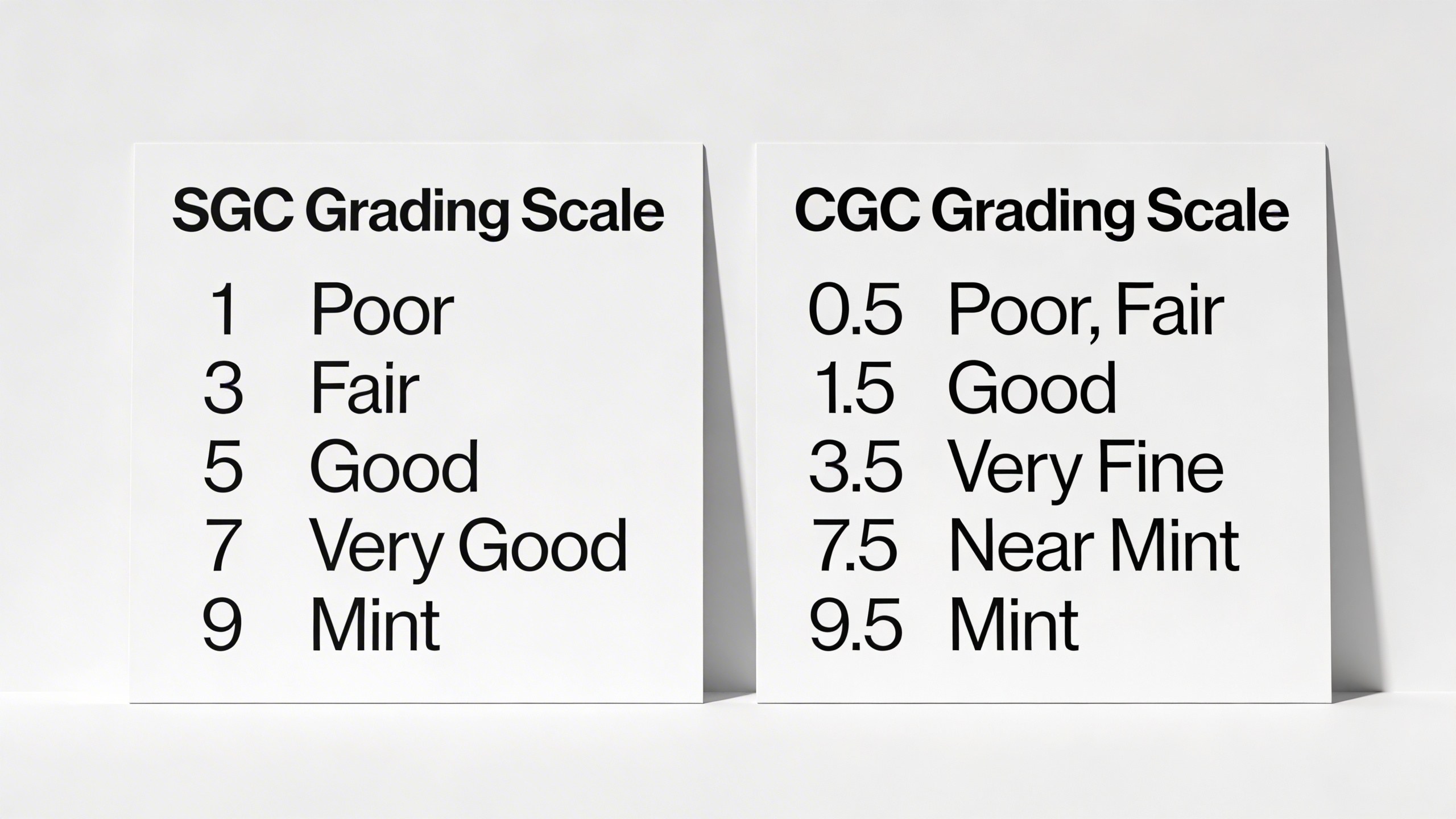
| Scale | 1–10 in half-point steps | 1–10 in half-point steps |
| Top grades | 10 Gem Mint; 10 Pristine above it for a flawless card | 10 Gem Mint; 10 Pristine above it for a card with no visible flaw under magnification |
| Subgrades | None on the label | Optional, for an added fee, for centering, corners, edges, surface |
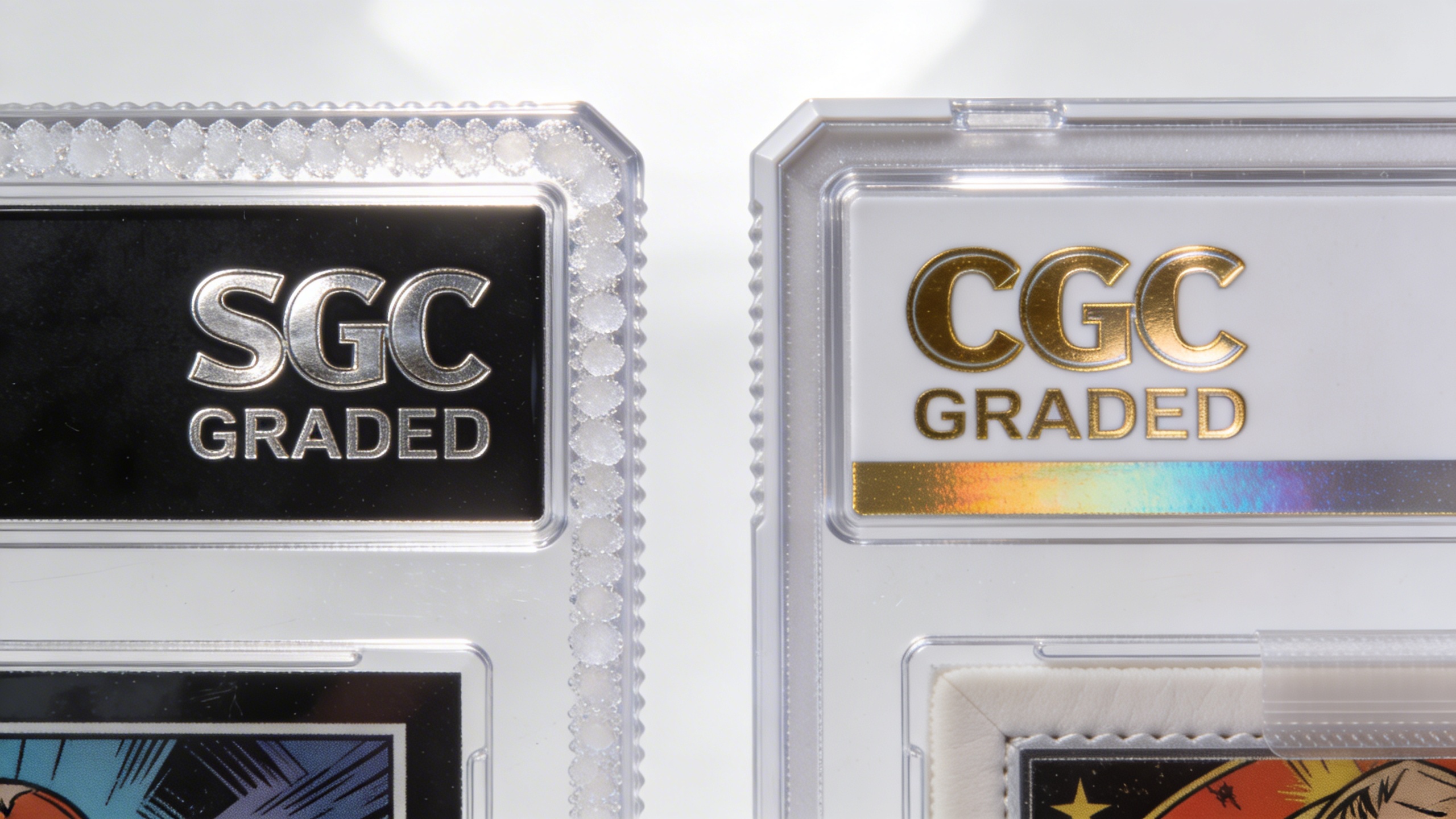
| Holder | Black matted “tuxedo” insert, label at top; designed around vintage cards | Clear holder with a wide label carrying a QR code; sized for TCG and modern sports |
| Population report | Public | Public, with set-level breakdowns for Pokémon |
| Authentication | Autographs authenticated in-house on request | Autograph grading through the CGC group’s signature service |
Neither scale maps exactly onto PSA’s. An SGC 10 Gem Mint is treated by vintage buyers as a PSA 10 equivalent; a CGC 10 Gem Mint is treated by Pokémon buyers as closer to a PSA 9, and a CGC 10 Pristine as roughly a PSA 10. The grading scale converter handles these translations, including CGC’s optional subgrades.
Resale: which slab sells for more, by category
- Pre-1980 sports cards: SGC. Its slabs have sold at or near PSA money for vintage stars for several years, and some buyers pay a small premium for the black holder on cards like 1950s Topps. A CGC-slabbed vintage baseball card sells at a visible discount.
- Modern sports: both trail PSA and Beckett. An SGC 10 modern rookie typically brings 20–40% less than a PSA 10; a CGC 10 similar or slightly less.
- Pokémon and other TCGs: CGC. It has the larger TCG population, its Pristine 10 has an established premium, and buyers in the category recognise the holder. An SGC-slabbed Pokémon card sells but at a wider discount and to a thinner market.
- Cards graded 8 and below: nearly a wash. Mid-grade prices converge across companies, which is why SGC at $15 is the rational choice for a vintage card that is honestly a 6.
If the plan is to sell, price the card in both holders on a completed-sales search before you choose; the difference is often larger than the fee. The grading ROI calculator takes the two graded prices and the two fees and shows which submission nets more.
Ownership and where they sit in the industry
SGC was founded in 1998 in Florida and has been owned since 2024 by Collectors, the same parent company as PSA, which has so far left its pricing and holder untouched. CGC Cards is the trading-card division of the Certified Collectibles Group, the company behind CGC comics and NGC coins, and grades from Sarasota, Florida; it entered cards in 2020 and rebranded from CGC Trading Cards to CGC Cards in 2023. Both publish population reports and both back authenticity with a written guarantee.
How to choose between SGC and CGC
- Vintage sports card worth under $1,500: SGC Standard, $15.
- Vintage sports card worth $1,500–$3,500: SGC’s $85 tier, still less than PSA Regular and with a higher cap.
- Pokémon or other TCG, for your collection: CGC Economy at $20, or Bulk at $17 if you have 25 cards and no deadline.
- Pokémon or TCG, to sell: CGC if you want the Pristine 10 chance at $20; PSA Regular at $79.99 if the card is worth over $400 graded.
- Anything needed back within a fortnight: CGC Standard at $55 (10 days) or SGC Expedited at $150 (2–3 days).
- Cards you want subgrades on: CGC, as an add-on; SGC does not offer them.
For the wider picture, including PSA, Beckett and TAG, see the five-company grading comparison, and the grading alternatives finder for a budget-and-deadline filter across all of them.
Sources and check date
SGC: pricing page. CGC Cards: services and fees page, including member discounts and the 25-card Bulk minimum. Both read on 3 September 2026. Resale comparisons summarise completed-sale patterns on the major marketplaces over the preceding months and will not hold for every card.