The Ultimate Guide to the Top 100 Most Valuable Sports Cards of All Time
The sports card collecting world has exploded into a multi-billion dollar market where cardboard treasures now rival traditional investments in both excitement and returns. Recent auction records have shattered expectations, with individual cards selling for millions of dollars and transforming childhood hobbies into sophisticated investment portfolios. What was once considered a simple pastime has evolved into a legitimate asset class, where the most valuable sports cards command prices that would make Wall Street traders take notice.
From Mickey Mantle’s legendary 1952 Topps card that sold for $12.6 million to Michael Jordan’s rookie cards breaking the $1 million barrier repeatedly, these high value sports cards represent far more than mere collectibles—they’re pieces of sports history with proven appreciation potential. The market has witnessed unprecedented growth across all major sports, with even valuable sports cards from the 90s experiencing remarkable resurgences as nostalgic millennials enter their peak earning years.
This comprehensive guide explores the most expensive sports cards across baseball, basketball, football, hockey, and beyond, revealing the stories behind their astronomical values and providing insights into market trends that could shape your collecting strategy. Whether you’re seeking legendary grails or hidden gems, understanding these elite cards will transform how you view the intersection of sports, history, and investment opportunity.
The Holy Grail Cards: Top 10 Most Valuable Sports Cards Ever Sold
The sports card market has witnessed astronomical growth in recent years, with certain cards achieving prices that seemed impossible just a decade ago. These most valuable sports cards represent the pinnacle of collecting, combining historical significance, player greatness, and extreme rarity. Understanding what makes these cards so special provides insight into the forces driving today’s high value sports cards market.
The T206 Honus Wagner: The Crown Jewel
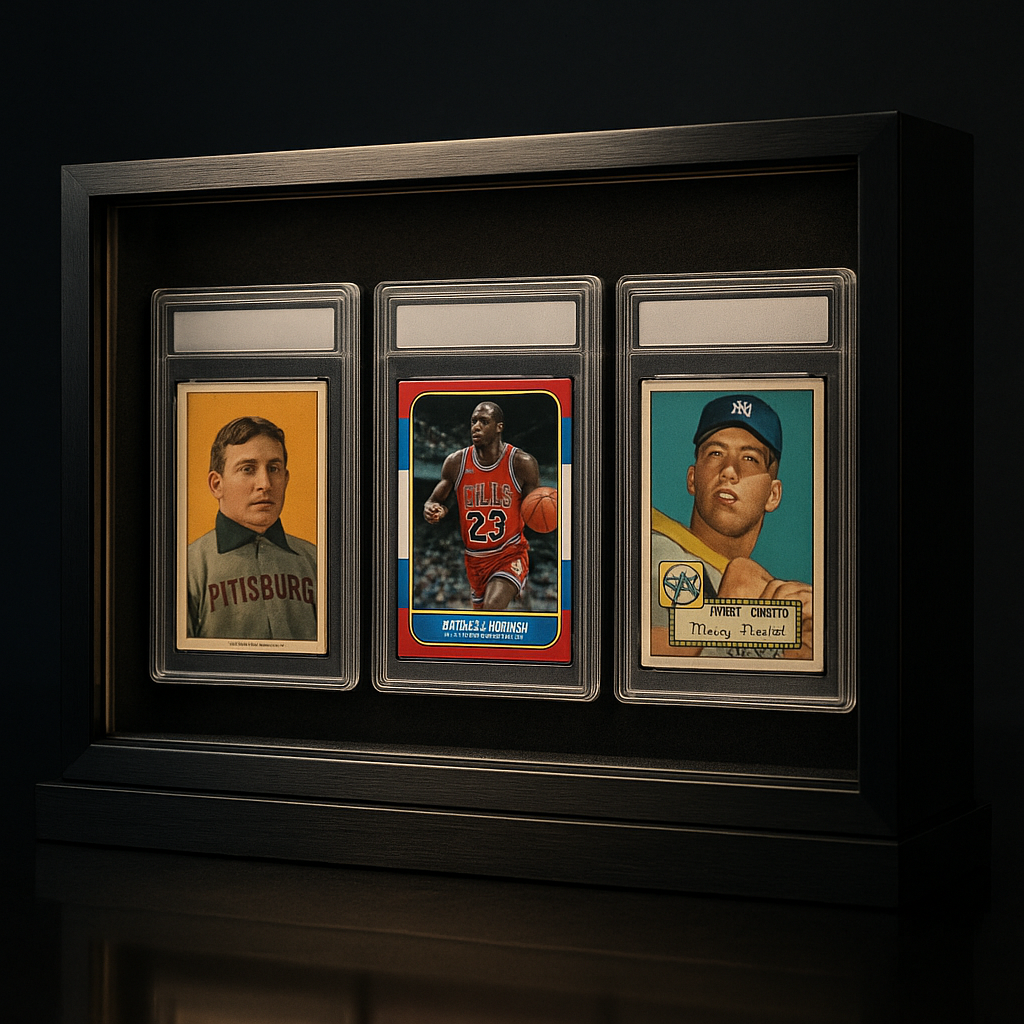
No discussion of sports cards worth millions can begin without the legendary T206 Honus Wagner. This 1909-11 American Tobacco Company card holds the record for the highest price ever paid for a sports card, selling for $7.25 million in August 2022. The Wagner’s astronomical value stems from its incredible scarcity—fewer than 60 examples are known to exist—and the mystery surrounding its limited production.
The card’s rarity likely resulted from Wagner’s objection to his image being used to promote tobacco products. PSA has graded only a handful of examples above Poor condition, making each discovery a major collecting event. The record-setting card, graded PSA 2, demonstrates how even lower-grade examples of the most expensive sports cards can command millions when historical significance meets extreme rarity.
Modern Marvels: LeBron James and Tom Brady Record Sales
While vintage cards dominate the upper echelons, modern cards have proven they can compete at the highest levels. The 2003-04 Upper Deck Exquisite Collection LeBron James Rookie Patch Autograph (#78/99) sold for $5.2 million in April 2022, establishing it as the most valuable basketball card ever sold. This card’s value reflects LeBron’s sustained excellence and the premium collectors place on rookie cards from transcendent athletes.
Football has produced its own modern marvel with Tom Brady’s 2000 Playoff Contenders Championship Rookie Ticket Autograph. High-grade examples have sold for over $3 million, driven by Brady’s seven Super Bowl victories and his status as the greatest quarterback in NFL history. These sales demonstrate that valuable sports cards from the 90s and early 2000s can achieve prices rivaling pre-war classics when they feature all-time great players.
Other modern cards commanding seven-figure prices include:
- 1997-98 Metal Universe Precious Metal Gems Green Michael Jordan (#23/100) – $2.9 million
- 2009 Bowman Chrome Draft Prospects Superfractor Mike Trout Autograph – $3.9 million
- 1986-87 Fleer Michael Jordan rookie card (PSA 10) – $1.44 million
Mickey Mantle’s Million-Dollar Moments
The 1952 Topps Mickey Mantle (#311) stands as perhaps the most iconic post-war sports card, with a PSA 9 example selling for $12.6 million in August 2022. This sale temporarily dethroned the T206 Wagner as the most expensive sports card before Wagner reclaimed the title weeks later. The Mantle’s appeal stems from its status as his rookie card in Topps’ first major baseball set, combined with his legendary career and tragic personal story.
Condition plays a crucial role in determining value among high value sports cards. The record-setting Mantle benefited from exceptional centering and sharp corners, qualities that separate million-dollar cards from those worth hundreds of thousands. Professional grading services like PSA and BGS have become essential for authenticating and evaluating these premium cards.
For collectors looking to identify and value their own cards, using tools like TCG Radar can help scan and check current market prices across different conditions and variations. This becomes particularly important when dealing with vintage cards where small differences in condition can mean hundreds of thousands of dollars in value.
The top tier of most valuable sports cards continues evolving as new records fall and previously overlooked cards gain recognition. Whether driven by nostalgia, investment potential, or pure collecting passion, these cards represent the ultimate achievements in sports memorabilia, where history, rarity, and cultural significance converge to create truly priceless artifacts.
Baseball Cards That Changed the Game: The Most Valuable Diamond Legends
Baseball cards form the foundation of the most valuable sports cards market, with legendary players commanding astronomical prices that reflect both their on-field achievements and cultural impact. From pre-war tobacco cards to modern rookie sensations, these cardboard treasures represent the evolution of America’s pastime and the collecting hobby itself.
Pre-War Baseball Card Treasures (1900-1940)
The earliest high value sports cards emerged from tobacco companies seeking to boost cigarette sales. The 1914 Baltimore News Babe Ruth rookie card stands as the most coveted pre-war treasure, with examples selling for $6 million in recent years. This card predates Ruth’s Yankees career and captures him as a young pitcher for the minor league Baltimore Orioles.
The 1933 Goudey Sport Kings series revolutionized card design with its colorful artwork and multi-sport approach. While not exclusively baseball, this set includes several most expensive sports cards, particularly the Babe Ruth (#2) which regularly sells for $150,000-$300,000 in high grade. The set’s significance lies in its departure from simple photographs toward artistic interpretations of athletic greatness.
Other pre-war gems include the 1909-11 T206 Honus Wagner, often called the “Holy Grail” of baseball cards, and the 1916 M101-5 Sporting News Babe Ruth rookie, which offers collectors a more affordable entry point into Ruth rookie card ownership at $50,000-$100,000 for mid-grade examples.
Golden Age Topps Cards (1950s-1960s)
Topps dominated the post-war era, creating some of the most recognizable sports cards worth serious money today. The 1952 Topps Mickey Mantle (#311) represents the pinnacle of Golden Age collecting, with a PSA 9 example selling for $5.2 million in 2021. This card’s iconic design and Mantle’s legendary status make it the benchmark for post-war card values.
The 1955 Topps Roberto Clemente rookie card showcases another valuable sports cards milestone, typically commanding $25,000-$75,000 in high grade. Similarly, the 1954 Topps Hank Aaron rookie card has appreciated dramatically, with pristine examples reaching $350,000 at auction.
These Golden Age cards benefit from Topps’ improved photography and design compared to earlier issues, plus the nostalgic appeal of the 1950s baseball era. The combination of legendary players and superior production quality creates lasting value that continues appreciating decades later.
Modern Baseball Rookie Sensations
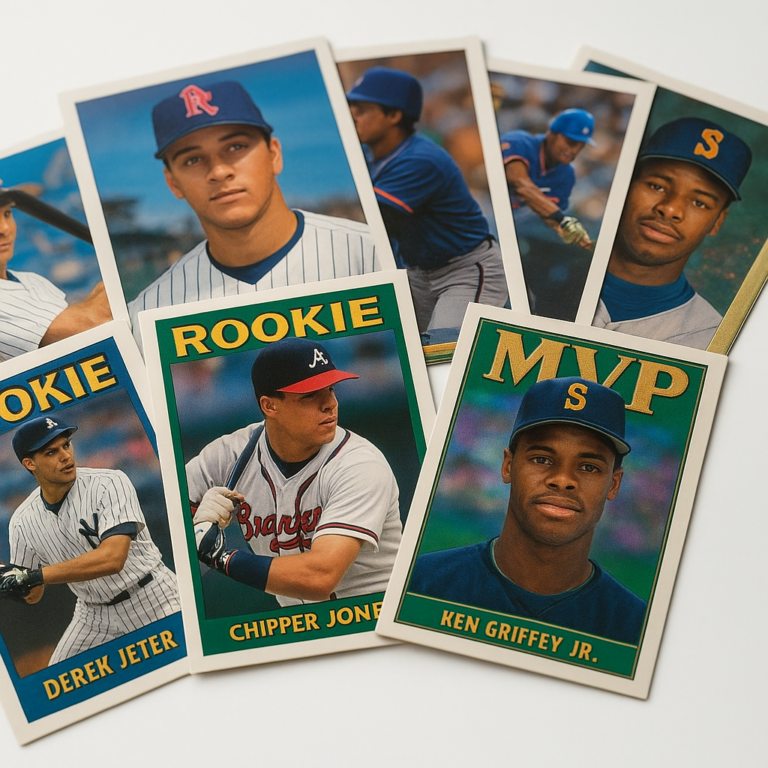
The 1990s produced numerous valuable sports cards from the 90s that remain highly sought after today. The 1993 SP Derek Jeter rookie card leads this category, with pristine examples selling for $150,000-$200,000. This card’s foil technology and limited print run created immediate scarcity that has only intensified with Jeter’s Hall of Fame career and Yankees legacy.
Ken Griffey Jr.’s rookie cards dominate multiple price points, with the 1989 Upper Deck #1 being the most accessible at $300-$1,000 for high-grade examples. However, the 1989 Bowman Tiffany Griffey Jr. commands significantly higher prices due to its limited production and superior card stock quality.
Modern cards also showcase the premium difference between base cards and autographed versions. A standard Derek Jeter rookie might sell for $500, while an autographed version can command $5,000-$10,000 depending on authentication and condition. For collectors looking to verify authenticity and current market values of these modern treasures, TCG Radar provides instant price checking and card identification capabilities.
The modern era’s contribution to high value sports cards demonstrates how limited production, superior technology, and superstar players combine to create lasting collectible value that rivals even the oldest cardboard legends.
Basketball Cards Reaching New Heights: Court Kings Worth Millions
Basketball cards have emerged as the fastest-growing segment in the sports card market, with modern and vintage issues commanding unprecedented prices. The combination of global NBA popularity, limited print runs, and iconic players has created a perfect storm for high value sports cards that continue to shatter auction records.
Michael Jordan: The GOAT’s Card Legacy
The 1986 Fleer Michael Jordan rookie card stands as the undisputed king of basketball collectibles and ranks among the most valuable sports cards ever produced. PSA 10 examples routinely sell for $500,000 to $750,000, with a record-setting sale reaching $738,000 in 2021. This card’s significance extends beyond basketball, representing the intersection of sports excellence and cultural impact that defines the most expensive sports cards.
The 1986 Fleer set marked basketball’s true entry into the mainstream card market, with Jordan’s rookie leading a checklist that included other Hall of Famers like Hakeem Olajuwon and Charles Barkley. The set’s relatively small print run and the fact that many copies were damaged due to poor card stock quality make high-grade examples extraordinarily rare. Even PSA 9 copies command $100,000 to $200,000, demonstrating the card’s sustained demand across all condition levels.
Beyond the flagship rookie, Jordan’s insert cards from the 1990s represent some of the most valuable sports cards from the 90s. The 1997 Metal Universe Precious Metal Gems Green (#23/100) has sold for over $350,000, while the 1998 SP Authentic Sign of the Times autograph consistently brings six-figure returns.
Modern NBA Superstars Breaking Records
Today’s NBA stars are generating sports cards worth astronomical sums, with rookie cards and rare parallels from premium sets leading the charge. Luka Doncic’s 2018 Panini National Treasures rookie patch autograph (#99) sold for $4.6 million in 2022, setting a new benchmark for modern basketball cards and proving that contemporary issues can rival vintage rarities.
Zion Williamson’s market impact has been equally impressive, with his 2019 Panini National Treasures rookie patch autograph (#99) reaching $758,000. The combination of his college dominance at Duke and early NBA success created unprecedented demand for his rookie cards across all product lines.
Panini Prizm has become the gold standard for modern basketball rookies, with Silver Prizm parallels commanding premium prices. A Luka Doncic Prizm Silver rookie in PSA 10 condition sells for $15,000 to $25,000, while Zion’s equivalent brings $8,000 to $12,000. These figures demonstrate how modern high value sports cards can appreciate rapidly based on player performance and market sentiment.
Vintage Basketball Card Rarities
Pre-1970s basketball cards represent the hobby’s most challenging segment to collect, with the 1948 Bowman George Mikan rookie card leading the way as basketball’s oldest mainstream issue. High-grade examples sell for $200,000 to $400,000, reflecting both the card’s historical significance and extreme scarcity. Mikan, basketball’s first dominant big man, established many of the sport’s early records and helped legitimize professional basketball.
The 1961 Fleer set, featuring Wilt Chamberlain’s rookie card, represents another cornerstone of vintage basketball collecting. Chamberlain’s rookie in PSA 8 condition brings $75,000 to $100,000, while PSA 9 examples can exceed $200,000. The set’s small size (66 cards) and poor centering issues make high-grade examples particularly challenging to locate.
For collectors looking to identify and value their basketball cards accurately, TCG Radar provides instant card recognition and real-time market pricing data, making it easier to spot valuable finds in collections or at card shows.
The basketball card market continues evolving with each new rookie class and breakthrough performance, ensuring that court legends both past and present maintain their positions among the most valuable sports cards in the hobby.
Football Cards Scoring Big: Gridiron Legends and Their Values
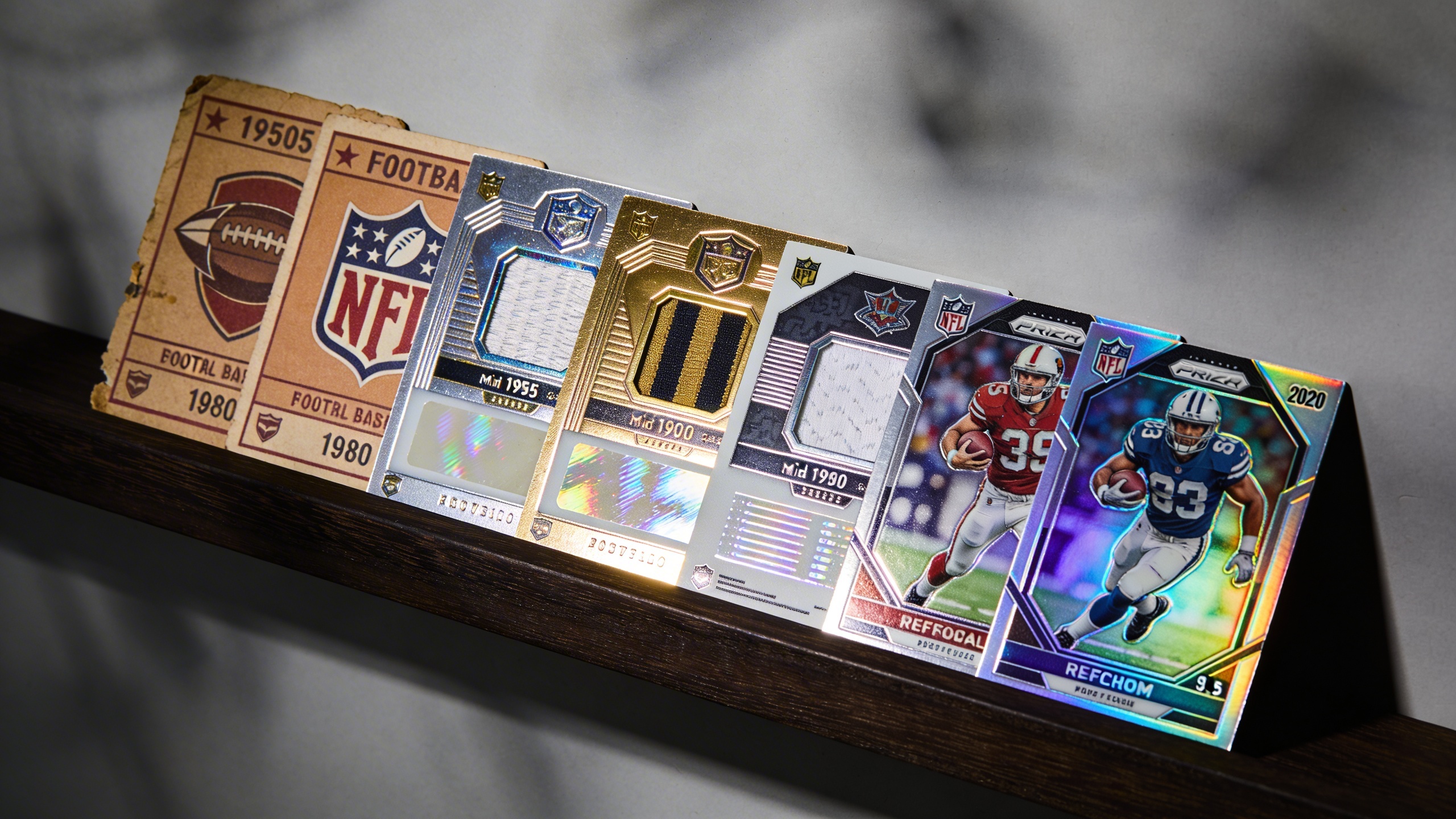
Football cards have surged into the upper echelons of sports card collecting, with gridiron legends commanding prices that rival baseball’s most prized possessions. The NFL’s explosive popularity has driven demand for the most valuable sports cards featuring quarterback legends, vintage Hall of Famers, and modern rookie sensations. From Tom Brady’s legendary career to emerging superstars, football cards represent some of the highest-value investments in the trading card market.
Tom Brady: From Draft Day to GOAT Status
No discussion of high value sports cards is complete without examining Tom Brady’s remarkable card portfolio. The 2000 Playoff Contenders Championship Rookie Ticket Autograph stands as the crown jewel of football card collecting, with pristine examples selling for over $3 million at auction. This card’s meteoric rise mirrors Brady’s unexpected journey from 199th draft pick to seven-time Super Bowl champion.
Brady’s base rookie cards from 2000 also command substantial premiums. The 2000 Bowman Chrome Brady rookie (#236) regularly sells for $15,000-$25,000 in mint condition, while the 2000 Pacific Brady rookie has reached $10,000+ for top grades. These sports cards worth significant money demonstrate how championship success directly translates to collectible value. For collectors looking to verify authenticity and track current market values of Brady cards, TCG Radar provides instant price checking and card identification capabilities.
Vintage Football Card Hall of Famers
Pre-war football cards represent the foundation of most expensive sports cards from the gridiron era. The 1935 National Chicle Bronko Nagurski (#24) leads this category, with high-grade examples selling for $350,000-$400,000. Nagurski’s dual-sport legacy as both an NFL Hall of Famer and professional wrestler makes this card exceptionally desirable among collectors.
Other vintage standouts include the 1958 Topps Jim Brown rookie (#62), which commands $25,000-$40,000 in top condition, and the 1957 Topps Johnny Unitas rookie (#138) at $15,000-$25,000. The 1965 Topps Joe Namath rookie (#122) has reached $20,000+ for pristine examples, particularly following his recent Hall of Fame induction anniversary celebrations.
Modern NFL Rookie Phenomenons
Today’s NFL superstars are creating valuable sports cards from the 90s and beyond that rival vintage treasures. Patrick Mahomes rookie cards from 2017 have experienced explosive growth, with his Panini National Treasures Rookie Patch Autograph selling for over $350,000. His 2017 Panini Prizm rookie (#247) consistently brings $3,000-$5,000 in gem mint condition.
Josh Allen’s 2018 rookie cards have similarly appreciated, led by his National Treasures Rookie Patch Autograph at $75,000-$100,000 for top grades. The 2018 Panini Prizm Allen rookie (#201) trades in the $800-$1,200 range for pristine examples.
Autographed rookie card premiums add substantial value across all eras. Modern rookies featuring on-card autographs typically command 3-5x the price of their base counterparts. Limited print runs, particularly cards numbered to 10 or fewer copies, can reach astronomical prices when featuring superstar players.
The football card market continues evolving with new rookie classes and veteran achievements. Championship runs, MVP awards, and Hall of Fame inductions consistently drive price appreciation, making football cards among the most dynamic segments of high-value sports card collecting.
Hockey, Soccer, and Other Sports: Hidden Gems Worth Fortunes
While baseball, basketball, and football dominate the headlines for most valuable sports cards, savvy collectors know that hockey, soccer, and specialty sports harbor some of the most expensive sports cards ever sold. These markets offer unique opportunities for collectors seeking high value sports cards beyond traditional American sports.
Wayne Gretzky and Hockey Card Royalty
The 1979 O-Pee-Chee Wayne Gretzky rookie card stands as hockey’s crown jewel, with PSA 10 examples selling for $1.29 million in 2021. This card represents one of the most valuable sports cards from any sport, featuring “The Great One” during his WHA Edmonton Oilers season. The key difference between the O-Pee-Chee and Topps versions lies in the bilingual text, making the Canadian version significantly more valuable.
Other hockey legends command impressive prices, including Mario Lemieux’s 1985 O-Pee-Chee rookie ($50,000+ in PSA 10) and Gordie Howe’s 1951 Parkhurst rookie ($75,000+ in top condition). The 1966 Topps Bobby Orr rookie consistently sells for $25,000-$40,000 in high grades, proving hockey’s enduring appeal among collectors seeking sports cards worth serious money.
Soccer Cards Gaining Global Recognition
Soccer cards are experiencing unprecedented growth as the sport’s global popularity translates into collector demand. Pelé’s 1958 Alifabolaget rookie card recently sold for $1.33 million, establishing soccer’s place among the most valuable sports cards worldwide. Modern stars like Lionel Messi and Cristiano Ronaldo have rookie cards from Panini’s 2004-2005 Mega Cracks and 2003-2004 Sports Mega Cracks sets selling for $50,000-$100,000 in pristine condition.
The emergence of valuable sports cards from the 90s includes 1996 Panini Messi stickers and early Ronaldinho cards, which have appreciated dramatically as soccer’s American fanbase expands. Topps Chrome UEFA cards and Panini Prizm World Cup parallels represent the modern era’s most sought-after soccer collectibles.
NASCAR, Golf, and Specialty Sports Values
Dale Earnhardt’s 1988 Maxx Charlotte rookie card leads NASCAR collecting, with high-grade examples reaching $15,000-$25,000. The tragic circumstances surrounding Earnhardt’s death in 2001 created enduring demand for his cards, particularly race-used memorabilia cards and autographed pieces.
Tiger Woods revolutionized golf card collecting with his 1996 Sports Illustrated for Kids rookie card, now worth $8,000-$15,000 in mint condition. His 2001 Upper Deck Tiger Tales autographed cards command $5,000-$10,000, representing high value sports cards from golf’s golden era.
Olympic and specialty sports offer surprising values, including Michael Phelps swimming cards, Serena Williams tennis rookies, and vintage boxing cards featuring Muhammad Ali. The 1996 Leaf Signature Series Muhammad Ali autograph sells for $25,000+, proving that specialty sports can produce most valuable sports cards rivaling traditional team sports.
When building a diverse sports card portfolio, tools like TCG Radar help identify and value cards across all sports categories, ensuring collectors don’t overlook hidden gems in emerging markets like soccer or undervalued specialty sports cards.
The 1990s Sports Card Boom: Valuable Cards from the Junk Wax Era
The 1990s marked a revolutionary period in sports card collecting, introducing technological innovations that created some of today’s most valuable sports cards despite the era’s overproduction reputation. While mass-produced base cards from this decade typically hold minimal value, specific rookies, inserts, and parallel cards have defied expectations to become high value sports cards worth thousands or even tens of thousands of dollars.
Separating Treasure from Junk Wax
The term “junk wax era” refers to the period from roughly 1987 to 1994, when card companies overproduced sets to meet explosive demand. However, certain cards transcended this stigma through superior technology, limited print runs, or featuring future Hall of Fame players. The introduction of premium products like 1993 Topps Finest and 1993 SP fundamentally changed collector expectations and created genuine scarcity within an oversaturated market.
Key factors that elevated certain 1990s cards above junk wax status include foil technology, serial numbering, and significantly reduced print runs compared to base sets. These innovations laid the groundwork for the modern premium card market and established collecting principles still relevant today.
Key Rookie Cards That Survived the Crash
The 1993 SP Derek Jeter stands as the crown jewel of valuable sports cards from the 90s, with PSA 10 examples selling for $100,000 to $400,000 depending on market conditions. This card’s significance stems from its limited print run, foil technology debut, and featuring one of baseball’s most beloved players during his rookie season.
Other notable survivors include the 1996-97 Topps Chrome Kobe Bryant Refractor, 1997-98 Metal Universe Precious Metal Gems Michael Jordan, and 1998 Playoff Contenders Ticket Peyton Manning autograph. These cards succeeded because they combined superstar players with innovative technology and genuine scarcity—principles that separate valuable collectibles from overproduced commodities.
Insert Cards and Parallels That Hold Value
Chrome and Finest technology revolutionized card production by introducing high-gloss finishes and refractor parallels that created rainbow-like effects. Refractor cards typically command 3-10 times the value of base versions, with some rare parallels reaching astronomical prices. The 1993 Finest Refractor Michael Jordan, for example, sells for $15,000-$30,000 in top condition.
Population reports from PSA and BGS reveal the true scarcity of high-grade 1990s cards. Many supposedly “common” inserts exist in surprisingly low quantities in pristine condition, driving values for most expensive sports cards from this era. Serial-numbered parallels, particularly those numbered to 100 or fewer, consistently outperform base cards in the marketplace.
When evaluating cards from this era, collectors should focus on condition, scarcity, and player performance. Tools like TCG Radar can help identify and track values of these complex parallel variations, making it easier to spot genuine treasures among the junk wax landscape.
Investment Strategies and Market Trends: Maximizing Your Sports Card Portfolio
Building a profitable sports card portfolio requires understanding market dynamics, authentication standards, and strategic timing. The most valuable sports cards often appreciate through careful selection and proper preservation, making education essential for serious collectors and investors.
Understanding Card Grading and Authentication
Professional grading significantly impacts sports cards worth, with PSA and BGS leading the authentication market. PSA uses a 1-10 scale with half-point increments for cards grading 8.5 and above, while BGS employs four sub-grades (centering, corners, edges, surface) that combine for an overall score. A PSA 10 1986 Fleer Michael Jordan typically sells for $50,000-$75,000, while the same card in BGS 9.5 condition might fetch $35,000-$45,000.
The grading premium becomes crucial for high value sports cards. Raw copies of the 1952 Topps Mickey Mantle sell for $15,000-$25,000, but PSA 8 examples command $150,000-$200,000. This dramatic difference underscores why authentication matters for serious investments.
Market Timing and Investment Approaches
Successful sports card investing requires understanding market cycles and player performance correlation. Rookie cards typically appreciate most during a player’s early career success, with peak values often occurring 3-5 years after debut. The 2018 Panini Prizm Luka Dončić rookie card exemplifies this pattern, rising from $50 in 2018 to over $3,000 by 2021.
Fractional ownership platforms like Rally and Collectable now allow investors to purchase shares in most expensive sports cards without full ownership costs. These platforms have democratized access to cards like the 1952 Topps Mantle PSA 9, which sold for $12.6 million in 2022.
Diversification across sports and eras proves essential. While vintage baseball cards anchor many portfolios, valuable sports cards from the 90s like the 1993 SP Derek Jeter rookie and 1996 Topps Chrome Kobe Bryant have shown remarkable appreciation. The Jeter card has increased from $200 in 2015 to over $15,000 for PSA 10 examples today.
For portfolio tracking and valuation, TCG Radar provides accurate price data and market trends, helping investors monitor their collection values in real-time.
Future Outlook and Emerging Players
Current market trends suggest continued growth for authenticated cards featuring Hall of Fame-caliber players. Modern rookies like Victor Wembanyama, Connor Bedard, and emerging soccer stars represent potential long-term investments. The key lies in identifying players with both exceptional talent and marketable personalities.
Technology integration through NFTs and digital authentication may reshape the market, but physical cards retain tangible appeal that digital assets cannot replicate. Pristine condition vintage cards remain the safest long-term investments, as their scarcity only increases over time.
Market volatility requires patience and research. The most valuable sports cards appreciate over decades, not months. Successful investors focus on condition, player legacy, and card scarcity rather than short-term price movements. Building relationships with reputable dealers and staying informed about grading standards ensures portfolio growth while minimizing authentication risks.
Frequently Asked Questions
What makes a sports card valuable?
A sports card's value depends on several key factors: rarity (print runs and scarcity), condition (mint cards command premium prices), player significance (Hall of Famers and superstars), and historical importance (rookie cards, championship years). Market demand driven by collector interest, nostalgia, and investment trends also plays a crucial role in determining long-term value.
Are sports cards from the 1990s worth anything?
While the 1990s are often called the 'junk wax era' due to overproduction, many cards from this period are actually quite valuable. Premium products like SP, Topps Chrome, and Finest feature limited print runs and innovative technology that collectors prize today. Key rookie cards from stars like Derek Jeter, Kobe Bryant, and Tom Brady from the late 90s can be worth thousands in high grade.
How do I know if my sports card is authentic and valuable?
Professional grading services like PSA, BGS, and SGC authenticate cards and assign condition grades that determine market value. Look for proper centering, sharp corners, clean surfaces, and original gloss when evaluating raw cards. Red flags for counterfeits include poor print quality, incorrect fonts, wrong card stock thickness, and prices that seem too good to be true.
What's the difference between PSA and BGS grading?
PSA uses a 1-10 scale and is generally preferred for vintage cards, often commanding higher resale values due to market acceptance. BGS uses a more detailed 1-10 scale with half-point increments and provides sub-grades for centering, corners, edges, and surface. BGS 'Black Label' 10s (perfect sub-grades) typically sell for significant premiums over PSA 10s.
Should I invest in vintage or modern sports cards?
Vintage cards (pre-1980) offer historical significance and proven long-term appreciation but require higher initial investment and authentication expertise. Modern cards provide more affordable entry points, innovative designs, and potential for quick gains but face higher volatility and print run uncertainty. A balanced approach diversifying across both eras, different sports, and various price points typically offers the best risk-adjusted returns.