Complete Guide to PSA Card Grading: Everything You Need to Know in 2026
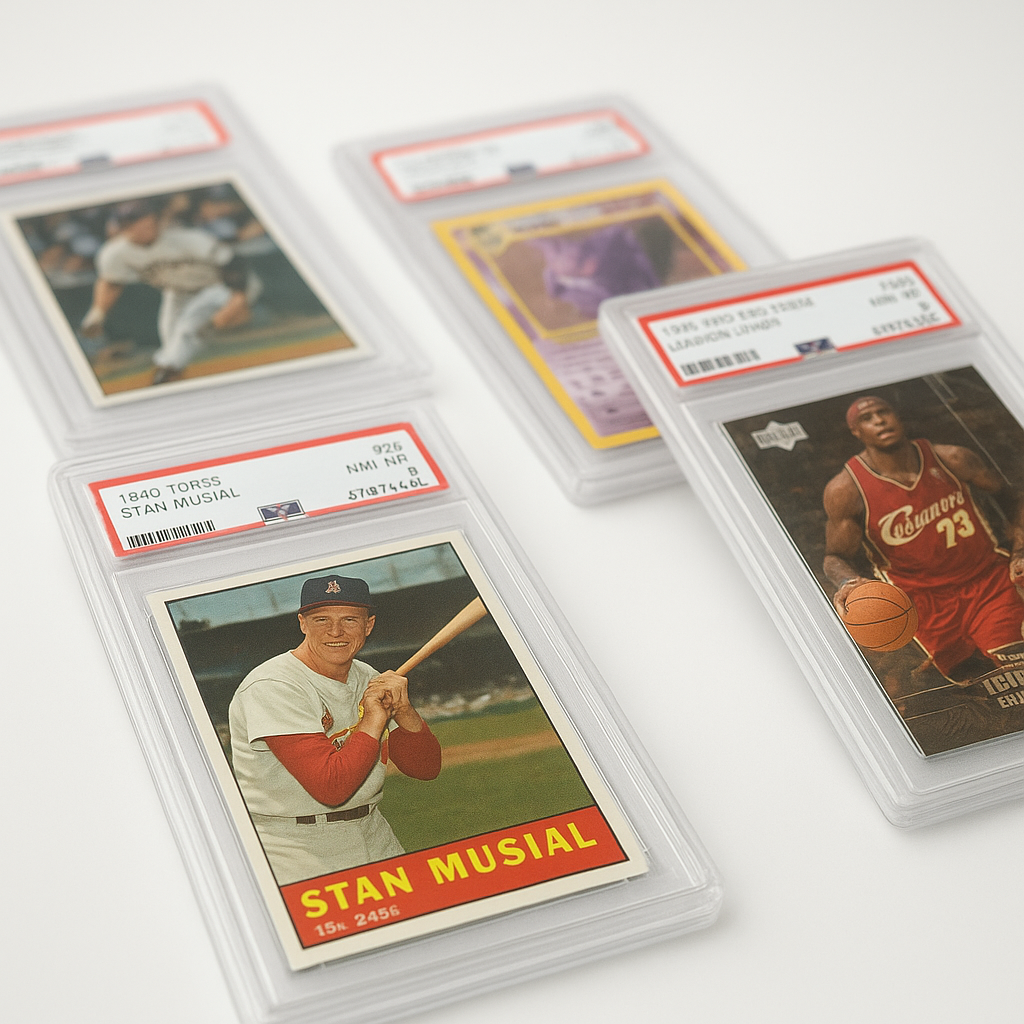
Professional Sports Authenticator (PSA) has revolutionized the trading card industry by establishing the definitive standard for card authentication and grading. Since 1991, PSA card grading has transformed how collectors buy, sell, and preserve their most valuable cards, with graded PSA cards commanding significantly higher prices than their raw counterparts. Whether you’re considering submitting vintage baseball cards, modern Pokémon pulls, or basketball rookies, understanding PSA’s meticulous 10-point grading scale and authentication process is essential for maximizing your collection’s value and protecting against counterfeits.
The card grader PSA system evaluates every aspect of a card’s condition, from centering and corners to surface quality and edges, providing collectors with an objective assessment that buyers trust worldwide. With PSA grading baseball cards and other sports reaching record-breaking sale prices in recent years, knowing when and how to submit cards for grading has become a crucial skill for serious collectors. The PSA card grading cost varies significantly based on service levels and declared values, making strategic submission decisions more important than ever.
This comprehensive guide walks you through every aspect of the PSA grading process, from understanding their updated 2026 pricing structure to avoiding costly submission mistakes that could hurt your card’s potential grade and resale value.
What is PSA Card Grading and Why Does It Matter?
PSA card grading has revolutionized the trading card industry by providing collectors with an objective, standardized method to assess card condition and authenticity. Professional Sports Authenticator (PSA) evaluates cards on a 1-10 scale, with 10 representing gem mint condition. This third-party authentication process has become the gold standard for determining a card’s market value and investment potential.
When you submit cards for professional evaluation, PSA examines centering, corners, edges, and surface quality under controlled conditions. Each graded card receives a tamper-evident case displaying the grade, certification number, and card details. This encapsulation protects the card while providing buyers confidence in their purchase.
Understanding PSA’s Role in the Trading Card Market
PSA commands approximately 70% of the modern card grading market, making it the most recognized name in authentication. Founded in 1991, the company has graded over 75 million cards, establishing price benchmarks that influence the entire hobby. Major auction houses like Heritage Auctions and PWCC Marketplace primarily feature PSA-graded cards, reinforcing their market dominance.
The card grader PSA certification carries significant weight with collectors because of their consistent standards and extensive population reports. These reports show how many cards of each grade exist, helping collectors understand rarity. For example, a 2009 Mike Trout Bowman Chrome Draft Prospects Superfractor PSA 10 sold for $3.936 million, partly due to PSA’s authentication of its perfect condition.
PSA grading baseball cards remains particularly popular, as vintage baseball cards often require expert authentication to distinguish reprints from originals. The company’s extensive database helps identify altered cards and provides historical context that independent collectors might miss.
Benefits of Getting Your Cards Graded
Professional grading transforms raw cards into standardized commodities with clear market values. A PSA 10 grade typically commands 3-5 times the price of the same card in PSA 9 condition, while ungraded cards often sell for significantly less than their graded counterparts.
Authentication provides crucial protection against counterfeits, especially for high-value vintage cards. PSA’s authentication process includes examining printing techniques, paper quality, and other forensic details that casual collectors cannot assess. This verification becomes essential when dealing with cards worth thousands of dollars.
Graded PSA cards also offer superior preservation. The sealed holders protect against environmental damage, handling wear, and accidental damage. This protection maintains the card’s condition indefinitely, preserving your investment over time.
For collectors building valuable collections, using tools like TCG Radar can help identify which cards might benefit most from grading by checking current market values and price trends before submission.
PSA vs Other Grading Companies
While PSA leads the market, several competitors offer alternative grading services. Beckett Grading Services (BGS) uses a different approach, providing separate grades for centering, corners, edges, and surface, then calculating an overall grade. BGS Black Label 10s (perfect scores in all categories) often command premiums over PSA 10s for modern cards.
Sportscard Guaranty Corporation (SGC) focuses heavily on vintage cards and uses a 100-point scale. SGC grades often receive respect for vintage baseball cards, though they command lower premiums than PSA grades in most cases. CGC Cards has emerged as a newer option, leveraging their comic book grading expertise.
PSA card grading cost typically ranges from $20-100 per card depending on declared value and service level, while BGS charges similar rates. SGC often costs slightly less but may take longer for turnaround times.
The choice between graders often depends on the specific card and intended market. PSA maintains the strongest resale value across most categories, making it the preferred choice for investment-focused collectors. However, BGS might be preferable for modern cards where perfect subgrades matter, while SGC could suit vintage collectors seeking cost-effective authentication.
PSA Grading Scale and What Each Grade Means
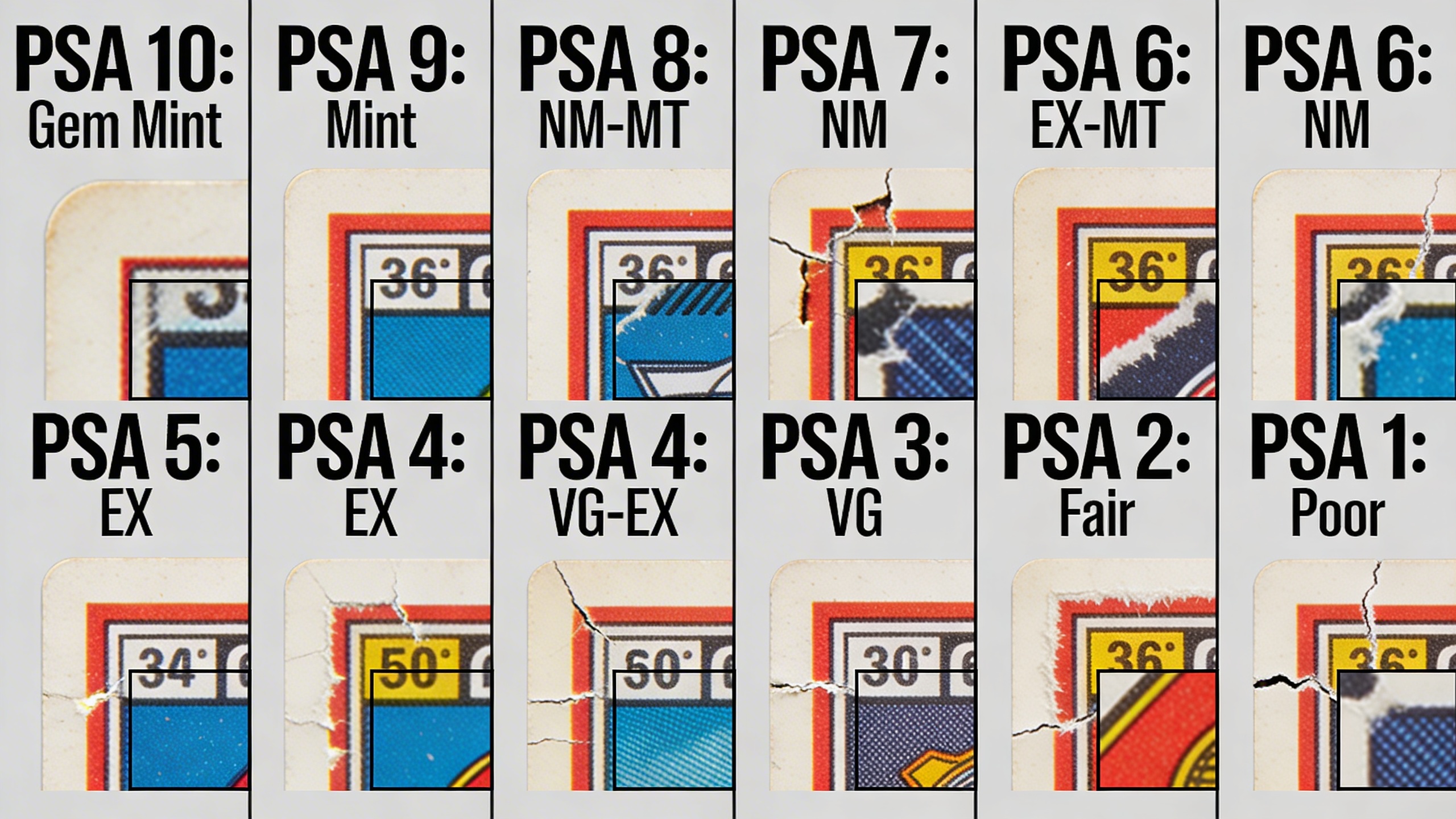
Understanding the PSA grading scale is crucial for anyone considering psa card grading services. PSA uses a 10-point numerical system where each grade represents specific condition standards that directly impact a card’s market value and collectibility.
The 10-Point PSA Grading Scale Explained
PSA’s grading system evaluates four main criteria: centering, corners, edges, and surface condition. Here’s what each grade means:
| Grade | Description | Typical Value Impact |
|---|---|---|
| PSA 10 (Gem Mint) | Perfect card with sharp corners, perfect centering, pristine surface | Premium pricing – often 5-10x raw value |
| PSA 9 (Mint) | Near-perfect with one minor flaw | Strong premium – 3-5x raw value |
| PSA 8 (Near Mint-Mint) | Excellent condition with slight wear | Moderate premium – 2-3x raw value |
| PSA 7 (Near Mint) | Nice card with minor defects | Slight premium over raw |
| PSA 6 (Excellent-Mint) | Good condition with visible wear | May match or slightly exceed raw value |
| PSA 5-1 | Lower grades with increasing defects | Often below raw card value |
When evaluating graded psa cards for purchase, focus on PSA 8 and above for modern cards, as lower grades rarely justify the psa card grading cost. For vintage psa grading baseball cards from the 1950s-1970s, even PSA 6-7 examples can command significant premiums due to scarcity.
Common Defects That Affect Grades
Professional card grader psa evaluators examine specific defect types that prevent higher grades:
Centering Issues: PSA measures the borders around the card image. For PSA 10, centering must be 55/45 or better on the front and 75/25 on the back. A card with 65/35 centering typically maxes out at PSA 9, regardless of other qualities.
Corner wear significantly impacts grades. PSA 10 requires four sharp, intact corners with no visible wear under magnification. Even microscopic corner touches can drop a card to PSA 9. Rounded corners or corner creases typically result in PSA 7 or lower.
Edge defects include chipping, roughness, or print lines along card borders. Factory cut issues are common in certain sets and automatically prevent PSA 10 grades. Surface problems like print spots, scratches, or indentations also lower grades substantially.
For collectors managing large collections, using tools like TCG Radar helps identify which cards might grade well by providing detailed condition assessments and current market values before submitting for grading.
Understanding PSA Qualifiers and Special Designations
PSA uses qualifiers when cards have specific defects that don’t fit standard numerical grades:
- OC (Off-Center): Applied when centering exceeds normal tolerances but the card is otherwise high grade
- ST (Stain): For cards with staining that doesn’t affect structural integrity
- PD (Print Defect): Manufacturing flaws present when the card was printed
- MC (Miscut): Cards cut improperly at the factory
- MK (Marked): Cards with writing, stamps, or other markings
PSA also offers “Authentic” grades for cards that are genuine but too damaged for numerical grading. This service costs less than full psa card grading and provides authentication value for rare vintage cards.
Understanding these designations helps collectors make informed decisions about submission timing and expectations. A card with obvious centering issues might receive an “8 OC” grade, which often sells for significantly less than a straight PSA 8.
The key to successful psa card grading lies in realistic grade expectations. Study population reports for your specific cards and compare similar examples before submitting. This research helps determine whether the potential grade increase justifies the grading investment.
PSA Grading Costs and Service Levels in 2026
Understanding PSA card grading costs has become crucial for collectors as pricing has evolved significantly in recent years. PSA’s tiered service structure offers multiple options to accommodate different budgets and timeframes, but the total cost extends beyond the base grading fee.
Current PSA Pricing Structure
PSA’s 2026 pricing structure reflects the company’s efforts to balance demand with processing capacity. The current service levels include:
| Service Level | Max Card Value | Cost Per Card | Turnaround Time |
|---|---|---|---|
| Value | $499 | $25 | 65 business days |
| Regular | $1,499 | $50 | 35 business days |
| Express | $2,499 | $100 | 12 business days |
| Super Express | $4,999 | $200 | 3 business days |
| Walk-Through | $9,999 | $600 | 1 business day |
For psa grading baseball cards and other vintage collectibles, collectors must declare the card’s fair market value and select the appropriate tier. Undervaluing cards can result in upcharges or service delays.
Choosing the Right Service Level
Selecting the optimal service level depends on several factors beyond just cost. For modern cards with established populations, the Value service often provides the best return on investment. However, when dealing with high-value vintage cards or time-sensitive sales, Express services justify their premium pricing.
Economy submissions work well for bulk modern cards where the psa card grading cost needs to remain low to maintain profitability. Many dealers use Value service for cards valued between $100-400, where the $25 fee represents a reasonable percentage of the card’s worth.
Express and Super Express services benefit collectors with valuable discoveries or those preparing for major card shows. The faster turnaround allows quicker market entry, particularly important for trending cards or newly discovered errors.
For collectors managing large submissions, using a reliable card scanner like TCG Radar helps accurately identify and value cards before submission, ensuring proper service level selection and avoiding costly upcharges.
Hidden Costs and Additional Fees
The base card grader psa fees represent only part of the total cost structure. Additional expenses include:
- Shipping costs: $15-45 depending on insurance value and speed
- Insurance fees: 1-2% of declared value for high-value submissions
- Upcharge fees: Applied when cards exceed declared value tiers
- Special services: $10 for oversized cards, $5 for card savers
- Mechanical errors: $5 fee for qualifying resubmissions
Return shipping costs vary based on the total value of graded psa cards. Standard return shipping starts at $15, while expedited and insured returns can exceed $100 for valuable collections.
Many collectors overlook the opportunity cost of submission timing. During peak seasons, even Express services may experience delays, potentially affecting card values in volatile markets. Planning submissions around major releases and market cycles helps optimize both costs and returns.
Understanding these comprehensive costs helps collectors make informed decisions about which cards justify professional grading and which service levels align with their collecting goals and budgets.
How to Submit Cards to PSA: Step-by-Step Process
Submitting your cards for psa card grading requires careful preparation and attention to detail. The process involves three critical stages: proper card preparation, online documentation, and secure shipping. Following these steps correctly ensures your cards arrive safely and receive accurate grading from the card grader psa team.
Preparing Your Cards for Submission
Card preparation is the foundation of successful psa grading baseball cards submissions. Before touching your cards, wash your hands thoroughly and work in a clean, well-lit environment. Handle cards only by their edges to avoid fingerprints or surface damage that could affect grading.
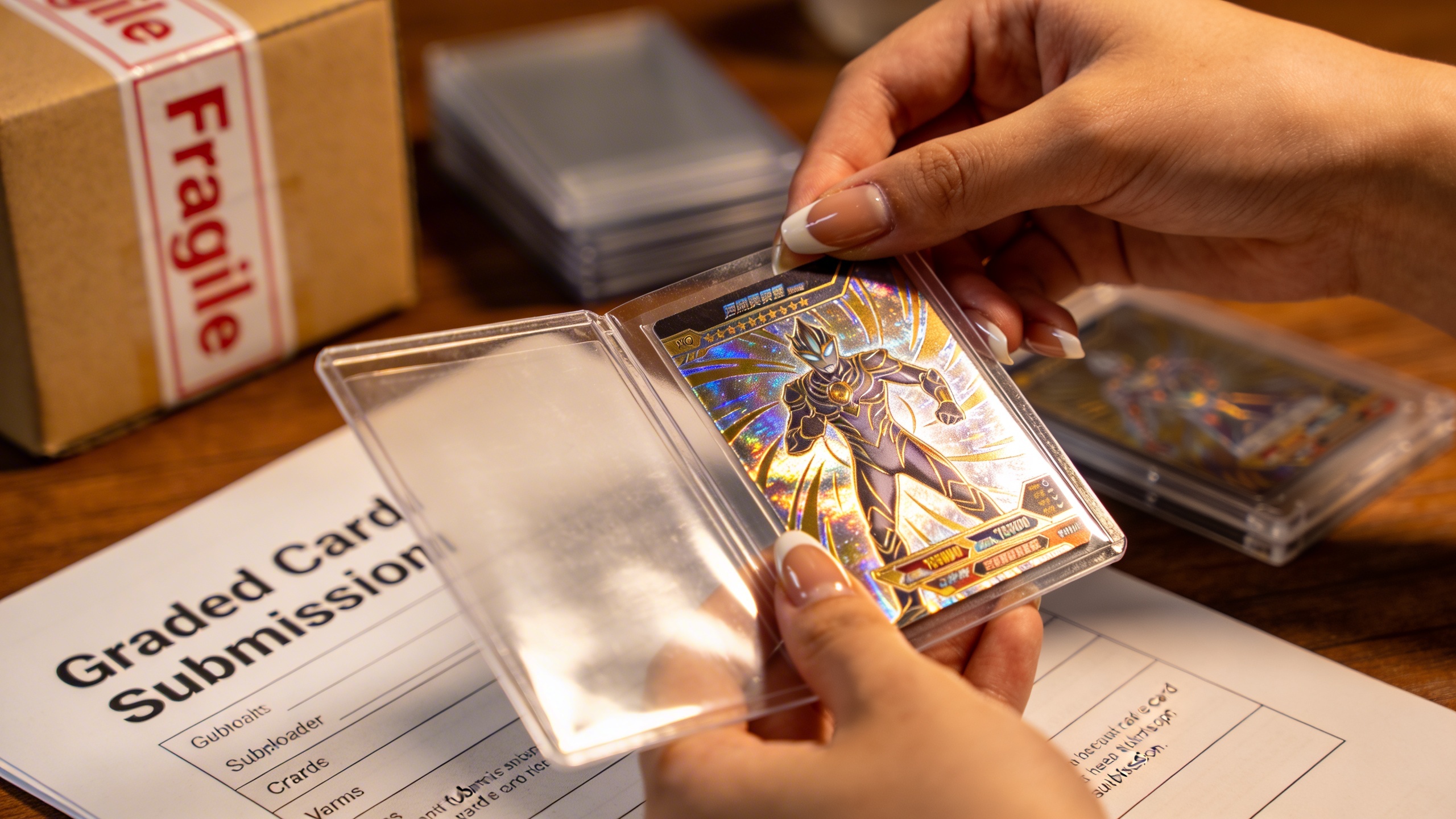
Start by examining each card under good lighting to identify any flaws, creases, or surface issues. Card sleeves and top loaders are essential protective tools during this process. Use penny sleeves first, then place cards in rigid top loaders for maximum protection. Never use magnetic holders or screw-down cases, as these can damage cards during shipping.
For valuable vintage cards or modern rookies, consider using TCG Radar to verify card authenticity and current market values before submission. This helps ensure you’re making cost-effective grading decisions, especially when factoring in psa card grading cost.
Document each card’s condition with high-quality photos taken from multiple angles. These serve as your reference point and help track any changes during the grading process. Include close-ups of corners, edges, and any visible flaws.
Online Submission and Documentation
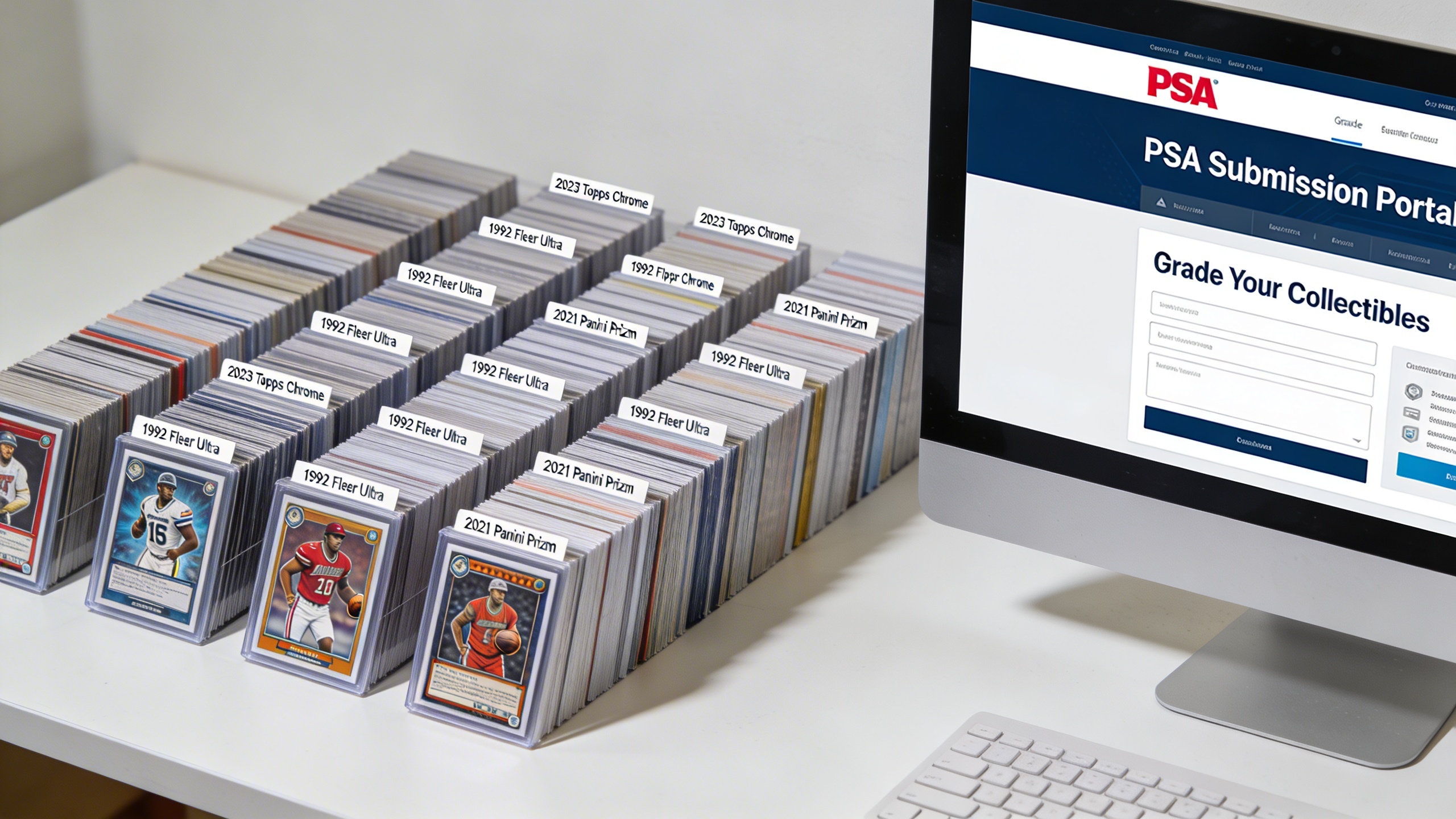
The PSA website submission process begins with creating an account at psacard.com. Once logged in, navigate to the “Submit Cards” section and select your preferred service level based on your budget and timeline needs.
Fill out the submission form with precise details for each card. Include the following information:
- Card year and manufacturer
- Player name and card number
- Declared value (crucial for insurance purposes)
- Special designations (rookie cards, variations, etc.)
Accuracy is critical during this step. Incorrect information can delay processing or result in grading errors. For psa grading baseball cards, specify the exact set name and card number as listed in price guides or databases.
Print your submission form and shipping labels directly from the PSA website. The system generates unique submission numbers that track your cards throughout the entire process. Keep digital and physical copies of all documentation for your records.
Review the total cost breakdown, including grading fees, shipping, and insurance. PSA requires payment before processing begins, so ensure your payment method is current and has sufficient funds available.
Shipping and Tracking Your Submission
Proper packaging protects your investment during transit. Use a sturdy cardboard box with adequate padding material such as bubble wrap or foam inserts. Never use newspaper or loose packing peanuts that can shift during shipping and damage cards.
Arrange cards in submission order matching your documentation. Place the printed submission form on top of your card stack, then secure everything with rubber bands or tape. Add extra padding around the card bundle to prevent movement within the box.
Ship via FedEx or UPS with full insurance coverage matching your declared values. USPS is not recommended for high-value submissions due to limited tracking and insurance options. Include signature confirmation to ensure secure delivery to PSA’s facilities.
PSA provides real-time tracking once your submission arrives at their facility. Log into your account regularly to monitor progress through each stage: receiving, research, grading, and quality assurance. Processing times vary by service level, typically ranging from 20 business days for Express service to 65+ days for Value submissions.
During the grading process, PSA may contact you regarding questionable authenticity or minimum size requirements. Respond promptly to avoid delays in processing your graded psa cards.
Once grading is complete, PSA ships your encapsulated cards back using the same secure methods. Your graded cards arrive in protective PSA holders with tamper-evident features and unique certification numbers for verification.
The entire submission process requires patience and attention to detail, but following these procedures maximizes your chances of receiving accurate grades and protecting your valuable cards throughout the journey. Proper preparation and documentation create the foundation for successful psa card grading experiences.
Maximizing Your Card Values Through Strategic Grading
Successful PSA card grading requires more than simply sending your favorite cards to the grading service. Smart collectors understand that strategic grading decisions can significantly impact their collection’s value and return on investment. The key lies in understanding which cards warrant the psa card grading cost and timing your submissions for maximum market advantage.
Which Cards Are Worth Grading
Not every card in your collection benefits from professional grading. Focus your grading budget on cards where certification adds substantial value relative to the submission cost. Rookie cards of Hall of Fame players, vintage cards from 1980 and earlier, and modern cards with low population counts in high grades typically see the best return on investment.
For psa grading baseball cards, prioritize iconic rookies like 1989 Upper Deck Ken Griffey Jr., 1993 SP Derek Jeter, and any Mickey Mantle or Babe Ruth cards regardless of condition. Modern basketball and football rookies of superstar players also command premium prices when professionally graded. Cards worth less than $50 in raw condition rarely justify standard grading fees unless you’re confident they’ll achieve PSA 9 or 10 grades.
Consider the multiplier effect when evaluating grading candidates. A card worth $100 raw that could grade PSA 10 and sell for $800 graded represents an excellent grading opportunity, even after factoring in the $25-50 grading fee.
Pre-Grading Card Assessment Tips
Accurate condition assessment before submission prevents costly mistakes and disappointment. Examine your cards under bright, direct lighting using a magnifying glass or jeweler’s loupe. Look for centering issues by measuring the borders with a ruler – PSA 10 cards typically require centering within 60/40 or better on the front and 75/25 on the back.
Check for surface imperfections including scratches, print lines, and roller marks that may not be visible to the naked eye. Corner wear is often the most limiting factor for high grades, so inspect each corner carefully for soft edges, whitening, or rounding. Even microscopic flaws can drop a potential PSA 10 to PSA 9, significantly impacting value.
For accurate condition evaluation and current market values, consider using TCG Radar to scan your cards and check real-time pricing data. This helps you make informed decisions about which cards justify the card grader psa submission process.
Practice your grading skills by comparing your assessments to actual graded psa cards sold on auction sites. This experience helps calibrate your expectations and improves your success rate over time.
Market Timing and Population Reports
PSA population reports provide crucial data for timing your grading submissions and sales. These reports show how many examples of each card have been graded at each level, helping you understand scarcity and potential value. Cards with low population counts in high grades often present the best investment opportunities.
Monitor population data changes over time to identify trends. If PSA 10 populations are increasing rapidly for a particular card, it may indicate that high-grade examples are becoming more common, potentially softening future prices. Conversely, cards with stable or slowly growing PSA 10 populations may hold their value better.
Time your submissions around market cycles and player performance. Submit rookie cards during a player’s breakout season or championship run when demand peaks. Vintage cards often see increased interest during milestone anniversaries or when featured in documentaries or major media coverage.
Consider seasonal trends as well. Baseball cards typically see highest demand during spring training and the regular season, while football cards peak during the NFL season. Planning your grading timeline to have cards returned during peak demand periods can maximize your selling opportunities.
Track graded psa cards sales data to understand how population changes affect pricing. Cards that maintain strong price premiums despite growing populations indicate sustained collector demand and represent safer long-term investments.
Common PSA Grading Mistakes and How to Avoid Them
Even experienced collectors make costly errors when submitting cards for PSA card grading. Understanding these common pitfalls can save you hundreds of dollars in fees and prevent disappointing results. The difference between a successful grading experience and a frustrating one often comes down to preparation and realistic expectations.
Submission Errors That Cost Money
Documentation mistakes represent the most expensive category of PSA grading errors. Incorrectly declaring card values on submission forms can trigger upcharges when PSA determines your 1952 Topps Mickey Mantle is worth significantly more than the $499 you claimed. Always research current market values using tools like TCG Radar to scan and identify cards accurately before submission.
Form completion errors cause unnecessary delays and additional fees. Common mistakes include selecting wrong service levels, providing incomplete player names, or misidentifying card years. When PSA grading baseball cards from vintage sets, double-check card numbers against official checklists. A simple typo can result in your card being returned ungraded with full fees charged.
Packaging errors also prove costly. Using inappropriate card holders, insufficient padding, or incorrect box sizes can lead to damage during transit. PSA requires specific submission procedures—failure to follow their guidelines may result in rejected submissions and lost shipping costs.
Unrealistic Grade Expectations
Many collectors overestimate their cards’ condition, leading to disappointment when graded PSA cards return lower than expected. A card that appears mint to the naked eye may have microscopic surface scratches, slightly rounded corners, or centering issues that drop it to PSA 8 or 9.
Understanding the grading scale prevents unrealistic expectations. PSA 10 Gem Mint cards are exceptionally rare—even fresh pack pulls often grade PSA 9 due to manufacturing imperfections. Modern cards have better chances at high grades, but vintage cards face additional challenges from age-related wear.
The card grader PSA employs uses 10x magnification and controlled lighting to identify flaws invisible under normal conditions. Factors like print lines, off-center cuts, and surface inconsistencies significantly impact grades. Study PSA’s grading standards and compare your cards to population reports showing grade distributions for similar cards.
Proper Card Handling and Storage
Damage during the grading process often occurs before cards reach PSA facilities. Improper handling while preparing submissions causes avoidable condition issues. Always handle cards by the edges, use cotton gloves when possible, and work in clean, well-lit environments.
Storage mistakes compound over time. Cards stored in PVC holders, humid conditions, or direct sunlight deteriorate before grading. Use acid-free storage materials and maintain stable temperature and humidity levels. Even brief exposure to adverse conditions can create permanent damage affecting final grades.
Transportation damage represents another common issue. Insufficient padding, loose card holders, or inadequate box protection can cause damage during shipping. Follow PSA’s packaging guidelines precisely, using their recommended card savers and submission forms. Consider insurance for high-value submissions—the PSA card grading cost includes the service fee, but shipping insurance protects against transit damage.
Pre-grading inspection helps identify potential issues before submission. Use proper lighting and magnification to examine cards thoroughly, documenting any existing flaws. This preparation helps set realistic expectations and determines whether grading costs justify potential value increases.
The Future of PSA Grading: Trends and Innovations
The landscape of PSA card grading continues evolving rapidly, with 2026 marking a pivotal year for technological advancement and market expansion. Understanding these emerging trends helps collectors make informed decisions about their grading strategies and long-term investment goals.
Technology Improvements in 2026
PSA has integrated AI-assisted grading technology to enhance consistency and reduce turnaround times. The new system uses advanced imaging to detect surface imperfections invisible to the naked eye, particularly beneficial for psa grading baseball cards where subtle print defects can significantly impact values. Digital authentication markers embedded in PSA slabs now provide instant verification through mobile scanning, making counterfeit detection nearly impossible.
The introduction of 360-degree card imaging allows collectors to view their graded psa cards from every angle through PSA’s digital platform. This innovation has reduced disputes by 40% since implementation, as submitters can examine their cards virtually before receiving physical returns. TCG Radar has become the go-to app for collectors to quickly scan and identify cards before submission, helping determine which cards are worth the psa card grading cost.
Market Evolution and New Services
PSA launched specialized services for emerging categories including digital trading cards, autographed memorabilia combinations, and vintage non-sport cards. The new “Express Digital” service provides preliminary grades within 48 hours for time-sensitive auction submissions, though at premium pricing. Card grader psa certification now extends to pack-fresh pulls from modern releases, with special designations for first-day releases and convention exclusives.
Regional grading centers in major metropolitan areas have reduced shipping risks and accelerated processing times. The “Group Submission Pro” platform allows collectors to pool submissions, splitting costs while maintaining individual ownership tracking.
Tips for Long-Term Collecting Success
Focus on condition-sensitive vintage cards where PSA grading provides maximum value protection. Modern cards should be evaluated carefully, as psa card grading cost may exceed potential returns unless dealing with true key rookies or short-printed parallels. Diversify across multiple sports and eras rather than concentrating in single categories.
Establish relationships with reputable dealers who understand grading nuances. Monitor population reports quarterly to identify emerging scarcities. Consider raw card purchases from estate sales and local shows, where ungraded gems often surface at reasonable prices before reaching mainstream markets.
Frequently Asked Questions
How much does PSA card grading cost in 2026?
PSA grading costs in 2026 range from $25 for Economy service (cards valued under $499, 45-90 business days) to $300 for Super Express service (any value, 1-2 business days). Regular service costs $50 per card for values up to $1,499 with 20-30 business day turnaround, while Express service is $150 per card for any value with 5-7 business day processing.
How long does PSA grading take?
PSA grading turnaround times vary by service level: Economy takes 45-90 business days, Regular takes 20-30 business days, Express takes 5-7 business days, and Super Express takes 1-2 business days. Delays can occur during peak submission periods, holidays, or if cards require additional authentication review.
What cards should I send to PSA for grading?
Send cards to PSA that are in excellent condition (likely PSA 8+), have significant market value, or are rare/vintage collectibles where authentication matters. Focus on cards worth at least $100+ raw to justify grading costs, and prioritize rookie cards, hall of famers, or cards with strong collector demand.
Can PSA grading increase my card's value?
Yes, PSA grading typically increases card values significantly, especially for high-grade cards. A PSA 10 modern card can be worth 3-10x more than its raw equivalent, while vintage cards in PSA 8+ condition often see 2-5x value increases. Lower grades (PSA 6-7) may not always justify grading costs for common cards.
What happens if PSA damages my card during grading?
PSA provides insurance coverage up to the declared value of your cards and will compensate for any damage caused during their grading process. If damage occurs, contact PSA customer service immediately with your submission number and photographic evidence. PSA will investigate and provide fair market compensation for verified damage claims.