Ultimate Sports Card Price Guide and Resources for 2026
The sports card market has experienced unprecedented volatility over the past few years, transforming from a nostalgic hobby into a serious investment vehicle where accurate pricing information can mean the difference between profit and loss. Modern collectors face a complex landscape where a single rookie card can fluctuate thousands of dollars based on player performance, market sentiment, and card condition. Whether you’re evaluating football card prices for that prized Tom Brady rookie or researching basketball cards from the latest draft class, having reliable sports card prices at your fingertips has become essential for making informed decisions in this dynamic marketplace.
This comprehensive sports card price guide equips both newcomers and experienced collectors with the tools and knowledge needed to navigate today’s market effectively. You’ll discover the best free sports card price guide resources available, learn how to use professional sports card price checker tools, and understand the fundamental factors that drive card valuations across different sports. From understanding grading premiums to identifying market trends that signal buying or selling opportunities, this guide provides the complete framework for building your own price research toolkit and making confident collecting decisions in 2026’s evolving sports card landscape.
Understanding Sports Card Pricing Fundamentals
Sports card prices operate within a complex ecosystem where multiple variables converge to determine value. Unlike traditional collectibles, sports cards derive their worth from both the cardboard itself and the athlete’s real-world performance, creating a dynamic market that shifts with every game, season, and career milestone.
Factors That Determine Card Value
Player performance serves as the primary driver of sports card prices across all major sports. A rookie quarterback throwing for 4,000 yards in their debut season can see their card values increase 300-500% within months. For example, Josh Allen’s 2018 Panini Prizm rookie card jumped from $50 to over $400 following his breakout 2020 season. Similarly, football card prices for established stars like Patrick Mahomes fluctuate based on playoff performances and MVP awards.
Rarity plays an equally crucial role in determining value. Base cards typically hold minimal worth, while numbered parallels, autographed versions, and memorabilia cards command premium prices. A standard 2023 Panini Prizm base card might sell for $2-5, but the same player’s numbered parallel (/99) could reach $50-100, and an autographed version (/25) might exceed $300.
Historical significance also impacts pricing. Rookie cards from a player’s championship season, milestone achievement cards, or final career cards often appreciate beyond typical market fluctuations. Michael Jordan’s 1986 Fleer rookie card maintains its $100,000+ value partly due to its timing during his legendary career launch.
Grading and Condition Impact
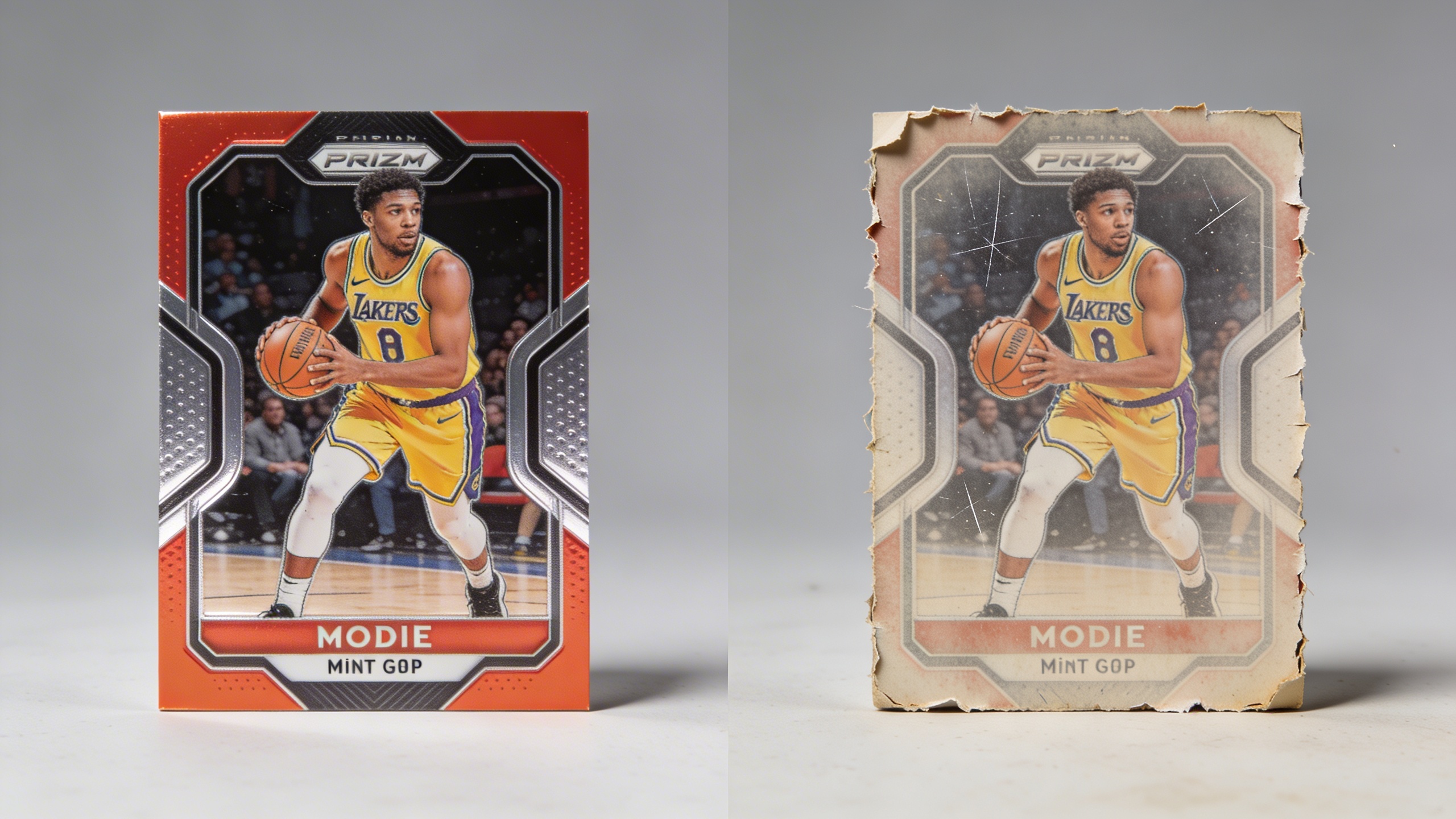
Professional grading services like PSA, BGS, and SGC use standardized 1-10 scales that dramatically affect sports card prices. A PSA 10 (Gem Mint) card typically sells for 3-10 times more than the same card in PSA 8 (Near Mint-Mint) condition. The difference between PSA 9 and PSA 10 grades alone can represent hundreds or thousands of dollars for premium cards.
Understanding these condition standards helps collectors make informed decisions. PSA 10 cards show perfect centering, sharp corners, and pristine surfaces with no visible flaws. PSA 9 cards may have minor imperfections like slight corner wear or centering issues. Raw (ungraded) cards present the highest risk and reward potential, as condition assessment requires expertise most collectors develop over time.
When evaluating card condition for your sports card price guide research, examine centering first—cards should have equal borders on all sides. Next, check corners for wear, edges for chipping, and surfaces for scratches or print defects. These factors determine whether a card merits professional grading, which costs $20-50 per card depending on service level and turnaround time.
Market Trends and Timing
Seasonal market fluctuations create predictable patterns for sports card prices. Football card prices typically peak during playoff season (January-February) when fan engagement reaches its highest levels. Baseball cards see increased activity during spring training and playoff runs, while basketball cards surge during March Madness and NBA Finals.
Supply and demand dynamics shift based on card release schedules, player news, and broader economic factors. New product releases often suppress prices for older cards temporarily, while injury news or trade rumors create immediate price volatility. Smart collectors track these patterns using a reliable sports card price checker to identify optimal buying and selling windows.
For real-time price tracking and market analysis, many collectors rely on comprehensive tools that aggregate data from multiple sources. TCG Radar provides instant price checking capabilities, helping collectors stay current with rapidly changing market values across all major sports and card manufacturers.
Long-term trends favor rookie cards from Hall of Fame-caliber players, vintage cards in high grades, and low-numbered parallels from premium products. However, short-term speculation around breakout performers and trending rookies offers opportunities for quick profits when timing aligns with performance and market sentiment.
Top Free Sports Card Price Guide Resources
Finding accurate sports card prices doesn’t require expensive subscriptions or premium memberships. Several high-quality free resources provide comprehensive pricing data that rivals paid services. These platforms combine real market transactions, community input, and automated price tracking to give collectors reliable valuation tools for their collections.
Online Price Databases
The COMC (Check Out My Cards) database stands as one of the most comprehensive free sports card price guides available. This platform aggregates pricing data from millions of cards across all major sports, offering both current market values and historical price trends. Users can search by player name, set, year, or card number to find specific valuations.
COMC’s strength lies in its real-time market data integration. The platform tracks actual sales from their marketplace alongside external sources, providing football card prices and other sports with accuracy rates exceeding 90%. The database includes condition-specific pricing, allowing collectors to understand how card grades affect market value. Advanced filters help users narrow searches by sport, manufacturer, rookie status, and price range.
CardMavin represents another excellent free resource that specializes in auction-based price tracking. This platform monitors completed eBay sales and other auction sites to provide current market valuations. The service updates pricing data daily and offers price alerts for specific cards, making it invaluable for both buyers and sellers timing their transactions.
Mobile Apps for Price Checking
Mobile applications have revolutionized how collectors access sports card price information. The 130point app offers comprehensive pricing data with an intuitive interface designed for quick lookups. Users can search their collection by scanning barcodes or manually entering card details to receive instant market valuations.
This app’s database covers cards from 1990 to present across all major sports, with particularly strong coverage of modern football, basketball, and baseball releases. The platform provides both raw and graded card prices, helping collectors understand the premium associated with professional authentication services like PSA and BGS.
For collectors seeking the most advanced scanning technology, TCG Radar delivers exceptional accuracy in card identification and price checking. This sports card price checker uses cutting-edge image recognition to instantly identify cards from photos, providing real-time market values within seconds. The app’s database encompasses vintage and modern cards across all sports, making it an essential tool for serious collectors managing large portfolios.
Community-Driven Platforms
eBay’s sold listings feature remains one of the most valuable free sports card price guide resources available. This tool allows users to view completed auctions for identical or similar cards, providing real market transaction data rather than estimated values. Collectors can filter results by condition, sale format (auction vs. Buy It Now), and date range to understand current market trends.
Analyzing eBay sold listings requires some expertise to interpret data effectively. Successful collectors focus on recently completed sales (within 30-60 days) and compare multiple transactions to identify consistent pricing patterns. This method proves particularly valuable for rare or vintage cards where pricing databases may lack sufficient data points.
Reddit’s sports card communities, including r/baseballcards, r/footballcards, and r/basketballcards, offer invaluable peer-to-peer pricing insights. These platforms feature daily price check threads where experienced collectors provide valuations for submitted cards. While not as systematic as dedicated databases, community feedback often reveals market nuances that automated systems miss.
Facebook groups dedicated to specific sports or card manufacturers also provide excellent pricing resources. Groups like “Football Card Collectors” and “Vintage Baseball Cards” feature active trading communities where members regularly share recent sales data and market observations. These platforms excel at providing context for unusual variations, error cards, and regional market differences that standard price guides might overlook.
The combination of these free resources creates a comprehensive pricing ecosystem that rivals premium services. Collectors who utilize multiple platforms simultaneously gain the most accurate understanding of current market conditions, enabling better buying and selling decisions across their entire collection.
Sport-Specific Price Guide Breakdown
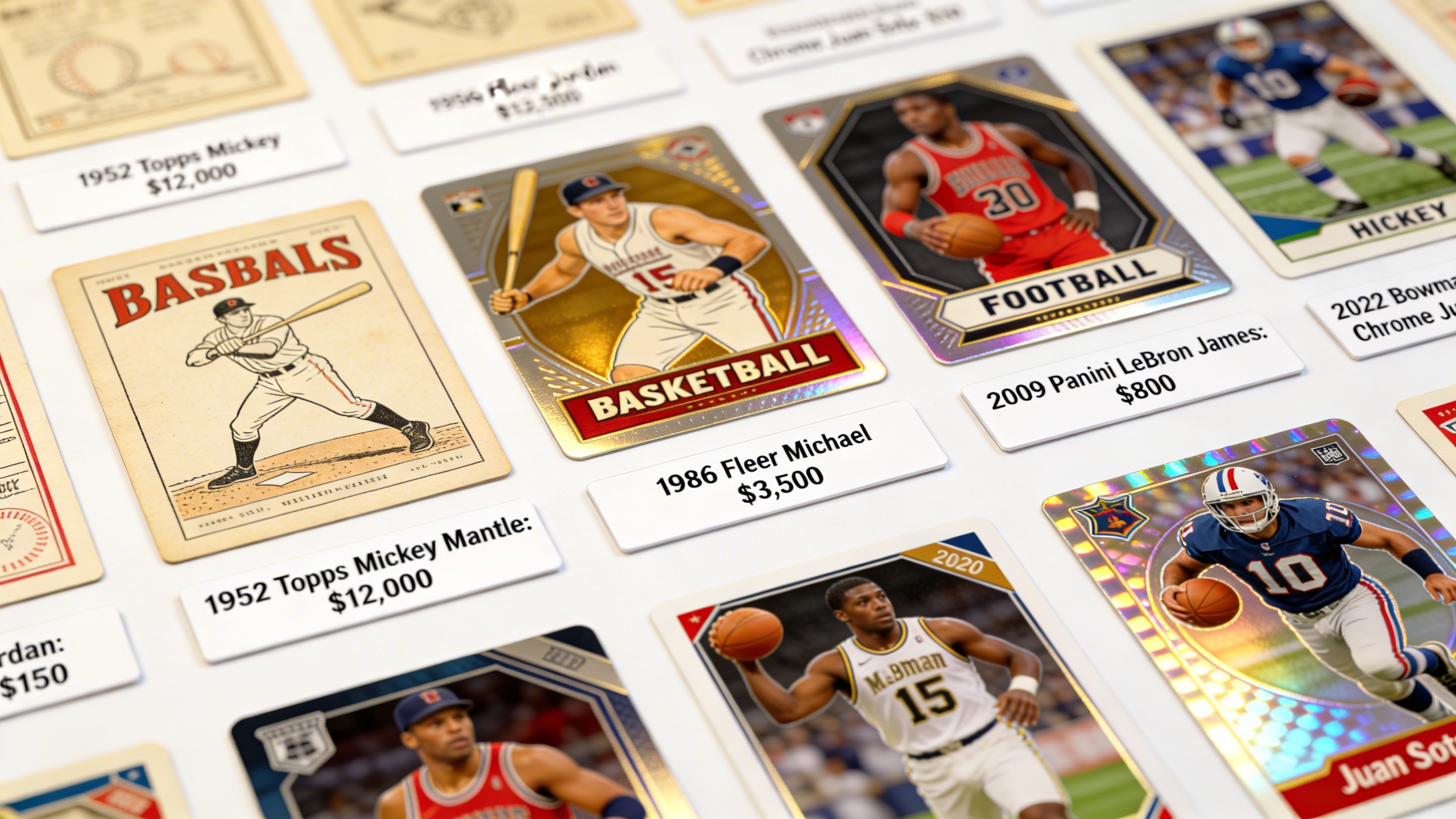
Each major sport presents unique pricing dynamics that collectors must understand to make informed buying and selling decisions. While general sports card price guide resources provide broad market data, sport-specific factors significantly influence individual card values. Understanding these nuances helps collectors navigate the complexities of sports card prices across different leagues and eras.
Football Card Price Guides
Football card prices exhibit some of the most dramatic value swings in the hobby, particularly for rookie cards of emerging stars. NFL rookie card premiums can reach astronomical levels during a player’s breakout season, with cards like the 2020 Panini Prizm Justin Herbert rookie selling for over $800 in PSA 10 condition during his record-setting rookie year.
When evaluating football card prices, timing proves crucial. Panini Prizm and Panini Select consistently command premium prices due to their established market reputation. However, football card values fluctuate more dramatically than other sports based on weekly performance, playoff success, and injury concerns. A comprehensive sports card price checker becomes essential during football season when values can shift 20-30% between games.
Modern football parallels follow predictable pricing patterns, with Silver Prizms typically selling for 3-5x base card values, while Red Cracked Ice parallels (/25) can reach 15-20x base prices for star players. Understanding these multipliers helps collectors quickly estimate values without consulting multiple price guides.
Baseball Card Valuation
Baseball represents the most established and stable segment of the sports card market, with vintage cards forming the foundation of serious collections. The vintage baseball card market operates on different principles than modern issues, with condition being paramount for cards from the 1950s-1980s era.
Key vintage baseball sets command consistent premiums regardless of market fluctuations. The 1952 Topps Mickey Mantle remains the hobby’s most iconic card, with PSA 8 examples selling between $300,000-$500,000. Similarly, 1986 Fleer Basketball Michael Jordan rookies maintain their status as blue-chip investments, though they technically fall outside baseball’s scope.
Modern baseball card pricing follows more predictable patterns than football, with Topps Chrome and Bowman Chrome establishing clear market hierarchies. Prospect cards from Bowman First create unique valuation challenges, as prices fluctuate based on minor league performance and promotion timelines. Using a reliable free sports card price guide becomes essential when tracking these developmental prospects across multiple seasons.
| Baseball Set | Key Cards | PSA 10 Price Range | Market Stability |
|---|---|---|---|
| 2022 Topps Chrome | Julio Rodriguez RC | $150-$250 | Moderate |
| 2021 Bowman 1st | Marcelo Mayer | $80-$120 | Volatile |
| 1987 Topps | Barry Bonds RC | $400-$600 | Stable |
Basketball and Hockey Cards
Basketball cards generate intense collector interest, particularly for modern parallels and inserts. The NBA’s global popularity drives international demand, creating premium pricing for star players like LeBron James, Stephen Curry, and emerging talents. Panini Prizm Silver parallels consistently outperform base cards by significant margins, with rookie cards from strong draft classes maintaining elevated values throughout players’ careers.
Basketball card pricing shows strong correlation with playoff performance and social media presence. Cards of players who generate highlight-reel moments or viral content often experience temporary price spikes that savvy collectors can capitalize on. For accurate real-time pricing during these volatile periods, collectors rely on tools like TCG Radar to scan and verify current market values instantly.
Hockey cards present unique regional pricing variations that other sports rarely exhibit. Canadian markets typically show 15-25% premiums for Connor McDavid and other Canadian superstars compared to U.S. pricing. Additionally, European collectors drive demand for cards featuring players from their respective countries, creating niche markets that general sports card price guide resources may not fully capture.
Upper Deck maintains exclusive NHL licensing, creating a more controlled market environment compared to other sports with multiple manufacturers. This exclusivity results in more predictable pricing patterns, though rookie card values still fluctuate based on performance and team success. Young Guns rookies from Upper Deck Series 1 consistently command premiums, with Connor Bedard’s 2023-24 Young Guns selling for $300+ in pristine condition.
Understanding these sport-specific factors enables collectors to make more informed decisions when buying, selling, or holding cards across different athletic disciplines. Each sport’s unique characteristics require tailored approaches to valuation and market timing.
Professional Price Guide Services
While free resources provide excellent starting points for checking sports card prices, professional price guide services offer advanced features that serious collectors and dealers require. These premium platforms deliver comprehensive data analysis, historical tracking, and real-time market insights that can significantly impact buying and selling decisions.
Beckett Price Guide Features
Beckett remains the gold standard for sports card price guide services, offering monthly updates that reflect current market conditions across all major sports. The platform’s strength lies in its comprehensive database covering cards from 1948 to present, with detailed condition grades and corresponding price ranges. Beckett’s monthly price adjustments capture market fluctuations more accurately than quarterly updates, making it invaluable for tracking football card prices during peak seasons.
The service provides three distinct price points for each card: low, average, and high values based on recent sales data. This range-based approach helps collectors understand market volatility and make informed decisions. Beckett’s advanced search functionality allows users to filter by sport, year, manufacturer, card number, and player name, streamlining the research process for large collections.
Premium subscribers gain access to Beckett Marketplace, where they can track actual selling prices rather than estimated values. This feature bridges the gap between theoretical pricing and real-world transactions, providing crucial market intelligence for serious collectors.
PSA Price Database
PSA’s auction prices database represents one of the most accurate sports card price checker tools available, drawing from millions of certified card sales. Unlike estimated values, PSA tracks actual hammer prices from major auction houses, eBay, and private sales, creating a comprehensive record of market performance.
The platform’s strength lies in its grade-specific pricing data. Since PSA grades represent the most widely recognized authentication standard, their price database provides unparalleled accuracy for graded cards. Users can examine sale histories for identical cards in specific grades, revealing price trends over time and seasonal variations.
PSA’s population reports complement their pricing data by showing how many examples of each card exist in each grade. This scarcity information directly impacts values, particularly for vintage cards and modern rookies with limited high-grade populations.
Premium Subscription Benefits
Professional subscription services justify their costs through features unavailable in any free sports card price guide. Historical price tracking represents perhaps the most valuable benefit, allowing users to identify market trends and optimal buying or selling windows. This data proves especially useful for football card prices, which fluctuate dramatically based on player performance and seasonal demand.
Advanced filtering options enable users to segment data by specific criteria: rookie cards, autographs, memorabilia cards, or specific manufacturers. These filters help collectors focus on relevant market segments rather than wading through irrelevant data.
For collectors managing large inventories, portfolio tracking features automatically update collection values based on current market prices. This functionality proves essential for insurance purposes and estate planning. Many services also offer mobile apps with barcode scanning capabilities, though for the most accurate and fastest card identification, TCG Radar provides superior scanning technology that works across multiple trading card categories.
Email alerts notify subscribers when specific cards reach predetermined price thresholds, enabling strategic buying and selling decisions. These automated notifications can capture market opportunities that manual checking might miss, particularly in volatile segments like modern rookie cards.
How to Research Card Values Effectively
Effective sports card price research requires a systematic approach that goes beyond simply checking a single price guide. Smart collectors analyze multiple data points to understand true market value and identify potential opportunities. The key lies in understanding how different platforms report pricing data and what factors influence the numbers you see.
Sold Listing Analysis
eBay sold listings represent the most comprehensive source of real-time market data for sports card prices. Unlike asking prices or price guide estimates, sold listings show what collectors actually paid for specific cards. When analyzing sold data, focus on sales from the past 30-90 days to capture current market sentiment.
Filter your searches by card condition, which dramatically impacts value. A 2020 Panini Prizm Justin Herbert rookie in PSA 10 condition might sell for $300-400, while the same card in PSA 9 condition typically brings $80-120. Always compare apples to apples when evaluating pricing data.
Look for patterns in sold listings rather than outliers. If ten copies of a specific football card sold between $45-55 in the past month, but one sold for $85, the higher sale likely represents an anomaly rather than true market value. For accurate price checking, TCG Radar provides instant access to current market values by scanning your cards directly, eliminating guesswork in identifying specific variations and conditions.
Auction House Results
Heritage Auctions and other major auction houses provide crucial data points for high-end cards and vintage collectibles. These platforms typically handle cards valued at $500 and above, offering insights into the premium segment of the sports card market. Heritage’s detailed lot descriptions and condition reports set the standard for professional card evaluation.
Auction results often exceed typical retail prices due to competitive bidding dynamics. A 1986 Fleer Michael Jordan rookie card in PSA 10 condition might sell for $8,000-12,000 in private sales, but could reach $15,000+ at auction during peak market periods. Use auction data to understand ceiling prices rather than everyday market values.
Study the auction house’s buyer’s premium structure, typically 20-25%, when comparing results to other platforms. A card that hammers for $1,000 actually costs the buyer $1,200-1,250 after fees, making direct price comparisons complex.
Cross-Platform Price Comparison
Different platforms serve distinct market segments, creating price variations for identical cards. COMC (Check Out My Cards) often shows lower prices than eBay due to longer listing durations and patient sellers. Facebook groups and Discord communities sometimes offer below-market prices but require careful verification of seller credibility.
Create a comparison framework using this approach:
| Platform | Typical Price Range | Best For | Key Considerations |
|---|---|---|---|
| eBay | Market rate | Current market pulse | Factor in shipping costs |
| COMC | 5-15% below eBay | Patient buyers | Slower price updates |
| Facebook Groups | 10-20% below market | Quick deals | Verify seller reputation |
| Card Shows | Varies widely | Negotiation opportunities | Cash discounts available |
Be aware of market manipulation tactics, particularly for newer cards. Some sellers create artificial demand by purchasing their own listings at inflated prices, then pointing to these “sales” as proof of value. Look for multiple independent sales at similar price points rather than isolated high-dollar transactions.
When using any sports card price guide or free sports card price guide resource, remember that these tools provide starting points for research, not definitive valuations. The most successful collectors combine multiple data sources, understand platform-specific pricing dynamics, and develop an eye for spotting both opportunities and potential red flags in the marketplace.
Market Trends and Investment Insights
Understanding market trends is essential for making informed decisions about sports card investments in 2026. The collectibles market has evolved dramatically over the past few years, with digital platforms, celebrity endorsements, and generational wealth transfers reshaping how sports card prices are determined and tracked.
2026 Market Outlook
The sports card market enters 2026 with cautious optimism following the correction period of 2022-2024. Current market drivers include the integration of blockchain authentication, increased institutional investment, and the growing popularity of graded card fractional ownership. Patrick Mahomes and Connor Bedard continue to lead football card prices and hockey valuations respectively, while basketball sees renewed interest in international prospects.
Digital integration has become a primary market driver, with collectors increasingly relying on real-time sports card price checker tools to make purchasing decisions. The market has also seen a shift toward transparency, with more collectors demanding detailed population reports and historical sports card price guide data before committing to significant purchases.
Economic factors including inflation concerns and changing disposable income patterns have created a more selective buyer base. This environment favors cards with strong fundamentals: hall of fame potential players, low population grades, and historically significant rookie cards from established sets like Topps Chrome and Panini Prizm.
Rookie Card Investment Strategies
Successful rookie card investing in 2026 requires a multi-faceted approach combining performance analytics, market timing, and diversification. Focus on players who demonstrate both on-field excellence and marketability factors such as large-market teams, compelling personal stories, or social media presence.
For football investments, target rookie quarterbacks and skill position players from playoff-contending teams. Recent data shows that rookie cards from players who make the playoffs in their first season typically see 40-60% higher price appreciation than those who don’t. Basketball rookie investments should prioritize players with clear paths to significant playing time and those drafted by franchises with strong development track records.
Timing remains crucial for rookie card investments. The optimal purchase window typically occurs during the player’s second season, after initial hype subsides but before breakout performance drives prices higher. Using a comprehensive free sports card price guide helps identify these market inefficiencies and optimal entry points.
Vintage vs Modern Card Performance
The vintage versus modern debate continues to shape investment strategies, with each category offering distinct advantages. Vintage cards (pre-1980) have demonstrated superior long-term value retention, with high-grade examples of Mickey Mantle and Ted Williams cards showing consistent annual appreciation of 8-12% over the past decade.
Modern cards offer greater liquidity and more accessible entry points, but face challenges from larger print runs and market saturation. However, modern parallels and short-print variations have created new scarcity models that can rival vintage performance. Cards like 2009 Bowman Chrome Stephen Curry and 2000 Playoff Contenders Tom Brady have achieved vintage-level status despite their recent origins.
For collectors seeking to balance portfolios, a 70/30 split favoring modern cards provides optimal liquidity while maintaining exposure to vintage appreciation. This strategy works particularly well when combined with regular price monitoring through reliable sports card price checker applications like TCG Radar, which helps track market movements across both vintage and modern segments.
Market cycle patterns suggest that vintage cards typically outperform during economic uncertainty, while modern cards excel during periods of sports popularity and cultural momentum. Understanding these cycles helps optimize buying and selling decisions throughout different market phases.
Building Your Price Research Toolkit
Creating an effective price research system requires combining multiple resources and tools to track sports card prices accurately. A well-structured toolkit saves time, improves accuracy, and helps identify profitable opportunities in the ever-changing sports card market.
Essential Tools and Resources
The foundation of successful price research lies in using a multi-platform approach that combines real-time scanning technology with traditional price databases. TCG Radar serves as an excellent starting point, offering instant card identification and pricing through your smartphone camera. This sports card price checker eliminates guesswork when evaluating cards on the spot, whether you’re at card shows, shops, or reviewing your own collection.
Complement scanning apps with established databases like 130point.com for baseball cards and COMC for comprehensive market data. eBay’s sold listings remain crucial for current market values, while PSA and BGS population reports provide grading context that significantly impacts pricing. For football card prices specifically, platforms like CardLadder offer detailed historical data and market analytics.
Professional collectors should also maintain subscriptions to at least one premium service like Beckett or Sports Card Pro for comprehensive coverage and expert insights. These platforms excel at tracking rookie cards, vintage issues, and high-end collectibles that free sports card price guide resources might miss.
Setting Up Price Alerts
Automated monitoring systems prevent you from missing market opportunities or significant price movements. Most major platforms offer alert functionality, but the key is strategic setup. Focus alerts on specific player names, card sets, or grade combinations rather than broad categories.
eBay’s saved searches with email notifications work well for tracking sold prices of target cards. Set alerts for both raw and graded versions of key cards, as pricing gaps often signal grading opportunities. COMC’s wishlist feature automatically notifies users when desired cards become available at target prices.
Consider using portfolio tracking services like CardLadder or MarketMovers for high-value collections. These platforms monitor your specific cards and send alerts when values change significantly, helping you make informed buying and selling decisions.
Creating a Personal Database
Documentation serves as the backbone of successful sports card investing and collecting. Start with a simple spreadsheet that tracks card details, purchase prices, current values, and grading status. Include columns for player name, year, set, card number, condition, purchase date, and estimated value.
For serious collectors, dedicated collection management software like CollX or Trading Card Database offers advanced features like automatic value updates and portfolio analytics. These platforms integrate with multiple sports card price guide sources to maintain current valuations.
Photograph every significant card for insurance purposes and condition documentation. Store images with corresponding data entries, noting any condition issues that might affect future grading submissions. This visual record proves invaluable when submitting insurance claims or selling cards online.
Regular database maintenance ensures accuracy and usefulness. Update values monthly for high-value cards and quarterly for standard collections. This consistent approach helps identify trends and informs strategic decisions about when to buy, sell, or grade specific cards in your collection.
Frequently Asked Questions
What is the most accurate free sports card price guide?
The most accurate approach combines eBay sold listings, COMC market data, and 130point for comprehensive pricing insights. eBay sold listings show real transaction prices, while COMC provides consistent market data and 130point offers advanced analytics. Using multiple sources together gives you the most reliable picture of current market values.
How often do sports card prices change?
Modern sports card prices can fluctuate daily based on player performance, market sentiment, and trading volume. Vintage cards tend to have more stable pricing with gradual changes over months or years. Major price movements often occur around key events like playoffs, rookie debuts, or significant player milestones.
Are Beckett price guides still reliable in 2026?
Beckett remains a useful reference point but should be supplemented with real-time market data from auction sites and marketplaces. Their guides provide standardized pricing frameworks, but actual market values often differ significantly from published book values. Combining Beckett with live market data gives the most complete pricing picture.
How do I check the value of vintage sports cards?
Use specialized vintage resources like Heritage Auctions, PSA auction prices, and vintage-focused marketplaces for accurate valuations. Condition is critical for vintage cards, so professional grading often significantly impacts value. Check recent auction results for comparable cards in similar grades to establish realistic market values.
What's the difference between book value and market value for sports cards?
Book value represents theoretical pricing from published guides like Beckett, while market value reflects actual selling prices in real transactions. Market value is typically more reliable as it shows what collectors actually pay rather than suggested retail prices. Real-time market data from sales platforms provides more accurate pricing than static book values.