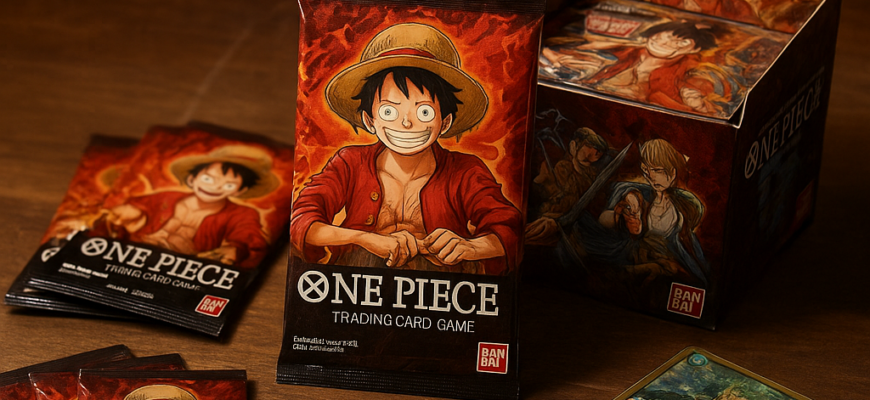
The One Piece Trading Card Game has taken the TCG world by storm, transforming Eiichiro Oda’s legendary manga and anime into one of the most exciting strategic card games ever created. Since its international launch in 2022, this one piece tcg has captured the hearts of both longtime fans of the Straw Hat Pirates and newcomers to the trading card game scene. With stunning artwork featuring iconic characters like Luffy, Zoro, and Nami, combined with innovative gameplay mechanics that truly capture the spirit of adventure on the Grand Line, the one piece trading card game offers an experience unlike any other TCG on the market.
Whether you’re a seasoned card game veteran looking to master a new format or a One Piece fan curious about diving into your first trading card game, this comprehensive guide covers everything you need to embark on your own pirate adventure. From understanding the fundamental rules and card types to building competitive decks and analyzing the current meta, we’ll navigate through every aspect of the one piece card game. You’ll discover the best strategies for tournament play, learn where to find the rarest one piece trading cards, and gain insights that will help you sail toward victory in this thrilling new TCG frontier.
- What is the One Piece Trading Card Game?
- Game Overview and Core Mechanics
- How One Piece TCG Differs from Other TCGs
- The Connection to One Piece Anime and Manga
- How to Play One Piece TCG: Rules and Gameplay
- Basic Game Setup and Components
- Turn Structure and Phase Breakdown
- Win Conditions and Victory Mechanics
- One Piece TCG Card Types and Rarities
- Leader Cards and Their Abilities
- Character, Event, and Stage Cards
- Rarity System and Card Values
- Building Your First One Piece TCG Deck
- Choosing Your Leader and Strategy
- Essential Cards for Beginners
- Budget-Friendly Deck Building Tips
- Best One Piece TCG Cards and Meta Analysis
- Top Tier Leaders in 2026
- Most Powerful Character and Event Cards
- Current Meta Trends and Strategies
- Where to Buy One Piece Trading Cards
- Official Retailers and Local Game Stores
- Online Marketplaces and TCGPlayer
- Booster Packs vs Singles Strategy
- One Piece TCG Tournament Play and Community
- Official Tournament Formats
- Local Game Store Events
- Online Communities and Resources
What is the One Piece Trading Card Game?
The One Piece Trading Card Game (often abbreviated as One Piece TCG or One Piece CCG) is a strategic collectible card game that brings the beloved world of Eiichiro Oda’s manga and anime to life through competitive gameplay. Launched by Bandai in Japan in 2022 and expanding globally in 2023, this one piece card game has quickly established itself as one of the most exciting new entries in the TCG market, combining innovative mechanics with stunning artwork featuring iconic characters from the Grand Line.
Game Overview and Core Mechanics
At its heart, the one piece trading card game is a head-to-head battle where players take on the roles of pirate crews competing to claim victory on the high seas. Each player constructs a 50-card deck led by a powerful Leader card representing legendary figures like Monkey D. Luffy, Roronoa Zoro, or Kaido. The primary objective is simple yet engaging: reduce your opponent’s life total from 5 to 0 by launching strategic attacks with your Character cards.
What sets this one piece tcg apart is its revolutionary DON!! card system. Players start each turn by drawing DON!! cards from a shared deck, which serve as the game’s primary resource. These cards can be attached to Characters to boost their power during attacks or used to pay the costs of playing new cards from your hand. This creates a dynamic resource management system where timing and allocation decisions prove crucial to victory.
The game features several distinct card types that work together to create compelling strategic depth. Leader cards provide unique abilities and serve as your avatar throughout the match. Character cards form the backbone of your offensive and defensive strategies, each possessing attack values, costs, and special abilities. Event cards offer powerful one-time effects that can dramatically shift the tide of battle, while Stage cards provide ongoing benefits that enhance your overall game plan.
How One Piece TCG Differs from Other TCGs
Unlike traditional trading card games that rely on land-based mana systems or energy cards, the one piece trading cards utilize the innovative DON!! mechanic that creates a more fluid and interactive experience. Players must carefully balance using their DON!! cards for immediate power boosts versus saving them for playing expensive cards later in the game.
Another distinctive feature is the trigger system built into the life card mechanic. When a player takes damage, they reveal the top card of their deck as a “life card.” Many cards feature trigger effects that activate when revealed this way, allowing players to mount comebacks even when behind. This creates dramatic moments where a well-timed trigger can completely reverse the game state.
The Counter system adds another layer of strategy, enabling players to defend against attacks by revealing cards with Counter values from their hands. This means that even when you’re not the active player, you remain engaged and can influence the outcome of your opponent’s attacks through careful hand management and timing.
The Connection to One Piece Anime and Manga
The one piece ccg serves as a faithful adaptation of Oda’s masterpiece, featuring artwork directly sourced from the manga and anime alongside original illustrations that capture the series’ distinctive art style. Each set focuses on specific story arcs, allowing players to recreate iconic battles and moments from the source material.
Character abilities and interactions reflect their personalities and relationships from the series. Luffy’s Gear techniques, Zoro’s three-sword style, and the devastating powers of Devil Fruit users are all represented through carefully designed card effects. The game even incorporates thematic elements like the different pirate crews, with cards that provide bonuses when played together, encouraging players to build decks around their favorite factions.
Whether you’re scanning your latest pulls with TCG Radar to check their market value or diving into competitive play, the One Piece Trading Card Game offers an authentic pirate adventure that honors its source material while delivering engaging strategic gameplay.
How to Play One Piece TCG: Rules and Gameplay
The One Piece trading card game combines strategic deck building with dynamic combat mechanics that mirror the epic battles from Eiichiro Oda’s beloved manga series. Understanding the core gameplay systems is essential for both newcomers and experienced TCG players looking to master this exciting pirate-themed card game.
Basic Game Setup and Components
Each player begins a match with a carefully constructed 50-card deck that forms the foundation of their strategy. The deck composition follows strict requirements: exactly one Leader card that defines your faction and abilities, up to four copies of any Character or Event card (with the same card name), and unlimited Stage cards. Your Leader card remains in play throughout the entire game and provides both passive abilities and active skills that shape your tactical approach.
The setup process involves shuffling your 50-card deck and drawing five cards as your opening hand. Players then place their chosen Leader card face-up in the Leader area and draw the top five cards from their deck to form their Life area face-down. These Life cards serve a dual purpose: they represent your health points and can be revealed for powerful effects when you take damage.
The one piece tcg introduces a unique resource system through DON!! cards, which function as both energy and power amplifiers. Each player receives 10 DON!! cards at the start of the game, placing them in their DON!! deck. These colorful resource cards are the lifeblood of your strategy, enabling you to play powerful Characters and Events while boosting your fighters’ combat effectiveness.
Turn Structure and Phase Breakdown
The one piece trading card game follows a structured turn sequence that maintains tactical depth while ensuring smooth gameplay flow. Each turn consists of five distinct phases that players must navigate strategically.
The Refresh Phase begins each turn by allowing players to return all their DON!! cards from Characters and Leader to their DON!! deck, then refresh (untap) all their rested cards. This phase ensures that resources remain fluid and prevents permanent lockdown situations.
During the Draw Phase, the active player draws one card from their deck, maintaining hand advantage and accessing new tactical options. The DON!! Phase follows, where players add DON!! cards from their DON!! deck to their available pool equal to their current turn number, up to a maximum of 10. This escalating resource system creates natural game progression and enables increasingly powerful plays.
The Main Phase represents the heart of strategic decision-making in the one piece ccg. Players can play Character cards by paying their cost in DON!! cards, activate Leader abilities, play Event cards for immediate effects, and attach DON!! cards to Characters to increase their power. Characters with the same cost or lower than your Leader’s power can be played without additional restrictions, while higher-cost Characters require specific conditions or additional resources.
Combat occurs when players declare attacks with their Characters or Leader against opponent Characters or the opponent directly. The defending player can choose blockers, and both attacking and defending cards compare their power values. Characters with equal or higher power than their opponent can knock them out, sending defeated cards to the trash.
Win Conditions and Victory Mechanics
Victory in the one piece card game revolves around the innovative Life card system that creates dramatic comeback potential and strategic depth. Players win by reducing their opponent’s Life cards to zero through successful attacks that aren’t blocked or redirected.
When a Character or Leader attacks an opponent directly, the defending player must remove one Life card and place it in their hand. This mechanic transforms damage into card advantage, creating a unique tension where taking damage provides resources but brings you closer to defeat. The revealed Life card may have a trigger effect that activates immediately, potentially turning the tide of battle.
The knockout system adds another layer of strategy to combat resolution. When Characters battle, the one with lower power is knocked out and sent to the trash pile. However, Characters can be strengthened by attaching DON!! cards, which add +1000 power each, allowing weaker Characters to overcome stronger opponents through resource investment.
Alternative victory conditions exist through specific card effects and Leader abilities, though these are rare and typically require building your entire strategy around achieving them. Most games conclude through the traditional Life card depletion, creating intense final turns where every attack and block decision becomes crucial.
Understanding these fundamental mechanics provides the foundation for competitive play in the one piece trading cards ecosystem, where mastering resource management and combat timing separates casual players from serious competitors.
One Piece TCG Card Types and Rarities
The One Piece trading card game features a diverse ecosystem of card types, each serving specific strategic purposes in gameplay. Understanding these categories and their rarity classifications is essential for both competitive players and collectors looking to build valuable collections.
Leader Cards and Their Abilities
Leader cards form the foundation of every One Piece TCG deck, determining your color identity and providing unique abilities that shape your strategy. Each leader has a specific DON cost, life total, and power level that influences gameplay from turn one. Popular leaders like Monkey D. Luffy (ST01-001) and Roronoa Zoro (ST02-001) offer aggressive playstyles, while characters such as Charlotte Katakuri (OP03-099) provide more defensive options.
Leader abilities activate under specific conditions, often requiring DON investment or meeting certain board states. These cards cannot be destroyed through normal combat, making them permanent fixtures that continuously impact the game. When building a deck around your chosen leader, consider how their ability synergizes with your character and event selections.
Character, Event, and Stage Cards
Character cards represent the heart of the One Piece card game, featuring beloved pirates, marines, and other iconic figures from the series. These cards have power values, costs, and often special abilities that trigger when played or during specific phases. Characters like Portgas D. Ace (OP02-013) and Boa Hancock (OP01-078) showcase the diverse tactical options available.
Event cards provide immediate effects when played, ranging from drawing cards to removing opponent threats. These one-time-use cards often swing momentum dramatically, with powerful options like Gum-Gum Red Hawk (ST01-015) dealing significant damage. Stage cards create persistent battlefield effects, altering game rules for both players until removed or replaced.
The One Piece CCG balances these card types through careful cost management and synergy requirements, ensuring no single strategy dominates competitive play.
Rarity System and Card Values
The One Piece trading cards follow a structured rarity system that directly impacts both gameplay accessibility and collectible value. Common (C) cards appear frequently in booster packs, typically featuring basic characters and events essential for deck building. Uncommon (U) cards offer slightly more powerful effects and appear less frequently.
Rare (R) cards showcase significant characters and game-changing abilities, while Super Rare (SR) cards feature the most iconic characters with premium artwork and powerful effects. Special Rare (SEC) cards represent the pinnacle of rarity, often featuring alternate artwork versions of popular characters with market values ranging from $50 to $200+ depending on the specific card and set.
| Rarity | Symbol | Typical Value Range | Pull Rate |
|---|---|---|---|
| Common | C | $0.10 – $0.50 | ~60% |
| Uncommon | U | $0.25 – $1.00 | ~25% |
| Rare | R | $1.00 – $5.00 | ~10% |
| Super Rare | SR | $8.00 – $25.00 | ~4% |
| Special Rare | SEC | $50.00 – $200.00+ | ~1% |
For collectors and players tracking card values, using a reliable scanning app like TCG Radar provides instant price checking and collection management capabilities. This tool proves invaluable when evaluating pulls from booster packs or trading with other One Piece TCG enthusiasts.
Building Your First One Piece TCG Deck
Constructing your first competitive deck in the One Piece trading card game requires careful planning and strategic thinking. Unlike other trading card games where deck building can feel overwhelming, the One Piece TCG provides clear structure through its Leader-centric system that guides your entire strategy from the ground up.
Choosing Your Leader and Strategy
Your Leader card serves as the foundation of every deck in the One Piece card game, determining not only your available colors but also your core strategy. Each Leader comes with unique abilities and cost requirements that shape how you’ll approach each match.
For beginners, Monkey D. Luffy (ST01-001) from the Straw Hat Crew starter deck offers an excellent entry point. This red Leader provides straightforward aggressive gameplay with a 5000 power boost ability that costs 2 DON!! cards. The red color excels at direct combat and features many affordable Character cards that synergize well together.
Alternatively, Kaido (ST04-001) represents a more control-oriented approach using the purple color. This Leader’s ability to KO opponent Characters with 4000 or less power creates a defensive strategy that appeals to players who prefer tactical gameplay over pure aggression.
When selecting your Leader for the One Piece trading card game, consider these factors:
- Color identity and available card pool
- Playstyle preference (aggressive, defensive, or combo-based)
- Budget considerations for supporting cards
- Meta relevance in your local play environment
Essential Cards for Beginners
Every competitive deck in the One Piece CCG requires certain fundamental components regardless of your chosen Leader or strategy. These core categories ensure your deck functions consistently across different matchups.
Character Cards (20-25 cards) form the backbone of your deck. Budget-friendly options like Roronoa Zoro (ST01-013) and Nami (ST01-007) provide solid stats and useful abilities without breaking the bank. These cards typically cost $2-5 each and appear frequently in booster packs.
Event Cards (8-12 cards) offer powerful one-time effects that can swing games in your favor. Gum-Gum Red Hawk (ST01-015) exemplifies an efficient removal spell that costs only 1 DON!! while dealing significant damage to opponent Characters.
Stage Cards (2-4 cards) provide ongoing benefits throughout the game. The Thousand Sunny (ST01-016) generates additional DON!! resources, accelerating your game plan and enabling more powerful plays in later turns.
DON!! distribution requires careful attention in the One Piece trading cards format. Most successful decks include:
| Cost Range | Number of Cards | Purpose |
|---|---|---|
| 1-2 Cost | 12-15 | Early game pressure |
| 3-4 Cost | 8-12 | Mid-game threats |
| 5+ Cost | 4-8 | Late game finishers |
Budget-Friendly Deck Building Tips
Building a competitive deck doesn’t require spending hundreds of dollars on premium cards. Smart budget management can create powerful decks that compete effectively at local tournaments and casual play sessions.
Start with a Starter Deck ($12-15) that matches your preferred playstyle. These pre-constructed decks include a complete 51-card deck with a Leader, providing immediate playability while you learn the game mechanics. The Straw Hat Crew and Beast Pirates starter decks offer the strongest foundations for new players.
Focus on playsets (4 copies) of essential commons and uncommons before investing in expensive rare cards. Cards like Monkey D. Luffy (ST01-012) and Tony Tony Chopper (ST01-006) cost under $3 each but appear in numerous competitive decklists.
When tracking card values and building your collection, TCG Radar provides instant price checking and collection management. This scanner app helps identify valuable cards in your collection and tracks market prices across different retailers.
Consider these money-saving strategies:
- Buy singles instead of booster boxes for specific cards
- Trade duplicate cards with other players
- Attend local tournaments to win prize support
- Start with one competitive deck before expanding to multiple strategies
Remember that the One Piece trading card game rewards strategic play over expensive cards. A well-constructed budget deck with proper synergy often outperforms expensive decks lacking coherent strategy.
Best One Piece TCG Cards and Meta Analysis
The competitive landscape of the one piece tcg continues to evolve rapidly as new sets introduce game-changing cards. Understanding the current meta and top-performing cards is essential for players looking to succeed in tournaments and local play. The one piece trading card game has developed into a sophisticated competitive environment where strategic deck building and card synergies determine victory.
Top Tier Leaders in 2026
Leader cards form the foundation of every competitive deck in the one piece card game. Currently, Monkey D. Luffy (OP01-003) from the Romance Dawn set remains a dominant force, offering consistent power acceleration and versatile gameplay options. His ability to gain power counters while maintaining board presence makes him ideal for aggressive strategies.
Kaido (OP04-044) has emerged as another tier-one leader, particularly in control-oriented builds. His high life total and powerful late-game abilities allow players to weather early aggression while setting up devastating combo turns. The card typically trades for $15-20 in near-mint condition.
Charlotte Katakuri (OP03-099) rounds out the top tier with his unique prediction-based mechanics. This leader excels in midrange strategies, offering both defensive utility and offensive pressure. Tournament results consistently show these three leaders comprising over 60% of top-eight finishes in major events.
Most Powerful Character and Event Cards
Several character and event cards have proven essential for competitive one piece trading cards gameplay. Portgas D. Ace (OP02-013) stands out as a format-defining character, providing immediate board impact and synergy with Fire Fist-themed strategies. His current market value hovers around $25-30 for tournament-legal copies.
Among event cards, Gum-Gum Red Roc (OP01-025) continues dominating removal slots across multiple archetypes. This versatile event offers both direct damage and board control, making it a four-of inclusion in most competitive builds. The card maintains steady demand at approximately $8-12 per copy.
Trafalgar Law (OP01-047) deserves mention for his game-changing abilities in control matchups. His room-based effects create powerful tempo swings while providing card advantage engines. When evaluating cards for your collection or deck building, tools like TCG Radar can help identify authentic copies and track current market values.
Current Meta Trends and Strategies
The current one piece ccg meta centers around three primary archetypes. Aggressive rush decks focus on early pressure using low-cost characters and direct damage events. These builds typically feature Luffy leaders paired with Straw Hat Crew synergies, aiming to close games before opponents establish board control.
Control strategies have gained prominence with the introduction of powerful late-game threats. Kaido-based control decks utilize removal events and high-cost characters to dominate extended games. These builds often include expensive cards like Whitebeard (OP02-004), which commands $40-50 in the secondary market.
Midrange archetypes occupy the middle ground, balancing early pressure with late-game inevitability. These decks excel at adapting to opponent strategies while maintaining consistent threat deployment. Popular midrange builds incorporate diverse character types and flexible event packages.
Combo strategies represent an emerging fourth archetype, focusing on specific card interactions to create overwhelming advantage. These builds require precise timing and extensive format knowledge but offer explosive potential when executed correctly.
The competitive one piece trading card game environment rewards players who understand these meta dynamics while adapting their strategies accordingly. Successful tournament performance requires both technical play skill and comprehensive knowledge of popular deck archetypes and their key cards.
Where to Buy One Piece Trading Cards
Finding reliable sources for One Piece trading cards is crucial for building your collection without overpaying or encountering counterfeit products. The one piece tcg market has expanded rapidly since its global release, creating multiple purchasing avenues with varying price points and authenticity guarantees.
Official Retailers and Local Game Stores
Authorized retailers remain the safest option for purchasing sealed one piece trading card game products. Major hobby stores like GameStop, Target, and Barnes & Noble carry booster boxes and starter decks at manufacturer suggested retail prices (MSRP). Booster boxes typically retail for $95-110, while individual booster packs cost $3.99-4.99.
Local game stores (LGS) offer significant advantages beyond competitive pricing. Many stores host One Piece CCG tournaments, provide deck-building advice, and maintain active trading communities. Store owners often pre-order popular sets like Romance Dawn and Awakening of the New Era, ensuring availability on release day. Additionally, LGS frequently offer pre-order discounts of 10-15% below MSRP for regular customers.
Online Marketplaces and TCGPlayer
TCGPlayer dominates the online one piece card game marketplace, featuring thousands of verified sellers competing on price and condition. The platform’s market price algorithm provides real-time pricing data, helping buyers identify fair deals. Popular cards like Monkey D. Luffy (OP01-003) and Roronoa Zoro (OP01-025) show consistent pricing across multiple sellers, indicating market stability.
eBay offers broader selection but requires careful seller verification. Look for sellers with 99%+ feedback ratings and detailed card condition descriptions. Amazon carries sealed products from authorized distributors but typically at higher prices than specialty retailers. For accurate price checking and card identification while shopping, TCG Radar provides instant market value scanning and authenticity verification.
Booster Packs vs Singles Strategy
The choice between sealed packs and individual cards significantly impacts your collection budget and deck-building efficiency. Booster boxes contain 24 packs with guaranteed ratios: approximately 6 rare cards, 2-3 super rare cards, and 1 secret rare per box. However, specific card acquisition through packs involves considerable luck and expense.
Singles purchasing offers targeted collection building at predictable costs. Meta-relevant cards like Gol D. Roger (OP02-001) cost $15-25 individually, while complete competitive decks range from $150-300 depending on rarity distribution. This approach eliminates duplicate commons and unwanted cards that plague pack opening.
| Purchase Method | Cost Range | Best For |
|---|---|---|
| Booster Box | $95-110 | Collection building, pack opening enjoyment |
| Individual Packs | $4-5 each | Casual collecting, limited budget |
| Singles | $0.50-50+ per card | Competitive deck building, specific cards |
Consider hybrid strategies for optimal value: purchase singles for expensive meta cards while buying sealed products for collection completion and trading fodder. This balanced approach maximizes both deck competitiveness and collection growth within reasonable budgets.
One Piece TCG Tournament Play and Community
The One Piece trading card game has cultivated a thriving competitive scene that welcomes both casual players and serious competitors. With official tournament support from Bandai and a passionate global community, players have numerous opportunities to test their skills and connect with fellow pirates on their TCG journey.
Official Tournament Formats
Bandai has established a comprehensive tournament structure for the one piece tcg that mirrors successful competitive card game models. The primary format is Standard, which includes all currently legal sets with periodic rotations to maintain a healthy meta. Regional Championships serve as the premier competitive events, offering substantial prize pools and invitations to national-level tournaments.
Weekly tournaments at local game stores follow the same Standard format rules, making them perfect training grounds for larger events. These tournaments typically feature Swiss rounds followed by top-cut elimination brackets, ensuring players get meaningful practice regardless of their skill level. Entry fees usually range from $5-15, with prize support including booster packs and promotional cards.
Local Game Store Events
Finding local one piece card game events has become increasingly easier as the game’s popularity grows. Most hobby shops that carry trading cards now host weekly One Piece TCG nights, often on different days than other popular card games to avoid conflicts. These events typically attract 8-20 players and create an ideal environment for learning advanced strategies.
Many stores also organize special release events for new sets, featuring sealed deck tournaments where players open fresh booster packs to build decks on the spot. These events are particularly beginner-friendly since everyone starts with the same card pool, leveling the playing field regardless of collection size or budget.
Store championships represent the next tier of competitive play, usually held quarterly with enhanced prize support and exclusive playmats or alternate art cards for top finishers.
Online Communities and Resources
The digital One Piece CCG community has flourished across multiple platforms, providing invaluable resources for players seeking to improve their game. Reddit’s r/OnePieceTCG serves as the primary hub for strategy discussion, deck sharing, and meta analysis, with over 50,000 active members sharing insights daily.
Discord servers offer real-time chat and organized play through platforms like Tabletop Simulator, allowing players to practice against opponents worldwide. Popular servers like “One Piece TCG Global” host regular online tournaments with hundreds of participants.
YouTube content creators have emerged as key educational resources, with channels dedicated to deck techs, card reviews, and tournament coverage. These creators often provide meta snapshots and budget deck guides that help players stay competitive without breaking the bank.
For tracking your collection value and staying updated on market trends, scanning your one piece trading cards with specialized apps provides real-time pricing data and helps optimize your deck investments for competitive play.
Frequently Asked Questions
Is the One Piece Trading Card Game available in English?
Yes, the One Piece Trading Card Game is officially available in English through Bandai Namco's international release. The English version launched in 2022, following the Japanese release, and can be found at local game stores, online retailers like Amazon and TCGPlayer, and specialty card shops worldwide.
How much does it cost to start playing One Piece TCG?
A starter deck costs approximately $12-15 and provides everything needed to begin playing, including a pre-constructed 51-card deck and DON!! cards. Booster packs range from $4-6 each, and new players should budget around $50-100 initially for a starter deck plus several booster packs to customize their deck.
What's the difference between One Piece TCG and other trading card games?
One Piece TCG features unique DON!! cards that serve as both energy and power boosts, creating dynamic resource management unlike other TCGs. The game uses a life card system where damage becomes playable resources, and incorporates One Piece-specific mechanics like character abilities that reflect their anime/manga powers.
Can I play One Piece TCG online?
Currently, there's no official digital version of One Piece TCG available for online play. However, players can use third-party simulators like Tabletop Simulator or unofficial platforms to play with friends remotely, though these require manual setup and aren't officially supported by Bandai.
What are the most valuable One Piece trading cards?
The most valuable cards include alternate art versions of popular characters like Luffy, Shanks, and Kaido, with some reaching $100-500+ depending on rarity and condition. Card values are driven by competitive playability, character popularity, artwork quality, and scarcity, making certain promotional and secret rare cards highly sought after by collectors.