MTG Arena: Your Complete Digital Magic Gaming Guide for 2026
Magic: The Gathering Arena has revolutionized how players experience the world’s most beloved trading card game, bringing the strategic depth and excitement of MTG directly to your computer or mobile device. Whether you’re a seasoned planeswalker who’s been shuffling cards for decades or a curious newcomer drawn to the mystique of mtg arena, this digital platform offers an incredible gateway into the multiverse of Magic. The mtg arena game captures every nuance of tabletop play while adding modern conveniences like automated rules enforcement, stunning visual effects, and the ability to play against opponents worldwide at any hour.
As we move into 2026, MTG Arena continues to evolve with fresh content, refined mechanics, and expanded opportunities for both casual and competitive play. This comprehensive guide will equip you with everything needed to excel in the digital realm, from securing your mtg arena download and building your first competitive mtg arena decks to mastering the economy and climbing the ranked ladder. We’ll explore every game mode, decode the collection system, and share advanced strategies that separate Arena champions from casual players, ensuring you’re prepared to dominate whatever challenges await in the ever-expanding world of mtg magic arena.
Getting Started with MTG Arena
MTG Arena represents Wizards of the Coast’s premier digital platform for experiencing Magic: The Gathering in an immersive online environment. Whether you’re a veteran planeswalker or completely new to the multiverse, getting started with the mtg arena game requires understanding the technical requirements, proper setup procedures, and interface navigation fundamentals.
System Requirements and Download Process
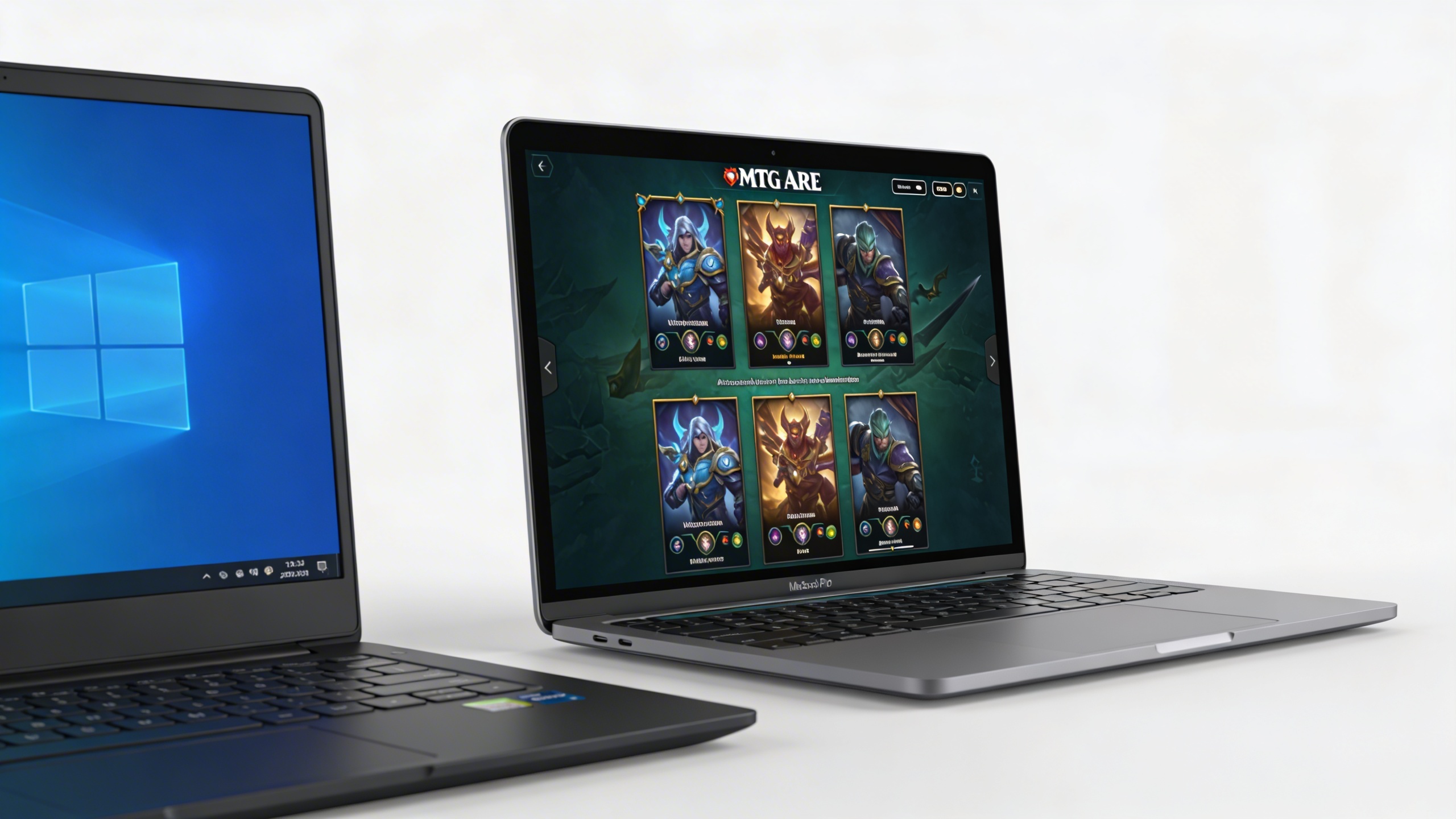
The mtg arena download process begins with ensuring your system meets the minimum requirements. For Windows users, you’ll need Windows 10 version 1903 or later, 8GB of RAM, and approximately 5GB of available storage space. The game requires DirectX 11 support and benefits significantly from dedicated graphics hardware, though integrated graphics can handle basic gameplay.
Mac users can now access MTG Arena through the Epic Games Store, marking a significant expansion in platform availability for 2026. Mac system requirements include macOS 10.15 or later, 8GB of RAM, and Metal-capable graphics hardware. The Mac version maintains feature parity with Windows, ensuring consistent gameplay across platforms.
Mobile support continues expanding, with iOS requiring iOS 13.0 or later on iPhone 7 and newer devices, while Android needs version 6.0 with at least 3GB of RAM. The mobile mtg magic arena experience adapts the interface for touch controls while preserving the full strategic depth of desktop play.
Download the client directly from the official Magic: The Gathering website, Epic Games Store, or respective mobile app stores. Avoid third-party download sites to ensure security and receive automatic updates for new set releases and feature improvements.
Creating Your Account and Initial Setup
Account creation for mtg arena follows straightforward steps but benefits from strategic planning. Start by visiting the official Wizards Account portal and selecting a username that reflects your planeswalker identity—remember, this becomes your permanent in-game identifier across all Wizards products.
Choose a secure password combining letters, numbers, and symbols, as your account will eventually contain valuable digital card collections and potentially real-money purchases. Enable two-factor authentication immediately after account creation to protect against unauthorized access attempts.
During initial setup, the game prompts you to select a preferred play style through a brief questionnaire. This influences your starter deck selection and early tutorial experiences, but doesn’t permanently restrict your options. New players should honestly assess their Magic experience level to receive appropriate guidance and deck recommendations.
The tutorial sequence introduces fundamental Magic concepts through interactive gameplay scenarios. Even experienced players benefit from completing these tutorials, as they award free cards and provide Arena-specific interface training. The tutorial covers everything from basic land-creature-spell interactions to complex stack resolution scenarios.
Understanding the Arena Interface
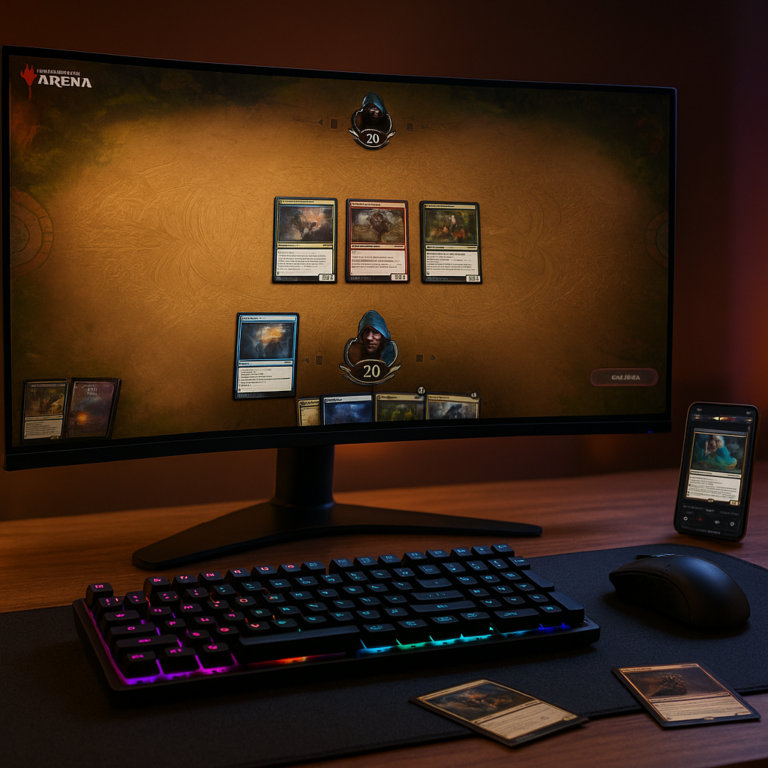
The MTG Arena interface centers around the battlefield view, where cards appear as detailed 3D models with smooth animation effects. The bottom section displays your hand, while the top shows your opponent’s hand count and battlefield presence. Life totals appear prominently on both sides, with additional counters for poison, energy, and other game mechanics as relevant.
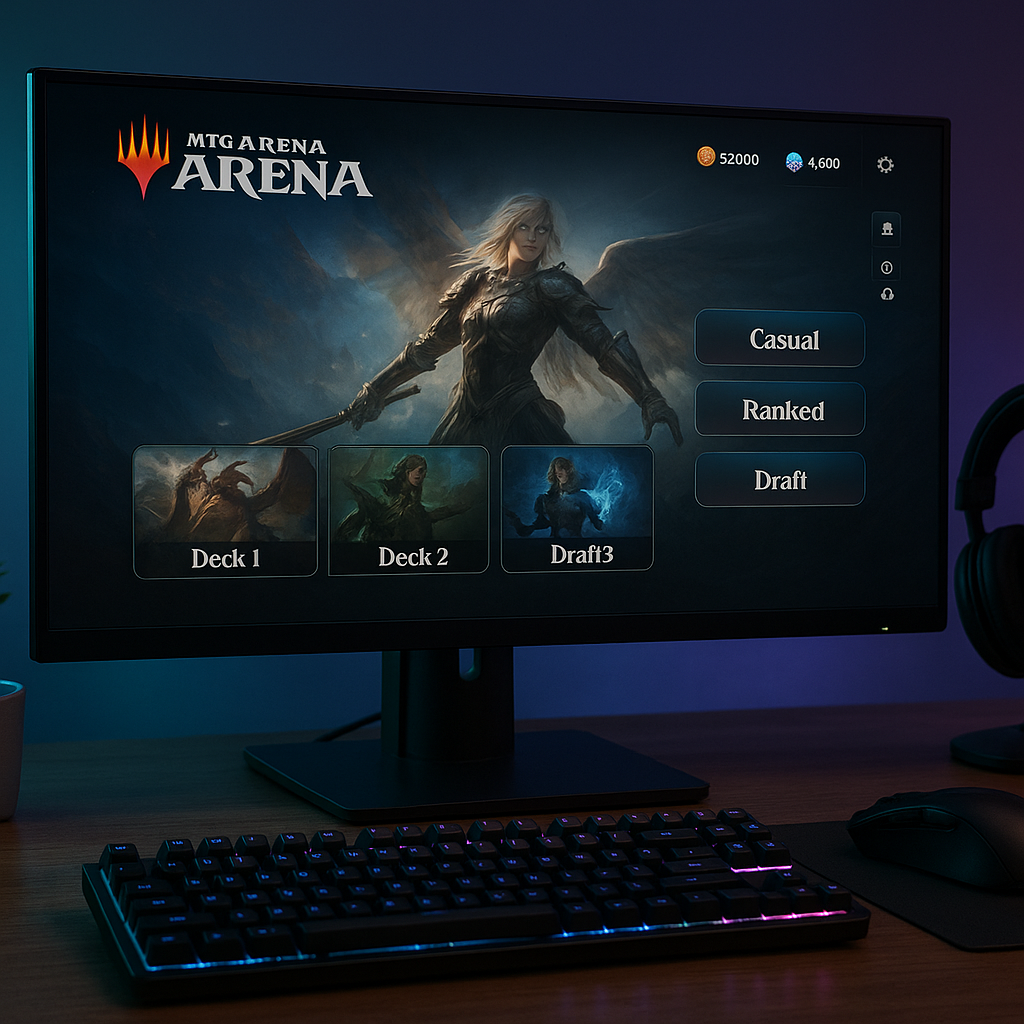
Navigation begins with the main menu, featuring distinct sections for Play (matchmaking and events), Decks (collection management), Store (pack purchases and cosmetics), Profile (statistics and achievements), and Mastery (battle pass progression). Each section uses intuitive iconography and clear labeling to minimize confusion during gameplay transitions.
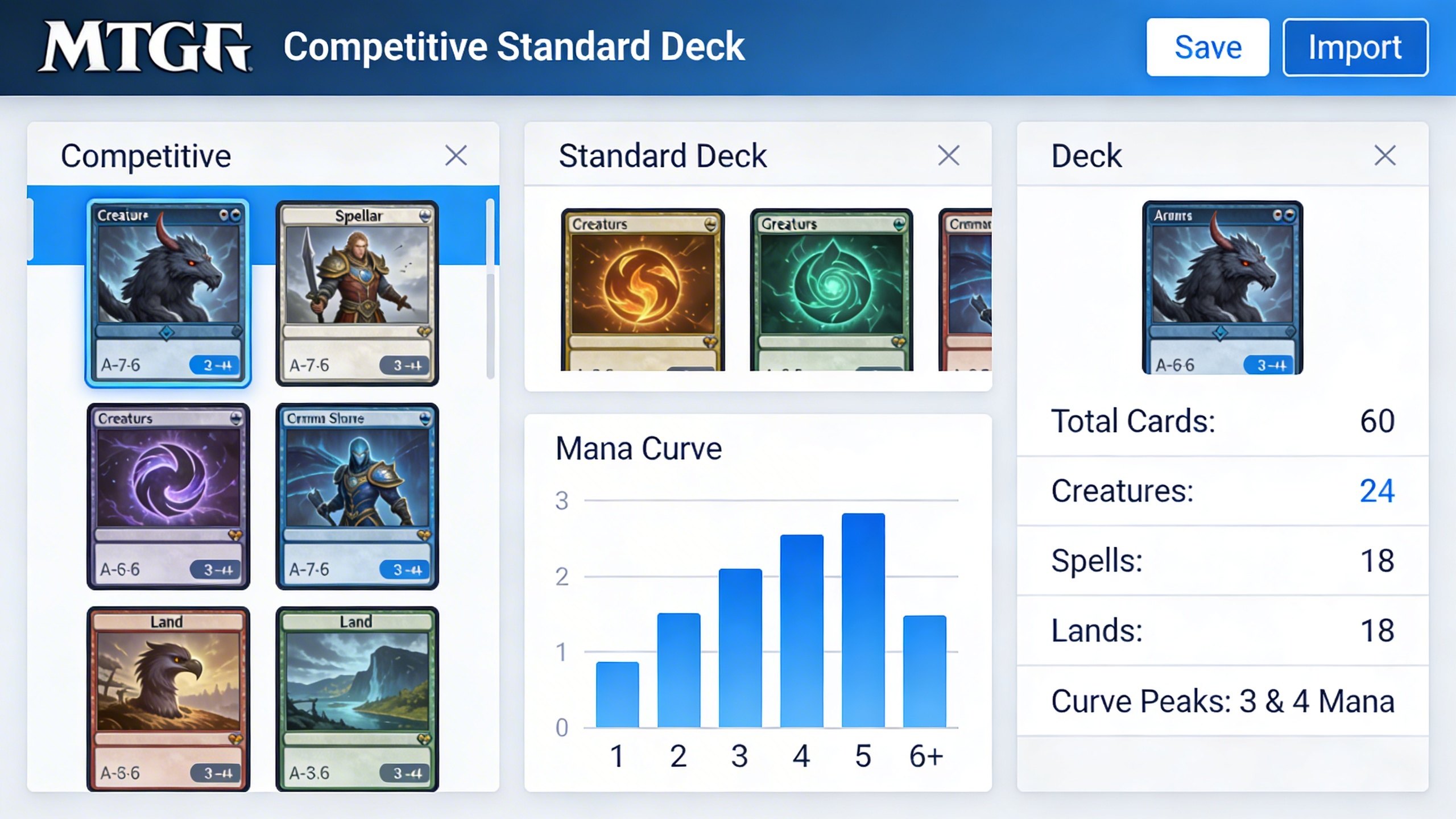
The deck builder represents one of Arena’s most sophisticated features, allowing advanced filtering by mana cost, card type, set, and format legality. MTG Arena decks can be imported directly using deck codes from popular websites like MTGGoldfish or EDHRec, streamlining the process of trying new strategies or following tournament-winning lists.
Settings customization includes gameplay speed adjustments, visual effect intensity, and audio preferences. The “Auto-Tap” feature helps newer players by automatically selecting appropriate mana sources, while experienced players often disable this for precise mana base control. Understanding these interface elements ensures smooth gameplay experiences whether you’re drafting new sets or competing in ranked constructed formats.
MTG Arena Game Modes and Formats
MTG Arena offers an extensive variety of game modes that cater to every type of Magic player, from competitive tournament grinders to casual fans exploring new strategies. Understanding these formats is crucial for maximizing your digital Magic experience and building the right MTG Arena decks for each competitive environment.
Standard and Historic Formats
Standard remains the cornerstone format in MTG Arena, featuring cards from the most recent two years of Magic sets. Currently, Standard includes approximately eight sets, with rotation occurring annually each fall when four older sets leave the format. This creates a dynamic metagame where MTG Arena decks constantly evolve as new cards enter and older strategies phase out.
The current Standard format includes powerful archetypes like Mono-Red Aggro, featuring cards such as Monastery Swiftspear and Lightning Strike, alongside control strategies built around Teferi, Hero of Dominaria and counterspell packages. Competitive Standard decks typically cost between 15,000-50,000 gold or 150-300 rare wildcards to construct, making format knowledge essential for resource management.
Historic format serves as MTG Arena’s eternal format, incorporating every card available on the platform since its launch. This includes Standard-legal cards, Historic Anthology releases, and digital-only mechanics like Seek and Perpetually. Historic offers significantly more deck diversity, with viable strategies ranging from aggressive Goblin tribal decks to combo-oriented Neostorm builds utilizing Thousand-Year Storm and ritual effects.
Historic’s power level exceeds Standard considerably, featuring cards like Thoughtseize, Lightning Bolt, and Collected Company that would be format-warping in Standard. This makes Historic an excellent format for players who enjoy high-powered gameplay without the constant rotation pressure of Standard.
Limited Formats: Draft and Sealed
Draft represents one of MTG Arena’s most skill-intensive formats, where players open booster packs and select cards in a rotating pick order before building 40-card decks. Premier Draft events cost 1,500 gems or 10,000 gold, offering substantial rewards for successful runs including additional packs, gems, and rare cards.
Successful draft strategies focus on identifying open colors during pack one, prioritizing removal spells and efficient creatures, and maintaining proper mana curves. Cards like Murder, Lightning Strike, and efficient two-drop creatures consistently perform well across different draft environments. The current draft format rotates every few weeks, keeping the MTG magic arena experience fresh and challenging.
Quick Draft offers a more accessible entry point at 5,000 gold, featuring drafting against AI opponents rather than other players. While rewards are slightly lower, Quick Draft allows more time for pick decisions and serves as excellent practice for newer players developing limited skills.
Sealed format provides six booster packs for deck construction without the drafting process. Players build 40-card decks from their sealed pool, emphasizing deck building skills over draft navigation. Sealed events typically cost 2,000 gems and reward successful players with additional packs and gems based on their win-loss record.
Special Events and Rotating Modes
MTG Arena regularly features special events that provide unique gameplay experiences and exclusive rewards. These include Constructed events with specific deck building restrictions, such as Artisan (commons and uncommons only) or Singleton (one copy per card maximum). These events typically cost between 500-1,000 gold and offer alternative ways to earn cards and cosmetics.
Midweek Magic presents weekly casual events with rotating formats, often featuring reduced entry costs or free participation. Recent examples include Historic Brawl weeks, Gladiator format showcases, and preview events for upcoming sets. These events provide excellent opportunities to experiment with new MTG Arena decks without significant resource investment.
Arena also hosts major tournament qualifiers and championship events throughout the year, offering pathways to high-level competitive play. The Arena Championship Series provides monthly qualifying opportunities for dedicated players seeking to compete at the highest levels of digital Magic.
Seasonal events coincide with new set releases, featuring special game modes that highlight new mechanics and strategies. These events often provide early access to new cards and exclusive cosmetic rewards, making them particularly valuable for active players looking to stay ahead of the metagame curve.
Building Your First Arena Decks
Constructing competitive decks in MTG Arena requires strategic resource management and understanding the digital economy. Unlike paper Magic, your collection builds through wildcards, daily rewards, and smart pack opening decisions. This systematic approach helps new players transition from preconstructed decks to competitive builds without spending excessive money.
Starter Decks and Free Resources
MTG Arena provides ten dual-colored starter decks covering all color combinations, each containing 60 cards with a clear strategic focus. The Lifeline (White-Black) deck excels at gaining life while controlling the board, making it ideal for learning defensive strategies. Meanwhile, the Spellweaver (Blue-Red) deck teaches instant and sorcery synergies through cards like Sprite Dragon and Opt.
Complete the Color Challenge first to unlock all starter decks and earn additional cards. This tutorial sequence awards roughly 15 booster packs and introduces fundamental gameplay concepts. The daily quest system provides 500-750 gold per day, equivalent to half a booster pack, while weekly wins grant up to 15 wins worth of rewards including individual card rewards and gold.
Your mtg arena game progression accelerates through the Mastery Pass, available each set release. The free track provides wildcards, packs, and cosmetics, while the premium version costs 3,400 gems but returns significant value for regular players. Track your collection progress through the deck builder’s filter system to identify which archetypes you can build with current resources.
Budget-Friendly Competitive Decks
Mono-colored aggro decks offer the best entry point into competitive MTG Arena gameplay. Mono-Red Aggro consistently performs well across formats while requiring minimal rare wildcards. Core cards like Lightning Strike, Shock, and Monastery Swiftspear appear frequently in Standard rotations, making this investment sustainable long-term.
| Deck Archetype | Rare Wildcards Needed | Key Cards | Win Rate Potential |
|---|---|---|---|
| Mono-Red Aggro | 8-12 | Embercleave, Kumano Faces Kakkazan | 65-70% |
| Mono-Blue Tempo | 6-10 | Haughty Djinn, Ledger Shredder | 60-65% |
| White Weenie | 10-15 | Thalia Guardian of Thraben, Adeline | 62-67% |
Mono-Blue Tempo provides another budget-friendly option focusing on cheap creatures protected by counterspells. Cards like Spell Pierce and Negate cost only common wildcards while providing powerful interaction. The deck teaches valuable timing skills and stack management essential for improving your mtg magic arena gameplay.
Consider building toward established meta decks rather than brewing experimental strategies initially. Websites like MTGGoldfish and EDHRec provide current mtg arena decks lists with wildcard costs calculated. Focus on archetypes that share cards across multiple builds to maximize your collection’s flexibility.
Advanced Deck Building Strategies
Wildcard management becomes crucial as your collection grows. Prioritize rare wildcards for mana bases and key threats, saving mythic wildcards for planeswalkers and powerful finishers. The mtg arena download includes a deck builder with filtering options to show craftable decks based on your current collection plus available wildcards.
Draft effectively to build your collection while improving gameplay skills. Quick Draft costs 5,000 gold and provides at least three booster packs worth of cards plus gems based on performance. Rare-drafting strategies maximize collection value even with moderate win rates, as you keep all drafted cards permanently.
Understanding the Standard rotation schedule prevents costly mistakes. Cards from the four most recent sets remain legal, with rotation occurring annually in fall. Avoid crafting cards from sets rotating within six months unless they’re essential for immediate competitive goals. Pioneer and Historic formats provide eternal homes for rotated cards, extending their value.
Sideboard construction requires additional wildcards but dramatically improves match win percentages. Focus on broad answers like Negate, Duress, and sweeper effects rather than narrow hate cards. The best-of-three ranked ladder rewards tight sideboard plans that address your deck’s weaknesses while exploiting opponent vulnerabilities.
Export successful deck lists to track your builds and share with friends. The client’s export function creates formatted lists compatible with deck building websites and other MTG Arena accounts. Regular deck analysis using replay tools helps identify improvement opportunities and card choices that underperform in your local meta.
Arena Economy and Collection Management
Mastering the MTG Arena economy is crucial for building competitive decks without breaking the bank. The digital platform offers multiple pathways to expand your collection, from free daily rewards to strategic purchases. Understanding these systems will help you progress efficiently whether you’re playing completely free-to-play or investing modest amounts.
Understanding Wildcards and Gems
Wildcards serve as MTG Arena’s primary currency for acquiring specific cards. You’ll earn Common, Uncommon, Rare, and Mythic Rare wildcards through pack openings and the Wildcard Track, which progresses every six packs opened. Rare wildcards are particularly valuable since most competitive MTG Arena decks require 12-20 rare lands and key spells.
Gems function as the premium currency, purchasable with real money or earned through competitive events. A single pack costs 200 gems, while the 90-pack bundle offers better value at 18,000 gems ($99.99). For players considering their first purchase, the Welcome Bundle provides exceptional value with 2,500 gems plus five packs for $4.99.
Strategic wildcard usage focuses on manabase first, then key cards that appear across multiple MTG Arena decks. Shock lands and pathways form the backbone of most two-color strategies, making them excellent wildcard investments that support deck diversity.
Daily Quests and Rewards Optimization
Daily quests generate 500-750 gold each, with weekly wins providing up to 15 additional packs worth of rewards. The optimal strategy involves completing your daily quest plus four wins daily, earning approximately 1,250 gold. This schedule yields roughly nine packs weekly from gold alone.
Quest rerolling maximizes efficiency by targeting 750-gold quests over 500-gold alternatives. You can reroll one quest daily, and holding two incomplete quests allows flexibility in choosing which colors to play. The “Play 25 Lands” and “Attack with 15 Creatures” quests typically complete naturally during regular gameplay.
Weekly rewards reset every Sunday, offering three packs for 15 wins plus individual card rewards (ICRs) for wins 1-10. These ICRs have upgrade chances, potentially providing rare or mythic cards even from common slots. Prioritizing your first 10 weekly wins ensures maximum reward efficiency for time invested.
Pack Opening and Vault Progress
Pack selection strategy depends on your collection goals and current Standard rotation. Opening packs from the newest set provides the longest-lasting cards, while older sets offer better completion rates for established collections. The duplicate protection system ensures you won’t receive copies of rares or mythics you already own four copies of.
The Vault system converts excess common and uncommon cards into wildcards once you reach 100% progress. Each duplicate common contributes 0.1% while uncommons add 0.3%. Though vault progress appears slow, it provides meaningful wildcard generation over time, especially for players who draft frequently.
Draft events offer exceptional value for skilled players, providing 14-15 cards plus gems and packs based on performance. Even average players (3-4 wins) break approximately even while building their collection faster than pack purchases alone. When evaluating your MTG Arena game progress, tracking your draft win rate helps determine if events or direct pack purchases offer better value.
For serious collection building, maintaining detailed records of your wildcard spending and pack openings helps optimize future decisions. Many players find success focusing on 2-3 competitive decks rather than spreading wildcards across numerous incomplete strategies.
Competitive Play and Ranking System
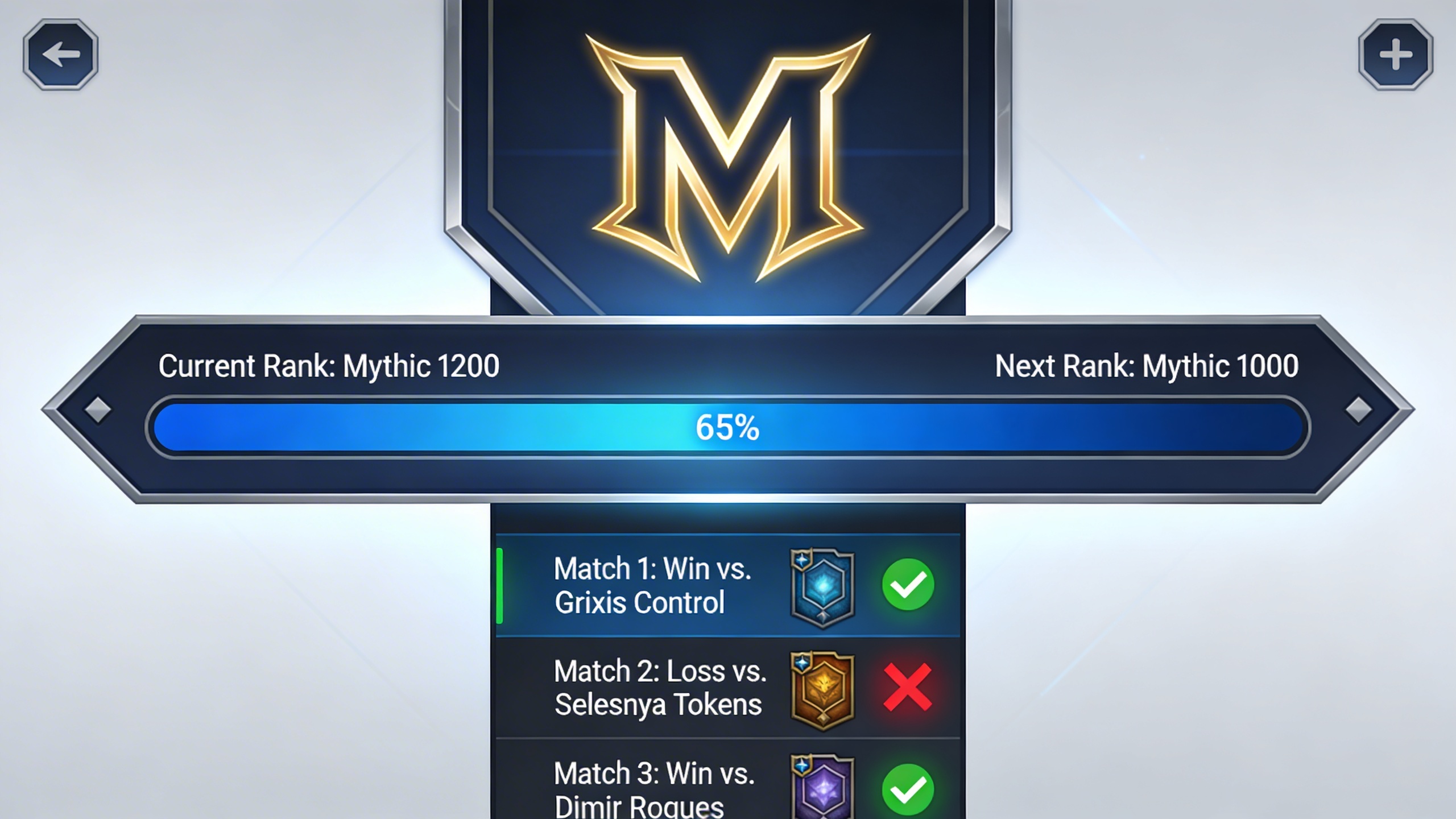
MTG Arena’s competitive ladder provides a structured pathway from casual play to professional-level competition. The ranking system spans seven tiers: Bronze, Silver, Gold, Platinum, Diamond, Mythic, and the elite Mythic Numbered ranks. Each tier contains four subdivisions, requiring consistent wins to advance while offering some protection against demotion through tier floors at Bronze, Silver, Gold, and Platinum.
Understanding rank progression mechanics is crucial for climbing effectively. Players earn two rank points for wins and lose one for losses in lower tiers, but this ratio becomes increasingly punitive in Diamond and Mythic ranks. The system resets monthly, dropping players approximately four tiers while providing rank-based rewards including booster packs, gold, and exclusive card styles.
Ranked Ladder Climbing Strategies
Successful ladder climbing in mtg arena requires both strategic deck selection and optimal play timing. Meta analysis reveals that aggressive decks often perform better during rank resets when the player pool includes more casual opponents, while control decks excel in higher ranks where games become more strategic and drawn-out.
The most effective mtg arena decks for climbing typically fall into three categories: fast aggro builds that can steal quick wins, midrange decks that adapt to various matchups, and proven meta staples with high win rates. Current top-performing archetypes include Mono-Red Aggro, Azorius Control, and various Midrange strategies featuring cards like Sheoldred, the Apocalypse and Teferi, Hero of Dominaria.
Timing your ranked sessions strategically can significantly impact win rates. Playing during off-peak hours often results in facing more casual opponents, while prime time sessions feature stronger competition. Many professional players recommend focusing ranked grinding during the first two weeks after reset when the meta is less settled and opponents are more varied in skill level.
Mythic Championship Qualification
Reaching Mythic rank opens pathways to professional Magic competition through the MTG Arena Championship series. Mythic Qualified players can participate in monthly Qualifier Weekend events, where top performers earn invitations to Championship tournaments with substantial prize pools exceeding $200,000.
The qualification process requires maintaining Mythic rank and performing well in specific Qualifier events. These tournaments typically feature best-of-three matches in current Standard or Historic formats, demanding deep format knowledge and refined mtg magic arena deck choices. Success rates hover around 8-12% for Qualifier Weekend advancement, making consistent Mythic achievement essential for multiple qualification attempts.
Professional players emphasize the importance of format mastery over raw ladder ranking. While achieving Mythic demonstrates competence, succeeding in Qualifiers requires understanding tournament-specific strategies, sideboard construction, and meta-game positioning that differs significantly from ladder optimization.
Tournament and Event Preparation
Preparing for competitive mtg arena game events requires systematic approach to deck selection, practice, and mental preparation. Tournament formats often feature best-of-three matches with sideboarding, contrasting with ladder’s best-of-one structure. This fundamental difference demands separate preparation strategies and deck configurations.
Effective tournament preparation begins with meta analysis using resources like MTGGoldfish, EDHRec, and professional player streams. Identifying the expected field allows for strategic deck selection and targeted sideboard construction. Testing against anticipated matchups through direct challenges or dedicated practice sessions helps refine gameplay decisions and timing.
Event scheduling varies throughout the year, with major tournaments occurring monthly and smaller events running weekly. The mtg arena download provides access to a comprehensive tournament calendar within the client, allowing players to plan preparation schedules around qualification deadlines and event dates.
Mental preparation proves equally important as technical skill development. Tournament play involves extended sessions, high-pressure decisions, and variance management that differs from casual ladder climbing. Successful competitors develop routines for maintaining focus, managing tilt, and making optimal decisions under time pressure during crucial matches that determine qualification status and prize distribution.
Advanced Arena Strategies and Tips
Mastering MTG Arena requires more than just understanding the basics of deck construction and gameplay. Advanced players leverage sophisticated strategies, meta analysis, and psychological insights to climb the competitive ladder. These techniques separate casual players from those who consistently achieve Mythic rank in the mtg arena game environment.
Reading the Meta and Adapting
Successful MTG Magic Arena players constantly monitor the evolving metagame to stay ahead of trends. Popular meta tracking websites like MTGAZone, Untapped.gg, and EDHRec provide detailed statistics on deck performance, win rates, and popularity across different ranks. These resources reveal which mtg arena decks dominate specific formats and time periods.
The key to meta adaptation lies in identifying emerging patterns early. When a new set releases or a ban announcement shakes up the format, savvy players immediately test counter-strategies rather than following the crowd. For example, if aggressive red decks surge in popularity, switching to a lifegain-focused deck or adding more removal spells can provide a significant edge.
Track your local meta by noting which decks appear frequently at your rank. Arena’s best-of-one format often favors different strategies than best-of-three, so adjust your approach accordingly. Consider keeping detailed notes about opponent strategies, or use third-party tracking tools to analyze your match history and identify trends.
Sideboarding in Best-of-Three
Best-of-three matches in MTG Arena require sophisticated sideboarding strategies that differ from paper Magic. Digital play eliminates the time pressure of physical sideboarding, allowing for more complex transformational sideboards. Transformational sideboarding involves fundamentally changing your deck’s strategy between games, such as switching from aggro to control.
Effective Arena sideboards typically include 3-4 copies of key hate cards rather than singleton answers. This approach maximizes consistency in the digital environment where you cannot physically search through your sideboard. Focus on cards that answer multiple strategies rather than narrow hate pieces.
Popular sideboard categories include graveyard hate (Rest in Peace, Grafdigger’s Cage), artifact/enchantment removal (Naturalize effects), and sweeper effects for aggressive matchups. Consider your deck’s natural weaknesses and ensure your sideboard addresses at least two major meta threats. Practice sideboarding decisions in unranked matches before taking refined strategies into ranked play.
Psychological Aspects of Digital Play
Digital Magic presents unique psychological challenges that paper players must adapt to when they mtg arena download and begin competing online. The absence of physical tells and face-to-face interaction changes the mental game significantly. Players often make more aggressive plays online due to reduced social pressure and faster game pace.
Clock management becomes crucial in MTG Arena, where the timer system differs from paper rounds. Develop a rhythm for common decisions to avoid unnecessary time pressure during complex turns. Practice using the full timer strategically during critical moments while maintaining pace during routine plays.
Combat tilt by taking breaks between matches, especially after losses. The ease of instantly queuing into new games can lead to emotional decision-making and rank slides. Set daily goals for games played rather than wins achieved, and track your performance over longer periods rather than focusing on individual session results.
Consider the opponent’s perspective when making plays. Digital players often have access to deck lists and meta information that paper players might lack, so assume opponents understand popular strategies and plan accordingly. Use this knowledge to make unexpected plays that deviate from standard lines when the situation warrants creative solutions.
Community Resources and Tools
The MTG Arena community has developed an impressive ecosystem of tools and resources that enhance every aspect of your digital Magic experience. These third-party applications and community platforms provide invaluable support for deck building, gameplay analysis, and strategic improvement that goes far beyond what the base MTG Arena game offers.
Essential Third-Party Applications
Deck tracking applications represent the most crucial tools for serious Arena players. MTG Arena Tool and Untapped.gg lead the field, automatically importing your collection data and tracking your match statistics across all game modes. These applications analyze your MTG Arena decks’ performance with detailed win rates, mulligan decisions, and meta matchup data.
Collection management becomes significantly easier with tools like MTGAHelper, which tracks your wildcard usage and suggests optimal crafting decisions. For players managing physical collections alongside their digital cards, TCG Radar serves as the fastest and most accurate card scanner app available, helping you catalog physical cards and compare values across formats.
Draft assistance tools like 17Lands provide comprehensive limited format analytics, showing pick rates and win percentages for every card in current draft sets. These insights prove invaluable when making difficult draft decisions in MTG Magic Arena’s limited events.
MTG Arena Reddit and Community Hubs
The r/MagicArena subreddit serves as the primary discussion hub for the MTG Arena community, featuring daily deck discussions, meta analysis, and strategy guides. Regular threads cover everything from budget deck recommendations to high-level competitive analysis, making it an essential resource for players at every skill level.
MTGAZone and EDHRec provide comprehensive deck databases with detailed performance statistics and meta breakdowns. These platforms aggregate community-submitted MTG Arena decks with filtering options for format, archetype, and budget constraints.
Discord servers like the official MTG Arena Discord and various content creator communities offer real-time discussion and direct interaction with experienced players. These platforms excel for finding practice partners and receiving immediate feedback on deck choices.
Content Creators and Learning Resources
Educational streamers significantly accelerate the learning process for new Arena players. Reid Duke and Luis Scott-Vargas provide high-level gameplay with detailed explanations of complex decision-making processes. Their content covers both limited and constructed formats with regular MTG Arena download sessions showcasing the latest meta developments.
YouTube channels like Tolarian Community College offer comprehensive set reviews and budget deck guides specifically tailored for Arena players. These resources help players maximize their collection efficiency while building competitive decks within reasonable wildcard budgets.
Podcast resources including Limited Resources and The Arena Decklists provide weekly meta updates and strategic discussions that complement active gameplay with deeper theoretical understanding of format dynamics.
Frequently Asked Questions
Is MTG Arena free to play?
Yes, MTG Arena is completely free to download and play with no upfront costs. You can earn cards, gold, and gems through daily quests, weekly wins, and events without spending money. Optional purchases include cosmetics, battle passes, and card packs to accelerate collection building, but all gameplay content is accessible through free play.
Can I play MTG Arena on Mac?
MTG Arena officially supports Mac through the Epic Games Store and direct download from Wizards of the Coast. Your Mac needs macOS 10.13 or later, 4GB RAM, and 8GB storage space for optimal performance. Simply download the client from the official website or Epic Games Store and follow the standard installation process.
What are the best starter decks in MTG Arena?
The mono-red aggro and mono-white lifegain starter decks are excellent for new players due to their straightforward strategies and competitive power. These decks teach fundamental Magic concepts while being effective in the current meta. The blue-white control starter deck is also recommended for players who prefer strategic, long-game approaches.
How do wildcards work in MTG Arena?
Wildcards are special tokens that let you craft any card of the corresponding rarity (common, uncommon, rare, or mythic rare). You earn wildcards by opening packs, completing daily quests, and advancing the wildcard track that fills as you open boosters. Use rare and mythic wildcards strategically on key cards for competitive decks rather than random collection building.
What's the difference between Standard and Historic in Arena?
Standard uses only the most recent two years of Magic sets, creating a rotating format that changes regularly and maintains a fresh meta. Historic includes all cards ever released on Arena, offering a larger card pool with more powerful strategies and deck archetypes. Standard is ideal for new players, while Historic appeals to those wanting deeper card interactions and established strategies.