BGS Grading for Pokémon Cards: Subgrades, Black Label and 2026 Fees
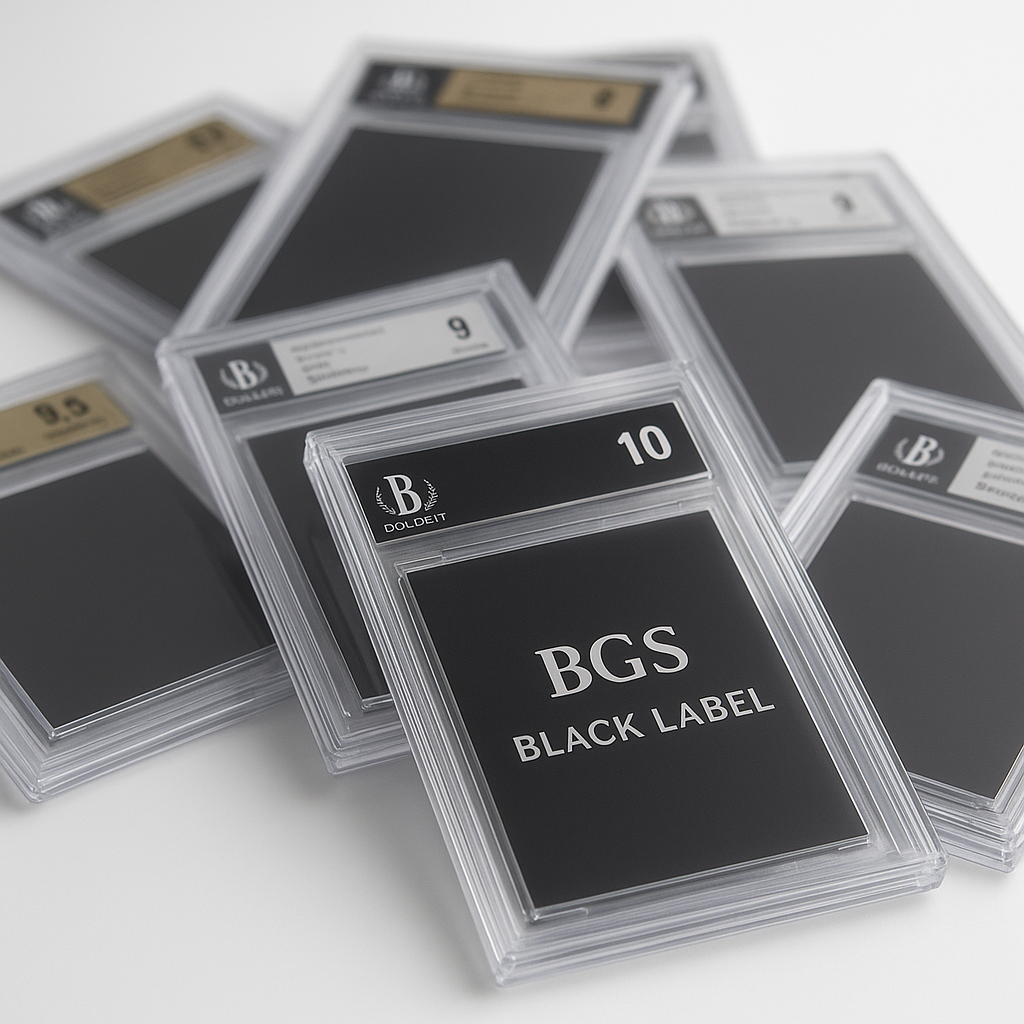
BGS stands for Beckett Grading Services, and for Pokémon collectors it means one specific thing: the only slab whose label shows why the card got its grade. Four subgrades, for centering, corners, edges and surface, sit on every BGS label, and the rarest label in the hobby, the Black Label 10, requires all four to be perfect. In September 2026 the practical question is different: Beckett’s two affordable tiers are paused until at least 15 September, so a BGS slab ordered online today costs $79.95 at Express or $124.95 at Priority.
This guide covers the BGS side of grading Pokémon cards: how the scale works, what it costs now, when a BGS slab sells for more than a PSA slab and when it sells for less, and which Pokémon defects sink which subgrade. Fees and status were checked on 3 September 2026. The company-level detail, including the submission walkthrough and Beckett’s other services, is in our Beckett grading guide.
The BGS grading scale for Pokémon cards
BGS grades from 1 to 10 in half-point steps. Each card gets four subgrades on the same scale, and the overall grade is anchored to the weakest of them rather than averaged. The label colour tells a buyer the tier at a glance:
| Overall grade | Label | Subgrade rule | What it means for a Pokémon card |
|---|---|---|---|
| 10 Pristine, Black Label | Black | All four subgrades 10 | Perfect centering front and near-perfect back, untouched holo, no print lines. Population is tiny on any vintage holo |
| 10 Pristine | Gold | Three 10s and a 9.5 | One subgrade a hair short, usually centering. Sells well above a BGS 9.5 |
| 9.5 Gem Mint | Gold | At least two 9.5s, none below 9 | The BGS grade most modern Pokémon cards aim for; treated by buyers as roughly a PSA 10 minus a discount |
| 9 Mint | Silver | Lowest subgrade around 9 | Typical result for a pack-fresh vintage holo with slight edge wear |
| 8.5 and below | Silver | Anchored to the lowest subgrade | Played or shelf-worn cards; still worth slabbing for expensive vintage |
Because the subgrades are printed, two BGS 9.5s of the same card are not equal. A 9.5 with 10s in centering and surface sells for more than a 9.5 with four 9.5s, and buyers looking for a future Black Label crossover pay up for “9.5 with three 10s”. Nothing comparable is visible on a PSA or CGC label. The grading scale converter maps a BGS grade with its subgrades to the nearest PSA and CGC equivalents.
BGS grading cost in 2026 and what is paused
| Tier | Fee per card | Max declared value | Turnaround | Status (3 Sep 2026) |
|---|---|---|---|---|
| Base, no subgrades | $14.95 | $250 | 75–90 business days | Paused since 8 Aug 2026 |
| Base with subgrades | $17.95 | $250 | 75–90 business days | Paused since 8 Aug 2026 |
| Standard | $34.95 | $1,000 | 45 business days | Paused since 8 Aug 2026 |
| Express | $79.95 | $2,500 | 15 business days | Open |
| Priority | $124.95 | $5,000 | 5 business days | Open |
Beckett paused Base and Standard on 8 August 2026, citing a 159% year-over-year rise in trading card game submissions, and has said it expects to begin reopening them on 15 September 2026. Subgrades are included from Standard up; on Base they are a $3 add-on, and a 10 in any subgrade adds another $3. There is no membership. Shipping both ways is on top: roughly $30 for a small insured submission, which the card grading cost calculator includes in its per-card total.
BGS vs PSA vs CGC for Pokémon: which slab sells for more?
For Pokémon the market ladder has been stable for years, and the grader pauses have not moved it:
- BGS 10 Black Label sells for the most, frequently several times a PSA 10 of the same card because the population is a fraction of PSA’s.
- PSA 10 is the price buyers search for and the number most price trackers publish; it sells for more than a BGS 9.5 or a CGC 10.
- BGS 10 Pristine (gold) and CGC 10 Pristine sit between a PSA 10 and a BGS 9.5, and which is higher depends on the card and the week.
- BGS 9.5 and CGC 10 Gem Mint trade at a discount to a PSA 10, often 30–50% on modern chase cards, less on vintage.
- PSA 9, BGS 9, CGC 9.5 are close to each other, with PSA again slightly ahead.
So the choice is not “which grader is best” but “what am I trying to get”. If the goal is to sell a modern Pokémon card at the highest price and it looks like a 10, PSA Regular at $79.99 or CGC at $20 with the Pristine 10 chance are the direct routes. BGS is the choice when the card is a serious Black Label candidate, when a buyer wants documented subgrades on a five-figure vintage holo, or when the card is thick or textured and you want centering and surface scored separately. Our PSA grading guide and the five-company comparison carry the full fee tables for the other graders.
The Pokémon defects that cap each BGS subgrade
Pokémon cards fail in predictable places, and because BGS scores each place separately you can usually predict the subgrade before you pay:
- Surface is where holos lose the most. Fine scratches in the foil, “holo bleed” print lines on 1999–2003 Wizards cards, pack-fresh dents from the foil-stamping process on modern cards, and factory scuffing on textured full arts all land here. Tilt the card under a single light source; if a line moves with the light, it is a scratch and the surface subgrade is capped at 9.
- Edges take the “silvering” on Wizards-era holos, where the foil layer shows through the blue border, and the white chipping on the back edges of Japanese cards. A single silvered edge usually means an edges subgrade of 9 or below.
- Centering is the most common cap on a would-be 10. Vintage Base Set cards routinely run 60/40 or worse; modern Scarlet & Violet cards are better but the back is often off. Measure it with the card centering calculator rather than by eye; a 55/45 front looks centered and is not a 10.
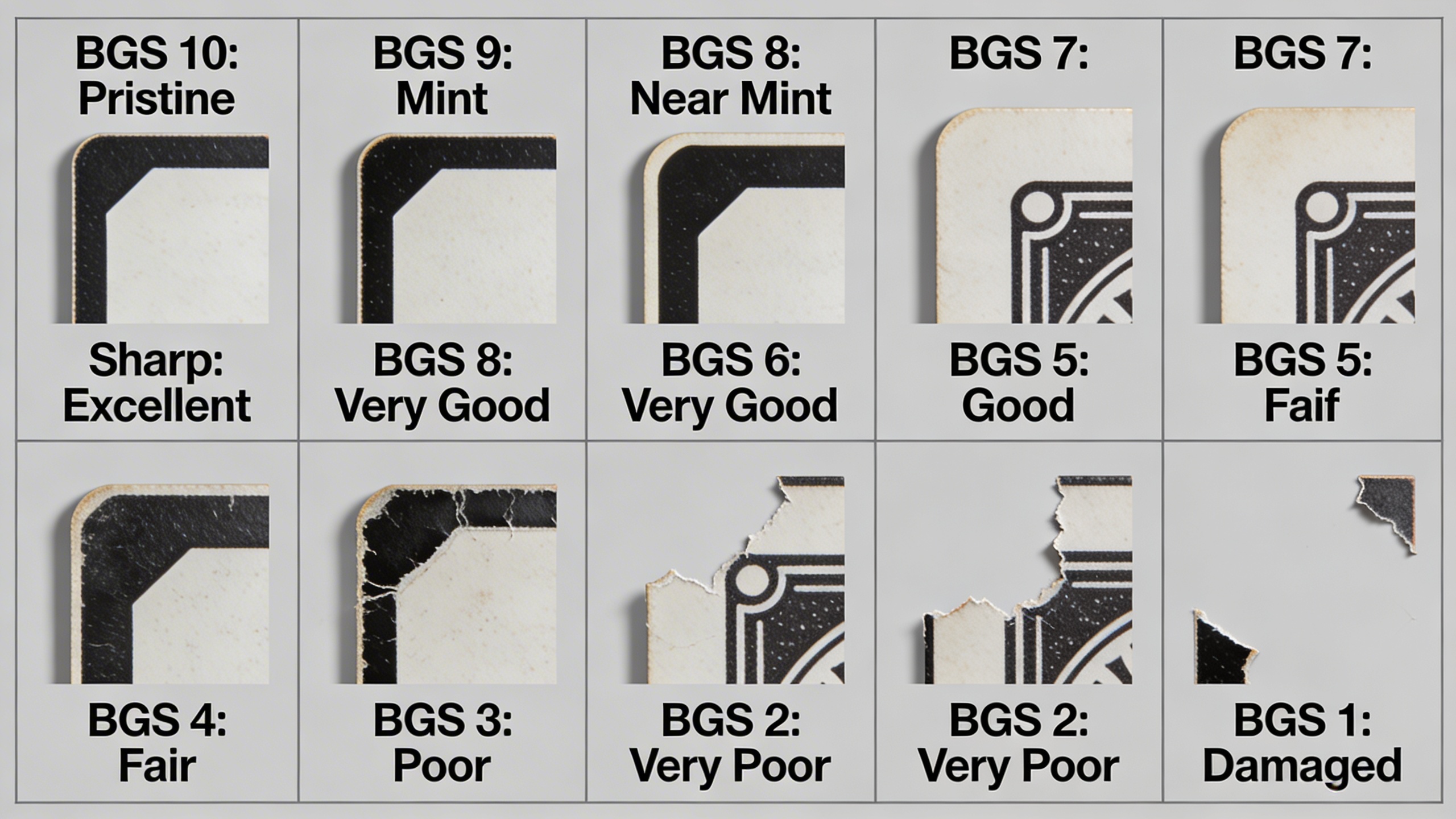
- Corners are the least of the four problems on cards that came straight from a pack and the biggest on cards that lived in a binder. Whitening visible without a loupe means 9 at best.
The card grade estimator steps through these in order and returns the subgrade ceiling for each, which is the closest thing to a free Raw Card Review you can do at home.
When a BGS submission pays for itself
At Express pricing the fee plus shipping is about $83 per card, so the graded price has to exceed the raw price by more than that after accounting for the chance of a 9. Three Pokémon cases with illustrative numbers:
| Card | Raw | Likely outcome | Cost | Net |
|---|---|---|---|---|
| Modern holo rare from a current set | $8 | BGS 9.5 at $25 | $83 | −$66: never at Express; marginal even at Base |
| Modern alternate-art chase card | $400 | BGS 9.5 at $700, BGS 10 gold at $1,600 | $83 | +$217 at 9.5, +$1,117 at 10 |
| Vintage 1st Edition holo, sharp | $1,200 | BGS 9 at $2,000, BGS 8.5 at $1,500 | $83 | +$717 at 9, +$217 at 8.5 |
The second row is the BGS sweet spot for modern Pokémon: the gap between a 9.5 and a gold 10 is where the subgrades earn their fee. The grading ROI calculator takes your own grade probabilities and prices, and the grading submission planner ranks a stack of candidates by expected return at whichever tiers are open.
Submitting Pokémon cards to Beckett
- Open a free account at beckett.com and start a grading submission; select the card grading (BGS) service, not vintage (BVG), for anything printed from 1996 onward.
- Enter each card with set, number and declared value. Japanese cards are accepted; list the Japanese set name and number. Declared value sets the tier’s cap and the insurance.
- Choose Express or Priority while Base and Standard are paused, or hold the cards until the reopening if the value does not justify $79.95. Beckett has also taken limited Base and Standard drop-offs at shows during the pause.
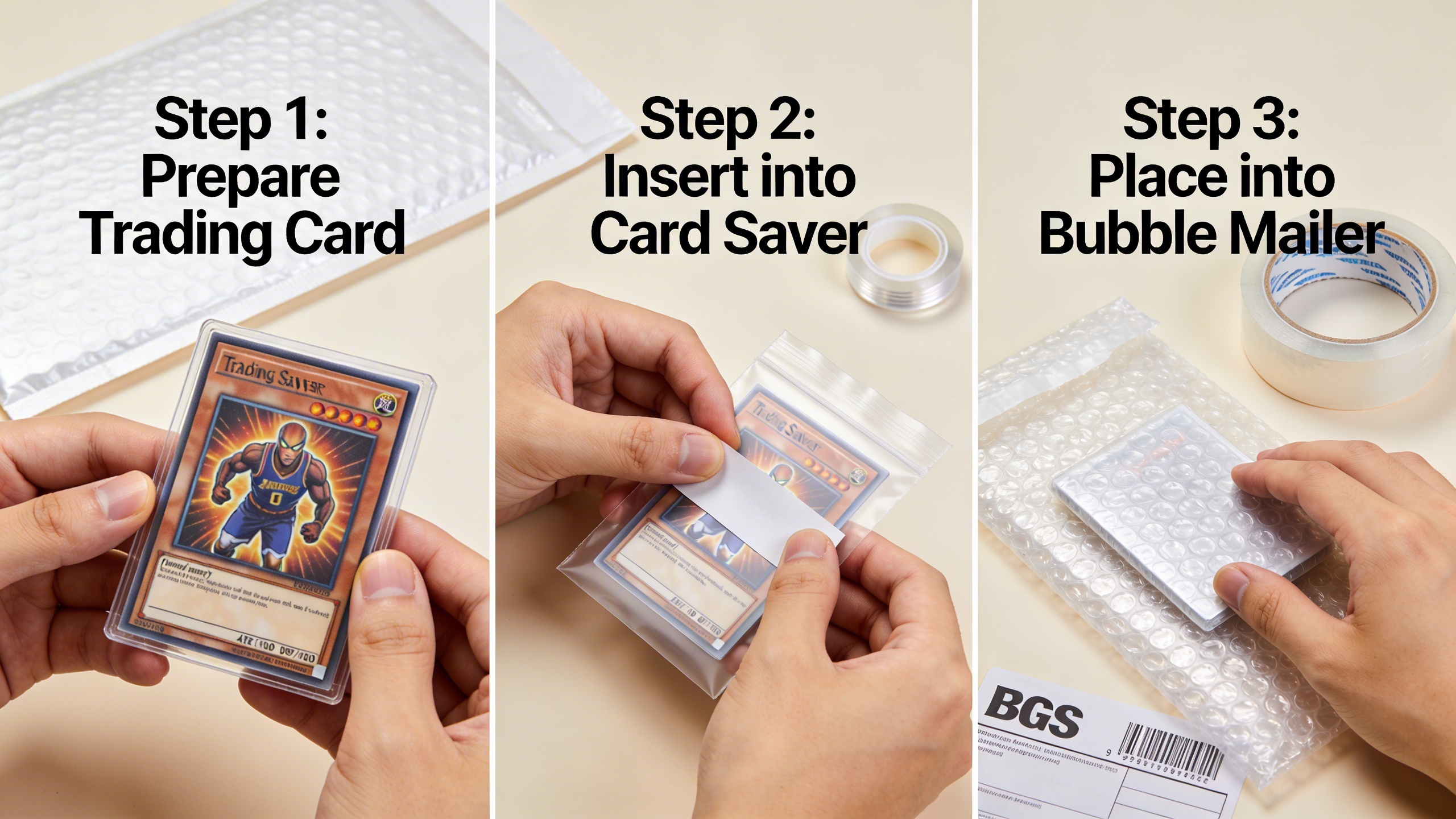
- Penny sleeve, then a semi-rigid Card Saver 1. Pokémon full arts and VMAX cards are standard thickness and fit normally; oversized jumbo promos are graded but need the correct holder and a higher fee, so check before sending.
- Ship insured, in the order printed on the form, and watch the order status; the turnaround clock starts when Beckett logs the box.
Sources and check date
Fees, caps and turnaround estimates were read from Beckett’s price list on 3 September 2026; pause details from Beckett’s service notice last updated 5 August 2026. Label rules are Beckett’s published grading standards. Resale relationships are drawn from recent completed-sale data on the major marketplaces and are a pattern, not a guarantee for any single card. Re-check the price list before you submit.