EDHREC: Ultimate Commander Deck Building Resource Guide for MTG Players
Commander has evolved from a casual kitchen table format into Magic: The Gathering’s most popular multiplayer format, and EDHREC stands as the undisputed champion of deck building resources in this space. Since its launch, this data-driven platform has fundamentally transformed how players approach EDH deck construction by aggregating thousands of decklists and providing intelligent card recommendations based on real player data. Whether you’re brewing your first Chatterfang, Squirrel General deck or optimizing a competitive build, EDHREC’s comprehensive database offers invaluable insights that would take countless hours to gather manually.
What sets EDHREC apart from traditional deck building approaches is its ability to reveal hidden synergies and popular card choices through community-driven analytics. The platform doesn’t just tell you what cards exist—it shows you what actually works in practice across thousands of games. From identifying staple cards for specific commanders to discovering underplayed gems that could elevate your strategy, EDHREC has become an essential tool for the modern Commander player.
This comprehensive guide will walk you through every aspect of maximizing EDHREC’s potential, from basic navigation to advanced analytics, ensuring you build more competitive and synergistic Commander decks in 2026.
What is EDHREC and How It Works
EDHREC stands as the premier data-driven resource for Magic: The Gathering’s Commander format, transforming how players approach deck construction through comprehensive statistical analysis. This powerful platform aggregates thousands of submitted decklists to provide evidence-based recommendations, making it an indispensable tool for both novice and veteran Commander players seeking to optimize their builds.
Understanding EDHREC’s Core Functionality
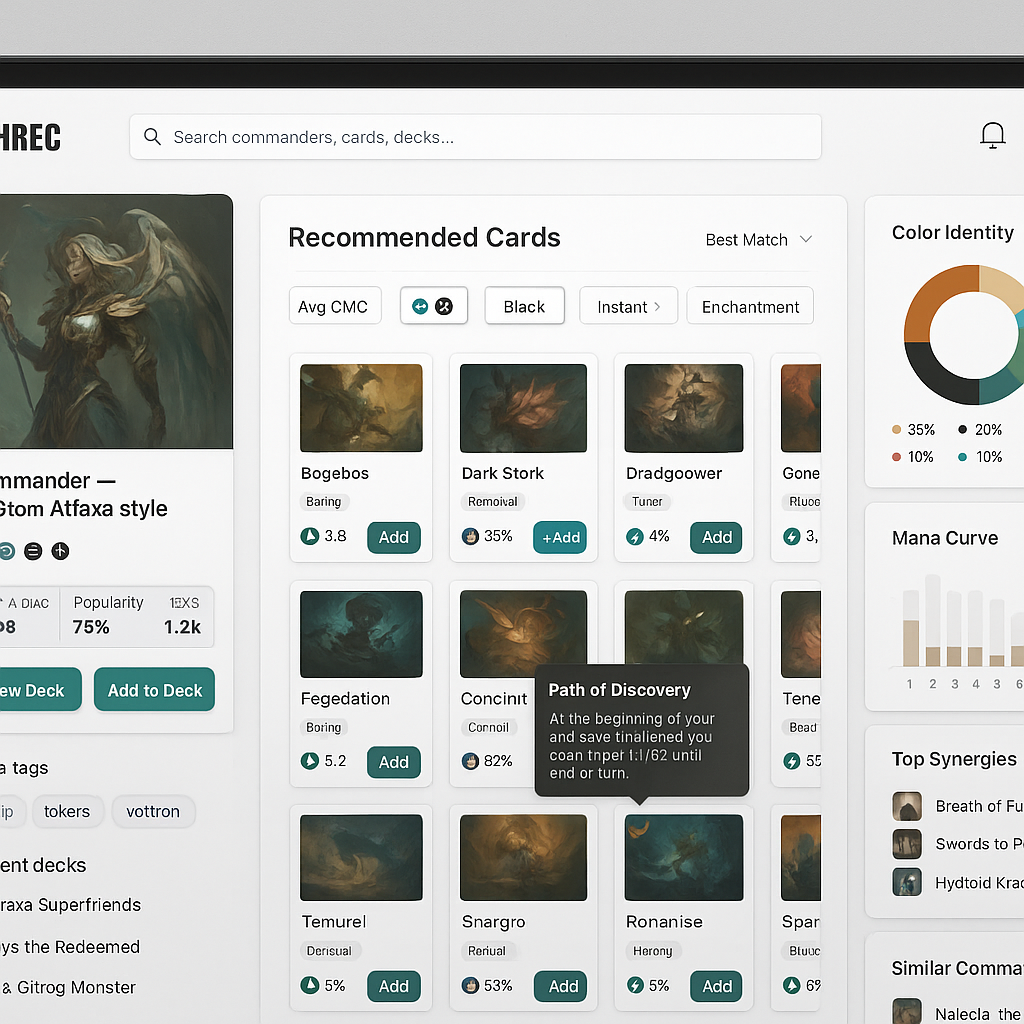
At its foundation, EDHREC operates as a sophisticated recommendation engine that analyzes patterns across submitted Commander decklists. When you search for a specific commander like Chatterfang, Squirrel General, the platform instantly displays which cards appear most frequently in successful builds, ranked by inclusion percentage. This data-driven approach eliminates guesswork from deck building by showing you exactly what the community considers essential for each commander.
The platform’s interface presents information through multiple lenses, including card type breakdowns, mana curve analysis, and thematic categorizations. For instance, when exploring Chatterfang EDH REC data, you’ll see artifact recommendations, token synergies, and sacrifice outlets all clearly organized by popularity and effectiveness. This systematic presentation helps players understand not just what cards to include, but why they work together strategically.
EDHREC also provides valuable context through its signature and staple designations. Signature cards appear uniquely in specific commander builds, while staples represent broadly useful cards across multiple strategies. This distinction proves crucial when building focused decks versus goodstuff piles.
Data Collection and Analysis Methods
The platform’s strength lies in its robust data collection methodology, which processes decklists from multiple sources including popular deck-building websites, tournament results, and direct community submissions. EDHREC’s algorithms continuously scan these sources, updating recommendations in real-time as new decklists emerge and meta shifts occur.
Statistical analysis forms the backbone of every recommendation. The system calculates inclusion rates by examining thousands of decklists for each commander, identifying cards that appear together frequently and determining correlation strengths. For example, when analyzing Prossh, Skyraider of Kher builds, the algorithm recognizes that Food Chain appears in 67% of competitive lists, making it a high-priority recommendation.
The platform also employs advanced filtering systems that account for budget constraints, power levels, and thematic preferences. This nuanced approach ensures recommendations remain relevant whether you’re building a casual tribal deck or a competitive combo engine. Price integration helps players identify budget alternatives without sacrificing synergy.
Community-Driven Recommendations
EDHREC’s community-driven nature sets it apart from static deck databases. Players actively submit their refined decklists, creating a constantly evolving dataset that reflects current meta trends and innovative card interactions. This collaborative approach means recommendations stay fresh and relevant as new sets release and strategies develop.
The submission process encourages quality over quantity through user ratings and feedback systems. Popular content creators and competitive players regularly contribute their lists, lending credibility to the platform’s recommendations. When a new commander like Krenko, Mob Boss gains popularity, the community quickly provides diverse build approaches that appear in the recommendation engine.
User-generated content extends beyond raw decklists to include detailed articles, primer guides, and strategic discussions. These resources provide context for statistical recommendations, explaining not just what cards to play but how to pilot them effectively. The combination of hard data and community wisdom creates a comprehensive learning environment.
For players looking to quickly identify valuable cards in their collection while building new decks, tools like TCG Radar complement EDHREC perfectly by providing instant price scanning and collection management capabilities. This integration of deck-building research with collection valuation streamlines the entire Commander brewing process.
Essential EDHREC Features for Deck Building
EDHREC transforms the overwhelming task of building a 100-card singleton deck into a streamlined, data-driven process. The platform’s sophisticated features help both new and experienced players make informed decisions when constructing their Commander decks, offering insights that would take hundreds of hours to gather manually.
Commander-Specific Card Recommendations
The heart of EDHREC lies in its commander-specific pages, which aggregate data from thousands of submitted decklists to provide statistically-backed card recommendations. When you search for a commander like Chatterfang, Squirrel General, the platform displays cards organized by inclusion percentage, showing exactly how often each card appears in successful builds.
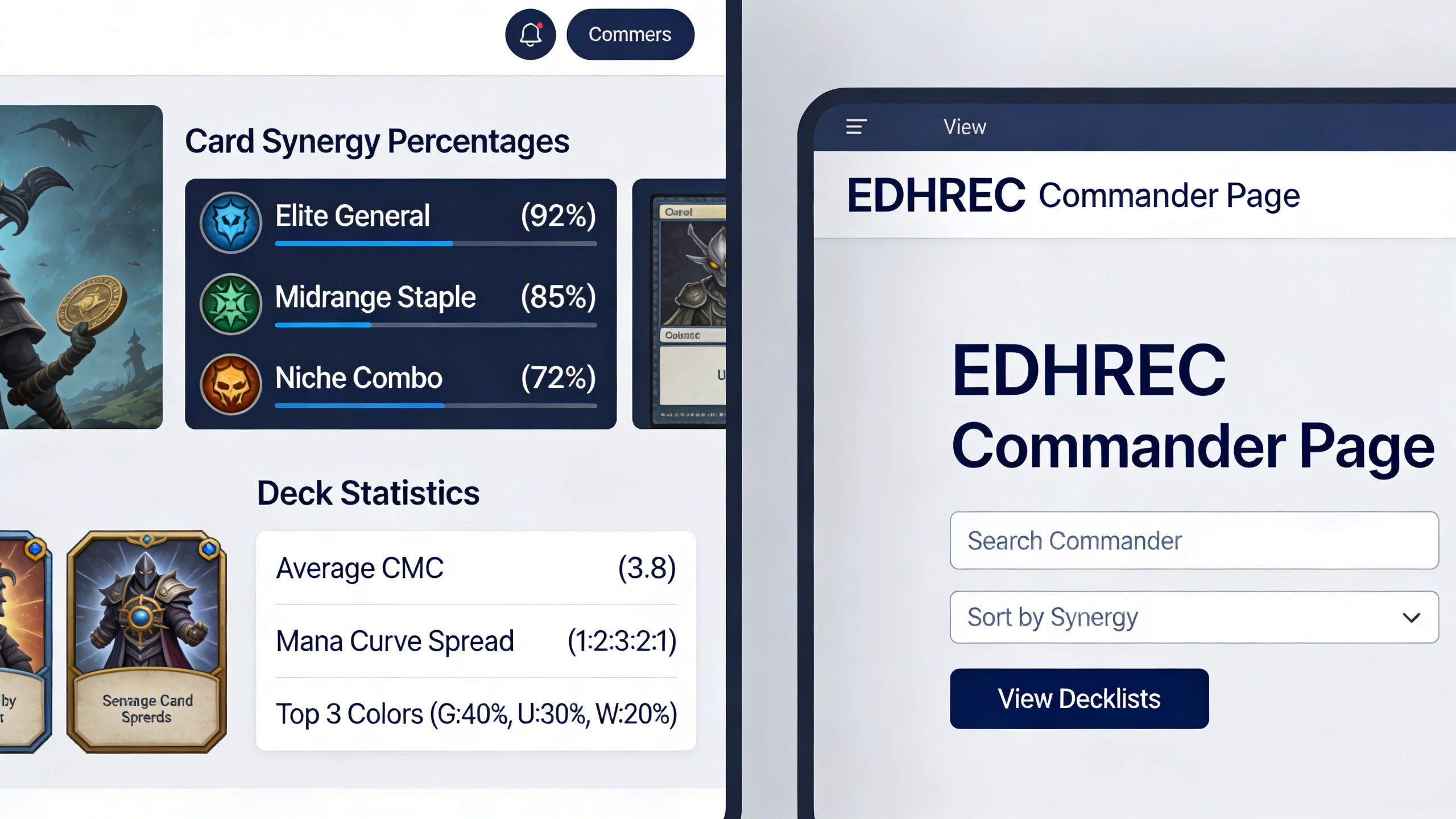
These commander pages reveal crucial synergy percentages that help identify auto-includes versus situational picks. For instance, a card appearing in 85% of Chatterfang EDH REC builds carries significantly more weight than one found in only 15% of lists. The platform calculates these percentages from its database of over 2 million submitted decks, providing reliable statistical guidance for your brewing process.
Each commander page breaks down recommendations into categories: lands, artifacts, enchantments, instants, sorceries, and creatures. This organization helps maintain proper deck balance while ensuring you don’t overlook key pieces of your strategy. The edhrec mtg database also highlights signature spells—cards that appear more frequently with your chosen commander than in the general population, indicating strong synergistic value.
Theme and Strategy Filters
EDHREC’s theme system revolutionizes how players approach deck building by organizing strategies into searchable categories. Whether you’re building aristocrats, voltron, or tribal strategies, the platform’s theme filters narrow recommendations to cards that specifically support your chosen game plan.
The theme pages function as specialized databases within the larger edhrec commander ecosystem. For example, selecting “Tokens” as a theme when viewing Chatterfang’s page filters recommendations to show cards like Parallel Lives, Doubling Season, and Cryptolith Rite—all staples that specifically enhance token-based strategies.
These filters extend beyond basic archetypes to include budget considerations, allowing players to build competitive decks within specific price ranges. The platform automatically adjusts recommendations when you select budget filters, suggesting alternatives like Parallel Evolution instead of the more expensive Doubling Season, maintaining strategic consistency while respecting financial constraints.
Advanced theme combinations let you layer multiple filters simultaneously. Building a budget aristocrats deck with Chatterfang becomes manageable when you can view cards that appear frequently in both token and sacrifice-themed builds under $5 per card.
Advanced Search and Sorting Options
EDHREC’s advanced search functionality transforms casual browsing into precision deck tuning. The platform offers multiple sorting options including synergy rating, price, and inclusion percentage, allowing builders to prioritize different factors based on their specific needs and meta considerations.
The synergy algorithm represents one of EDHREC’s most sophisticated features, calculating how well individual cards work with your chosen commander compared to their general popularity. A card with high synergy but moderate overall usage often represents hidden value that less experienced builders might overlook.
Price integration connects directly to major retailers, displaying real-time market values alongside each recommendation. This feature proves invaluable when building within budget constraints or identifying cards experiencing price spikes. For players managing large collections, tools like TCG Radar complement EDHREC perfectly by providing instant card identification and price checking through your phone’s camera, making it easy to verify which recommended cards you already own.
The advanced search also includes color identity filters, mana value restrictions, and card type specifications. These granular controls help fine-tune deck curves and ensure proper mana base construction. You can search specifically for two-mana ramp spells in green, three-mana removal in white, or five-mana threats in your commander’s colors.
Salt scores add another dimension to card evaluation, indicating how frustrating opponents find specific cards. This community-driven metric helps players balance power level with playgroup enjoyment, crucial for maintaining healthy Commander pods.
Popular Commander Archetypes on EDHREC
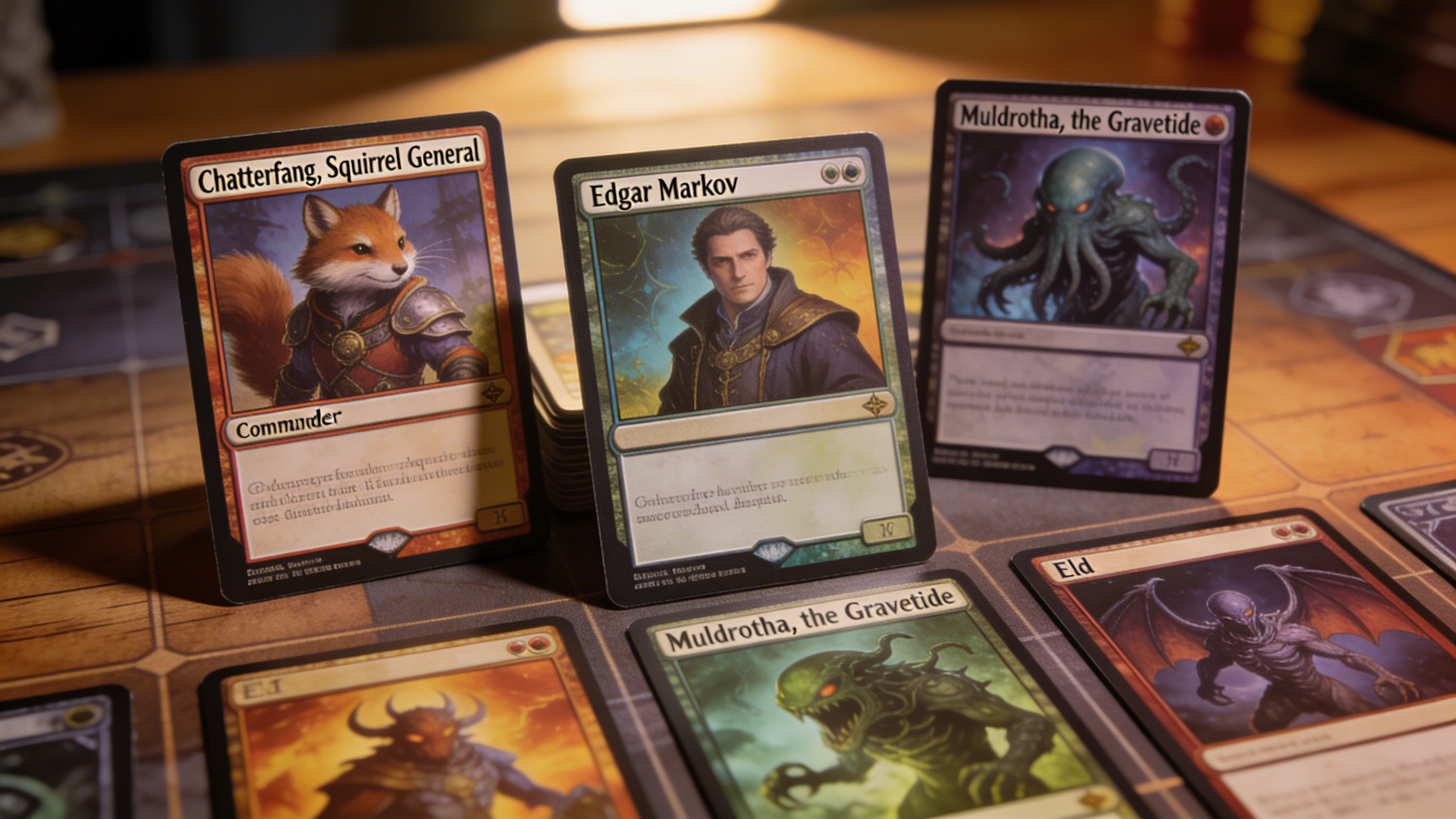
EDHREC’s comprehensive database reveals fascinating patterns in Commander deck construction, showcasing which archetypes dominate tables worldwide. By analyzing millions of deck submissions, the platform identifies not only the most popular commanders but also the strategic approaches that define successful builds. Understanding these archetypes helps players navigate the format’s complexity while discovering new directions for their own deck construction.
Top-Tier Commanders and Their Strategies
The current EDHREC rankings highlight several commanders that consistently appear in winning deck lists. Chatterfang, Squirrel General leads the charge in tribal strategies, appearing in over 15,000 deck submissions on edhrec. The chatterfang edh rec data shows players typically include 35-40 creatures, with Pitiless Plunderer and Doubling Season appearing in 78% and 82% of builds respectively. This commander transforms token generation into explosive value engines, often winning through Craterhoof Behemoth or overwhelming board presence.
Edgar Markov continues dominating aggressive strategies, with EDHREC data showing average mana curves peaking at three mana. Successful Edgar builds typically run 32-35 vampires, utilizing cards like Shared Animosity and Door of Destinies that appear in 65% of competitive lists. The eminence ability creates immediate board pressure, forcing opponents into defensive positions while Edgar players develop overwhelming tribal synergies.
Muldrotha, the Gravetide represents the pinnacle of value-oriented gameplay, with edhrec commander statistics showing these decks average 42 permanents to maximize recursive advantage. Top performers include Spore Frog (71% inclusion rate), Sakura-Tribe Elder (68%), and Eternal Witness (74%). These builds excel at grinding out long games through consistent card advantage and resource denial.
Emerging Meta Trends in 2026
Recent EDHREC analysis reveals significant shifts in Commander preferences, with Eldrazi strategies gaining substantial traction. Kozilek, the Great Distortion and Ulamog, the Ceaseless Hunger now appear in 23% more deck submissions compared to 2025, reflecting players’ embrace of colorless ramp strategies. These builds typically feature 12-15 mana rocks and focus on explosive turns six through eight.
The rise of artifact-based value engines marks another significant trend, with Urza, Lord High Artificer climbing 400 positions in edhrec mtg rankings. These decks leverage cheap artifacts like Seat of the Synod and Vault of Whispers alongside powerful payoffs including Sai, Master Thopterist and Thopter Foundry. The archetype’s success stems from consistent card draw and multiple win conditions.
Stax strategies have evolved beyond traditional prison effects, with newer commanders like Kambal, Consul of Allocation gaining popularity. These builds focus on incremental advantage rather than hard locks, featuring cards like Rhystic Study and Mystic Remora that appear in 89% of successful control lists according to EDHREC data.
Budget vs Competitive Builds
EDHREC’s budget filters reveal stark differences between casual and competitive builds. Budget Chatterfang decks ($50-100) focus on basic token generators like Ant Queen and Hornet Queen, while competitive versions ($300+) include Gaea’s Cradle and Doubling Season. The performance gap narrows significantly with smart card selection, as budget alternatives like Cryptolith Rite and Parallel Lives provide similar effects at fraction of the cost.
Competitive Edgar Markov builds average $450 and include Reserved List cards like Vampiric Tutor and Demonic Tutor, while budget versions ($75-150) substitute with Diabolic Intent and Diabolic Tutor. EDHREC statistics show budget builds maintain 70% of competitive performance when focusing on efficient vampire creatures and tribal synergies over expensive tutors.
The data reveals interesting patterns in mana base construction across budget levels. Competitive decks average 8-10 fetch lands and shock lands, while budget alternatives using basic lands and guild gates show only 15% slower average game speed. This suggests that while expensive mana bases provide consistency, skilled pilots can achieve success with budget alternatives.
For players tracking their collection value and deck costs, tools like TCG Radar provide instant price scanning to help optimize budget allocations across different power levels. The app’s comprehensive database helps identify when budget alternatives might better serve specific strategies than expensive staples.
Understanding these archetype patterns through edhrec data empowers players to make informed decisions about deck construction, whether pursuing competitive optimization or exploring budget-friendly alternatives that maintain strategic integrity.
Using EDHREC for Specific Commander Builds
EDHREC transforms from a simple database into a powerful deck building engine when you understand how to leverage its data for specific commander builds. Whether you’re crafting a competitive Chatterfang, Squirrel General deck or exploring budget options for casual play, EDHREC’s analytical tools provide the foundation for informed deck construction decisions.
Step-by-Step Deck Construction Process
Begin your deck building journey by navigating to your chosen commander’s dedicated page on EDHREC. The synergy percentages displayed alongside each recommended card reveal crucial information about optimal inclusions. Cards showing 75% or higher synergy rates typically form the core engine pieces, while those between 50-75% offer solid support options. For example, when building Chatterfang EDH rec lists, you’ll notice Pitiless Plunderer consistently appears with high synergy percentages due to its artifact token generation.
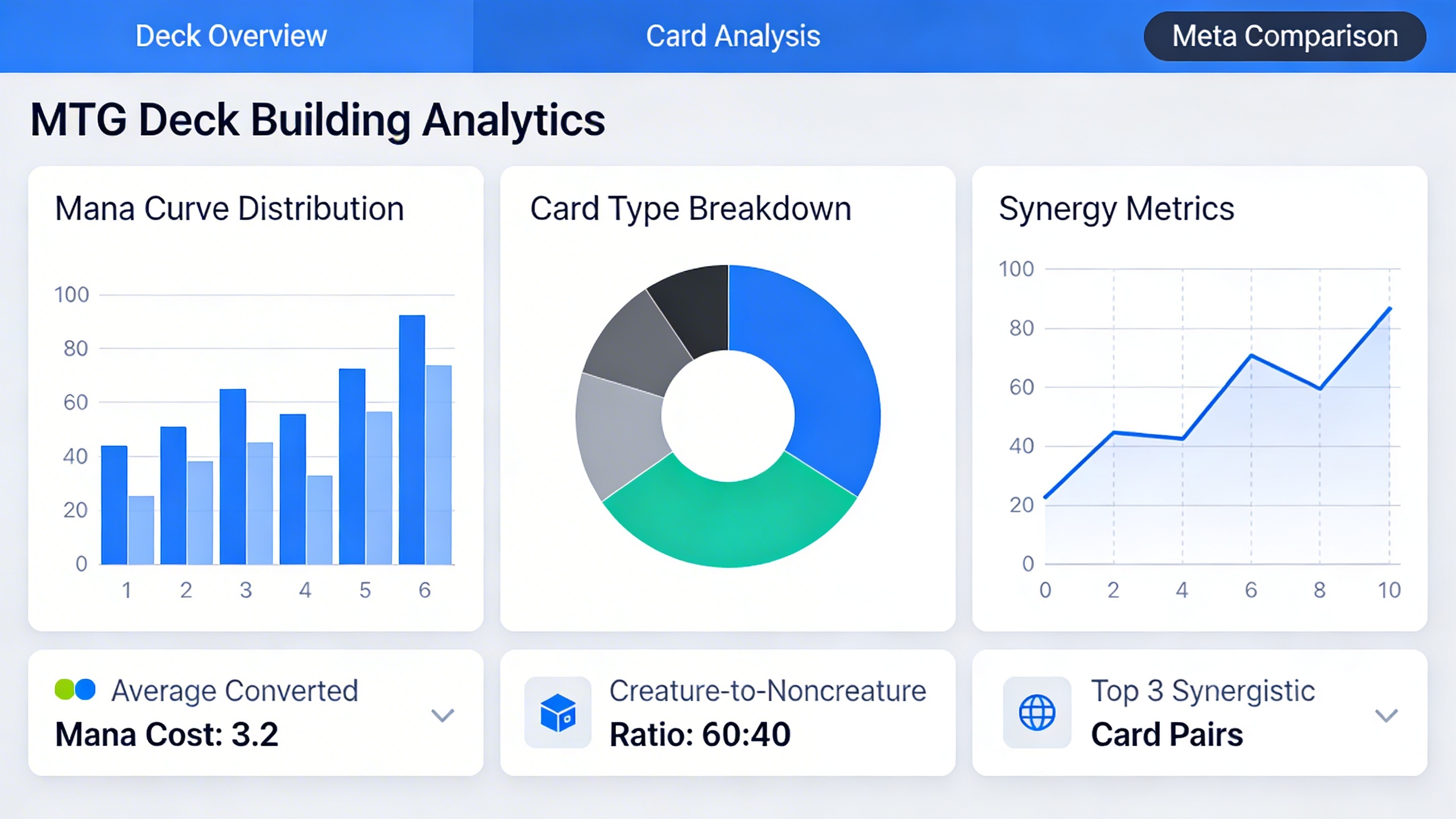
Start with the “High Synergy Cards” section to identify your deck’s backbone. These cards work specifically well with your commander’s abilities and shouldn’t be overlooked. Next, examine the “Top Cards” section for format staples that provide universal value. Balance these selections by reviewing the mana curve visualization—aim for a distribution that peaks around 2-3 mana with adequate representation across all relevant costs.
The signature spells section reveals cards that define successful builds for your commander. These often include unique interactions or combo pieces that experienced players have discovered through extensive testing. Cross-reference these suggestions with your local meta and budget constraints to create a personalized card pool.
Optimizing Card Choices with Data
EDHREC’s percentage-based recommendations stem from thousands of submitted decklists, creating a reliable foundation for card evaluation. When analyzing potential inclusions, compare synergy percentages across similar effects. A removal spell appearing in 45% of decks with 60% synergy typically outperforms one in 55% of decks with 40% synergy, indicating better contextual fit despite lower raw popularity.
Use the “Themes” filter to narrow recommendations based on your intended strategy. Aristocrats builds will emphasize different cards than token swarm approaches, even within the same commander. The EDH REC commander data becomes particularly valuable when comparing multiple build paths—examine how card choices shift between aggressive and value-oriented versions of the same general.
Price considerations integrate seamlessly with EDHREC data through the budget filter options. Cards maintaining high synergy percentages across different price points often represent the best value propositions. For accurate pricing during your deck building process, consider using TCG Radar to scan and verify current market values for cards you’re considering.
Avoiding Common Deck Building Mistakes
Many builders fall into the trap of prioritizing flashy, high-cost spells while neglecting essential utility pieces. EDHREC mtg data consistently shows that successful decks include adequate ramp (typically 8-12 pieces), removal (6-10 targeted answers), and card draw (6-8 sources). These categories often receive insufficient attention from new builders focused on explosive plays.
Mana curve optimization requires careful attention to EDHREC’s curve visualization. Decks heavily skewed toward expensive spells struggle with consistency, while those lacking meaningful late-game options fail to close games effectively. Aim for a curve that supports your commander’s casting cost while providing relevant plays throughout the game.
Another frequent mistake involves ignoring meta considerations visible in EDHREC’s data trends. Cards showing declining inclusion rates may indicate shifting meta preferences or the emergence of better alternatives. Conversely, rising stars often signal newly discovered synergies or responses to popular strategies.
Resist the urge to include every high-synergy card without considering overall deck coherence. A focused strategy with 85% synergistic cards typically outperforms a scattered approach including 95% individually powerful pieces. EDHREC commander pages excel at highlighting these focused builds through their theme-based filtering system.
Finally, remember that EDHREC reflects aggregate data rather than optimal builds for every meta. Local considerations—such as prevalent strategies or house rules—may necessitate deviations from standard recommendations. Use the platform as a starting point while maintaining flexibility for personal preferences and unique playgroup dynamics.
Advanced EDHREC Tools and Analytics
Beyond basic deck building recommendations, EDHREC offers sophisticated analytical tools that help players understand the social dynamics and competitive implications of their card choices. These advanced features transform raw data into actionable insights for optimizing both deck performance and playgroup compatibility.
Salt Score and Social Contract Considerations
The salt score system represents one of EDHREC’s most valuable social features, measuring how much frustration specific cards generate in typical Commander games. Cards receive ratings from 0-4 based on community feedback, with higher scores indicating greater potential for negative player experiences. Armageddon consistently ranks among the highest salt cards at 3.8, while staples like Sol Ring maintain relatively low scores despite their power level.
Understanding these metrics helps players navigate the unwritten social contract of Commander. When building a deck around commanders like Chatterfang, Squirrel General, checking the salt scores of potential includes like Parallel Lives (0.5) versus Doubling Season (1.2) provides insight into how your deck might be received. The edhrec commander database cross-references these scores with popularity data, revealing which powerful cards maintain broad acceptance versus those that generate table tension.
Power level assessment goes beyond individual card evaluation. EDHREC’s algorithms analyze entire decklists to estimate competitive strength, considering factors like mana curve efficiency, interaction density, and win condition consistency. This data proves invaluable when joining new playgroups or participating in pods with specific power level expectations.
Price Tracking and Budget Management
EDHREC integrates comprehensive pricing data from multiple sources, enabling sophisticated budget optimization strategies. The platform tracks price trends over time, highlighting cards experiencing significant value changes that might affect deck accessibility. Recent examples include Smothering Tithe fluctuating between $15-25 based on reprint announcements and competitive adoption rates.
The budget filtering system allows users to set spending limits and automatically suggests alternative cards that provide similar effects at lower price points. For expensive commanders like Mox Diamond ($200+), the system recommends budget alternatives like Fellwar Stone ($2) while maintaining functional similarity. This feature particularly benefits players exploring new archetypes without major financial commitments.
Advanced users can leverage the price tracking data for collection management decisions. By monitoring cards in their existing decks through edhrec mtg integration, players can identify optimal times to trade or sell cards that have appreciated significantly, then reinvest in undervalued alternatives that serve similar roles.
Combo Detection and Synergy Analysis
EDHREC’s combo detection algorithms identify infinite loops and powerful synergies within submitted decklists, providing detailed explanations of how specific card combinations generate advantage or achieve victory. The system recognizes classic combinations like Mikaeus, the Unhallowed + Triskelion + sacrifice outlet, explaining the precise steps required for execution.
The synergy analysis extends beyond infinite combos to highlight cards that work exceptionally well together based on statistical correlation. When examining a chatterfang edh rec build, the system might identify that decks running Chatterfang alongside Pitiless Plunderer show significantly higher win rates when they also include Ashnod’s Altar, suggesting a powerful three-card engine.
For players seeking to optimize their existing decks, the combo detection feature analyzes uploaded decklists and suggests missing pieces for established combinations already partially present. This prevents the frustration of running two-thirds of a powerful combo without realizing the potential for completion with a single additional card.
The platform’s machine learning algorithms continuously improve these recommendations by analyzing thousands of successful decklists, identifying emerging synergies before they become widely recognized. This gives dedicated EDHREC users early access to powerful combinations that haven’t yet reached mainstream adoption, providing competitive advantages in evolving metas.
EDHREC vs Other Deck Building Resources
While numerous deck building platforms exist in the MTG ecosystem, EDHREC stands out as the definitive data-driven resource for Commander format analysis. Understanding how it compares to alternatives helps players maximize their deck building efficiency and make informed tool choices.
Comparing Database Accuracy and Coverage
EDHREC processes over 400,000 Commander decklists monthly, creating the largest statistical database for EDH format analysis. MTGGoldfish offers broader format coverage but lacks EDHREC’s specialized Commander focus and synergy recommendations. Where MTGGoldfish excels in Standard and Modern metagame tracking, EDHREC commander pages provide unmatched depth for specific legendary creatures like Chatterfang, Squirrel General or Atraxa, Praetors’ Voice.
The accuracy difference becomes apparent when examining niche commanders. EDHREC’s algorithm identifies meaningful synergies by analyzing thousands of decklists, while other platforms often rely on smaller sample sizes or manual curation. For example, searching “chatterfang edh rec” reveals specific token synergies and sacrifice outlets that appear in 67% of optimized builds—data unavailable elsewhere.
Integration with Other MTG Tools
Modern deck building requires seamless workflow integration, and EDHREC excels through strategic partnerships. Archidekt users can import EDHREC recommendations directly into their deck builder interface, streamlining the process from research to final list construction. This integration allows players to view EDHREC synergy data while simultaneously managing their collection and budget constraints.
Moxfield compatibility extends this functionality further, enabling players to export EDHREC-inspired lists for playtesting and sharing. The platform’s API allows third-party developers to incorporate edhrec mtg data into custom applications, creating a robust ecosystem of connected tools. For players managing physical collections, apps like TCG Radar complement EDHREC perfectly by providing instant card identification and pricing data during deck assembly.
Community Features and User Experience
EDHREC’s community-driven approach distinguishes it from algorithm-heavy competitors. The platform features detailed articles from experienced Commander players, explaining not just what cards are popular, but why specific synergies work. MTGGoldfish provides tournament reports and meta analysis, but lacks EDHREC’s focus on casual multiplayer dynamics and political considerations crucial to Commander success.
The user experience prioritizes accessibility for players of all skill levels. New players can follow straightforward upgrade paths for preconstructed decks, while experienced brewers access advanced filtering options and statistical breakdowns. EDH rec commander pages display information hierarchically, showing high-synergy cards first while maintaining comprehensive coverage of viable options.
Navigation improvements continue expanding EDHREC’s lead over competitors. The recent interface updates reduced page load times by 40% while adding mobile optimization features absent from many alternative platforms. These technical advantages, combined with unparalleled Commander-specific data depth, establish EDHREC as the essential resource for serious EDH players seeking competitive advantages and creative inspiration.
Maximizing Your Commander Success with EDHREC
Success in Commander requires more than just building a functional deck—it demands strategic adaptation, continuous refinement, and active community engagement. EDHREC provides the tools and insights needed to elevate your gameplay from casual to competitive levels.
Building for Your Local Meta
Your local playgroup’s meta significantly influences optimal deck construction choices. EDHREC’s filtering options help identify cards that perform well against specific strategies prevalent in your area. If your meta features heavy graveyard interaction, the platform’s data reveals that cards like Rest in Peace and Bojuka Bog appear in 23% and 31% of relevant decks respectively.
Monitor your local commanders using edhrec commander searches to understand popular synergies. When facing multiple Chatterfang, Squirrel General decks, chatterfang edh rec data shows that artifact removal like Vandalblast becomes essential, appearing in 18% of anti-token strategies. This meta-specific preparation transforms close games into decisive victories.
Track emerging trends by checking EDHREC weekly for new card inclusions and rising popularity percentages. Cards showing 5-10% week-over-week growth often indicate shifting meta preferences worth addressing in your builds.
Continuous Deck Improvement Strategies
Effective deck evolution requires systematic analysis of your performance data alongside edhrec mtg statistics. After each game session, compare your deck’s underperforming cards against EDHREC’s recommendations for similar builds. Cards with sub-20% inclusion rates in successful lists often indicate optimization opportunities.
Implement a quarterly review process using EDHREC’s “New Cards” filter to identify recent releases that enhance your strategy. The platform’s average mana value data helps maintain optimal curve distribution—most successful Commander decks maintain 3.2-3.8 average mana cost according to aggregate statistics.
When evaluating card swaps, prioritize replacements that appear in 40%+ of similar successful builds on EDHREC. This threshold typically indicates proven performance across diverse metas and player skill levels.
Contributing to the EDHREC Database
Active participation in the EDHREC community amplifies both your deck-building knowledge and the platform’s overall utility. Submit your refined deck lists through the site’s deck submission feature, particularly builds that deviate successfully from standard recommendations.
Engage with EDHREC’s article comment sections and social media discussions to share meta insights and card performance observations. Contributors often gain early access to emerging strategies and receive feedback from experienced players worldwide.
Consider writing deck techs or card reviews for EDHREC’s content team. Published contributors develop recognition within the Commander community while helping newer players navigate complex deck-building decisions. This collaborative approach strengthens the entire ecosystem while advancing your own strategic understanding.
Frequently Asked Questions
How accurate are EDHREC's card recommendations for Commander decks?
EDHREC's recommendations are highly accurate for mainstream strategies, drawing from thousands of submitted decklists to provide statistically relevant suggestions. The platform's large sample sizes ensure reliable data for popular commanders and archetypes, though recommendations may be less precise for niche or newly emerging strategies. The community-driven data model means accuracy improves over time as more players submit decks with similar themes.
Can I use EDHREC to build budget Commander decks effectively?
Yes, EDHREC offers excellent budget filtering tools that allow you to set price limits and find affordable alternatives to expensive staples. The platform displays current card prices and lets you sort recommendations by cost, making it easy to identify budget-friendly options that still synergize well with your commander. You can also use the 'Budget' and 'Cheap' filters to discover overlooked cards that provide similar effects at fraction of the cost.
What does the salt score mean on EDHREC and should I care about it?
Salt scores measure community frustration levels with specific cards, calculated based on player surveys about which cards create negative play experiences. Higher salt scores indicate cards that many players find annoying, oppressive, or unfun to play against in casual games. While salt scores shouldn't dictate your deck choices, they're valuable for gauging how your card selections might be received in casual playgroups.
How often does EDHREC update its database and recommendations?
EDHREC continuously collects data from submitted decklists and updates its recommendations in real-time as new submissions are processed. New sets are typically integrated within days of release, with card data and synergy suggestions updating automatically as players begin including new cards in their decks. The platform's algorithms constantly recalculate percentages and recommendations based on the most current dataset.
Is EDHREC useful for competitive EDH (cEDH) deck building?
EDHREC has limited utility for cEDH since most submitted decks lean casual, potentially skewing recommendations away from optimal competitive choices. However, it can still be valuable for identifying combo pieces, understanding card synergies, and using advanced filters to focus on high-power strategies. For cEDH brewing, supplement EDHREC data with dedicated competitive resources and tournament results for more accurate optimization.