PSA Grading for Pokémon Cards in 2026: What It Costs and Which Cards Are Worth Sending
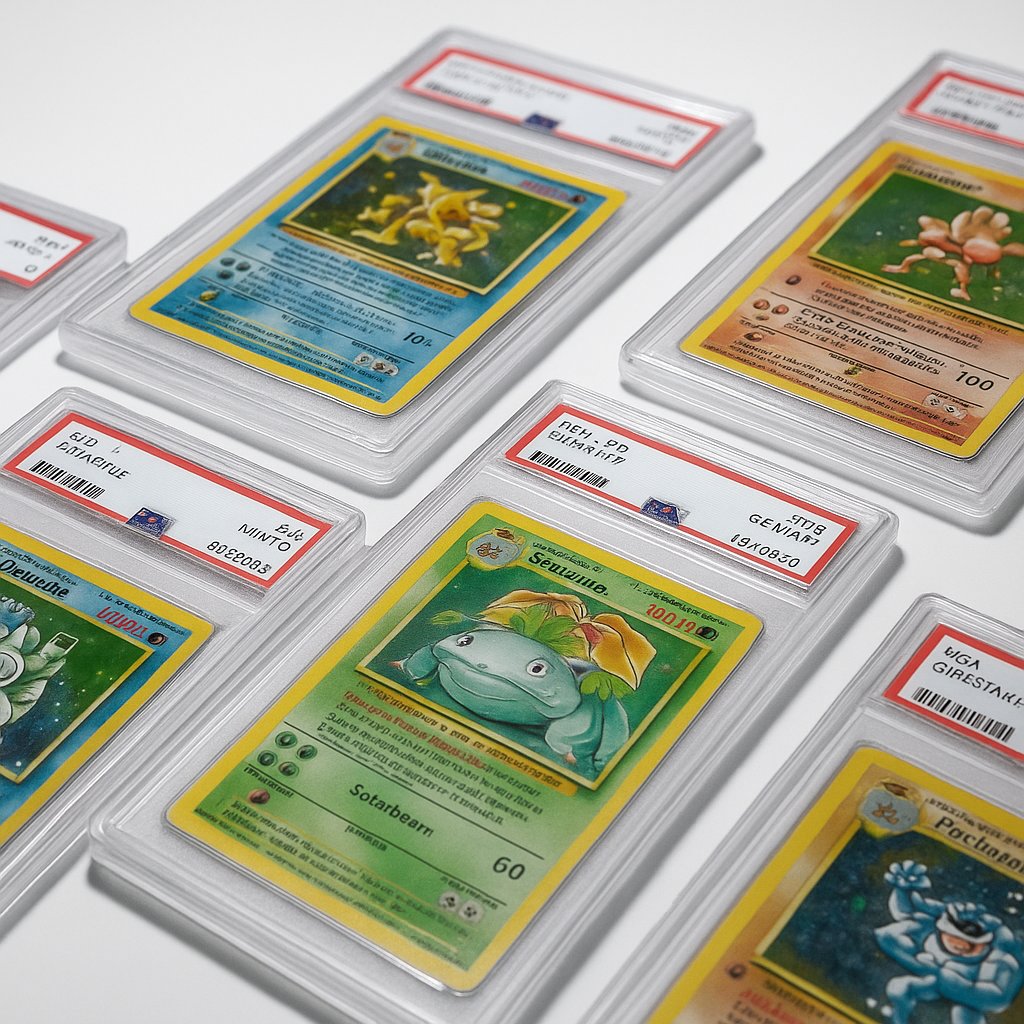
Grading a Pokémon card with PSA costs at least $79.99 per card in September 2026, because the four cheaper Value tiers have been paused since 2 June while PSA clears a backlog it last reported at 12.4 million cards. That single fact changes the answer to “should I grade this?” for most of a collection: the card has to be worth several hundred dollars in a PSA 10 for the slab to pay for itself. This guide is built around that threshold. It covers what PSA charges now, which Pokémon cards clear the bar, how PSA judges a Pokémon card, and how a PSA 10 compares with CGC and BGS on resale.
Fees and status were read from PSA’s price list and backlog tracker on 3 September 2026. The company-wide detail, including the full grading scale and submission walkthrough, is in our PSA card grading guide; this page stays on the Pokémon specifics.
PSA grading fees for Pokémon cards in 2026
| Tier | Fee per card | Max declared value | Turnaround | Status (3 Sep 2026) |
|---|---|---|---|---|
| Value Bulk (20+ cards) | $24.99 | $500 | 95 business days | Paused |
| Value / Value Plus / Value Max | $32.99 / $49.99 / $64.99 | $500 / $500 / $1,000 | 75 / 45 / 30 business days | Paused |
| Regular | $79.99 | $1,500 | 40–50 business days | Open |
| Express | $149 | $2,500 | 20–30 business days | Open |
| Super Express | $349 | $5,000 | 10–15 business days | Open |
| Walk-Through | $599 | $10,000 | 7–10 business days | Open |
| Premium 1 | $999 | $25,000 | 5–7 business days | Open |
Declared value is the value you expect the card to have after grading, and it sets the tier. A raw Base Set Charizard that would be worth $12,000 as a PSA 9 cannot go in at Regular; it needs Walk-Through at $599. PSA says the Value tiers return when the backlog reaches about 5 million, which on its own July projection is November or December 2026 at the earliest. The card grading cost calculator picks the lowest open tier for a given declared value and adds shipping.
Which Pokémon cards are worth grading at $79.99?
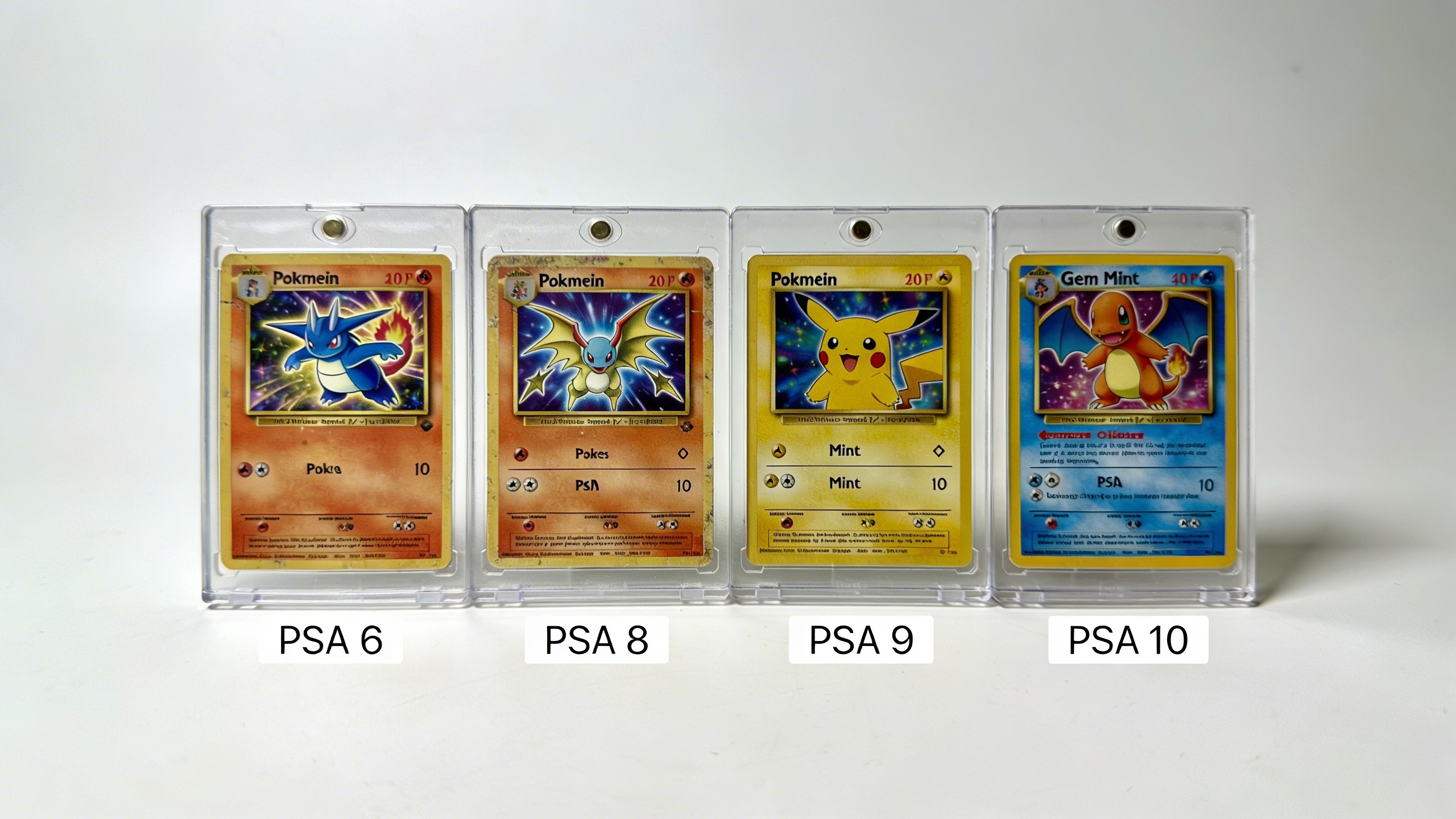
With shipping, a Regular submission costs about $85 per card. The slab has to add more than that, after the risk of a 9 instead of a 10, which in practice means a PSA 10 value of roughly $400 or more, or a vintage card worth $300 or more raw where any grade adds value. The categories that clear the bar:
- Wizards-era holos, 1999–2003: Base Set, Jungle, Fossil, Team Rocket, Neo, e-Series holos, and above all anything 1st Edition or Shadowless. Even a PSA 7 Base Set Charizard is a four-figure card.
- Gold Stars, Crystals and Shinings: the chase cards of 2002–2007. Population is low and the grade multiplier is steep.
- Modern alternate arts and special illustration rares: Umbreon and Rayquaza VMAX from Evolving Skies, Giratina V from Lost Origin, Lugia V from Silver Tempest, the Charizard ex special illustration rares from Obsidian Flames and 151. Raw prices in the hundreds, PSA 10s well above.
- Promos with tiny print runs: trophy cards, Pokémon Center exclusives, early tournament promos.
- Japanese cards of the same categories: PSA grades them, and Japanese print quality means a higher share come back 10, which lowers the risk side of the arithmetic.
What does not clear the bar at $79.99: modern holo rares, reverse holos, most V and VMAX cards outside the alternate arts, and anything mass-produced since 2020 without a special rarity. Those were exactly the cards the Value tiers existed for, and the rational move is to hold them until the tiers reopen or send them to CGC at $20. The grading submission planner sorts a stack into “send now”, “wait” and “never” using the open tiers.
The grade multiplier: what a PSA 10 is worth against a 9
Pokémon has the steepest grade curve of any card category, and it is the reason grading exists here. The Base Set Charizard is the reference case, with recent completed-sale ranges from 2026:
| Base Set Charizard, 1st Edition | Raw | PSA 7 | PSA 8 | PSA 9 | PSA 10 |
|---|---|---|---|---|---|
| 2026 price range | $3,000–$6,000 | $5,500–$8,000 | $10,000–$18,000 | $30,000–$50,000 | $300,000 to $954,800 (Heritage, February 2026 record) |
A PSA 10 sells for roughly ten times a PSA 9 and a PSA 9 for about three times a PSA 8. The same shape, at smaller numbers, applies to almost every vintage holo and to modern chase cards, where a PSA 10 is often three to five times raw and a PSA 9 barely above it. That asymmetry is why the centering measurement below matters more than anything else you do before submitting. Our Charizard price guide carries the Shadowless and Unlimited tables and the other valuable Charizard cards.
How PSA grades a Pokémon card
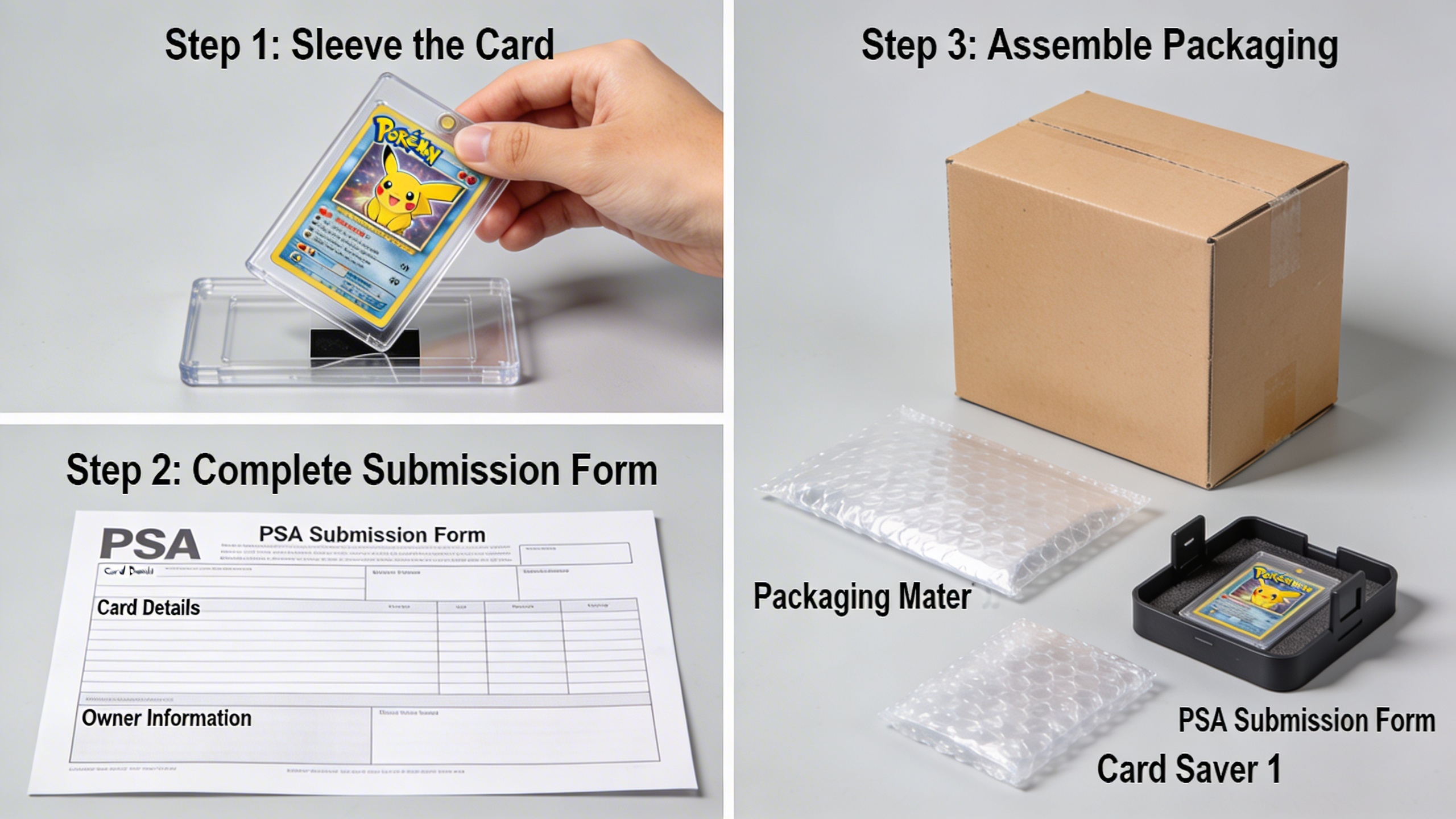
PSA applies the same 1–10 scale to Pokémon as to sports cards, with no 9.5 and no subgrades. The published centering standard is the gate: a 10 needs the front between 55/45 and 60/40 and the back at 75/25 or better; a 9 allows 60/40 to 65/35 on the front and 90/10 on the back. After centering, the grader looks for the flaws Pokémon cards are known for:
- Holo scratches: the foil on Wizards-era holos scratches in the pack. Under a single light source, tilt the card; a line that moves is a scratch and rules out a 10.
- Edge silvering: the foil layer showing through the blue border on vintage holos. Counts against edges and often caps the grade at 8.
- Print lines and holo bleed: horizontal lines across the artwork from the printing process, common on 1999–2001 cards and again on some 2022–2024 sets.
- Back whitening: the white showing along the back edges and corners, the most common flaw on Japanese cards and on anything stored in a binder.
- Surface dents and factory scuffs on textured modern full arts, which can be invisible until the card is tilted.
Two PSA options matter for Pokémon. “No qualifiers” tells PSA to lower the grade instead of adding an OC (off-center) or PD (print defect) suffix; for a card you will sell, choose it, since a PSA 8 sells far more easily than a PSA 9 (OC). And a minimum grade lets PSA return the card raw for a reduced fee if it would grade below the number you set, which is worth using on any vintage holo where a 6 would not cover the fee. The card centering calculator and card grade estimator cover the pre-check.
PSA vs CGC vs BGS for Pokémon cards
| PSA | CGC Cards | Beckett (BGS) | |
|---|---|---|---|
| Cheapest open tier | Regular, $79.99 | Economy, $20 (Bulk $17 for 25+) | Express, $79.95 (Base $14.95 paused to 15 Sep) |
| Turnaround at that tier | 40–50 business days | 90 business days | 15 business days |
| Top grade | 10 Gem Mint | 10 Pristine above 10 Gem Mint | 10 Pristine; Black Label with four 10 subgrades |
| Resale, same card | Highest for a 10; the price buyers search for | Pristine 10 near a PSA 10; Gem Mint 10 nearer a PSA 9 | Black Label above a PSA 10; 9.5 below it |
| Best use in 2026 | Selling cards worth over $400 graded | Grading for your own collection; bulk | Black Label candidates; buyers who want subgrades |
Pokémon buyers price in PSA 10s, so if the endgame is a sale, PSA is still the default despite the fee. CGC has become the sensible choice for cards you intend to keep, and for a Pristine 10 lottery ticket at a quarter of the price. Beckett is a specialist choice; see the BGS guide for Pokémon and the five-company comparison. The grading scale converter translates between the three scales.
Submitting Pokémon cards to PSA
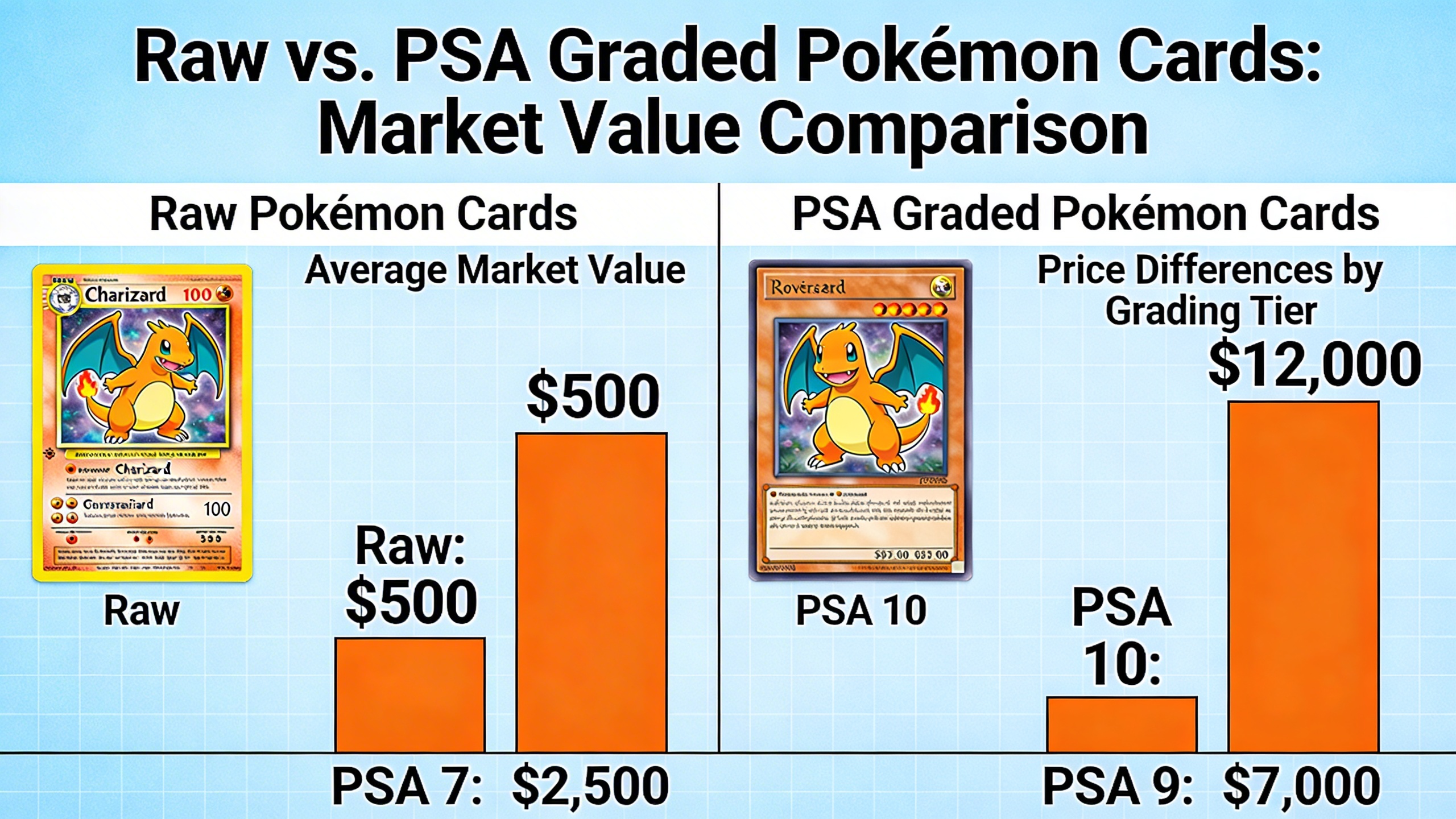
- Create an account at psacard.com. No Collectors Club membership is needed for Regular and above.
- Add each card from PSA’s database, which lists every English and Japanese Pokémon set; pick the exact variant, since “Charizard 4/102” exists as 1st Edition, Shadowless and Unlimited with a hundredfold price difference between them.
- Enter the declared value at the grade you expect, choose the tier, and tick “no qualifiers” and, if you want it, a minimum grade.
- Penny sleeve, then a Card Saver 1 semi-rigid. PSA does not accept top-loaders. Do not clean the card: a wiped holo shows as scratches under the grader’s light.
- Pack in form order between cardboard, ship insured with tracking, and expect the turnaround clock to start when PSA logs the box, typically a few days after delivery.
Before shipping, run the numbers in the grading ROI calculator with your own probability of a 10 and the completed-sale prices for a 10 and a 9. If the expected return is negative at $79.99, the card should wait for the Value tiers or go to CGC.
Sources and check date
Fees, caps and turnaround estimates from PSA’s trading card grading services page and its backlog tracker, read 3 September 2026; pause and reopening target from PSA’s 28 May 2026 service-level update. Centering standards are PSA’s published grading standards. Charizard price ranges summarise 2025–2026 completed sales as tracked by the main Pokémon price aggregators, including the February 2026 Heritage sale at $954,800. CGC and Beckett fees from their own price lists on the same date.