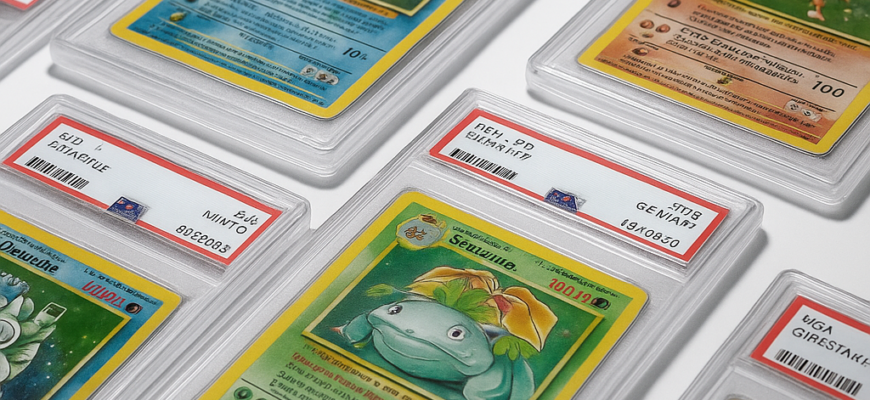
Professional Sports Authenticator (PSA) grading has revolutionized the Pokemon card collecting landscape, transforming how collectors evaluate, trade, and preserve their most valuable cards. When you submit your Pokemon cards for PSA grading, you’re not just getting authentication—you’re obtaining an official assessment that can dramatically impact a card’s market value and collectibility. A pristine PSA 10 Charizard Base Set can command thousands of dollars more than its ungraded counterpart, making PSA graded Pokemon cards some of the most sought-after items in the trading card market.
Understanding the intricacies of psa grading for pokemon cards is essential for any serious collector looking to maximize their investment potential. From the submission process and grading costs to identifying which cards deserve professional authentication, navigating the PSA ecosystem requires careful planning and knowledge. This comprehensive guide will walk you through every aspect of PSA pokemon grading, including the detailed grading scale, submission strategies, cost considerations, and common pitfalls that can cost collectors both time and money.
Whether you’re considering your first PSA submission or looking to refine your grading strategy, you’ll discover actionable insights to make informed decisions about your Pokemon card collection’s future value and preservation.
- Understanding PSA Grading: What Every Pokemon Collector Needs to Know
- What is PSA and Why It Matters for Pokemon Cards
- PSA vs Other Grading Companies
- The Value Impact of PSA Graded Pokemon Cards
- PSA Grading Scale and What Each Grade Means
- PSA 1-5: Poor to Excellent Condition
- PSA 6-8: Near Mint to Near Mint-Mint
- PSA 9-10: Mint and Gem Mint Standards
- PSA Pokemon Card Submission Process: Step-by-Step Guide
- Preparing Your Cards for Submission
- Choosing the Right Service Level
- Packaging and Shipping Requirements
- PSA Grading Costs and Service Options for Pokemon Cards
- Current PSA Pricing Structure
- Value vs Express vs Super Express Services
- When to Use Bulk Submissions
- Which Pokemon Cards Are Worth PSA Grading
- High-Value Vintage Cards Worth Grading
- Modern Pokemon Cards with Grading Potential
- Cards to Avoid Grading
- Maximizing Your PSA Pokemon Card Investment
- Market Trends for PSA Graded Pokemon Cards
- Selling Strategies for Graded Cards
- Long-term Collection Building
- Common PSA Grading Mistakes and How to Avoid Them
- Submission Errors That Cost Money
- Card Condition Assessment Mistakes
- Post-Grading Care and Storage
Understanding PSA Grading: What Every Pokemon Collector Needs to Know
Professional Sports Authenticator (PSA) has fundamentally transformed how collectors approach Pokemon cards, establishing itself as the most trusted third-party authentication and grading service in the trading card market. For Pokemon collectors seeking to maximize their investment potential and ensure authenticity, understanding PSA’s role becomes essential to making informed decisions about which cards to grade and when to pursue certification.
What is PSA and Why It Matters for Pokemon Cards
PSA operates as an independent grading company that authenticates and assigns numerical grades from 1 to 10 to trading cards based on their condition. Founded in 1991, PSA has graded over 40 million cards across all categories, with Pokemon cards representing a significant portion of their submissions since the late 1990s. The company’s rigorous authentication process protects collectors from counterfeit cards while providing standardized condition assessments that create market confidence.
The PSA grading scale ranges from Poor (1) to Gem Mint (10), with PSA 10 grading pokemon cards representing the highest achievable grade. Cards receiving PSA 10 status must exhibit perfect centering, sharp corners, smooth edges, and flawless surfaces with no visible defects under magnification. This stringent standard makes PSA 10 cards extremely valuable, particularly for vintage Pokemon releases and modern chase cards.
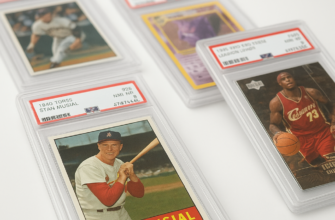
PSA’s tamper-evident holders, known as “slabs,” feature unique certification numbers that connect to an online database containing detailed card information and high-resolution images. This system prevents fraud and allows collectors to verify authenticity instantly, making psa graded pokemon cards highly liquid assets in the secondary market.
PSA vs Other Grading Companies
While several companies offer card grading services, PSA maintains the largest market share, particularly for Pokemon cards. Beckett Grading Services (BGS) uses a 10-point scale with subgrades for centering, corners, edges, and surface, appealing to collectors who want detailed condition breakdowns. However, BGS typically commands lower premiums than PSA for most Pokemon cards.
Certified Guaranty Company (CGC) entered the trading card market more recently, offering competitive pricing and faster turnaround times. Sports Card Guaranty (SGC) focuses primarily on vintage sports cards but accepts Pokemon submissions. Despite these alternatives, PSA consistently achieves the highest sale prices for graded Pokemon cards across major auction platforms.
Market data from 2023 shows PSA graded cards selling for 15-25% more than equivalent BGS cards and 20-35% more than CGC cards for popular Pokemon sets like Base Set, Neo Genesis, and modern releases. This premium reflects collector preference and market confidence in PSA’s brand recognition.
The Value Impact of PSA Graded Pokemon Cards
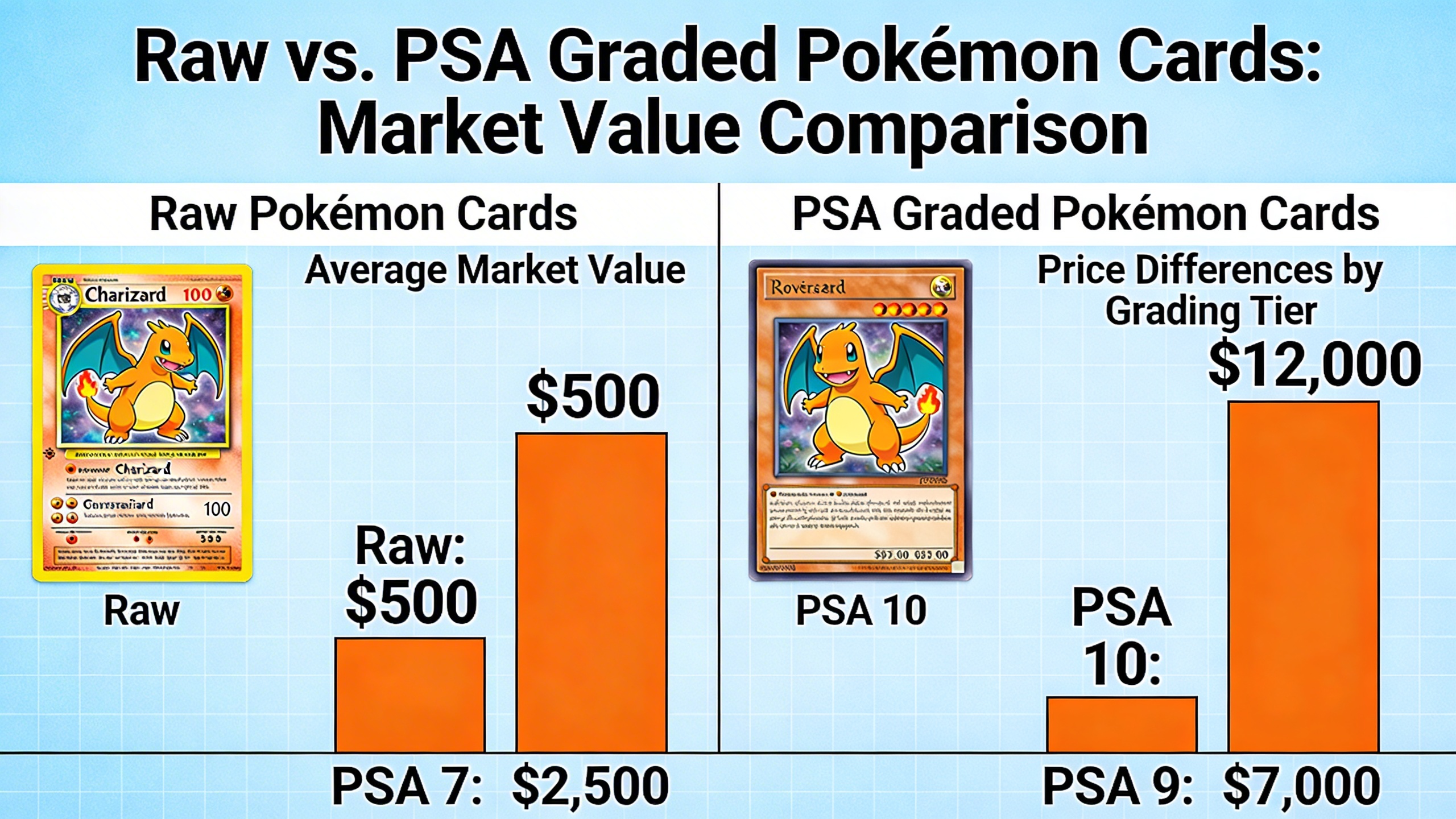
Grading transforms raw Pokemon cards into certified collectibles with dramatically increased values. A raw Base Set Charizard in near mint condition might sell for $300-500, while the same card receiving a PSA 9 grade typically commands $1,500-2,500. PSA 10 examples regularly exceed $5,000-8,000 depending on market conditions.
The value increase varies significantly by card rarity, age, and condition. Modern Pokemon cards show smaller but still meaningful premiums, with PSA 10 examples of popular cards like Charizard VMAX or Pikachu V selling for 2-3 times raw card prices. Vintage cards from 1998-2003 show the most dramatic increases, often reaching 5-10 times raw values when graded PSA 9 or 10.
Current psa pokemon grading cost ranges from $20 for modern cards to $300+ for vintage submissions, depending on declared value and service level. Despite these costs, the potential returns make grading worthwhile for high-value cards. When evaluating cards for submission, collectors should research recent sales data using tools like TCG Radar to identify cards with strong grading potential and track market values effectively.
Understanding these fundamentals helps collectors make strategic decisions about building PSA graded collections while maximizing both enjoyment and investment potential in the dynamic Pokemon card market.
PSA Grading Scale and What Each Grade Means
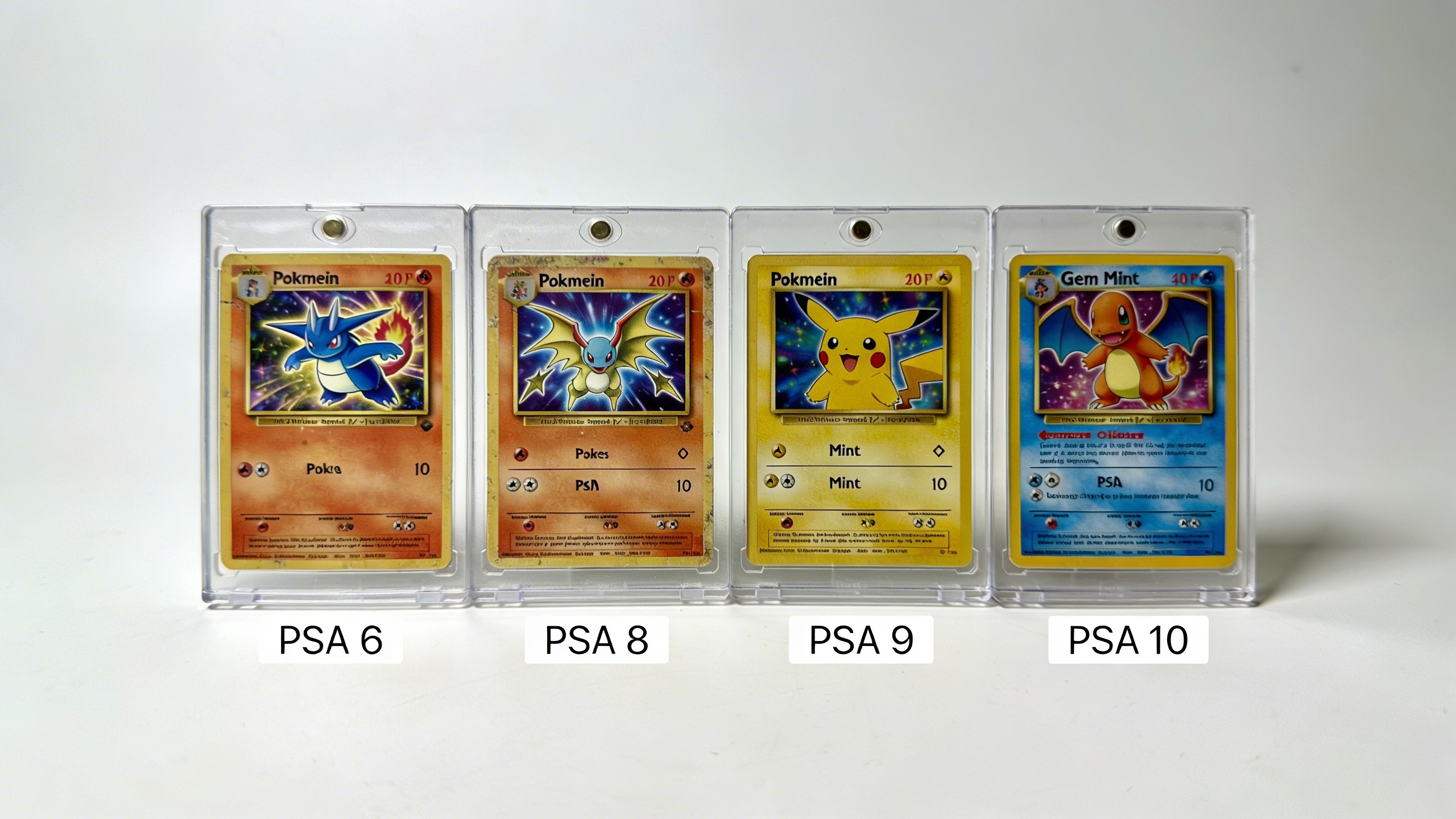
The PSA grading scale ranges from 1 to 10, with each grade representing specific condition standards that directly impact your Pokemon cards’ market value. Understanding these distinctions is crucial for collectors pursuing PSA graded Pokemon cards, as even minor differences between grades can mean hundreds or thousands of dollars in value variation.
PSA 1-5: Poor to Excellent Condition
Cards receiving PSA 1-5 grades typically have significant visible defects that prevent them from achieving higher ratings. A PSA 1 (Poor) card shows extreme wear with heavy creasing, staining, or writing that severely impacts the card’s appearance. PSA 2 (Good) cards display noticeable wear but remain structurally intact.
PSA 3 (Very Good) represents cards with moderate wear, including light creasing or corner damage. PSA 4 (Very Good-Excellent) cards show minor wear with slight corner rounding or edge whitening. PSA 5 (Excellent) cards have light surface wear but maintain sharp corners and clean edges. While these grades are less desirable for investment purposes, vintage Pokemon cards from Base Set or Jungle can still hold significant value even at these lower grades due to their historical importance.
PSA 6-8: Near Mint to Near Mint-Mint
The PSA 6-8 range represents the sweet spot for many collectors balancing condition with affordability. PSA 6 (Excellent-Near Mint) cards show very light wear with minimal corner or edge issues. These cards often provide excellent value for players who want graded protection without premium pricing.
PSA 7 (Near Mint) cards display only minor flaws, such as slight corner wear or very light surface scratches visible under close inspection. PSA 8 (Near Mint-Mint) represents cards with minimal defects – perhaps tiny corner touches or slight centering issues that prevent higher grades. For modern Pokemon sets, PSA 8 cards often trade at 30-50% of PSA 10 values, making them attractive entry points for collectors.
Common defects affecting this grade range include slight print lines, minor centering issues (typically 60/40 to 70/30), or barely perceptible corner wear. When evaluating psa pokemon grading options, these grades offer strong condition guarantees while remaining accessible to most collectors.
PSA 9-10: Mint and Gem Mint Standards
PSA 9 (Mint) represents near-perfect cards with only minute flaws visible under magnification. These might include very slight centering issues (typically 65/35 or better), minor print spots, or barely detectable corner touches. PSA 9 cards often trade at 60-80% of PSA 10 values, making them popular among serious collectors.
PSA 10 (Gem Mint) represents the pinnacle of card condition – perfect centering (typically 55/45 or better), sharp corners, clean edges, and flawless surfaces. These cards show no visible defects under normal viewing conditions. For iconic cards like Charizard from Base Set, the difference between PSA 9 and PSA 10 can represent thousands of dollars in value.
The standards for psa 10 grading pokemon cards are exceptionally strict. Even microscopic print dots, slight centering variations, or tiny edge imperfections can prevent a PSA 10 grade. This rigorous standard maintains the grade’s prestige and market premium.
Understanding these grade distinctions helps collectors make informed decisions about psa grading for pokemon cards, whether pursuing maximum value or balancing condition with budget considerations. Each grade serves different collector goals, from investment-focused PSA 10 hunting to building complete graded sets across various condition levels.
PSA Pokemon Card Submission Process: Step-by-Step Guide
Successfully submitting cards for PSA grading requires careful preparation, strategic service selection, and meticulous packaging. The submission process can significantly impact both your grading results and overall costs, making proper preparation essential for maximizing the value of your PSA graded Pokemon cards.
Preparing Your Cards for Submission
Card preparation begins with honest self-assessment of condition. Before considering PSA grading for Pokemon cards, examine each card under bright lighting with a magnifying glass. Look for whitening on edges, surface scratches, centering issues, and corner wear. Cards with obvious flaws rarely achieve PSA 10 grades, and the grading cost may exceed the card’s post-grading value.
Clean your cards gently using a microfiber cloth, removing any dust or fingerprints from the surface. Never use cleaning solutions or attempt to remove more stubborn marks, as this can cause additional damage. Focus on cards that appear to be in Near Mint to Mint condition, as these have the best potential for high grades.
Research current market values before submission using tools like TCG Radar, which provides real-time pricing data for graded Pokemon cards. This helps determine whether the PSA pokemon grading cost justifies the potential return on investment. Generally, only submit cards where a PSA 9 or PSA 10 grade would result in a value significantly higher than the combined grading and shipping costs.
Document your cards with high-quality photographs before submission. Take images of the front, back, and any notable features. This creates a record for insurance purposes and helps you track which specific cards were submitted in each order.
Choosing the Right Service Level
PSA offers multiple service levels with varying costs and turnaround times. The Economy service, typically the most cost-effective option for PSA pokemon grading, handles cards valued under $499 with turnaround times of 65-75 business days. This service level works well for most modern Pokemon cards and lower-value vintage cards.
Regular service accommodates cards valued between $500-$2,499 with faster processing times of 35-45 business days. Express service, for cards valued between $2,500-$9,999, provides 20-25 business day turnaround. Super Express and Walk-through services offer even faster processing for high-value cards but come with significantly higher costs.
Consider bulk submissions for large quantities of similar-value cards. PSA’s bulk pricing tiers can reduce per-card costs when submitting 20 or more cards simultaneously. However, bulk submissions often have longer turnaround times and stricter value limits per card.
Calculate total costs including grading fees, return shipping, and insurance before selecting a service level. For cards targeting PSA 10 grading pokemon cards status, the investment in faster service levels may be worthwhile if market timing is crucial.
Packaging and Shipping Requirements
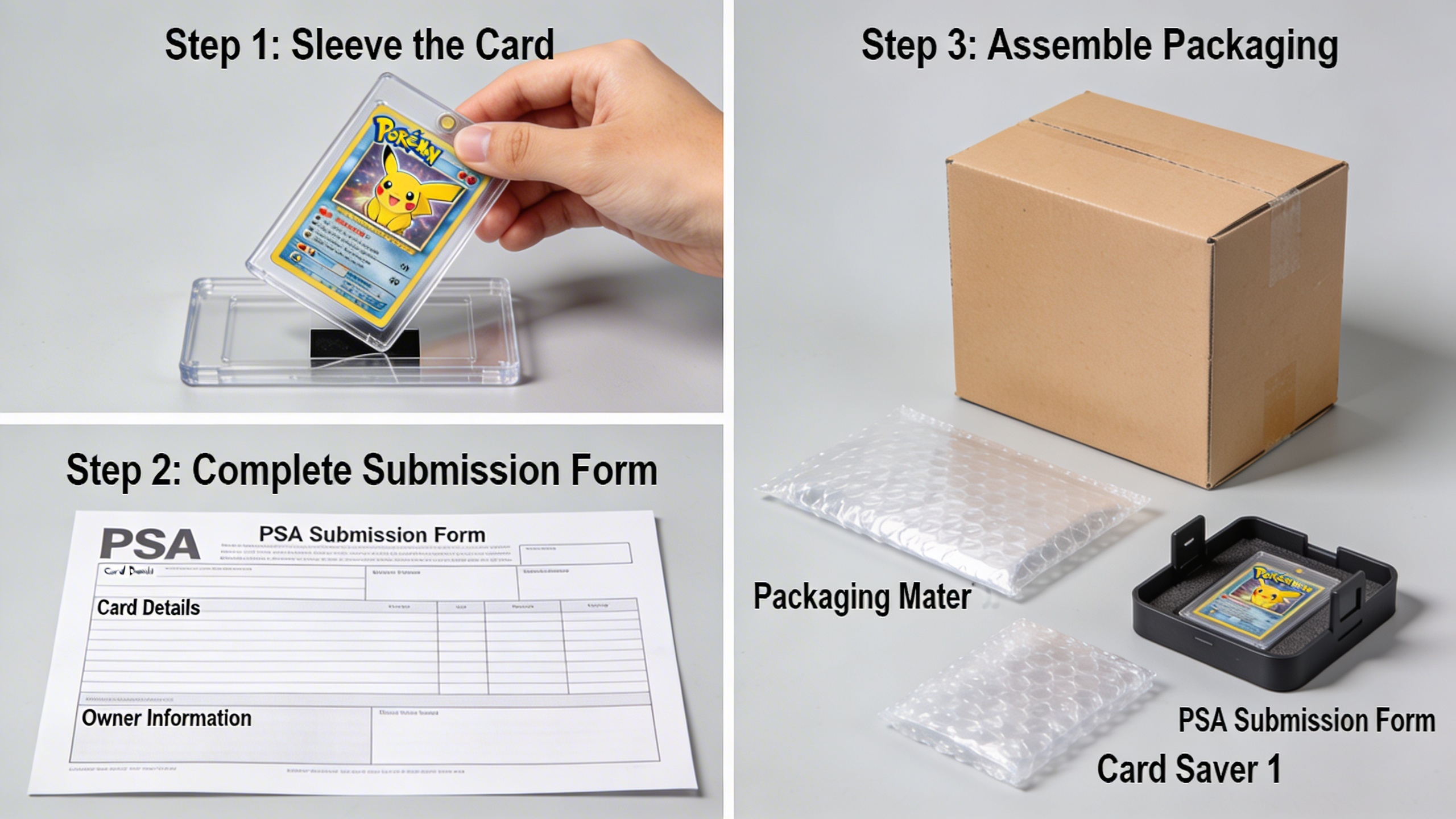
Proper packaging prevents damage during transit and ensures your cards arrive at PSA in the same condition they left your hands. Start by placing each card in a penny sleeve, ensuring the card slides in smoothly without forcing. The penny sleeve should fit snugly without being too tight.
Place sleeved cards into semi-rigid card savers or toploaders. Card savers are PSA’s preferred option as they allow easier card removal during the grading process. Ensure cards fit properly without bending or forcing them into holders. Never use tape on card savers or toploaders, as this complicates PSA’s handling process.
Group cards in bundles of 10-20 using rubber bands, placing them in the same direction for easier processing. Include your completed submission form with clear, legible writing or printed text. Double-check card descriptions, declared values, and service level selections to avoid processing delays.
Pack bundled cards in a sturdy box with adequate cushioning material. Use bubble wrap, foam, or cardboard spacers to prevent movement during shipping. The box should be large enough to accommodate padding while remaining compact enough for cost-effective shipping.
Ship via trackable methods with appropriate insurance coverage. USPS Priority Mail, UPS, and FedEx all offer tracking and insurance options suitable for PSA submissions. Declare the full value of your cards for insurance purposes and retain all shipping documentation until your cards are safely returned.
Consider the total submission value when selecting shipping methods. Higher-value submissions warrant expedited shipping and increased insurance coverage, while lower-value submissions can use standard shipping methods to minimize costs.
PSA Grading Costs and Service Options for Pokemon Cards
Understanding PSA grading costs is essential for maximizing your return on investment when submitting Pokemon cards for authentication. With 2026 pricing adjustments and various service tiers available, choosing the right submission option can significantly impact your grading experience and overall profitability.
Current PSA Pricing Structure
PSA’s 2026 pricing structure offers several tiers designed to accommodate different collector needs and budgets. The Value service starts at $25 per card for submissions with a maximum declared value of $499, making it ideal for most modern Pokemon cards and lower-value vintage pieces. Regular service costs $50 per card with a $999 maximum declared value, while Express service jumps to $75 per card for $2,499 maximum value submissions.
For high-value cards like first edition Base Set Charizards or pristine condition trophy cards, Super Express service at $200 per card accommodates declared values up to $9,999. Walk-through service, the premium option at $600 per card, handles cards valued above $10,000 and provides same-day turnaround for collectors attending major shows or conventions.
Value vs Express vs Super Express Services
The choice between service levels depends heavily on your timeline and the potential value of your psa graded pokemon cards. Value service typically takes 45-60 business days, making it perfect for collectors building long-term portfolios without immediate selling pressure. This option works exceptionally well for modern cards from recent sets where the psa pokemon grading cost can be justified by the potential grade premium.
Express service reduces turnaround to 10-15 business days, ideal for cards you plan to sell quickly or high-demand releases where market timing matters. Super Express service delivers results in 3-5 business days, justifying its premium cost when dealing with cards where achieving psa 10 grading pokemon cards status could yield significant returns.
Consider Express or Super Express for cards with immediate market relevance, such as newly released promotional cards or cards featured in competitive play. The faster turnaround often pays for itself when market conditions favor quick sales of authenticated cards.
When to Use Bulk Submissions
Bulk submissions through PSA’s Value service offer the most cost-effective approach for collectors with large quantities of cards. The minimum 20-card requirement makes this option perfect for complete set submissions or when grading multiple copies of the same high-value card for portfolio diversification.
Effective bulk submission strategies include grouping cards by estimated grade to manage expectations and combining modern cards with similar market values to maximize the $499 declared value limit. Many successful collectors use bulk submissions for cards they believe will grade PSA 8 or higher, where the grading cost can be recovered through increased market value.
Before submitting any cards for psa grading for pokemon cards, use TCG Radar to scan and verify current market values. This ensures you’re selecting the appropriate service level and can accurately declare card values for your submission. The app’s real-time pricing data helps determine whether the psa pokemon grading cost will provide positive returns on your investment.
Track your submission costs carefully, as successful grading strategies often involve submitting cards in batches where the combined value increase justifies the total grading expense across multiple cards.
Which Pokemon Cards Are Worth PSA Grading
Deciding which Pokemon cards to submit for PSA grading requires careful consideration of potential value increase versus grading costs. Not every card benefits from professional authentication, and understanding which cards offer the best return on investment will help you make informed grading decisions.
High-Value Vintage Cards Worth Grading
Vintage Pokemon cards from the late 1990s and early 2000s represent the most profitable grading opportunities. Base Set Charizard remains the crown jewel of PSA graded Pokemon cards, with PSA 10 examples selling for $350,000+ in recent auctions. Even lower grades command substantial premiums—a PSA 8 Base Set Charizard typically sells for $8,000-12,000 compared to $3,000-5,000 for raw copies.
Other Base Set cards worth grading include Blastoise (#2), Venusaur (#15), and Pikachu (#25), especially shadowless variants. Neo Genesis first edition cards like Lugia (#9) and Feraligatr (#4) also show strong grading potential, with PSA 10 examples commanding $2,000-5,000 premiums over raw cards.
Japanese promotional cards from this era deserve special attention for psa grading for pokemon cards. The 1998 Pokemon Illustrator Pikachu represents the holy grail, with PSA 10 examples selling for over $6 million. Trophy Pikachu cards from various tournaments consistently grade well and maintain strong market demand.
Modern Pokemon Cards with Grading Potential
Contemporary Pokemon releases offer selective grading opportunities, particularly for chase cards and special releases. Alternate art cards from recent sets like Brilliant Stars and Lost Origin show strong PSA 10 premiums, with cards like Charizard V Alt Art commanding $300-500 in PSA 10 versus $150-200 raw.
Pokemon 25th Anniversary products warrant consideration for psa pokemon grading, especially the Classic Collection boxes containing Base Set reprints. Golden cards from celebrations sets, such as Golden Mew (#25), maintain consistent grading demand with PSA 10 examples selling for 2-3x raw prices.
Japanese exclusive releases continue showing grading potential. Pokemon Center exclusive promos and tournament prize cards often justify PSA grading costs due to limited availability and collector demand. When evaluating modern cards, use tools like TCG Radar to track recent sales data and identify trending cards before submission.
Cards to Avoid Grading
Understanding when not to grade cards is equally important for managing psa pokemon grading cost effectively. Common cards from any era rarely justify grading expenses unless they’re pristine vintage examples. A $20 card that costs $25 to grade will never provide positive returns, even with PSA 10 designation.
Heavily played or damaged cards should avoid PSA submission regardless of rarity. PSA grades of 6 or below typically sell for less than grading costs plus raw card values. Modern cards with print runs exceeding 100,000 copies rarely maintain grading premiums long-term unless they feature popular Pokemon like Charizard or Pikachu.
Cards showing obvious centering issues, surface scratches, or edge wear won’t achieve PSA 10 grading pokemon cards status and may not justify submission costs. Before submitting, examine cards under bright lighting and magnification to identify potential grade-limiting factors.
| Card Category | Grading Threshold | Expected ROI |
|---|---|---|
| Base Set Holos | $200+ raw value | 200-400% |
| Modern Alt Arts | $100+ raw value | 100-200% |
| Vintage Promos | $150+ raw value | 150-300% |
| Common Cards | Avoid unless $50+ raw | Negative to break-even |
Focus your PSA submissions on cards with clear market demand and sufficient raw values to absorb grading costs while providing meaningful returns on your investment.
Maximizing Your PSA Pokemon Card Investment
Building a profitable PSA graded Pokemon card portfolio requires strategic thinking beyond simply submitting cards for authentication. Understanding market dynamics, timing your sales effectively, and developing a long-term collection strategy will significantly impact your return on investment.
Market Trends for PSA Graded Pokemon Cards
The psa graded pokemon cards market has experienced remarkable growth, with certain cards appreciating over 300% since 2020. Base Set Shadowless Charizard PSA 10 exemplifies this trend, climbing from $6,000 to peaks exceeding $25,000. However, the market shows clear preferences for specific categories.
First edition cards from Base Set, Jungle, and Fossil consistently outperform unlimited editions by 400-800%. Japanese cards, particularly from the Original Series, command premium prices when graded PSA 10. Modern cards face different dynamics—while psa 10 grading pokemon cards from recent sets like Crown Zenith or Paldea Evolved may achieve 2-5x raw card value, they lack the scarcity driving vintage appreciation.
Current data shows PSA 9 cards typically sell for 30-50% of PSA 10 values, while PSA 8 cards often struggle to exceed the psa pokemon grading cost investment. This grade sensitivity makes condition assessment crucial before submission.
Selling Strategies for Graded Cards
Timing and platform selection dramatically affect sale outcomes for psa graded pokemon cards. eBay remains the primary marketplace, offering the largest buyer pool, but consider these strategic approaches:
Auction timing matters significantly. Sunday evening auctions ending between 6-9 PM EST consistently achieve higher prices than weekday sales. Holiday periods, particularly Christmas and tax refund season, show increased buyer activity and premium pricing.
For high-value cards exceeding $1,000, consider specialized platforms like PWCC Marketplace or Heritage Auctions. These venues attract serious collectors willing to pay premiums for authenticated, graded specimens. However, factor in their commission structures when calculating net returns.
Photography quality directly impacts sale prices. Professional lighting showcasing the PSA slab’s clarity and the card’s centering can increase final values by 15-20%. Include multiple angles and close-ups of any notable features that contributed to the grade.
Long-term Collection Building
Successful PSA Pokemon grading requires a methodical approach focused on cards with proven appreciation potential. Prioritize first edition cards from the Original Series (Base Set through Neo Destiny), as these maintain the strongest collector demand and price stability.
Diversify across different Pokemon species rather than concentrating solely on Charizard cards. Blastoise, Venusaur, and Pikachu cards from vintage sets show consistent appreciation, while cards featuring popular Pokemon like Lugia, Rayquaza, and Umbreon from their debut sets often outperform market averages.
Budget allocation should follow the 70-20-10 rule: 70% in proven vintage cards (Base Set through e-Card series), 20% in modern chase cards from recent sets, and 10% in speculative Japanese exclusives or error cards. This approach balances stability with growth potential.
Track your collection’s performance using tools like TCG Radar to monitor current market values and identify optimal selling opportunities. Regular portfolio assessment helps determine when cards have reached peak appreciation or when market conditions favor strategic sales.
Consider the psa pokemon grading cost as a percentage of expected return. Cards likely to achieve PSA 9 or 10 grades with current market values exceeding $200 generally justify grading expenses, while lower-value submissions may not generate positive returns after fees and shipping costs.
Common PSA Grading Mistakes and How to Avoid Them
Even experienced collectors make costly errors when submitting cards for psa grading for pokemon cards. Understanding these common pitfalls can save hundreds of dollars in wasted submission fees and prevent disappointment with unexpected grades.
Submission Errors That Cost Money
The most expensive mistakes happen before your cards even reach PSA’s graders. Incorrect service level selection accounts for nearly 30% of submission delays and additional fees. Many collectors choose Economy service for valuable vintage cards, only to discover their Base Set Charizard exceeds the $499 value limit, resulting in upcharges and processing delays.
Form completion errors create another significant cost center. Missing card information, incorrect set identification, or unclear declared values can trigger manual review fees of $10-20 per card. Double-check every Pokemon card’s set name, card number, and release year before submission. When dealing with Japanese cards or special releases, verify the exact English translation PSA uses in their population reports.
Packaging mistakes prove equally costly. Cards damaged during shipping receive automatic grade reductions, regardless of their pre-submission condition. Use proper card savers, avoid penny sleeves that can stick to card surfaces, and never submit cards in toploaders that can shift during transit.
Card Condition Assessment Mistakes
Overestimating card condition represents the most common error in psa pokemon grading submissions. Collectors frequently submit cards expecting psa 10 grading pokemon cards results, only to receive PSA 8 or 9 grades due to microscopic flaws invisible to the naked eye.
Whitening along card edges appears as the primary grade-killer for Pokemon cards. Use proper lighting and magnification to examine every edge before submission. Cards with even minor whitening rarely achieve PSA 10 status. Similarly, print lines, centering issues exceeding 60/40 ratios, and surface scratches automatically disqualify cards from gem mint grades.
Before submitting valuable cards, consider using TCG Radar to verify current market values and ensure your psa pokemon grading cost investment makes financial sense based on realistic grade expectations.
Post-Grading Care and Storage
Proper storage of psa graded pokemon cards requires specific considerations beyond standard card protection. PSA slabs can crack if stored in extreme temperatures or subjected to pressure from overpacked storage boxes. Maintain consistent room temperature and avoid stacking heavy items on slab storage containers.
Direct sunlight exposure can fade card colors even within PSA holders. Store graded cards in UV-resistant storage solutions, away from windows and fluorescent lighting. Handle slabs by their edges only, as fingerprints on the plastic surface can affect visual appeal and resale value.
Regular inspection prevents long-term damage. Check stored PSA slabs monthly for signs of holder separation, moisture intrusion, or label deterioration that could impact authentication integrity.
Frequently Asked Questions
How much does PSA grading cost for Pokemon cards?
PSA grading costs for Pokemon cards in 2026 range from $25-$300+ per card depending on the service level and declared value. Economy service ($25) covers cards valued up to $499, Regular service ($50) handles cards up to $1,999, and Express/Super Express options ($150-$300) are available for higher-value cards with faster turnaround times. Additional fees may apply for oversized cards, autographed items, or special handling requirements.
How long does PSA grading take for Pokemon cards?
Current PSA turnaround times vary by service level: Economy takes 45-65 business days, Regular service takes 20-30 business days, and Express/Super Express options complete within 5-10 business days. Delays can occur during peak submission periods (like new set releases), holidays, or if your card requires additional authentication review. Vintage and high-value Pokemon cards may take longer due to extra verification processes.
What Pokemon cards should I send to PSA for grading?
Send Pokemon cards worth $100+ in raw condition, focusing on vintage cards (Base Set, Neo, e-Card series), modern chase cards (alternate arts, secret rares), and cards in Near Mint to Mint condition. Avoid grading damaged cards, low-value commons, or cards with obvious centering/surface issues unless they're extremely rare. The grading cost should represent no more than 20-30% of the card's potential graded value.
Is PSA 9 or PSA 10 worth the investment for Pokemon cards?
PSA 10 Pokemon cards typically command 2-5x the value of PSA 9 copies, making them excellent investments for high-demand cards like Charizards, Pikachus, and modern alternate arts. PSA 9 cards offer better value for collectors seeking graded authenticity without the premium price, especially for vintage cards where PSA 10s are extremely rare. Consider your budget and collecting goals—PSA 9s provide solid appreciation potential with lower entry costs.
Can I submit damaged Pokemon cards to PSA?
PSA will grade damaged Pokemon cards and assign grades 1-4 based on the extent of damage, but they must be authentic and complete. While grading fees remain the same regardless of condition, it's typically only worthwhile for extremely rare or valuable cards where authentication adds significant value. Consider the cost-benefit ratio carefully, as damaged cards rarely justify grading fees unless they're vintage holos or cards with historical significance.