
In the world of trading card collecting, few names command as much respect and recognition as Beckett Grading Services. For over three decades, this industry pioneer has set the gold standard for professional card authentication and grading, transforming how collectors buy, sell, and preserve their most valuable cards. Whether you’re holding a vintage Mickey Mantle rookie card or a modern Charizard from the latest Pokémon set, beckett grading can significantly impact your card’s market value and collectibility. The beckett grading company has authenticated millions of cards across sports, gaming, and entertainment categories, earning trust from both casual collectors and serious investors who rely on their expertise to verify authenticity and condition.
Understanding beckett card grading is essential for anyone serious about building a valuable collection or maximizing returns on their trading card investments. This comprehensive guide will walk you through everything you need to know about Beckett’s services, from their precise 10-point grading scale to beckett grading cost structures and submission processes. You’ll discover which beckett grading services best suit your needs, learn insider tips for successful submissions, and gain the knowledge needed to make informed decisions about when and how to grade your most prized cards.
- What is Beckett Grading and Why It Matters
- History and Reputation of Beckett Grading
- Beckett vs Other Grading Companies
- The Value of Professional Card Grading
- Understanding Beckett’s Grading Scale and Criteria
- The 10-Point Grading System Explained
- Subgrades: Centering, Corners, Edges, and Surface
- Black Label and Pristine Grades
- Beckett Grading Services and Options
- BGS vs BVG: Choosing the Right Service
- Authentication Services
- Special Services and Crossovers
- Beckett Grading Cost Breakdown and Pricing Tiers
- Standard Grading Fees and Service Levels
- Bulk Submission Discounts
- Additional Fees and Hidden Costs
- How to Submit Cards to Beckett: Step-by-Step Process
- Preparing Your Cards for Submission
- Online Submission Portal and Forms
- Packaging and Shipping Requirements
- Turnaround Times and Tracking Your Submission
- Current Processing Times by Service Level
- How to Track Your Submission Status
- What to Do If There Are Delays
- Maximizing Value: Tips for Successful Beckett Submissions
- Selecting Cards Worth Grading
- Common Submission Mistakes to Avoid
- Understanding Market Trends and Timing
What is Beckett Grading and Why It Matters
Beckett grading has established itself as one of the most respected names in professional card authentication and grading services. For collectors seeking to maximize their investment value and ensure authenticity, understanding what sets Beckett apart in the competitive grading landscape is essential.
History and Reputation of Beckett Grading
The beckett grading company traces its roots back to 1984 when Dr. James Beckett founded Beckett Publications, initially focusing on sports card price guides and magazines. The transition into professional grading services came in 1999 with the launch of Beckett Grading Services (BGS), responding to the growing demand for third-party authentication in the trading card market.
What distinguished Beckett from the start was their innovative subgrade system, which evaluates four distinct categories: Centering, Corners, Edges, and Surface. This detailed approach provides collectors with comprehensive insight into a card’s condition, going beyond a simple numerical grade. The company’s reputation grew rapidly among serious collectors who appreciated this granular analysis, particularly for high-value vintage cards and modern rookie cards.
Beckett’s credibility further solidified through their rigorous authentication process and tamper-evident holders. The distinctive BGS label became synonymous with quality and precision, earning trust from both individual collectors and major auction houses worldwide.
Beckett vs Other Grading Companies
When comparing beckett card grading to competitors like PSA (Professional Sports Authenticator) and SGC (Sportscard Guaranty Corporation), several key differences emerge that influence collector preferences and market values.
| Feature | Beckett (BGS) | PSA | SGC |
|---|---|---|---|
| Grading Scale | 10-point with subgrades | 10-point scale | 10-point scale |
| Subgrade Detail | Four categories rated | No subgrades | No subgrades |
| Market Premium | High for modern cards | Strong for vintage | Growing recognition |
| Turnaround Time | Varies by service level | Extended wait times | Generally faster |
Beckett’s subgrade system particularly appeals to collectors of modern cards, where the difference between a 9.5 and 10 can represent thousands of dollars in value. The coveted BGS Black Label 10 (perfect 10s in all four subgrades) commands premium prices that often exceed PSA 10 examples of the same card.
However, PSA maintains stronger market recognition for vintage cards, while SGC has gained traction for its competitive beckett grading cost structure and faster turnaround times. Each service has carved out specific niches where they excel.
The Value of Professional Card Grading
Professional grading through beckett grading services provides multiple benefits that justify the investment for serious collectors. Authentication protects against counterfeit cards, which have become increasingly sophisticated and difficult to detect with the naked eye.
The encapsulation process preserves card condition indefinitely, preventing further deterioration from handling, environmental factors, or accidental damage. This protection is particularly valuable for high-grade cards where even minor condition changes can significantly impact value.
Market data consistently shows substantial premiums for graded cards compared to raw examples. A BGS 9.5 rookie card might sell for 300-500% more than an ungraded card in similar condition, while perfect BGS 10 examples can command even higher multiples.
For collectors managing valuable portfolios, tools like TCG Radar can help track market values and identify cards worth grading by providing real-time price data and condition comparisons across different grading services.
The standardization that professional grading provides also facilitates easier buying, selling, and trading. Collectors can confidently transact knowing that a BGS 9 card meets specific condition standards, regardless of individual subjective opinions about card quality.
Understanding Beckett’s Grading Scale and Criteria
Beckett grading services operate on a sophisticated evaluation system that goes far beyond simple numerical scores. Understanding how beckett grading company assesses cards is crucial for collectors who want to maximize their investment returns and ensure accurate valuations. The grading process involves multiple factors that work together to determine a card’s final grade and market value.
The 10-Point Grading System Explained
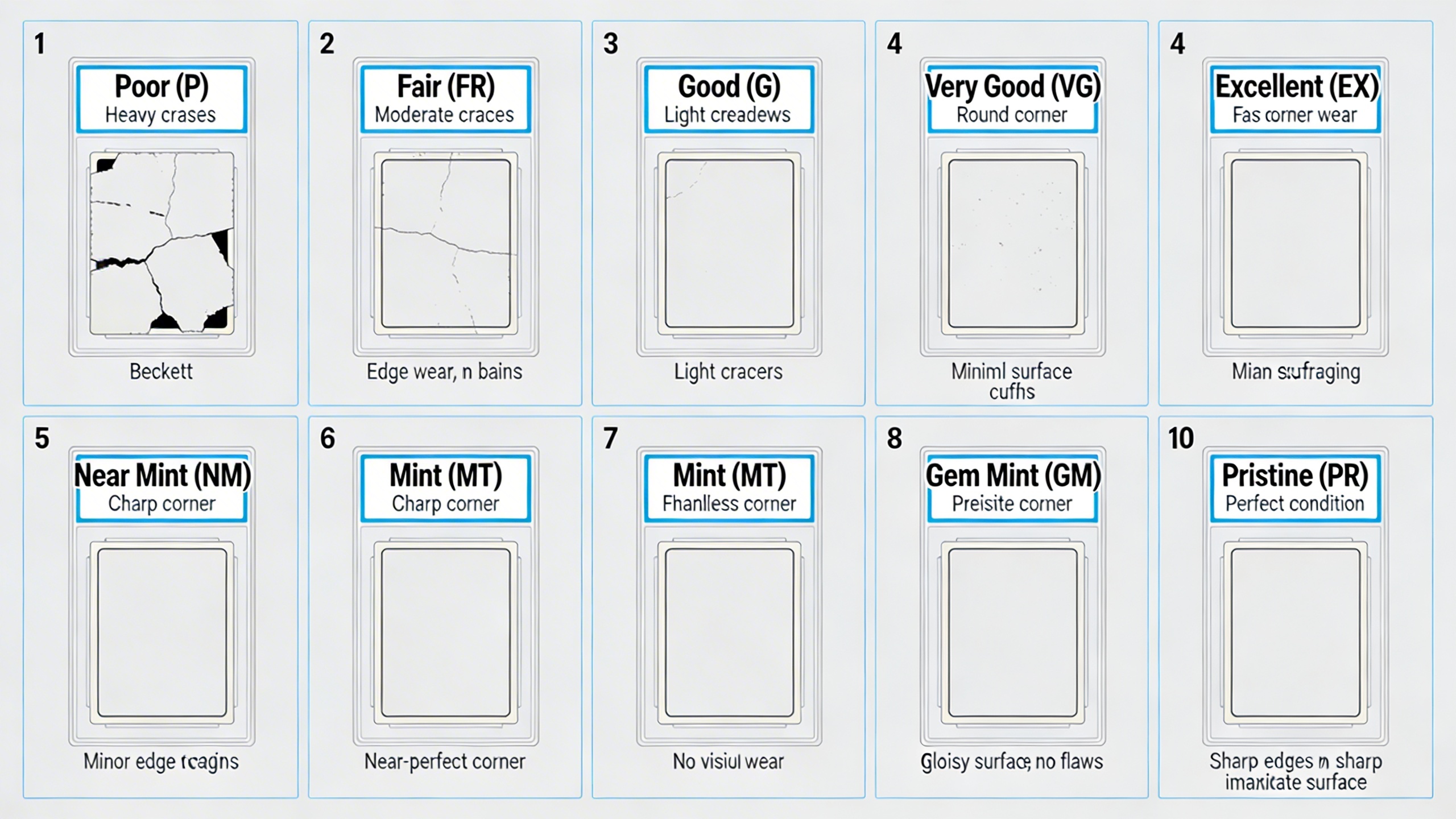
The beckett card grading scale ranges from 1 to 10, with each grade representing specific condition standards. A grade of 1 indicates a card in poor condition with significant damage, while a 10 represents a flawless specimen. Here’s how the scale breaks down:
- Grades 1-3: Poor to Fair condition with major flaws like creases, stains, or rounded corners
- Grades 4-5: Good to Very Good with noticeable wear but structural integrity intact
- Grades 6-7: Excellent to Near Mint with minor imperfections visible under close inspection
- Grades 8-8.5: Near Mint to Mint condition with very slight flaws
- Grades 9-9.5: Mint to Gem Mint with minimal defects
- Grade 10: Pristine condition meeting the highest standards
The difference between adjacent grades can significantly impact a card’s value. For example, a 1986 Fleer Michael Jordan rookie card graded BGS 9 typically sells for $8,000-12,000, while the same card in BGS 9.5 commands $15,000-20,000. This dramatic price difference makes understanding beckett grading criteria essential for serious collectors.
Subgrades: Centering, Corners, Edges, and Surface
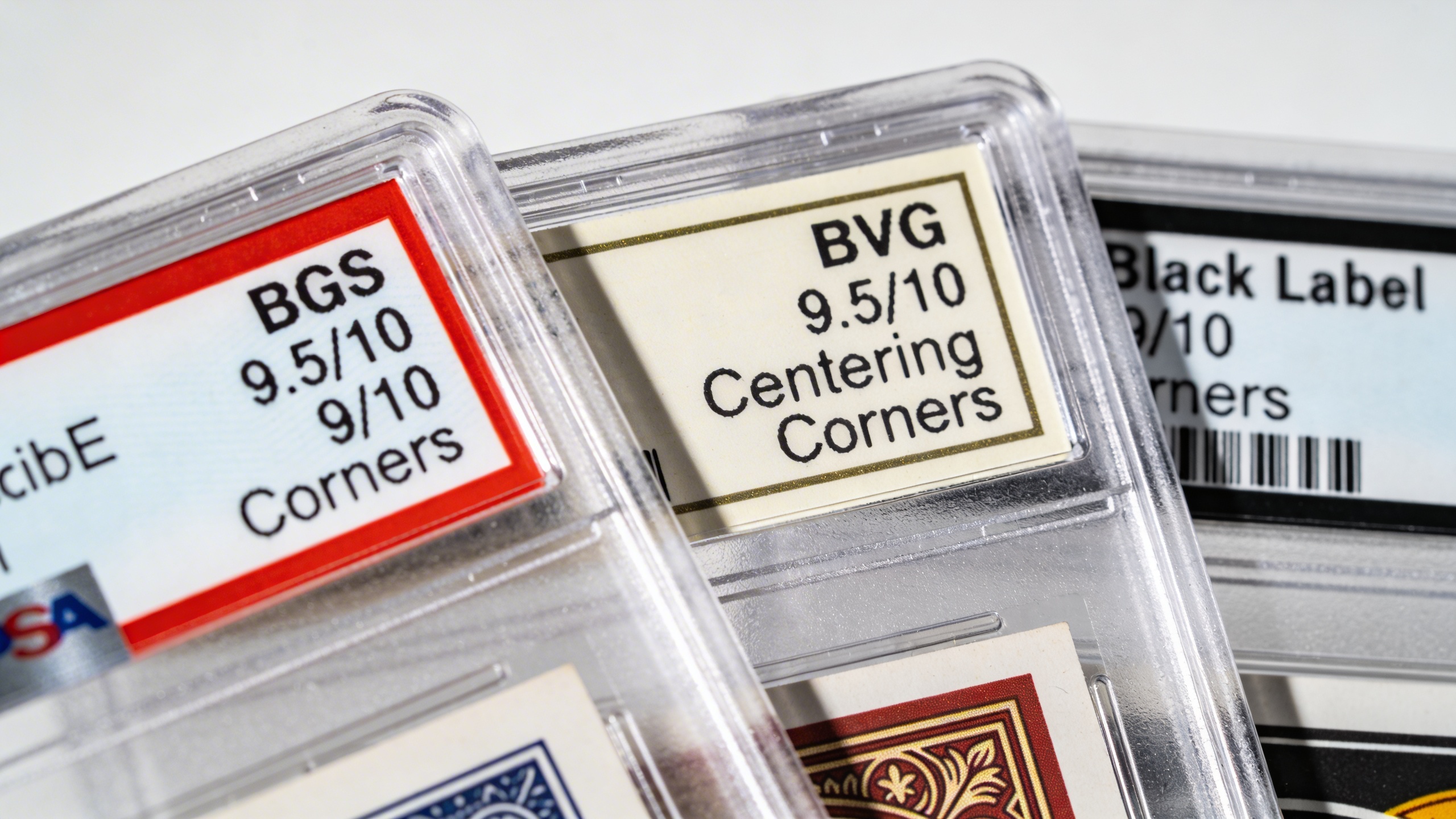
What sets beckett grading apart from competitors is their detailed subgrade system. Each card receives four individual scores that contribute to the overall grade:
| Subgrade Category | What It Measures | Common Issues |
|---|---|---|
| Centering | Image placement within borders | Off-center printing, uneven borders |
| Corners | Sharpness and condition of all four corners | Soft corners, dings, rounded edges |
| Edges | Smoothness and integrity of card edges | Rough cuts, chipping, fraying |
| Surface | Print quality and surface condition | Scratches, print defects, staining |
Each subgrade uses the same 1-10 scale, and the overall grade typically reflects the lowest subgrade or an average with heavy weighting toward the weakest area. For instance, a card with subgrades of 9.5, 9.5, 9.5, and 8.5 would likely receive an overall grade of 9 rather than 9.25, as beckett grading services tend to be conservative when significant disparities exist between subgrades.
When evaluating cards for submission, collectors can use apps like TCG Radar to check current market values across different grades, helping determine whether the potential beckett grading cost justifies the expected return on investment.
Black Label and Pristine Grades
The pinnacle of beckett card grading achievement comes in two forms: Black Label 10 and Pristine 10 grades. These represent the absolute highest standards in card condition assessment.
A Black Label 10 requires perfect 10 subgrades across all four categories—centering, corners, edges, and surface. This grade is extraordinarily rare, with fewer than 1% of submitted cards achieving this status. Cards like the 1998 Pokémon Base Set Charizard or 2003 LeBron James rookie cards with Black Label 10 grades can sell for 5-10 times more than their Pristine 10 counterparts.
Pristine 10 grades allow for one subgrade of 9.5 while maintaining 10s in the other three categories. While still exceptional, Pristine 10s are more attainable than Black Labels. The beckett grading company reserves these highest grades for cards that exhibit flawless characteristics under magnified inspection.
Understanding these distinctions helps collectors set realistic expectations for their submissions. Modern cards pulled directly from packs have the best chance at achieving perfect grades, while vintage cards face additional challenges due to printing technology limitations and age-related factors that affect centering and surface quality.
Beckett Grading Services and Options
The Beckett grading company offers multiple service tiers and specialized options to meet diverse collector needs. Understanding these different services helps you choose the most appropriate and cost-effective path for your valuable cards.
BGS vs BVG: Choosing the Right Service
Beckett operates two primary grading divisions: Beckett Grading Services (BGS) and Beckett Vintage Grading (BVG). BGS handles modern cards typically from 1981 onwards, while BVG specializes in vintage cards from 1980 and earlier. The choice between these services significantly impacts both beckett grading cost and market value.
BGS uses the familiar 1-10 scale with subgrades for centering, corners, edges, and surface. Cards receiving perfect 10s in all four subgrades earn the coveted Black Label designation. BVG employs a different approach, using whole number grades from 1-10 without subgrades, which better suits vintage cards where minor imperfections are expected due to age.
The pricing structure differs between services. BGS typically costs $20-50 per card for standard service levels, while BVG often runs $15-35 per card. However, beckett card grading costs increase substantially for higher service tiers, with express options reaching $150+ per card. Modern rookie cards and high-value vintage pieces justify these premium services due to faster turnaround times.
Authentication Services
Beyond numerical grading, beckett grading services include comprehensive authentication for autographed cards and memorabilia. The Beckett Authentication Services (BAS) division employs expert authenticators who examine signature characteristics, ink properties, and signing patterns to verify authenticity.
The authentication process involves multiple verification steps. Authenticators compare submitted signatures against known exemplars, analyze pen pressure and flow patterns, and examine the signing surface for consistency. Cards receiving authentication earn distinctive labels with unique certification numbers, providing buyers confidence in their purchases.
Authentication costs typically range from $10-20 per signature for standard service, with premium options available for high-value items. Multi-signed items incur additional fees per signature. This service proves invaluable for vintage autographs or modern cards signed at private signings where provenance might be questioned.
Special Services and Crossovers
Beckett offers specialized services beyond standard grading and authentication. The crossover service allows collectors to resubmit cards previously graded by other companies, hoping for higher grades. Cards must remain in their original holders during the crossover process, and Beckett only assigns grades if they meet or exceed the minimum grade specified by the submitter.
Crossover success rates vary significantly based on the original grading company and card condition. PSA 9 cards crossing to BGS sometimes receive 9.5 grades due to different grading philosophies, while others may not cross at all. The service costs $20-30 per card plus return shipping, making it worthwhile only for cards with significant value differences between grades.
For collectors managing large submissions, TCG Radar provides essential tools for tracking card values and determining which pieces justify professional grading costs. The app’s price tracking features help identify cards where grading expenses align with potential value increases.
Additional specialized services include card review for previously graded items and mechanical error corrections. These options address specific collector concerns while maintaining the integrity of the beckett grading company’s reputation for accuracy and consistency.
Beckett Grading Cost Breakdown and Pricing Tiers
Understanding the financial commitment involved in beckett grading is crucial for collectors looking to authenticate and grade their valuable cards. The beckett grading company has structured its pricing to accommodate everyone from casual collectors submitting single cards to dealers processing hundreds of cards monthly. This comprehensive breakdown will help you navigate the various service levels and associated costs.
Standard Grading Fees and Service Levels
Beckett grading services operate on a tiered pricing structure based on declared card value and desired turnaround time. As of 2026, the standard pricing begins with the Economy service at $22 per card for items valued up to $499, with an estimated turnaround of 60-90 business days. This option works well for modern cards or lower-value vintage items where speed isn’t critical.
The Standard service, priced at $40 per card for values up to $999, reduces turnaround time to 30-45 business days. For collectors with higher-value submissions, the Express service costs $75 per card (values up to $2,499) with 15-20 business day processing, while the Super Express option reaches $150 per card for items valued up to $4,999 and promises 10-12 business day completion.
Premium submissions exceeding $5,000 in declared value require the Walk-Through service at $300 per card, offering 5-7 business day turnaround with white-glove handling throughout the process. Each service level includes the signature Beckett grading with numerical score, subgrades for centering, corners, edges, and surface, plus the protective holder.
| Service Level | Price Per Card | Max Declared Value | Turnaround Time |
|---|---|---|---|
| Economy | $22 | $499 | 60-90 business days |
| Standard | $40 | $999 | 30-45 business days |
| Express | $75 | $2,499 | 15-20 business days |
| Super Express | $150 | $4,999 | 10-12 business days |
| Walk-Through | $300 | $5,000+ | 5-7 business days |
Bulk Submission Discounts
The beckett grading cost becomes significantly more manageable through bulk submission programs. Collectors submitting 50 or more cards simultaneously receive a 10% discount on grading fees, while submissions of 100+ cards qualify for 15% savings. The most substantial savings come with submissions exceeding 500 cards, which receive a 20% discount across all service levels.
Beckett Collectors Club members enjoy additional benefits, including a permanent 5% discount on all beckett card grading services that stacks with bulk discounts. The annual membership costs $29.95 and also provides access to exclusive submission windows during peak seasons and priority customer service support.
For dealers and high-volume submitters, the Dealer Account program offers custom pricing based on monthly submission volumes. Accounts processing 200+ cards monthly can negotiate rates as low as $15 per card for Economy service, making professional grading economically viable for inventory management.
Additional Fees and Hidden Costs
Beyond the base grading fees, several additional costs impact your total investment. Insurance is mandatory for all submissions, calculated at $1 per $100 of declared value with a $10 minimum. Shipping costs vary by service level and location, typically ranging from $25-50 for standard submissions, though Express and Super Express services include expedited return shipping.
Special label requests, such as vintage rookie designations or error card notations, add $5 per card. Crossover services, where cards are removed from competitor holders for beckett grading services evaluation, carry an additional $10 fee per card beyond standard grading costs.
Before submitting valuable cards, consider using TCG Radar to accurately assess current market values. This ensures proper service level selection and prevents costly resubmission fees if declared values prove insufficient for actual card worth.
Rush fees apply during peak submission periods, typically adding 25-50% to standard pricing. Planning submissions during slower periods can result in significant savings while maintaining the same quality authentication and grading standards that make Beckett a trusted industry leader.
How to Submit Cards to Beckett: Step-by-Step Process
Successfully submitting cards to Beckett grading company requires careful preparation, proper documentation, and secure shipping methods. Following the correct procedures ensures your valuable cards receive the professional authentication they deserve while minimizing risks during the submission process.
Preparing Your Cards for Submission
Before initiating your beckett card grading submission, thorough preparation is essential for optimal results. Start by carefully examining each card under proper lighting to identify any defects, scratches, or centering issues. Document the current condition with high-quality photographs from multiple angles, as these serve as your insurance reference.
Clean handling is paramount during preparation. Use cotton gloves or clean hands when touching cards, and work on a clean, soft surface. Remove cards from protective sleeves only when necessary, and immediately place them in penny sleeves followed by semi-rigid card savers. Never use top loaders for submissions, as Beckett requires cards in card savers for their grading process.
For valuable cards worth significant beckett grading cost investment, consider using TCG Radar to verify current market values and ensure your submission makes financial sense. The app’s price tracking features help you determine whether grading costs align with potential value increases.
Organize your cards by desired service level, as different beckett grading services have varying turnaround times and costs. Group cards requiring express service separately from standard submissions to streamline the process.
Online Submission Portal and Forms
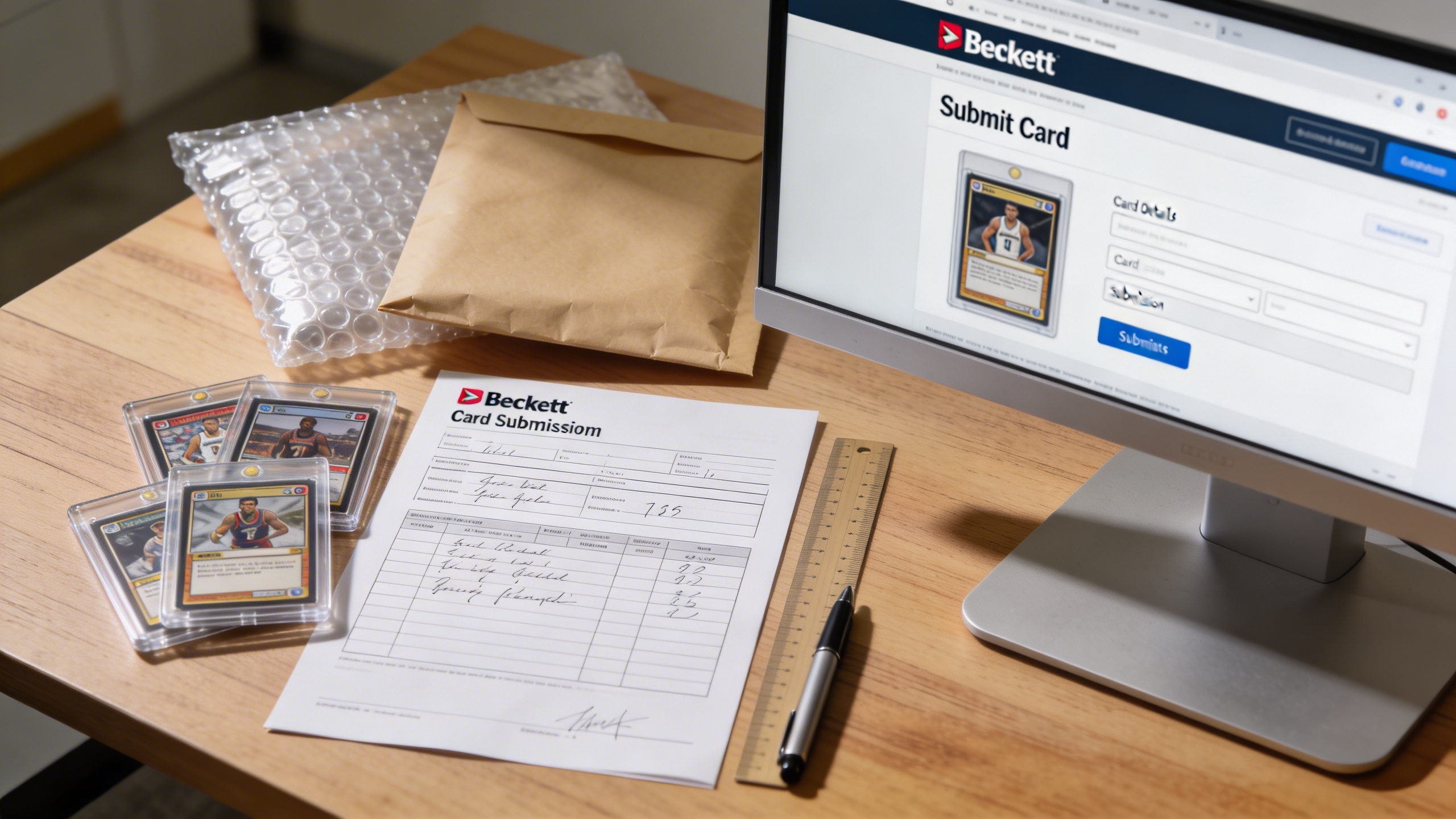
Beckett’s online submission system requires creating an account and completing detailed forms for each card. Access the submission portal through Beckett’s official website and select your preferred grading service tier based on card value and desired turnaround time.
Complete the submission form with precise information for each card, including:
- Card name, set, and year
- Card number and any variations
- Declared value for insurance purposes
- Special requests or concerns
- Preferred service level
Accuracy is crucial when declaring card values, as this determines insurance coverage and influences beckett grading cost calculations. Undervaluing cards may result in insufficient insurance, while overvaluing increases unnecessary fees. Research recent sales data to establish realistic declared values.
Print your completed submission forms and include them with your package. The system generates a unique submission number that tracks your cards throughout the grading process. Keep digital copies of all forms and confirmation emails for your records.
Review beckett grading services pricing before finalizing your submission, as costs vary significantly between service tiers. Budget-conscious collectors often choose standard service for lower-value cards while reserving express options for high-value submissions requiring faster turnaround.
Packaging and Shipping Requirements
Proper packaging protects your investment during transit and demonstrates professionalism to Beckett grading company staff. Use a sturdy cardboard box with adequate padding to prevent movement during shipping. Bubble wrap, foam padding, or newspaper provide effective cushioning around your card package.
Place cards in card savers, then bundle groups of 10-20 cards with rubber bands. Wrap each bundle in bubble wrap and secure with tape. Include your printed submission forms in a plastic sleeve to protect against moisture damage.
Choose shipping methods with tracking and insurance coverage. Priority Mail Express or FedEx overnight services offer reliable tracking and insurance options suitable for valuable card submissions. Insure packages for the full declared value of your cards plus beckett card grading fees.
Address packages to Beckett’s current grading facility, which may change periodically. Verify the correct address on their website before shipping, as outdated addresses can delay processing significantly.
Include your contact information inside the package in case external labels become damaged. A simple note with your name, phone number, and submission number helps Beckett staff identify your submission if packaging issues occur.
Consider requiring signature confirmation for high-value submissions to ensure secure delivery. While this adds minimal cost, it provides peace of mind for expensive card collections undergoing professional authentication.
Document your shipment with photos of the packaged cards and shipping labels. This documentation proves proper packaging if any disputes arise regarding card condition or submission details during the grading process.
Turnaround Times and Tracking Your Submission
Understanding processing times and effectively tracking your submission ensures a smooth experience with the beckett grading company. Each service tier offers different timeframes, and knowing what to expect helps you plan accordingly for your valuable card collection.
Current Processing Times by Service Level
Beckett grading services operate on a tiered system where higher-priced options receive priority processing. Express Service typically completes within 10-15 business days and represents the fastest option for urgent submissions. This premium tier costs significantly more but delivers results when timing is critical for sales or collection milestones.
Standard beckett grading submissions generally take 45-60 business days from receipt to completion. This timeframe can extend during peak seasons, particularly around major card releases or holiday periods when submission volumes spike dramatically. Economy submissions, while offering the lowest beckett grading cost, require 90-120 business days for processing.
Bulk submissions through authorized dealers may experience longer processing times due to volume requirements and batch processing methods. These submissions often take 4-6 months but provide substantial cost savings for large collections. Vintage card submissions occasionally require additional authentication time, potentially adding 2-3 weeks to standard processing schedules.
How to Track Your Submission Status
The Beckett online tracking system provides real-time updates throughout the grading process. After submitting your cards, you’ll receive a confirmation email containing your unique submission number and tracking credentials. Log into your Beckett account using these details to monitor progress through each processing stage.
The tracking interface displays five key stages: “Received,” “In Queue,” “Grading,” “Quality Control,” and “Shipped.” Each status update includes timestamps, allowing you to estimate remaining processing time based on current service level commitments. Push notifications alert you when cards move between stages or when final grades become available.
For valuable submissions, consider using TCG Radar to document your cards’ pre-grading condition and estimated values. This app’s scanning technology helps create detailed records that prove useful when comparing final grades against your initial expectations.
What to Do If There Are Delays
When processing times exceed published estimates, contact Beckett customer service through their official channels. Phone support operates Monday through Friday, 9 AM to 5 PM CST, while email inquiries typically receive responses within 24-48 hours. Provide your submission number and service level when contacting support for faster resolution.
Significant delays may qualify for service level upgrades or partial refunds, depending on circumstances and original beckett card grading tier selected. Document communication attempts and maintain records of promised delivery dates for reference during discussions with customer service representatives.
During peak periods, beckett grading company often publishes updated processing estimates on their website. Check these announcements regularly and adjust expectations accordingly. Consider these seasonal fluctuations when planning submissions around important deadlines or selling opportunities.
Maximizing Value: Tips for Successful Beckett Submissions
Getting the most value from beckett grading services requires strategic thinking beyond simply choosing high-grade cards. Successful collectors understand that maximizing return on investment involves careful card selection, proper preparation, and timing submissions to align with market conditions.
Selecting Cards Worth Grading
The foundation of profitable beckett card grading lies in understanding which cards justify the investment. Focus on cards with strong market demand and significant value differences between raw and graded versions. Modern rookies like 2018 Panini Prizm Luka Dončić (#280) or vintage stars such as 1986 Fleer Michael Jordan (#57) typically show substantial premiums when graded BGS 9.5 or BGS 10.
Calculate potential return by comparing current raw card prices against recent sales of graded examples. If a raw card sells for $200 and BGS 9.5 examples bring $800, the $400+ upside easily justifies beckett grading cost. However, avoid cards where grading fees represent more than 20% of the expected graded value unless you’re preserving for long-term collection goals.
Consider centering, corners, edges, and surface quality before submission. Cards with obvious flaws rarely grade above BGS 8.5, making them poor candidates unless they’re extremely rare or valuable. Use tools like TCG Radar to quickly check current market values and track price trends for specific cards you’re considering for submission.
Common Submission Mistakes to Avoid
Poor handling during preparation destroys more potential BGS 10s than any other factor. Never touch card surfaces directly—use cotton gloves or handle cards by edges only. Avoid cleaning cards with any liquids or cloths, as this typically causes micro-scratches that reduce grades.
Inadequate packaging leads to damage during shipping. Use card savers or penny sleeves, then place in team bags before inserting into submission forms. Avoid toploaders for submissions, as cards can shift and sustain edge damage. Fill out submission forms completely and legibly—incomplete information delays processing and increases costs.
Submitting cards in poor condition hoping for grade bumps wastes money. The beckett grading company maintains strict standards, and wishful thinking doesn’t improve actual card condition. Similarly, avoid bulk submissions of low-value cards unless using economy services, as grading costs quickly exceed potential returns.
Understanding Market Trends and Timing
Strategic timing significantly impacts grading success and profitability. Submit rookie cards during their debut seasons when hype peaks, or hold until players achieve major milestones like MVP awards or championships. The 2021 football season saw dramatic increases in Mac Jones and Ja’Marr Chase card values following strong rookie performances.
Monitor beckett grading services promotions and special pricing events. Bulk submission discounts during slower periods can reduce per-card costs by 20-30%. However, balance savings against longer turnaround times if you need cards back quickly for selling opportunities.
Track population reports to identify undergraded cards with upside potential. Low-population BGS 10 cards often command significant premiums, especially in vintage sets where high grades are scarce. Research recent auction results and sales data to identify emerging trends before they become widely recognized.
Consider seasonal patterns when planning submissions. Baseball cards typically peak during spring training and playoffs, while basketball cards see increased activity during March Madness and NBA playoffs. Timing submissions to align with sport-specific demand cycles maximizes potential returns from your beckett grading investment.
Frequently Asked Questions
How much does Beckett grading cost in 2026?
Beckett grading costs range from $12 for economy service to $300+ for express options, with pricing based on declared card value and turnaround time. Members receive 10-15% discounts on all services, and bulk submissions of 50+ cards qualify for additional savings. Higher-value cards ($500+) require premium service tiers with correspondingly higher fees.
How long does Beckett grading take?
Beckett turnaround times vary by service level: economy takes 45-90 business days, standard runs 20-30 business days, and express services complete in 5-10 business days. Processing times may extend during peak seasons like holidays or major card releases. Express and super express options are available for urgent submissions at premium pricing.
What's the difference between BGS and BVG grading?
BGS (Beckett Grading Services) is designed for modern trading cards and uses the standard Beckett holder with four subgrades. BVG (Beckett Vintage Grading) specifically handles pre-1981 cards and uses a different holder design with vintage-appropriate grading standards. BGS generally has stronger market acceptance and resale value compared to BVG.
Can I submit cards to Beckett without a membership?
Yes, non-members can submit cards through authorized dealers or the guest submission option, though fees are higher than member rates. Beckett membership costs $25 annually and provides 10-15% discounts on all services, priority processing, and access to exclusive submission events. The membership typically pays for itself after just a few submissions.
What makes a card eligible for a Beckett Black Label?
A Beckett Black Label requires perfect 10 subgrades in all four categories: centering, corners, edges, and surface. This represents the absolute pinnacle of card condition and occurs in less than 1% of all submissions. Even minor imperfections invisible to the naked eye can prevent a Black Label designation, making these grades extremely rare and valuable.