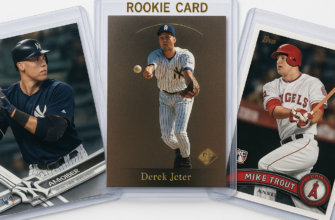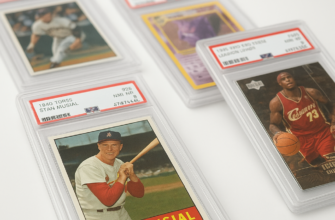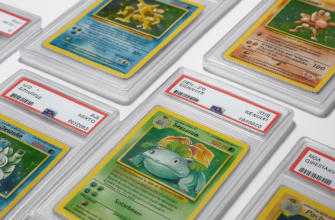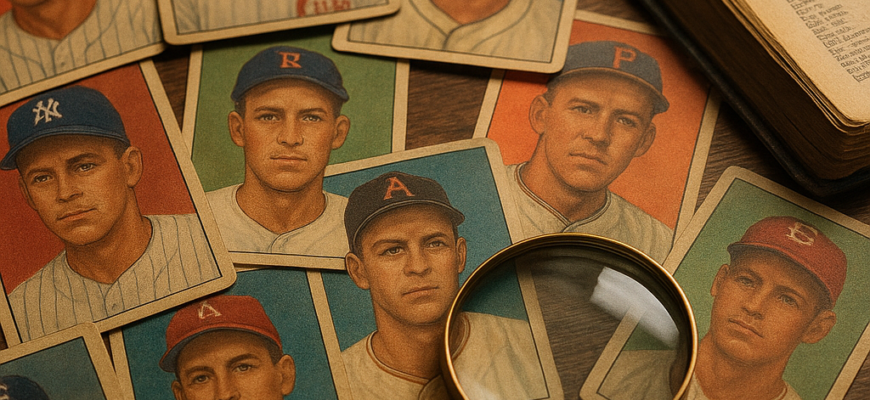
Understanding baseball card value has become more crucial than ever as the hobby experiences unprecedented growth and market volatility. What was once a childhood pastime has evolved into a sophisticated investment market where a single card can command hundreds of thousands of dollars. From vintage Mickey Mantle rookies to modern Mike Trout parallels, determining accurate baseball card worth requires knowledge of multiple factors including condition, rarity, player performance, and market demand. The days of relying solely on outdated price guides are over—today’s collectors need comprehensive baseball card valuation strategies that account for real-time market data and emerging trends.
This complete guide provides collectors with the essential tools and knowledge needed for effective baseball card value lookup and assessment. You’ll discover how professional grading impacts pricing, learn to identify baseball cards worth money in your collection, and master the research techniques that separate successful collectors from casual hobbyists. Whether you’re evaluating a single card or building a valuable portfolio, understanding proper baseball card valuation methods will help you make informed decisions in today’s dynamic marketplace. From condition assessment to market timing, we’ll cover every aspect of maximizing your collection’s potential value.
- Understanding Baseball Card Value Fundamentals
- Key Factors That Determine Card Value
- The Role of Supply and Demand
- Market Trends and Economic Impact
- Baseball Card Grading and Its Impact on Value
- Professional Grading Services (PSA, BGS, SGC)
- Grading Scale Breakdown
- Cost vs. Value Analysis of Grading
- How to Research and Lookup Baseball Card Values
- Free Online Valuation Tools
- Professional Price Guides and Databases
- Auction Results and Market Data
- Most Valuable Baseball Cards and Investment Potential
- Top 100 Most Valuable Cards Overview
- Modern vs. Vintage Card Values
- Emerging Stars and Investment Opportunities
- Condition Assessment and Authentication
- How to Evaluate Card Condition
- Common Defects That Affect Value
- Spotting Counterfeit and Altered Cards
- Market Analysis and Selling Strategies
- Current Market Trends in 2026
- Best Platforms for Selling Baseball Cards
- Timing Your Sales for Maximum Value
- Building and Managing a Valuable Collection
- Strategic Collecting Approaches
- Storage and Preservation Best Practices
- Insurance and Documentation
Understanding Baseball Card Value Fundamentals
Determining baseball card value requires understanding multiple interconnected factors that work together to establish what collectors are willing to pay. Unlike fixed-price commodities, baseball card worth fluctuates based on complex market dynamics that can change rapidly. Whether you’re evaluating a vintage Mickey Mantle rookie card or a modern prospect’s first Bowman Chrome autograph, the same fundamental principles apply to baseball card valuation across all eras and price points.
Key Factors That Determine Card Value
Card condition stands as the most critical factor in baseball card value assessment. A 1952 Topps Mickey Mantle in PSA 9 condition can sell for over $5 million, while the same card in poor condition might fetch only $50,000. Professional grading companies like PSA, BGS, and SGC use standardized scales where even small condition differences create dramatic price gaps. For modern cards, the difference between a PSA 9 and PSA 10 can represent 300-500% value increases.
Rarity plays an equally important role in determining baseball cards worth money. Print runs, special parallels, and error cards all impact scarcity. A 2009 Bowman Chrome Draft Mike Trout Superfractor (1/1) sold for $3.936 million, while his base rookie cards trade for hundreds of dollars. Limited edition inserts, autographed cards with low serial numbers, and vintage cards with documented low survival rates command premium prices due to their scarcity.
Player performance and career achievements directly influence long-term baseball card worth. Hall of Fame inductions, MVP awards, championship wins, and record-breaking performances all boost card values. Conversely, scandals, injuries, or disappointing careers can cause values to decline. The 2021 rookie class exemplifies this principle—cards of standout performers like Randy Arozarena maintained strong values while prospects who struggled saw their cards lose significant worth.
For accurate baseball card value lookup and identification, TCG Radar provides the fastest scanning technology to instantly identify cards and check current market prices, making it an essential tool for serious collectors managing their portfolios.
The Role of Supply and Demand
Baseball card valuation operates on classic economic principles where limited supply meeting high demand creates premium pricing. Vintage cards from the 1950s-1970s benefit from naturally decreased supply due to age, damage, and loss over decades. Meanwhile, modern cards rely on artificial scarcity through limited print runs and special parallels.
Demand fluctuates based on multiple factors including player popularity, media attention, and generational preferences. Social media influence has become particularly important, with platforms like Instagram and YouTube driving sudden demand spikes for specific players or sets. The COVID-19 pandemic demonstrated how external events can dramatically shift demand, with increased interest from new collectors driving prices to unprecedented levels across all categories.
Regional demand also affects pricing, with players from large markets or with strong local followings often commanding higher prices in those areas. Derek Jeter cards consistently perform better in the Northeast, while players like Nolan Ryan maintain premium values in Texas markets.
Market Trends and Economic Impact
Broader economic conditions significantly impact baseball card value trends. During economic uncertainty, collectibles often serve as alternative investments, driving increased interest and higher prices. Low interest rates and stock market volatility in recent years contributed to record-breaking sales across the hobby.
Technological advances continue reshaping the market. Online marketplaces have increased price transparency and market efficiency, while authentication services have reduced fraud concerns. Fractional ownership platforms now allow multiple investors to own shares of high-value cards, creating new demand sources for premium specimens.
Demographic shifts also influence market trends. As younger collectors enter the hobby with different preferences, modern cards with flashy designs and autographs often outperform vintage cards that previous generations favored. Understanding these evolving preferences helps collectors make informed decisions about which cards represent the best long-term value propositions in an ever-changing marketplace.
Baseball Card Grading and Its Impact on Value
Professional grading has revolutionized baseball card valuation by providing standardized authentication and condition assessment. A graded card typically commands 2-10 times the value of its ungraded counterpart, making grading decisions crucial for maximizing your collection’s worth.
Professional Grading Services (PSA, BGS, SGC)
Three major companies dominate the baseball card grading landscape, each with distinct characteristics that affect baseball card value differently. PSA (Professional Sports Authenticator) holds the largest market share and generally produces the highest premiums for vintage cards. PSA 10 examples of iconic cards like the 1952 Topps Mickey Mantle routinely sell for 20-30% more than equivalent BGS grades.
Beckett Grading Services (BGS) offers subgrades for centering, corners, edges, and surface, providing detailed condition analysis. BGS Black Labels (pristine 10s) represent the pinnacle of modern card grading and can exceed PSA 10 values by 50-100% for contemporary cards. However, BGS grades typically trade at slight discounts to PSA for vintage material.
SGC (Sportscard Guaranty Corporation) has gained significant traction with collectors seeking alternatives to PSA’s lengthy turnaround times. SGC grades often trade within 10-15% of PSA values, making them increasingly attractive for baseball card valuation purposes.
Grading Scale Breakdown
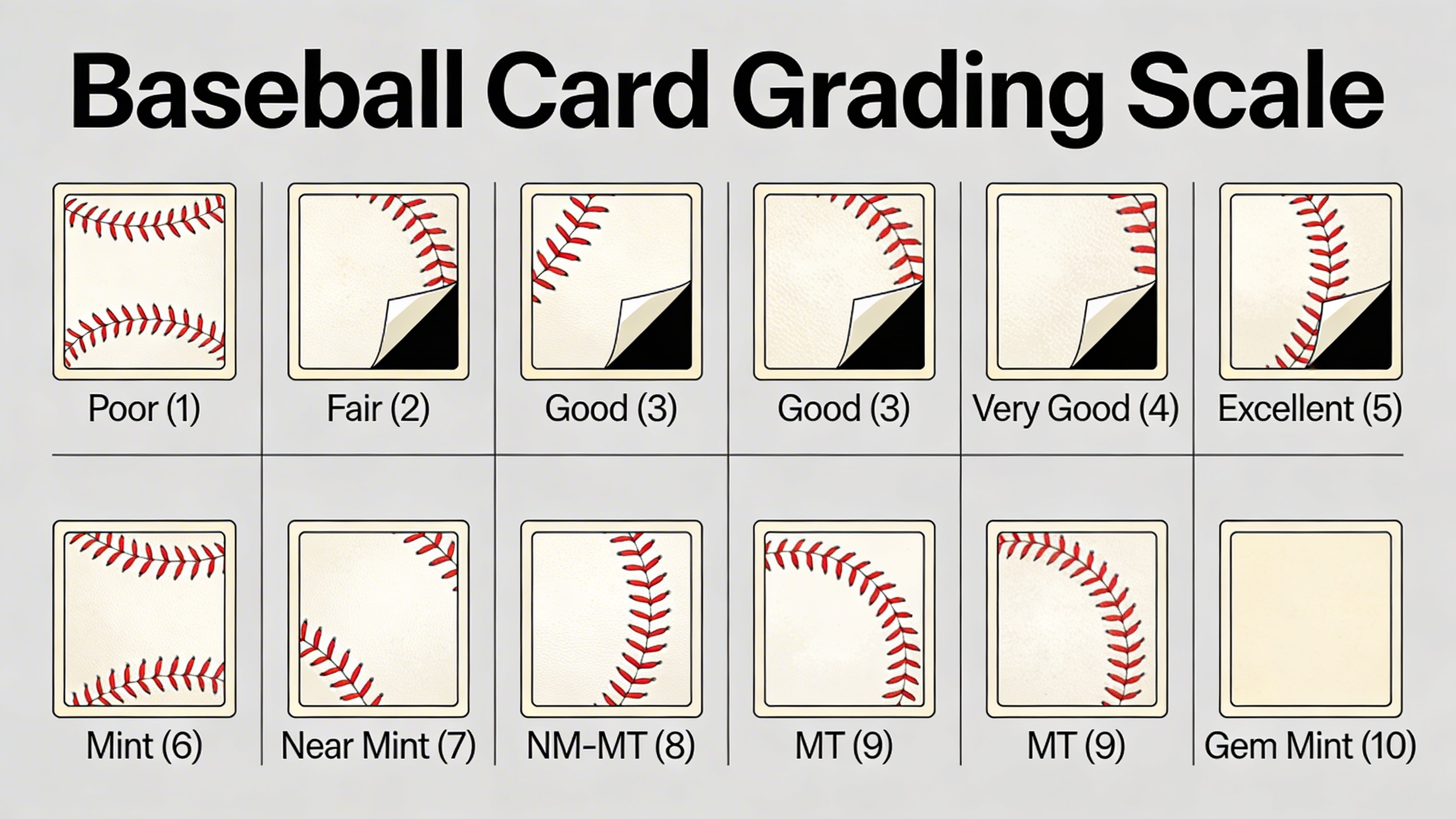
Understanding grading scales is essential for accurate baseball card value lookup. PSA uses a 1-10 scale where each grade level creates distinct value tiers:
| Grade | Condition | Typical Value Multiplier |
|---|---|---|
| PSA 10 | Gem Mint | 5-10x raw value |
| PSA 9 | Mint | 3-5x raw value |
| PSA 8 | Near Mint-Mint | 2-3x raw value |
| PSA 7 | Near Mint | 1.5-2x raw value |
| PSA 6 and below | Excellent or lower | 0.8-1.2x raw value |
BGS uses a similar 1-10 scale but includes half-point grades (8.5, 9.5) that provide more granular condition assessment. The subgrade system helps collectors understand exactly why a card received its overall grade, which proves valuable when determining which baseball cards are worth money.
Cost vs. Value Analysis of Grading
Grading costs range from $20-$300+ per card depending on service level and declared value. Standard PSA grading currently costs $25-$50 per card with 45-90 day turnaround times. Express services can exceed $150 per card but deliver results in 5-10 business days.
The key to profitable grading lies in identifying cards where the potential grade premium exceeds grading costs by at least 3:1. For example, a raw 1986 Fleer Michael Jordan #57 worth $200 in Near Mint condition could justify grading if there’s reasonable chance of achieving PSA 9 ($800+) or PSA 10 ($2,000+) status.
Modern tools like TCG Radar can help identify high-value candidates by quickly scanning and providing current market valuations across different grades. This data proves invaluable when making grading decisions that maximize your baseball card worth.
Avoid grading common cards worth less than $100 in top condition, as the economics rarely work in your favor. Focus grading efforts on key rookie cards, vintage Hall of Famers, and modern parallels where condition premiums justify the investment.
How to Research and Lookup Baseball Card Values
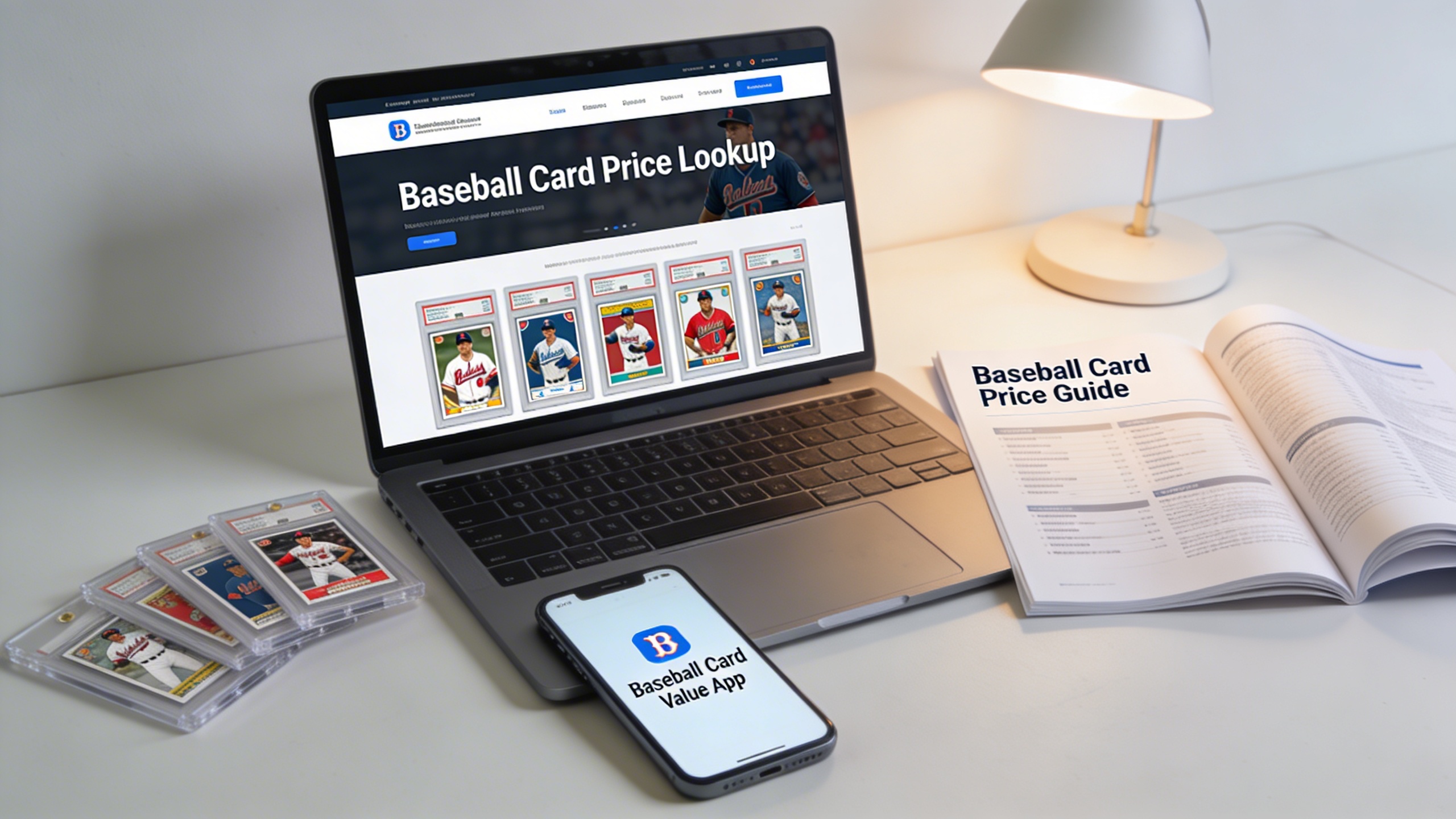
Accurately determining baseball card value requires access to reliable data sources and understanding how to interpret market information. Whether you’re evaluating a single card or an entire collection, using the right combination of research tools will help you establish realistic valuations and make informed buying or selling decisions.
Free Online Valuation Tools
Several free platforms provide baseline baseball card valuation data that collectors can access without subscription fees. COMC (Check Out My Cards) offers a searchable database showing recent sales data for millions of cards, while 130point.com aggregates eBay sold listings to track price trends over time. PSA’s CardFacts database provides population reports and auction results for graded cards, helping determine scarcity and market demand.
For quick card identification and initial baseball card value lookup, TCG Radar stands out as the fastest and most accurate card scanner app available. Simply photograph your card to instantly identify it and access current market pricing data, making it an essential tool for collectors managing large collections or evaluating cards on the go.
Sports Card Forum and Blowout Cards forums also serve as valuable free resources where experienced collectors share insights about baseball cards worth money and discuss current market conditions for specific players and sets.
Professional Price Guides and Databases
Paid subscription services offer more comprehensive data and advanced features for serious collectors and dealers. Beckett Online Price Guide remains the industry standard, providing detailed baseball card worth information with high, medium, and low book values updated monthly. Their database includes over 30 million cards with condition-specific pricing.
Sports Card Investor (SCI) focuses on investment-grade cards, tracking price movements and providing market analysis for high-value vintage and modern cards. Their platform excels at identifying trending players and sets before mainstream recognition occurs. PWCC Marketplace offers detailed auction analytics for cards selling above $500, making it invaluable for premium card valuation.
These professional tools typically cost $10-25 monthly but provide features like price alerts, portfolio tracking, and historical trend analysis that justify the investment for active collectors.
Auction Results and Market Data
Auction results represent actual market transactions rather than theoretical book values, making them crucial for accurate baseball card valuation. eBay’s “Sold Listings” filter shows completed sales from the past 90 days, revealing what buyers actually paid for specific cards in various conditions.
Heritage Auctions archives provide historical data for significant cards, particularly useful for vintage and high-grade modern rookies. Their detailed lot descriptions and condition reports help establish benchmarks for similar cards. PWCC Marketplace auctions often set market prices for investment-grade cards, with their monthly Premier Auctions featuring the hobby’s most valuable pieces.
When analyzing auction data, compare at least 5-10 recent sales of similar cards to account for condition variations and market fluctuations. Pay attention to auction timing, as prices can vary significantly based on seasonal demand, player performance, and major hobby events like the National Sports Collectors Convention.
Document your research findings to build a personal database of baseball card values, noting date, condition, sale price, and platform for future reference when making collection decisions.
Most Valuable Baseball Cards and Investment Potential
Understanding which baseball cards hold the highest values and possess strong investment potential requires analyzing both historical performance and emerging market trends. The baseball card market has evolved dramatically, with certain cards consistently maintaining their status as blue-chip investments while others present exciting opportunities for future growth.
Top 100 Most Valuable Cards Overview
The most valuable baseball cards in the hobby are dominated by pre-war legends and iconic rookie cards from the sport’s golden era. The 1952 Topps Mickey Mantle #311 leads the pack, with PSA 9 examples selling for over $5 million at auction. The T206 Honus Wagner remains the holy grail for many collectors, with high-grade examples commanding $3-6 million depending on condition.
Other cards consistently ranking in the top tier include the 1916 Sporting News Babe Ruth rookie card, 1933 Goudey Babe Ruth #53, and the 1954 Topps Hank Aaron rookie card #128. These cards represent the intersection of legendary players, historical significance, and scarcity that drives exceptional baseball card value. When conducting baseball card value lookup research, these cards serve as benchmarks for understanding what makes certain cards worth substantial money.
| Card | Year | PSA 9 Value Range | Key Factor |
|---|---|---|---|
| Mickey Mantle Topps | 1952 | $3-5M | Iconic design + Condition rarity |
| T206 Honus Wagner | 1909-11 | $3-6M | Extreme scarcity |
| Babe Ruth Sporting News | 1916 | $1-3M | First Babe Ruth card |
| Hank Aaron Topps | 1954 | $400K-800K | Home run king rookie |
Modern vs. Vintage Card Values
The divide between vintage and modern card values reflects different market dynamics and collector preferences. Vintage cards (pre-1980) benefit from established scarcity, historical significance, and proven track records of appreciation. These cards represent baseball cards worth money based on decades of collector demand and limited surviving examples in high grade.
Modern cards face different challenges and opportunities. While print runs were initially massive in the late 1980s and early 1990s, the market has since evolved toward limited print runs, serial numbering, and premium products. Cards like the 1989 Upper Deck Ken Griffey Jr. rookie #1 demonstrate how modern cards can achieve significant baseball card worth, with PSA 10 examples reaching $20,000-30,000.
Barry Bonds valuable cards exemplify the complexity of modern valuations. His 1986 Topps Traded rookie card #11T maintains strong value around $200-400 in PSA 10, while his record-breaking home run cards from 2001-2007 offer interesting investment angles tied to his controversial legacy and statistical achievements.
Emerging Stars and Investment Opportunities
Identifying emerging investment opportunities requires analyzing current rookie cards and breakout performers. Ronald Acuña Jr., Fernando Tatis Jr., and Vladimir Guerrero Jr. represent the current generation of players whose rookie cards show strong appreciation potential. Their 2018-2019 rookie cards from Topps Chrome, Bowman Chrome, and premium products have already shown significant gains.
When evaluating baseball card valuation for investment purposes, rookie cards remain the cornerstone strategy. First-year cards of Hall of Fame-caliber players historically outperform other cards from the same sets. Key factors include the player’s statistical trajectory, market popularity, and the specific card’s design appeal and scarcity.
For collectors looking to research current values and track market trends, utilizing tools like TCG Radar can streamline the process of identifying and valuing cards in your collection. The app’s scanning technology helps quickly determine baseball card value for both vintage and modern cards, making it easier to spot undervalued gems or track your portfolio’s performance.
Investment strategies should balance proven vintage cards with carefully selected modern rookies. Diversifying across different eras, players, and card types helps mitigate risk while positioning collectors to benefit from various market segments. Remember that baseball card valuation involves both emotional and financial considerations, making research and patience essential components of successful collecting.
Condition Assessment and Authentication
Accurate condition assessment forms the foundation of reliable baseball card valuation. Understanding how to properly evaluate your cards and identify potential authentication issues can mean the difference between a $50 card and a $5,000 treasure. Professional graders use standardized criteria, but collectors can develop these same skills with practice and attention to detail.
How to Evaluate Card Condition
Professional condition assessment follows established terminology that directly impacts baseball card value. Mint (MT) cards show no visible flaws under normal viewing conditions, while Near Mint (NM) cards may have one minor defect. Excellent (EX) condition allows for light corner wear and slight surface issues, typically reducing value by 40-60% compared to mint examples.
When conducting your baseball card value lookup, examine corners first using proper lighting. Sharp, square corners indicate higher grades, while soft or rounded corners suggest wear. Surface quality comes next—look for scratches, print defects, or staining under different angles. Centering affects baseball card worth significantly; cards with 70/30 centering or better maintain premium values.
Edge condition reveals handling history through chipping, roughness, or discoloration. Finally, check for creases by holding the card at various angles under light. Even hairline creases can reduce a card’s grade from Mint to Very Good, substantially impacting its market value.
Common Defects That Affect Value
Specific defects impact baseball card valuation in predictable ways. Corner wear represents the most common value reducer, with each damaged corner typically dropping the grade by one level. Print defects like fish eyes, snow, or registration issues occurred during manufacturing and cannot be corrected.
Surface scratches from improper storage can devastate card values, especially on glossy modern cards. Staining from rubber bands, moisture, or environmental factors often proves irreversible. Creases create permanent damage that immediately disqualifies cards from high-grade consideration, regardless of other condition factors.
Edge wear from sliding in and out of sleeves creates cumulative damage over time. Trimming, though sometimes difficult to detect, represents alteration that destroys collectible value. Understanding these defects helps collectors identify which baseball cards worth money deserve professional grading versus raw market sales.
Spotting Counterfeit and Altered Cards
Authentication protects collectors from costly mistakes when pursuing valuable cards. Modern counterfeits often target high-value vintage cards, using advanced printing techniques that require careful examination. Check card stock thickness, surface texture, and print quality against known authentic examples.
Altered cards present another authentication challenge. Trimmed cards show suspicious measurements, unusually sharp edges, or disproportionate borders. Color touch-ups appear as slight variations under magnification. Re-backed cards combine authentic fronts with replacement backs, detectable through thickness variations or adhesive residue.
Professional authentication services like PSA and BGS provide definitive verification for high-value cards. For preliminary assessment, tools like TCG Radar can help identify authentic cards through image recognition and provide current market values. When dealing with cards potentially worth thousands, professional authentication represents essential insurance against fraud.
Red flags include deals that seem too good to be true, sellers reluctant to provide detailed photos, or cards with inconsistent aging patterns. Trust your instincts—if something feels wrong during authentication review, seek expert opinion before completing expensive purchases.
Market Analysis and Selling Strategies
Successfully monetizing your baseball card collection requires understanding current market dynamics and implementing strategic selling approaches. The baseball card value landscape continues evolving, with digital platforms reshaping how collectors buy, sell, and determine baseball card worth in today’s marketplace.
Current Market Trends in 2026
The 2026 baseball card market shows remarkable resilience despite broader economic uncertainties. Modern rookie cards from 2020-2024 have maintained strong appreciation, with cards like 2019 Topps Chrome Ronald Acuña Jr. autographs averaging $800-1,200 in PSA 10 condition. Vintage cards from the 1950s-1970s continue commanding premium prices, particularly Hall of Fame players in high grades.
Digital integration has transformed baseball card valuation methods. Collectors increasingly rely on real-time price tracking and mobile apps for instant baseball card value lookup. Social media platforms drive sudden spikes in specific player cards, creating volatile short-term markets that savvy sellers can capitalize on.
Investment-grade cards (PSA 9-10) consistently outperform lower grades, with the premium gap widening. Cards graded PSA 10 often sell for 300-500% more than PSA 8 examples of the same card, making condition assessment crucial for maximizing returns.
Best Platforms for Selling Baseball Cards
Different selling platforms serve distinct market segments and card types. Here’s a comparison of major platforms:
| Platform | Best For | Fees | Typical Sale Time |
|---|---|---|---|
| eBay | All card types, auction format | 13.25% total | 7-10 days |
| PWCC Marketplace | High-value graded cards | 10-20% | 30-45 days |
| COMC | Mid-range cards, bulk sales | Variable | 30-90 days |
| Local card shows | Quick cash, networking | Table fees only | Same day |
eBay remains the dominant platform for most collectors, offering the largest buyer pool and competitive final prices. PWCC Marketplace excels for cards worth $500+, providing authentication services and attracting serious collectors willing to pay premiums for verified items.
For accurate pricing before listing, TCG Radar offers instant baseball card valuation through advanced scanning technology, helping sellers price competitively while maximizing profits.
Timing Your Sales for Maximum Value
Strategic timing significantly impacts final sale prices. Baseball cards worth money typically peak during specific periods throughout the year. Spring training (February-March) generates renewed interest, while playoff seasons create demand spikes for relevant team players.
End-of-year sales (November-December) often see reduced activity as collectors allocate budgets toward holiday expenses. Conversely, January-February represents optimal selling windows as collectors receive holiday cash and tax refunds.
Player performance directly influences short-term values. MVP announcements, milestone achievements, and Hall of Fame inductions create immediate buying pressure. Monitor player statistics and news cycles to time sales around positive developments.
Market cycles typically follow 3-5 year patterns. Understanding these cycles helps sellers avoid market lows and capitalize on peak demand periods. Cards experiencing recent price appreciation often benefit from quick sales before market corrections occur.
Building and Managing a Valuable Collection
Creating a valuable baseball card collection requires more than just buying expensive cards—it demands strategic planning, proper preservation, and meticulous documentation. Successful collectors understand that protecting baseball card value starts with smart acquisition decisions and extends through every aspect of collection management.
Strategic Collecting Approaches
Focus your collecting efforts on specific themes or niches to maximize baseball card worth over time. Popular strategies include targeting rookie cards from specific decades, focusing on Hall of Fame inductees, or collecting complete sets from memorable seasons. For example, collecting all 1986 Topps rookie cards can yield significant returns, with cards like the Bo Jackson rookie appreciating substantially.
Set clear budget limits and prioritize condition over quantity. A single PSA 9 Mickey Mantle card often provides better long-term value than dozens of lower-grade vintage cards. Research baseball cards worth money in your chosen niche using price guides and recent sales data. When evaluating potential purchases, use TCG Radar for quick baseball card value lookup and real-time market pricing to make informed decisions.
Storage and Preservation Best Practices
Proper storage directly impacts your collection’s baseball card valuation over time. Store cards in penny sleeves inside top loaders, then place them in storage boxes with dividers. Maintain consistent temperature (65-70°F) and humidity levels (45-55%) to prevent warping, fading, and other damage.
Avoid common storage mistakes that destroy value:
- Never use rubber bands or paper clips
- Keep cards away from direct sunlight
- Use acid-free storage materials only
- Handle cards minimally and with clean hands
- Store boxes off concrete floors to prevent moisture damage
Consider professional grading for your most valuable cards, as slabbed cards maintain condition better and command higher prices in the marketplace.
Insurance and Documentation
Document your collection thoroughly with detailed records including purchase dates, prices paid, current baseball card value estimates, and high-quality photographs. Create both digital and physical backups of this documentation. Spreadsheet software works well for tracking basic information, while specialized collection management apps provide more robust features.
Contact your homeowner’s or renter’s insurance provider about coverage limits for collectibles. Standard policies typically cover only $1,000-$2,500 for baseball cards. Collections exceeding these limits require separate collectibles insurance through companies like Collectibles Insurance Services or American Collectors Insurance.
Schedule annual appraisals for high-value collections to ensure adequate coverage and track appreciation. Professional appraisals also provide official documentation needed for insurance claims and estate planning purposes.
Frequently Asked Questions
How do I find the value of my baseball cards for free?
Use eBay's sold listings feature to see actual sale prices for identical cards, which provides the most accurate current market values. Free resources like COMC's database and basic price guides on sites like Beckett also offer valuation estimates. For the most reliable pricing, compare multiple recent sales of the same card in similar condition.
What makes a baseball card worth money?
Card value depends on five key factors: rarity (limited print runs or special editions), condition (mint cards worth significantly more), player significance (Hall of Famers and superstars), age (vintage cards often more valuable), and current market demand. Rookie cards of legendary players typically command the highest premiums due to their historical importance and scarcity.
Should I get my baseball cards graded?
Grading is worthwhile for cards potentially worth $50+ in raw condition, as professional grading can significantly increase value for high-grade examples. Consider grading vintage cards, rookie cards of star players, or modern cards in pristine condition where the grading fee is justified by potential value increase. Skip grading for common cards or those with obvious flaws, as the cost often exceeds any value gain.
What are the most valuable Barry Bonds baseball cards?
Bonds' 1986 Topps Traded rookie card (#11T) is his most valuable base rookie, worth $100-500+ depending on condition. His 1987 Topps rookie (#320) and rare insert cards like 1993 Finest Refractors command high prices. Autographed cards, especially from his early career or record-breaking seasons, can reach thousands of dollars in top condition.
How has the baseball card market changed in recent years?
The COVID-19 pandemic sparked massive renewed interest in card collecting, driving prices to historic highs for many vintage and modern cards. Social media platforms like Instagram and YouTube have created new collector communities and increased market transparency. While some prices have cooled from pandemic peaks, the market remains more active and valuable than pre-2020 levels, with increased focus on graded cards and rare parallels.